New Round of Israel-Lebanon Talks Set for August 4
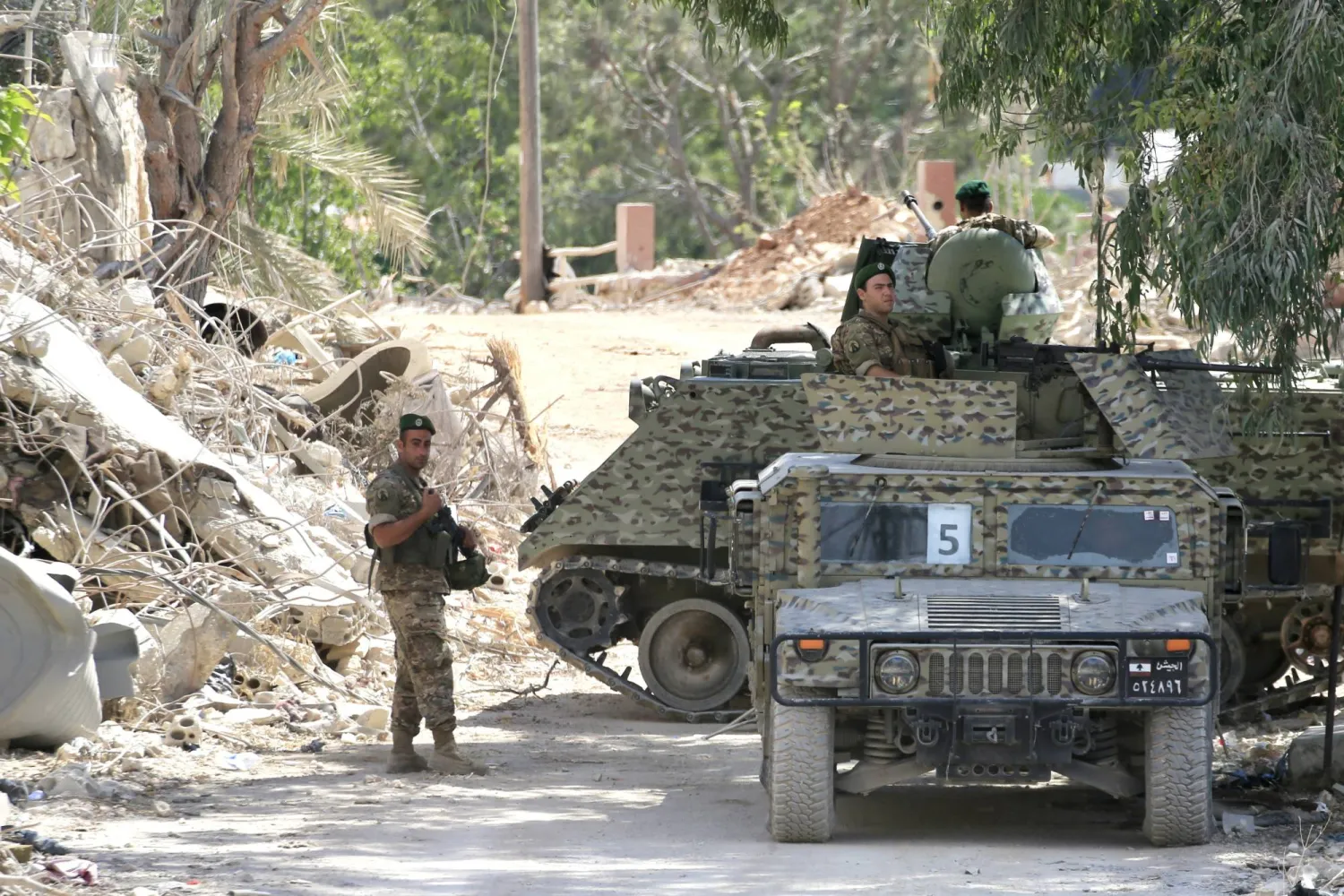
Lebanese army soldiers are stationed in the village of Zawtar al-Gharbiyeh in southern Lebanon, 26 July 2026. EPA/STRINGER
The US State Department confirmed Monday that the next round of talks between Israel and Lebanon will be held in Rome on August 4 through 6, as Israel prepares to withdraw from two "pilot zones" in southern Lebanon.
Italian Foreign Minister Antonio Tajani first announced the next round of US-mediated talks last week, with a State Department official detailing the talks to AFP on the condition of anonymity.
"In Rome, technical groups will focus on advancing the full implementation of the framework agreement," the official told AFP, adding that the planned discussion "includes expanding the pilot zone process, resolving all outstanding border issues, and working on a comprehensive peace and security agreement."
The Israel-Lebanon framework deal emerged after war broke out between Israel and Iran-backed militant group Hezbollah on March 2, against the backdrop of the wider Middle East war.
It calls for an end to the war in Lebanon, disarmament of the Lebanese movement, the deployment of Lebanese troops in the south and for Israeli forces to steadily withdraw from the country in two "pilot zones."
"The experience of the initial zones will help us perfect pilot-zone implementation so it can expand in a phased manner," the US official added. Lebanon's army on Sunday condemned Israel's ongoing military operations in the south of the country, arguing it was preventing its full deployment under the framework deal.
Beirut has reported intermittent Israeli strikes and artillery shelling on the south despite the lull in fighting.
Growing Lawlessness Complicates Lebanon’s Efforts to Assert State Authorityhttps://english.aawsat.com/arab-world/5346873-growing-lawlessness-complicates-lebanon%E2%80%99s-efforts-assert-state-authority
Growing Lawlessness Complicates Lebanon’s Efforts to Assert State Authority
Members of Lebanon’s Internal Security Forces deploy in Beirut on November 25, 2026. (EPA)
Concerns are mounting over lawlessness in Lebanon, from street robberies in Beirut to armed clashes in its southern suburbs and Baalbek in eastern Lebanon, as shortages of security personnel, vehicles and equipment limit patrols.
The unrest comes amid political divisions over extending state authority and establishing its monopoly on arms. A security source acknowledged that "political and partisan protection enjoyed by some offenders is hampering law enforcement."
Sporadic violence
A Syrian national was killed near the Iranian embassy in Beirut's Bir Hassan area on Friday following a personal dispute. On Thursday, a clash involving automatic weapons between minibus drivers in Hay al-Sellom, in Beirut's southern suburbs, left people wounded.
The incidents followed a confrontation between the Lebanese army and wanted suspects in Baalbek's Sharawneh neighborhood. The army said raids on Tuesday involved exchanges of gunfire with wanted suspects, resulting in six arrests and the seizure of weapons, ammunition and drugs.
Two months ago, disputes in Beirut neighborhoods, particularly Aisha Bakkar and Bourj Abi Haidar, escalated into armed clashes, leaving people dead and wounded.
Nighttime street robberies, locally known as "tashlih," have since heightened concern among the capital's residents.
The incidents pose a growing challenge to the state and test its ability to enforce security and stability, particularly across Beirut, ahead of Christmas and New Year celebrations and amid reports of strong bookings at hotels, tourism establishments and on flights to the Lebanese capital.
Dwindling resources
A security source identified the declining capacity to deploy personnel as a key factor behind the deteriorating security situation.
"Fewer security personnel, coupled with shortages of vehicles and equipment, have limited the ability of security forces to patrol as frequently as needed and cover several areas at once," the source told Asharq Al-Awsat.
The shortages, the source added, have disrupted patrol schedules and slowed responses to reports of crime.
Beirut's surveillance network has also suffered. The number of operational cameras has fallen from 4,000 to around 1,700, the source said, making it harder for investigators to track suspects after a crime.
Interior and Municipalities Minister Ahmad al-Hajjar had urged Beirut Governor Marwan Abboud to expedite repairs to the surveillance network and street lighting as part of measures discussed with Defense Minister Michel Menassa to bolster security in the capital.
In early November, al-Hajjar announced plans to step up deployments, patrols and investigative operations to combat robberies and pickpocketing. The Central Internal Security Council also discussed intensifying patrols and strengthening coordination among security agencies.
Political protection
Beyond resource shortages, the security source pointed to the political and partisan protection enjoyed by some offenders.
"When that protection translates into intervention to dissuade security agencies from arresting a wanted suspect or pursuing a violation, law enforcement becomes contingent on the state's ability to enforce its decisions across all areas," the source said.
Security enforcement thus intersects with the political dispute over extending state authority, leaving personnel on the ground to contend with disagreements over their powers to intervene and the scope of their pursuit of offenders, the source added.
The source stressed that dwindling resources did not absolve security agencies of their responsibilities.
The security plan launched by al-Hajjar about a month ago remains in effect, the source said, aimed at cracking down on violations, arresting wanted suspects and curbing attacks in Beirut and across other governorates.
Securing the road from Rafic Hariri International Airport to downtown Beirut remains a priority to reassure expatriates and Arab and foreign tourists, the source added.
"We attach particular importance to securing places of worship and tourist sites during Christmas and New Year celebrations. This was the focus of the Central Internal Security Council's latest meeting," the source said.
Burhan Warns Neighboring Countries Will ‘Pay the Price’ for Hostility Toward Sudanhttps://english.aawsat.com/arab-world/5346869-burhan-warns-neighboring-countries-will-%E2%80%98pay-price%E2%80%99-hostility-toward-sudan
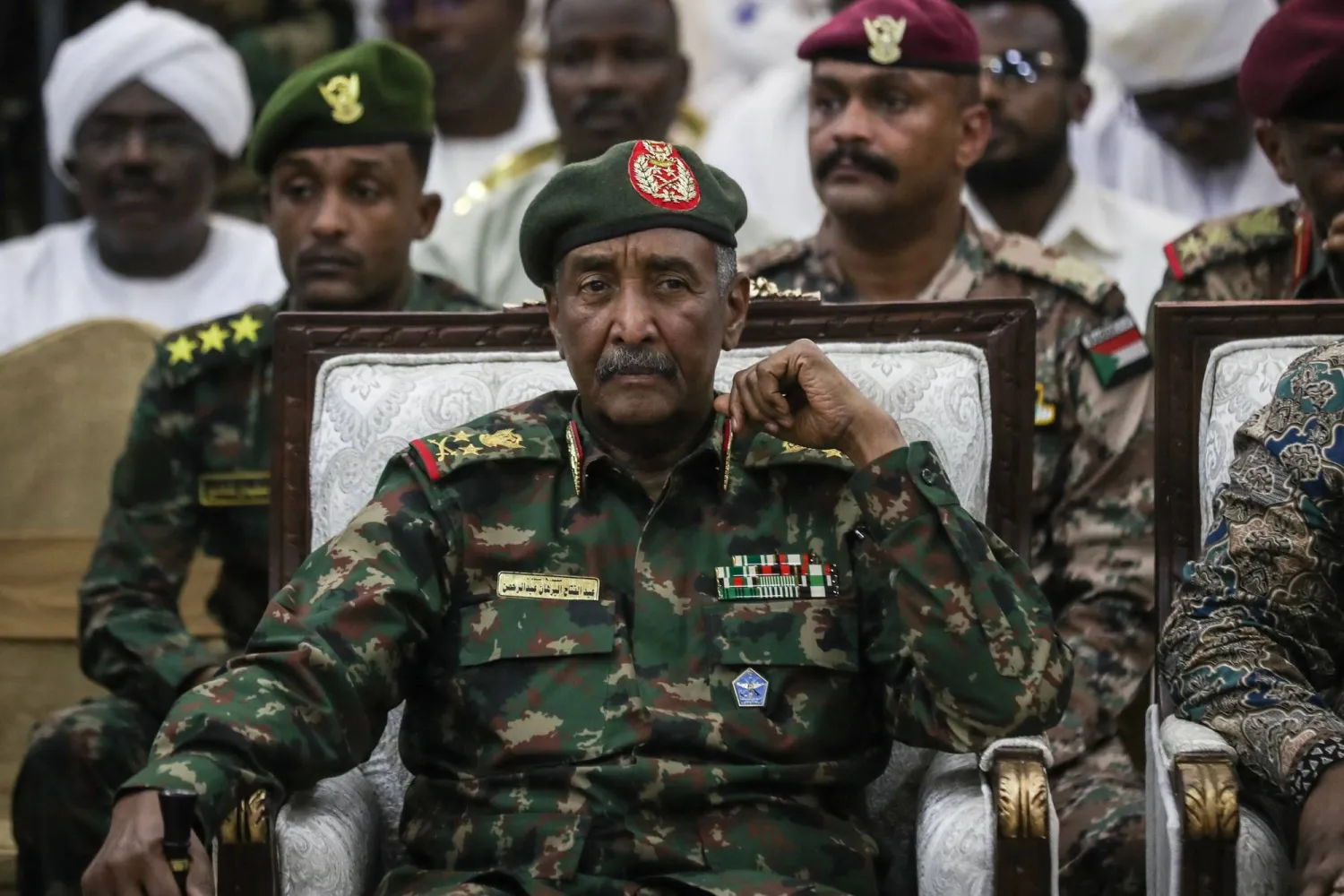
Sudan's army chief Abdel Fattah al-Burhan looks on during a meeting with injured fighters from armed groups allied with the Sudanese army in Omdurman on November 28, 2026. (Photo by Ebrahim HAMID / AFP)
Burhan Warns Neighboring Countries Will ‘Pay the Price’ for Hostility Toward Sudan
Sudan's army chief Abdel Fattah al-Burhan looks on during a meeting with injured fighters from armed groups allied with the Sudanese army in Omdurman on November 28, 2026. (Photo by Ebrahim HAMID / AFP)
Sudan’s Sovereign Council chairman and army chief Gen. Abdel Fattah al-Burhan has renewed his accusations against neighboring countries of acting hostile toward Sudan, warning that they would “pay the price sooner or later.”
His remarks came as the army announced the recapture of new areas in the Blue Nile region following clashes with the Rapid Support Forces (RSF) and its ally, the Sudan People’s Liberation Movement-North (SPLM-N).
Meanwhile, Sudanese political forces agreed on a common vision calling for an urgent humanitarian truce leading to a comprehensive and lasting ceasefire.
Speaking at a ceremony honoring wounded members of the Joint Force of Armed Movements allied with the army in Omdurman, Al-Burhan said on Saturday that “most neighboring countries have been turned against us through financial inducements.”
He added that the enemy is operating from Ethiopia, South Sudan, Chad, and Libya to attack Sudan.
He warned that everyone who has incited hostility against the Sudanese people “will pay the price sooner or later,” while stressing that Sudan would overcome its current challenges.
Al-Burhan reiterated the military’s commitment to continue fighting until every area under RSF control has been retaken, declaring that the armed forces “will not lay down their weapons before ending the rebellion.”
He said he had arrived late to the ceremony because he was following a battle in Ad-Damazin, the capital of Blue Nile State.
According to his account, anti-army forces withdrew from the battlefield, leaving behind 18 combat vehicles.
He also announced a $5 million contribution to a fund supporting wounded military personnel and pledged that the state would cover treatment costs for cases requiring medical care abroad.
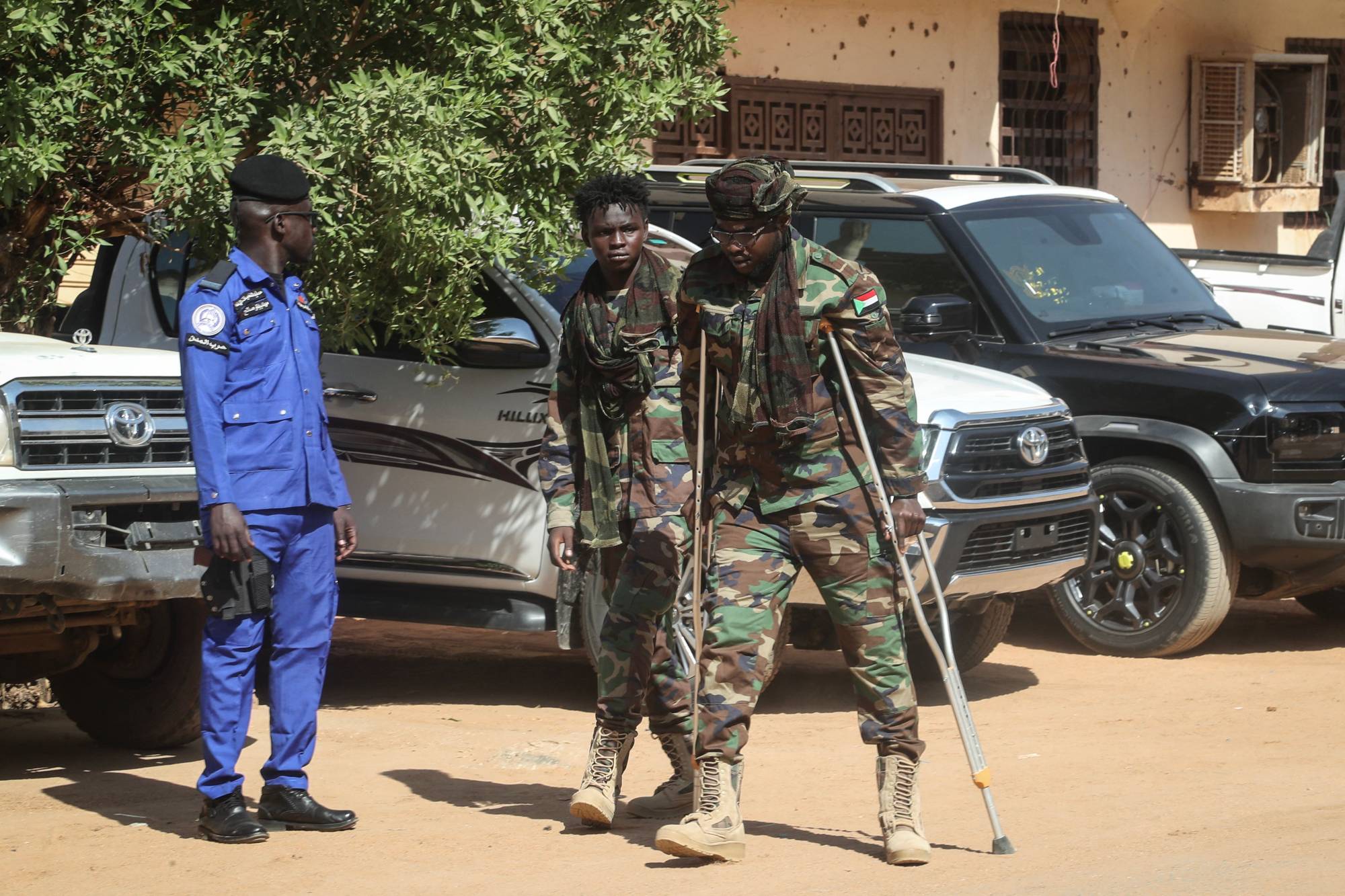
An injured fighter arrives at a gathering where Sudan's army chief met wounded fighters from armed groups allied with the Sudanese army in Omdurman on November 28, 2026. (Photo by Ebrahim HAMID / AFP)
Blue Nile Battles
The Sudanese army announced on Saturday that it had retaken the areas of Samsour and Village 11 in Blue Nile State after clashes with the RSF and the SPLM-N faction led by Abdelaziz al-Hilu.
The Fourth Infantry Division said in a statement that government troops and allied forces regained control of Village 11 following battles with forces allied to the RSF under Joseph Tuka. Military and local sources also reported the recapture of Samsour.
The advance followed the army’s announcement a day earlier that it had regained control of Khor Maganza in Bau County, days after the RSF and its allies said they had seized the area.
Conflicting reports emerged regarding casualties, with pro-RSF platforms claiming they had ambushed Sudan Shield Forces and inflicted dozens of deaths, while army-aligned sources reported heavy losses among opposing forces.
In a related development, Ad-Damazin was targeted early Saturday by new drone attacks. Military sources said the strikes targeted positions belonging to the Fourth Infantry Division and other sites in the city. Ground defenses reportedly intercepted several drones, though local reports spoke of explosions inside the division’s headquarters. No confirmed casualty figures were released.
Call for a Humanitarian Truce
Politically, Sudanese political and civilian groups concluded four days of consultations in Switzerland by agreeing on a shared vision emphasizing the need for an urgent humanitarian truce that would pave the way for a comprehensive and permanent ceasefire. Participants stressed that any truce must not become a prelude to the partition of Sudan.
The meetings were held as part of the seventh round of the Neuchâtel Process informal peace consultations, sponsored by the Swiss Foreign Ministry and facilitated by the organization Promediation.
Participants included representatives from the Civil Democratic Alliance of the Forces of the Revolution (Somoud), the army-aligned Democratic Bloc, the National Movement Forces, the Arab Socialist Baath Party, the Umma Party led by Mubarak al-Fadil, and a number of independent national figures.
The final statement reaffirmed the participants’ commitment to Sudan’s unity, sovereignty, and territorial integrity, rejecting any political or security arrangements that might entrench division or threaten national unity.
The groups also called for greater coordination between regional and international mediation mechanisms and for linking security arrangements to a broader political process that would restore civilian life and bring the war to an end.
The consultations also addressed the increasing use of drones against civilians, markets, and infrastructure, and the resulting deterioration of the humanitarian situation and growing risk of famine.
Participants called for continued dialogue among political and civilian actors and the creation of a national mechanism to bridge differences and prepare the ground for a comprehensive peaceful settlement.
The agreement was particularly significant because it brought together groups that have opposed the war and others that have supported the army, despite their sharply differing positions since the conflict erupted in April 2023.
Hezbollah Rejects Internationalizing Lebanon-Israel Framework Deal: What Are its Options?https://english.aawsat.com/arab-world/5346859-hezbollah-rejects-internationalizing-lebanon-israel-framework-deal-what-are-its
A Hezbollah supporter holds up a sign reading “We Will Not Give Up Our Weapons” on the second anniversary of the assassinations of former secretaries-general Hassan Nasrallah and Hashem Safieddine. (File photo - EPA)
Hezbollah Rejects Internationalizing Lebanon-Israel Framework Deal: What Are its Options?
A Hezbollah supporter holds up a sign reading “We Will Not Give Up Our Weapons” on the second anniversary of the assassinations of former secretaries-general Hassan Nasrallah and Hashem Safieddine. (File photo - EPA)
Hezbollah and the Amal Movement are mobilizing to counter a US push to internationalize the framework agreement Lebanon signed with Israel under US auspices in June by incorporating it into an updated UN Security Council Resolution (1701) as UNIFIL's mandate expires at the end of the year.
The move was among proposals discussed last week to avert a security vacuum in southern Lebanon once the mandate of the United Nations Interim Force in Lebanon expires.
The issue is particularly sensitive as Israel seeks to establish a new security order in the south, where the absence of an international force would allow it to impose direct coordination mechanisms between the Lebanese and Israeli armies.
The Shiite duo's options range from securing a unified official Lebanese position against the move and seeking a Russian or Chinese veto at the Security Council to mobilizing street protests or escalating on the ground.
Its room for maneuver, however, is narrowing as France re-enters the diplomatic fray, backing Washington's push and seeking to persuade Hezbollah and Amal to accept alternative arrangements that would avert a security vacuum opposed by most domestic and international actors.
Hezbollah Secretary-General Naim Qassem made clear in his latest address that any new international resolution must remain within the parameters of Resolution 1701 and the Nov. 27, 2024, ceasefire agreement with Israel.
He rejected any attempt to replace them with the framework agreement as "unconstitutional and illegal," warning that any force operating outside those parameters, regardless of its name or designation, would be treated as an "occupation force."
Amal has taken an identical stance, recently rejecting the inclusion of any new agreement or understanding alongside Resolution 1701 and the cessation of hostilities agreement in any new UN resolution or mandate.
Three options to push back
While some believe an international agreement would confront the Shiite duo with a fait accompli, political writer Qassem Qassir, who closely follows Hezbollah's positions, outlined several options for resisting the move.
"The first effort is domestic. No Security Council resolution can be adopted without Lebanon's consent. This naturally requires official approval, either through the government or coordination among the country's leaders," Qassir said.
"It is clear that Parliament Speaker Nabih Berri rejects internationalizing the framework agreement or incorporating it into Resolution 1701. This was conveyed to US envoy Mike Waltz during his latest visit to Beirut."
The second option, Qassir said, lies with the Security Council's major powers.
"Any Security Council resolution requires the approval of major powers, particularly Russia and China. Given the ongoing coordination with Moscow and Beijing, either country could exercise its veto if it objects to the resolution."
While no precise or confirmed information was available on that prospect, he said, it remained an option.
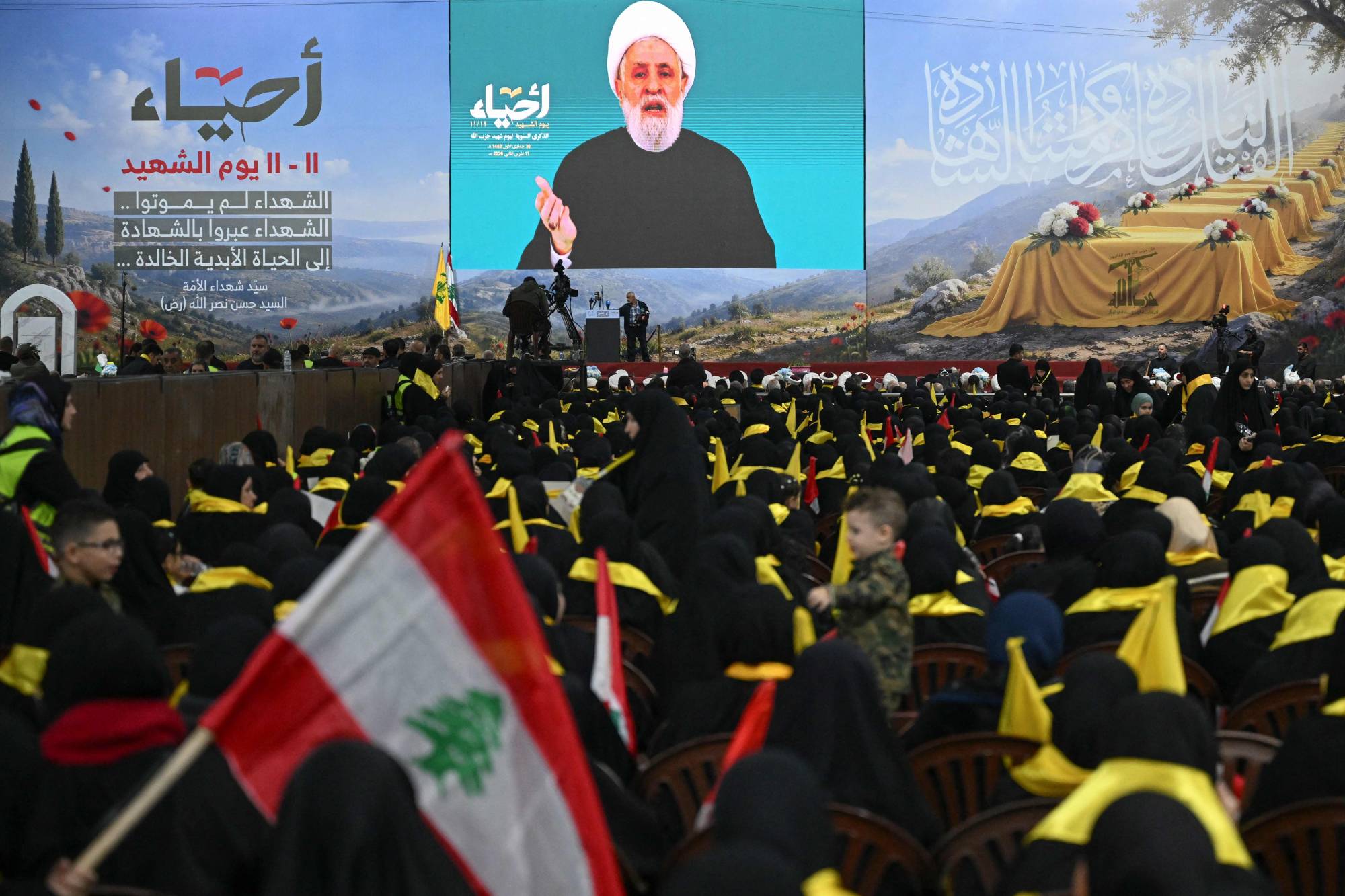
Hezbollah supporters watch a televised address on a big screen by Naim Qassem, the Secretary-General of the Iran-backed group, during the commemoration of Hezbollah's annual Martyrs' Day in Beirut's southern suburbs on November 11, 2026. (Photo by Joseph EID / AFP) /
Street mobilization
The third and most important scenario, Qassir told Asharq Al-Awsat, concerns how any resolution would be enforced on the ground.
"Any international forces deployed to Lebanon without the consent of local parties, particularly the Amal Movement, Hezbollah and the Higher Islamic Shiite Council, would be unacceptable. If these forces come in coordination with the Israeli enemy or through it, they will be treated as occupation forces," he said.
"According to available information, countries seeking to participate, such as Italy and France, are unwilling to deploy troops to Lebanon without the consent of local parties."
Qassir stressed that contacts and consultations were still underway, adding that street mobilization remained an option should it become necessary to oppose the move.
A 'suicidal move'
Political writer Ali Al-Amin, editor-in-chief of the Janoubia news website, disagreed with Qassir's assessment, arguing that the Shiite duo lacked the means to derail the process.
He said it could neither secure an official Lebanese position opposing the move nor leverage international opposition to block such a resolution at the Security Council.
"The framework agreement was approved by the Lebanese government. No Security Council member would oppose the draft resolution unless the Lebanese state formally requested it," Al-Amin said.
That prospect appeared unlikely, he added, given that the framework agreement had been linked to Resolution 1701 and France had reclaimed its role in Lebanese-Israeli affairs, joining Washington in shaping the post-UNIFIL landscape in southern Lebanon.
Al-Amin told Asharq Al-Awsat that Hezbollah was issuing both overt and veiled threats over the authorities' handling of its members detained in Dahr al-Baidar and between Bsharri and Batroun.
The group was also sending messages to the government and the president over their handling of the proposed international resolution, he said.
"Hezbollah could resort to military and security measures to demonstrate its grip on the ground and could even become embroiled in an internal military confrontation."
Such a decision, however, would amount to a "suicidal move" with catastrophic consequences for the group, Al-Amin said, given that it now faced a Lebanese public opposed to its weapons and committed to the state's exclusive control over arms.
Sowing chaos
Al-Amin pointed to another possible avenue of confrontation: sowing chaos through communal or sectarian clashes in which Hezbollah would not appear to be a party.
He cited possible scenarios including infighting among Palestinians in refugee camps, Sunni-Christian tensions between Bsharri and Dinniyeh, intra-Christian clashes, bombings or disputes between Syrians and Lebanese.
"Chaos is the most effective means of creating political confusion and hesitation among the authorities," he said.
It would help foster the impression that Lebanon could not withstand serious and decisive steps to assert state authority, he added, while Iran would seek to derail any domestic or international political process it had no hand in shaping.
لم تشترك بعد
انشئ حساباً خاصاً بك لتحصل على أخبار مخصصة لك ولتتمتع بخاصية حفظ المقالات وتتلقى نشراتنا البريدية المتنوعة