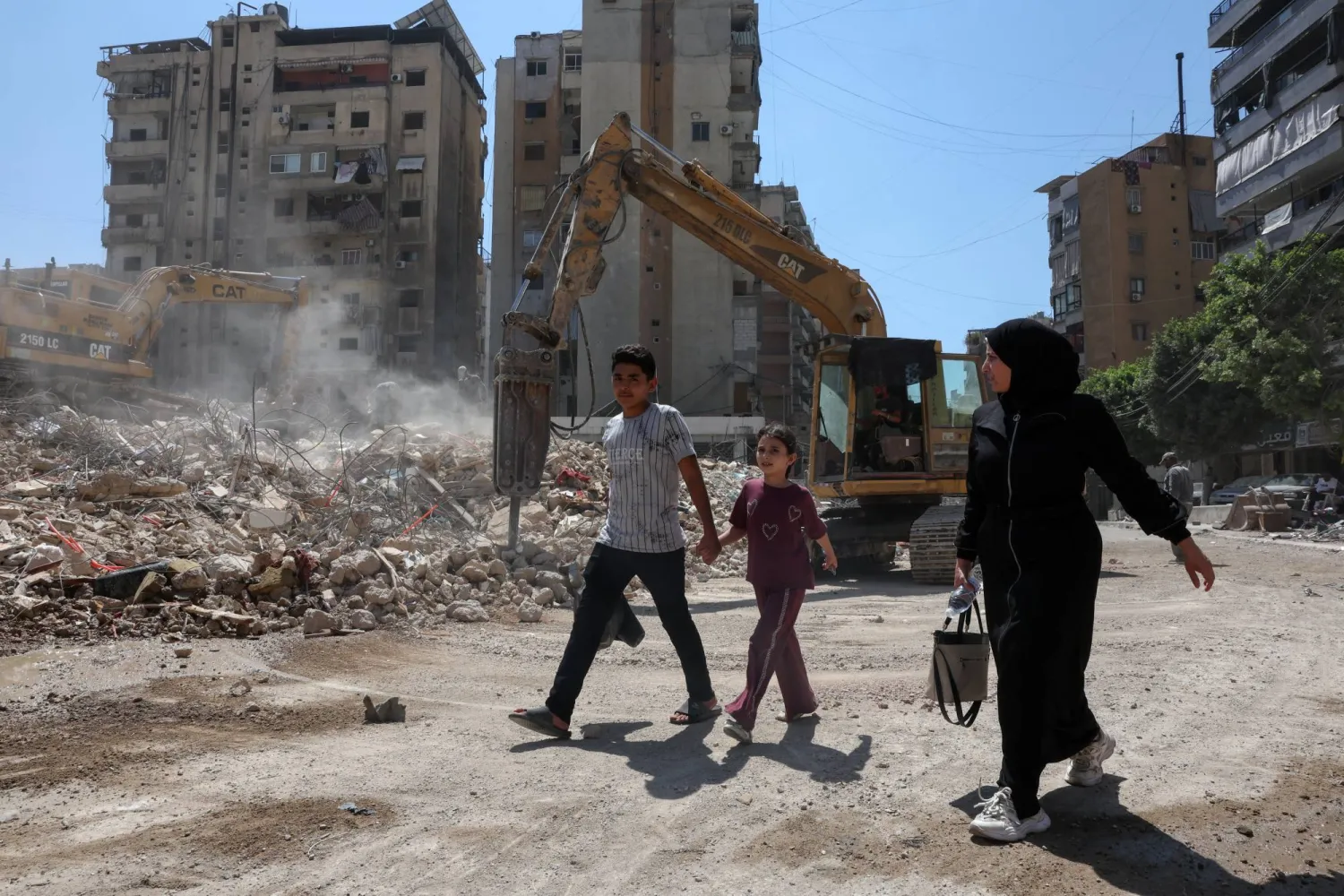

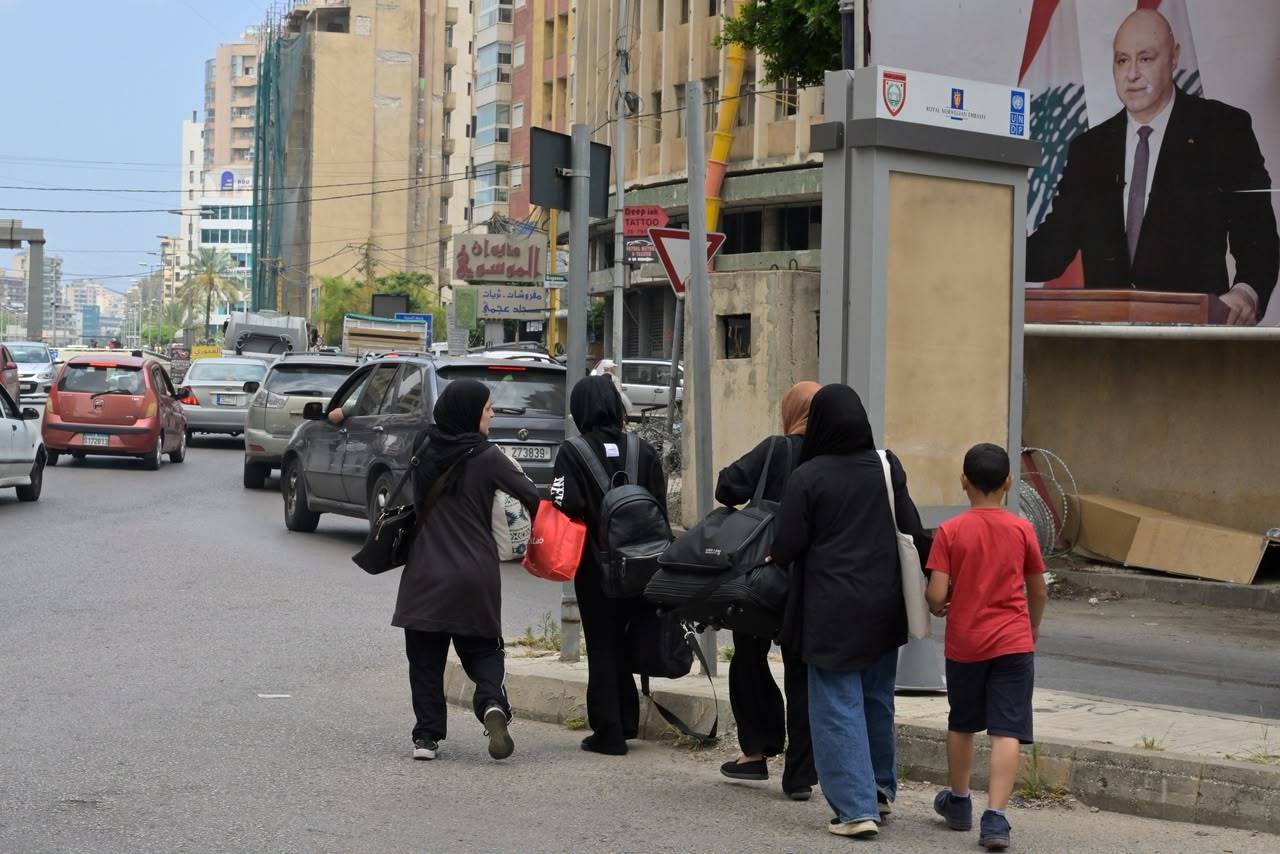
Fatima Meshik has been unable to treat her return to her home in Beirut's southern suburb as the end of her family's displacement. The suitcases the family packed when they left the suburb have yet to be unpacked because of persistent fears that the fighting could resume.
The latest war left behind more than damaged buildings. It also reshaped how people live and the decisions they make. Renovating a home, reopening a shop, investing savings, or even unpacking a suitcase have all become postponed decisions.
Some residents returned to the suburb because every other option had been exhausted. Others have stayed away because they still have somewhere else to live.
We Returned, but Our Bags Stayed Packed
For many residents, life in the southern suburb feels more like a period of waiting than a new beginning.
"We came back because we could no longer afford to stay away," Meshik told Asharq Al-Awsat. "But we kept our clothes, medicines, and essential belongings packed in suitcases inside the car. If we have to leave again, we want to be ready."
She said financial pressures forced the family to return, explaining that living in the suburb is less expensive than renting another home. She added that her father has reopened his store to provide for the family's daily needs, helping them cope with difficult economic conditions.
Returning Because Rent Became Impossible
Mariam Saleh's experience reflects the same reality. For her, returning was not a decision based on feeling safe, but on no longer being able to remain outside the suburb.
"We rented a house in Aramoun during our displacement," she told Asharq Al-Awsat. "But my father could no longer afford the roughly $500 monthly rent, in addition to transportation costs. In the end, we had no choice but to come back."
She said her apartment building remains largely empty, with many residents yet to return and numerous apartments still damaged and unrepaired.
"People are still afraid," she said. "But many came back because their living conditions left them with no other option."
We Exhausted Everything We Had Saved Before the War
Many residents of Beirut's southern suburb were forced to flee and rent homes elsewhere because of Israeli bombardment, while those unable to afford rent moved into shelters.
Zeinab Hamieh told Asharq Al-Awsat that returning to the suburb "was not a return to safety, but the direct result of no longer being able to remain elsewhere after families exhausted everything they had saved before the war."
"I didn't come back because the fear disappeared," she said. "I came back because I could no longer afford the luxury of displacement. Everything we had saved before the war was spent during it. We could no longer pay rent or afford to live elsewhere, so returning was a decision imposed by circumstances, not by a sense of security."
She noted that many people returned to damaged homes lacking doors or windows.
"Families are postponing repairs because meeting daily living needs has become the priority, and because they have no guarantees that the war will not happen again," she said.
"Work has declined, expenses have increased, and even securing water and electricity has become more costly. We are living between fear and financial hardship, but we no longer have another choice."
Having an Alternative Made the Difference
Ali, who is undergoing cancer treatment, reached a very different decision. Although his home in the southern suburb escaped damage, he chose not to return because he has another place to stay in Mount Lebanon.
"My home is intact," he told Asharq Al-Awsat. "But I do not want to relive what happened on March 2, when we had to flee under bombardment. As long as I have another place to stay, I will remain there."
He said his medical condition was the decisive factor in his decision, explaining that another displacement could disrupt both his treatment and his health.
"I have cancer and need regular treatment," he said. "I do not want to go through the pressure of war, displacement, and fear again. When I am certain that stability is permanent, I will return. For now, I prefer to stay in Mount Lebanon because I have an alternative."
Minimal Repairs and Postponed Investments
The same caution is evident among business owners. Many have resumed operations, but without returning to the level of investment they made before the war.
Youssef Badran, who owns a store in Beirut's southern suburb, said reopening his business did not mean regaining confidence in the area's security. Instead, it meant running his business cautiously out of concern that any new investment could be lost if tensions escalate again.
"I still haven't reinstalled the store's glass storefront," he told Asharq Al-Awsat. "For the past three months I've covered it with plastic sheeting instead. I told myself that if the situation truly stabilizes, I can install the glass later. Right now, I don't want to lose money if the war starts again."
He said his decision was driven not only by financial constraints but also by uncertainty.
"Even if I had the money, I would think a hundred times before spending it. No one knows what might happen, and you could lose everything you've invested in an instant."
Badran said his return to business has been gradual, and that he no longer commits all of his capital as he did before the war.
"Before the war, I invested almost all of my capital," he said. "Today I use only half and keep the other half in reserve for any emergency. I buy merchandise cautiously and focus on essential, classic products because this is not a time for taking risks."
On a personal level, he said he has returned to the suburb only for work and has not decided to live there again.
"The last strike on the southern suburb left a deep mark on people," he said. "That shock has not left them. Neither children nor adults have forgotten it. We may have returned to work, but we still live and make decisions as though the possibility of war remains at any moment."
He Closed His Store While Waiting to Return
Imad Ayyash made an even more difficult choice. After spending more than 20 years operating a store in the southern suburb, he terminated his lease, closed the shop, and moved his business abroad, where he now works in wholesale trade.
"The decision was not easy," Ayyash told Asharq Al-Awsat. "But I could no longer continue amid this level of uncertainty. I preferred to close the store and end the lease rather than continue in a business that I don't know will survive if circumstances change again."
Despite relocating abroad, Ayyash said his decision does not mean abandoning the southern suburb, but postponing his return.
"If I become convinced that stability has returned for good, I will rent a new shop in the southern suburb and resume my business," he said.
"The problem isn't the place. The problem is the lack of confidence that what we're experiencing today will last."