


Mokha after Houthi Takeover: Looting, Poverty, Fear and Displacement

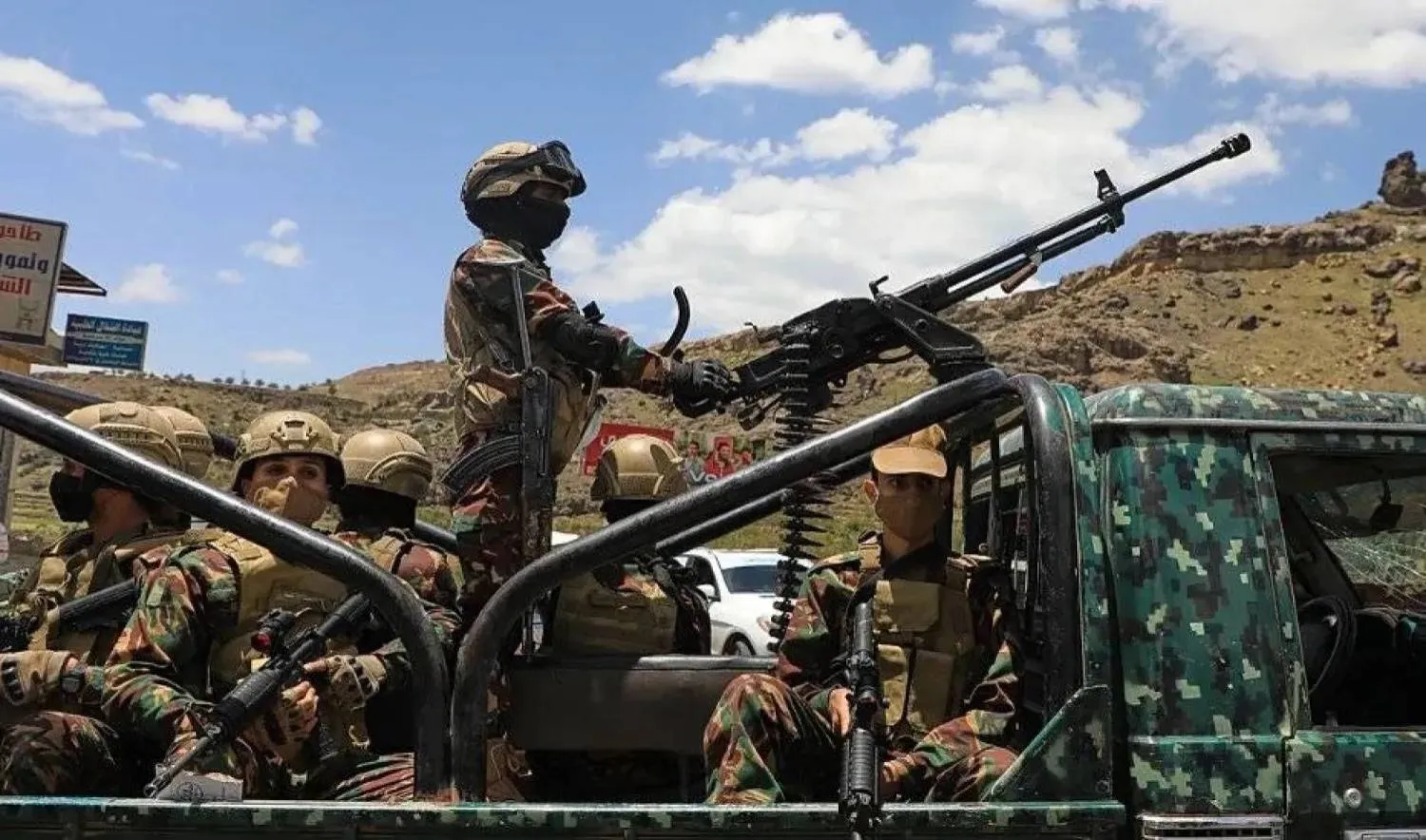
Houthi militia members returning from Mokha to Sanaa escort a convoy believed to be carrying looted goods and detainees (AP) 
TT

Mokha after Houthi Takeover: Looting, Poverty, Fear and Displacement

Houthi militia members returning from Mokha to Sanaa escort a convoy believed to be carrying looted goods and detainees (AP) 

Since the Houthis seized the western Yemeni coastal city of Mokha a week ago, widespread looting has targeted homes, private property, government facilities and humanitarian organizations, while deteriorating basic services and soaring prices have added to pressure on residents, thousands of whom have fled fearing Houthi reprisals.

Local sources reported that Houthis raided dozens of homes and apartments, in Al-Hali neighborhood, seizing furniture, appliances and other belongings and transporting them out of Mokha by truck. Government offices were also subjected to looting directed by senior leaders, with their contents taken to unknown locations.

According to the sources, the Houthi militia entered the city’s airport and initially tried to remove some items before masked gunmen, believed to belong to Houthi intelligence services, arrived, prevented the removal of the looted property and took control of the entire civilian facility, barring other armed men from the site and its surroundings.

Another group of masked men in civilian clothes appeared, based on their look, bags and actions, to be an engineering team tasked with dismantling equipment and packing it into special boxes and bags.

The masked men left several hours later in three small vehicles with tinted windows. When the earlier group returned, the sources recounted, the airport had been stripped of equipment, files and records.

They also described the looting of records, files and computers from Mokha’s local authority headquarters, along with contents from the city’s branch of the Central Bank of Yemen. It was not known where the items were taken.

Houthi leaders also targeted homes belonging to officers in the National Resistance forces, while raids extended to the homes of civilian employees. Residents recounted that Houthi members justified some of the looting by claiming the properties belonged to people linked to forces led by Presidential Leadership Council member Tareq Saleh.

Aid and Services Hit

Relief and charity workers reported that the Houthi militia seized the offices of humanitarian organizations and charities and transported their contents outside the city under the supervision of unidentified individuals believed to belong to Houthi security and intelligence agencies.

The UN Office for the Coordination of Humanitarian Affairs condemned the seizure of a humanitarian compound housing UN agencies and international organizations in Mokha, reporting that Houthi members confiscated eight vehicles belonging to the city’s UN humanitarian center after storming it.

Multiple rights sources estimated that raids on humanitarian organizations and charities affected around 18,000 families that had been receiving food assistance from the United Nations and local organizations, as poor households face worsening living conditions.

Houthi military operations, looting and seizures also halted support for 30 health facilities across six coastal districts: Mokha, Dhubab, Al-Wazi’iyah and Mawza in Taiz, and Hays and Al-Khawkhah in Hodeidah, affecting medicines, medical supplies and staff salaries.

Loss of Security

More than 1,500 humanitarian workers have been left without jobs or sources of income after several organizations suspended or halted operations, amid disrupted services and rising prices.

Mokha residents complained that electricity had been almost completely cut off since the Houthi takeover. The price of a household gas cylinder rose from about $3.50, or 5,400 Yemeni rials, to $11.60, or 18,000 rials, based on the exchange rate in government-held areas of 1,550 rials to the dollar.

The Houthis have begun imposing the exchange rate used in areas under their control, 535 rials to the dollar, while banning banknotes issued by the Central Bank in Aden and replacing them with old, worn banknotes or newly introduced alternative coins approved by the group. Many residents of Mokha and Yemen’s western coast rely on fishing and daily manual work.

Marsadak, the Media Freedoms Observatory affiliated with the Studies and Economic Media Center, announced that 117 journalists, media workers and employees of media organizations were displaced in September. It noted that most had left their homes fearing arrest or abduction, while others reported raids on journalists’ homes and the looting of their contents.

The developments have left Mokha residents facing a crisis extending beyond the loss of property, with displacement and fears of arrest compounded by deteriorating services and the disruption of some humanitarian assistance as the city grapples with the consequences of its sudden transition to Houthi control.



Barrack, al-Zaidi Discuss Iraq’s Difficult Path to Stability

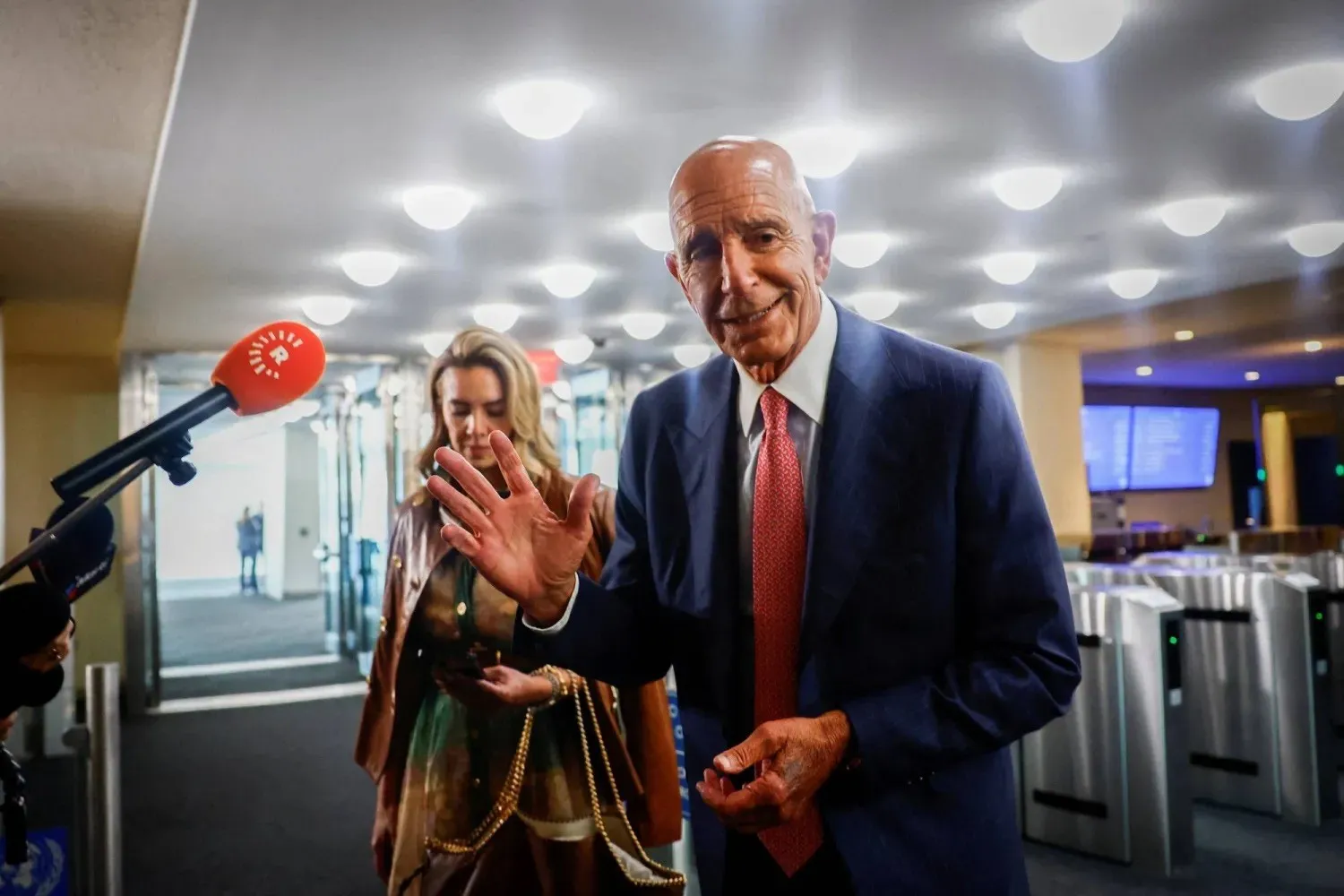
US envoy to Iraq Tom Barrack speaks to the media at United Nations headquarters in New York on September 24, 2026 (Reuters)
TT

Barrack, al-Zaidi Discuss Iraq’s Difficult Path to Stability

US envoy to Iraq Tom Barrack speaks to the media at United Nations headquarters in New York on September 24, 2026 (Reuters)

Iraqi sources have indicated that the issue of weapons held by armed factions was likely among the topics discussed in Baghdad between Iraq’s prime minister, head of the judiciary and US envoy Tom Barrack, who spoke of the “hard road toward” towards achieving stability in the region.

Prime Minister Ali al-Zaidi received Barrack on Monday evening, nearly two weeks after the withdrawal of the US-led international coalition forces from Iraqi territory.

According to observers, the withdrawal could prompt Washington and Baghdad to discuss post-pullout arrangements, particularly amid regional tensions and the possibility of renewed conflict between Washington and Tehran.

The Iraqi Prime Minister’s Office said the meeting between al-Zaidi and Barrack addressed “bilateral relations between Iraq and the United States and ways to strengthen cooperation in various fields.”

They also discussed “the latest developments in the region and efforts to support regional security and stability in a manner that serves the common interests of both countries and eases regional tensions and conflicts.”

The US envoy praised al-Zaidi’s leadership in a post on X.

"Stability is not inherited; it is built by leaders who choose the hard road. Iraq's security and prosperity are the region's. Grateful for his leadership and partnership,” Barrack said.

The envoy’s visit to Baghdad came amid a shift in relations between Baghdad and Washington following the end of the international coalition’s military mission in Iraq late September. The relationship is now expected to transition toward a political and economic partnership, alongside continued security cooperation between the two countries.

Barrack highlighted this shift during a meeting with US Embassy Chargé d’Affaires in Iraq Steve Fagin, saying that US-Iraqi relations are moving from a security-based partnership toward a broader relationship centered on economic cooperation and mutual interests.

Barrack had met Foreign Minister Fuad Hussein in Istanbul on Saturday, where they discussed “bilateral relations between Iraq and the US ... in light of the end of the international coalition forces’ mission in Iraq, as well as prospects for cooperation between the two countries in the coming period,” according to an Iraqi Foreign Ministry statement.

Barrack added that the meeting addressed developments in the region, ongoing conflicts and their implications for security and stability in Iraq and other countries in the region, as well as Iraq’s financial and economic situation and developments related to the Iraqi dinar’s exchange rate.

The US envoy also met in Baghdad with Supreme Judicial Council President Faik Zaidan. According to a statement by the council, the two sides “discussed ideas related to developing relations between the two countries in the legal and judicial fields.”

An official source close to the Coordination Framework alliance did not rule out the possibility that “the visit is an attempt to support al-Zaidi’s government, which is facing intense pressure at this stage, particularly following the decision to devalue the Iraqi dinar.”

Several lawmakers have recently raised the possibility of withdrawing confidence from al-Zaidi and bringing down his government in an attempt to absorb public anger following market turmoil and a sharp rise in the prices of goods and basic commodities after the dinar’s devaluation.

The source told Asharq Al-Awsat that he believed “Washington has come to realize that Iran and its allies in Iraq are seeking to challenge it by pressuring al-Zaidi with the threat of a no-confidence vote. Barrack’s presence may be intended to renew confidence in al-Zaidi’s government, whose leadership has previously been praised by senior US officials, including President Trump.”

The source also did not rule out the possibility that the US official would discuss the issue of weapons held by armed factions, given the importance Washington attaches to the matter.

Bringing all arms under state control is one of the key issues in Iraqi-US talks. During a meeting in Baghdad last June, al-Zaidi and Barrack stressed the importance of completing efforts to end the presence of armed formations operating outside state authority and strengthening Iraqi sovereignty.

Aqil Abbas, a researcher specializing in US affairs, highlighted the significance of Barrack’s meeting with Zaidan, saying that “the US-Iraqi understanding is based on the judiciary serving as the spearhead in efforts to dismantle armed factions, paving the way for the executive authorities to resolve this issue.”

Abbas told Asharq Al-Awsat that Iraqi authorities would likely resort to the judiciary after exhausting negotiations with armed factions and efforts to reach a consensual political solution. This, he said, confirmed that the US strategy remained focused on addressing armed factions through Iraqi institutions.

“The decisive factor in the weapons issue is the firmness of the government and judiciary, as well as the willingness shown by the Coordination Framework forces to deal with this issue,” Abbas said.

He cautioned, however, that “Iraq’s shifting sands may dash Tom Barrack’s hopes. Without a firm US position encompassing Iraq as a whole, we will not see the armed factions disarmed anytime soon.”


Lebanon Steps Up Probe into Seized Explosives, Smuggling Networks

Lebanese Prime Minister Nawaf Salam meets Army Commander Gen. Rodolphe Haykal (Prime Minister’s Office)
TT

Lebanon Steps Up Probe into Seized Explosives, Smuggling Networks

Lebanese Prime Minister Nawaf Salam meets Army Commander Gen. Rodolphe Haykal (Prime Minister’s Office)

Lebanese Prime Minister Nawaf Salam and Interior Minister Ahmad al-Hajjar have stressed the need to continue investigations into recently seized explosives to identify those behind the smuggling networks and bring them to justice, while strengthening security measures to prevent threats to the country’s stability.

Salam met on Tuesday Lebanese Army Commander Gen. Rodolphe Haykal to discuss the security situation, particularly in South Lebanon, the military’s ongoing deployment and its efforts to extend state authority across the country.

The meeting also addressed the recent seizure of explosives in two different areas – in Dahr al-Baidar and Qasr-Hermel.

Salam praised the military’s efforts and urged investigators to identify all those involved, including the parties behind the smuggling operations, and refer them to the relevant judicial authorities.

He reaffirmed his full support for the army, emphasizing the need to strengthen its capabilities to secure Lebanon’s borders, protect citizens and assert state authority throughout the country.

Separately, Hajjar provided details of an explosives shipment intercepted last week at the Dahr al-Baidar checkpoint. He said officers became suspicious of an overloaded gray Dodge Caravan and searched the vehicle, discovering explosive materials. The driver and his passenger were arrested and handed over to the Military Police, along with the seized materials, on the instructions of the relevant judicial authorities.

Hajjar praised the Internal Security Forces and the personnel stationed at Dahr al-Baidar, crediting their vigilance and professionalism for the discovery and arrests.

Chairing a meeting of the Central Internal Security Council, he said the officers’ alertness and operational readiness underscored the importance of proactive security measures in preventing threats.

Hajjar announced that Lebanese Army Intelligence and the Internal Security Forces’ Information Branch would expand the investigation at the request of the public prosecutor at the Court of Cassation.

The inquiry aims to establish the circumstances surrounding the shipment and ensure that anyone found responsible is held accountable under the law.

As a precaution, Hajjar instructed security agencies to tighten procedures at checkpoints and roadblocks, intensify inspections, increase patrols and reinforce their presence to strengthen internal security.


Yemeni Forces Repel Fierce Houthi Attacks on Taiz Fronts

Yemeni government forces repel intensified Houthi attacks on the Taiz fronts (Military Media)
TT

Yemeni Forces Repel Fierce Houthi Attacks on Taiz Fronts

Yemeni government forces repel intensified Houthi attacks on the Taiz fronts (Military Media)

Yemeni government forces and Popular Resistance fighters battled intensified Houthi attacks across Taiz province on Tuesday as Operation Dawn of Yemen entered its ninth day, with airstrikes targeting the group’s positions and reinforcements.

Fighting also extended to Marib and Al-Jawf, while the Southern Giants Brigades deployed reinforcements to the Al-Mudaraba front in Lahj province to counter Houthi movements threatening Al-Subaiha tribal areas.

The deployment came amid concerns that the Houthis were attempting to open an alternative route toward the western coast and break the encirclement of their fighters near the strategic Bab al-Mandab strait.

Yemen’s armed forces announced 1,879 military targeting operations in recent hours, claiming that preliminary assessments showed around 950 Houthi fighters had been neutralized and 380 military vehicles and pieces of equipment destroyed or disabled.

Armed forces spokesman Col. Majed al-Nuzaili said the operations involved warplanes, drones, artillery, rocket launchers and sniper units.

Targets included fortifications, defensive positions, command-and-control centers, artillery and rocket-launcher emplacements, observation posts, troop concentrations, weapons depots and supply vehicles.

Nuzaili added that airstrikes in Taiz had hit Houthi reinforcements and convoys, dispersing fighters and disrupting efforts to reinforce positions and regroup.

Fierce fighting around Taiz

Clashes were concentrated on the Al-Dhabab front west of Taiz city and the al-Aqroudh and al-Shaqab fronts in the province’s south.

Government forces reported repelling Houthi attacks in Al-Dhabab and al-Aqroudh, forcing the attackers to retreat after suffering casualties and losing military vehicles.

Warplanes also struck Houthi positions and concentrations across the province, including Al-Dhabab and al-Misrakh.

The Taiz Military Axis Command reported additional strikes on positions in Milat, Tabbat al-Khalwa, al-Tabba al-Sawda and Tabbat al-Karba, west of the city. Government military statements said the strikes damaged vehicles and weapons, including a tank and artillery pieces, and killed or wounded Houthi fighters.

Clashes continued in Al-Dhabab, where government troops carried out ambushes targeting Houthi fighters, vehicles and military equipment.

The simultaneous attacks on the western and southern fronts underscored mounting pressure on government forces, which, backed by Popular Resistance fighters and air support, sought to prevent Houthi breakthroughs and the establishment of new positions.

Reinforcements sent to Al-Subaiha

On the western coastal front, the Southern Giants Brigades reinforced their deployment in Al-Mudaraba district of Lahj province, which borders al-Wazi’iyah district in western Taiz.

The reinforcements were intended to counter possible Houthi advances toward Al-Subaiha tribal areas.

Airstrikes targeted Houthi positions, troop concentrations and vehicles in al-Wazi’iyah and Al-Mudaraba as fighting intensified following a Houthi attack on government positions Monday evening, according to military sources. The front is strategically important because it connects Lahj with areas along the western coast.

Houthi movements there are viewed as a possible attempt to establish an alternative route toward the coast and relieve pressure on fighters surrounded near Bab al-Mandab. Government reinforcements aim to block advances through Al-Subaiha territory and secure routes linking the coastal fronts.

Operations expand to Marib and Al-Jawf

In Marib, government forces targeted Houthi positions and troop concentrations with artillery and drones, while airstrikes hit reinforcements and fortifications on several fronts.

Military statements said troops from the Third Military Region attacked Houthi positions on the southern fronts, inflicting casualties.

Fighting also continued in areas under the Seventh Military Region’s command in northern Marib.

Warplanes struck Houthi reinforcements and defensive positions on Marib’s southern and northwestern fronts.

Further airstrikes targeted Houthi positions and troop concentrations east of Al-Hazm district in Al-Jawf province, extending the campaign across multiple fronts.

Alongside the fighting, the armed forces said military engineering units were continuing to clear recaptured positions and areas of landmines and explosive devices to secure them for troops and prepare for the return of civilians.