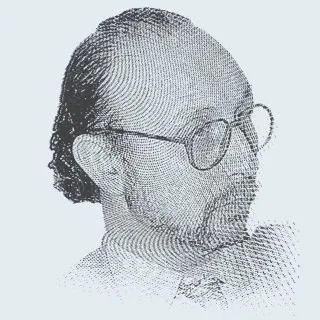
Buses rarely play a part in foreign policy, but a bus was the public transport Andy Burnham took to Downing Street.
The British prime minister rebuilt his political image as mayor of Manchester, and his name became bound up with public buses, housing, local services, and the push to shift more power and money from London to the regions.
This week he travelled, by plane this time, to Berlin for consultations on European security, Russian threats, cyberattacks, and industrial and military cooperation. A long journey from a two-pound bus ticket to the files of European security.
The visit to Germany is his first real test in foreign policy since taking office. A man accustomed, as mayor of Manchester, to dealing with local services found a different reality in Berlin: Russian threats, cyberattacks, sabotage, and a covert war, at a time when reliance on the American umbrella can no longer be taken for granted.
With Chancellor Friedrich Merz he discussed expanding security and defense cooperation between the two countries, and the possibility of German participation in the future combat aircraft project on which Britain is working with Italy and Japan. Burnham may be beginning to realize that the move to Downing Street goes beyond managing the economy and services to national security.
Germany matters to Burnham in his desire to shift power and money to the regions, since the German federal system may offer the model of a state whose provinces enjoy wide political and economic powers.
That does not mean Britain can replicate the German model, given the different positions of the United Kingdom's four nations: England, Scotland, Wales, and Northern Ireland. But Burnham, who is already talking about constitutional changes, must have found in Berlin something worth reflecting on.
Burnham and Merz also met British and German businessmen to discuss investment and growth outside the two capitals, a subject almost tailor-made for Burnham's politics. But the most politically dangerous of the Berlin files was Europe.
Having said at the Labor Party conference that Brexit had harmed Britain, he moved a further step in Berlin toward a closer relationship with the European Union. Merz, for his part, said Germany would work to bring Britain closer to Europe.
Here the matter shifts from talking about Brexit to dealing with its consequences. Every word by which Burnham draws closer to Europe becomes a stone in the hand of the populist Reform leader Nigel Farage to throw at the windows of Downing Street. And Thursday's by-election came as a double test for Burnham.
While he was in Berlin, Labor held the seat of Keir Starmer's former constituency in London. The party's candidate, Sagal Abdi-Wali, a Muslim of Somali origin, won 45.2 percent against 32.8 percent for the Green Party leader, Zack Polanski.
The significance of the result is perhaps greater than simply holding a Labor seat. The constituency contains a number of universities and colleges and a large proportion of students, young people, and educated voters. Socially and politically it is closer to the Green Party's rhetoric and ideology, particularly given its left-wing positions and its strong support for the Palestinian cause. Indeed, many of its voters are, on paper, closer to the Greens' current policies than to Labor's- and yet they chose Labor.
The vote was perhaps less a rejection of the Greens than a decision to give the new prime minister a chance. And here the difference between protest and power may appear.
A voter may back a protest party in an opinion poll or a local election, but handing it a parliamentary seat, especially when the candidate is the party's own leader, is another decision.
One constituency is not enough to declare the British voter's return to the center, or the retreat of the more extreme parties. But the result says something worth watching: in a constituency that was supposed to suit the Greens very well, voters preferred to stay with Labor and try the new leadership.
On the same day, Burnham was undergoing his own new experience outside Britain. In Berlin he was learning how to turn from a successful mayor into a statesman.
And in London the voters were deciding, provisionally at least, to give him the time to learn.