Amazon's Cloud Unit to Invest $13 Billion in India by 2030

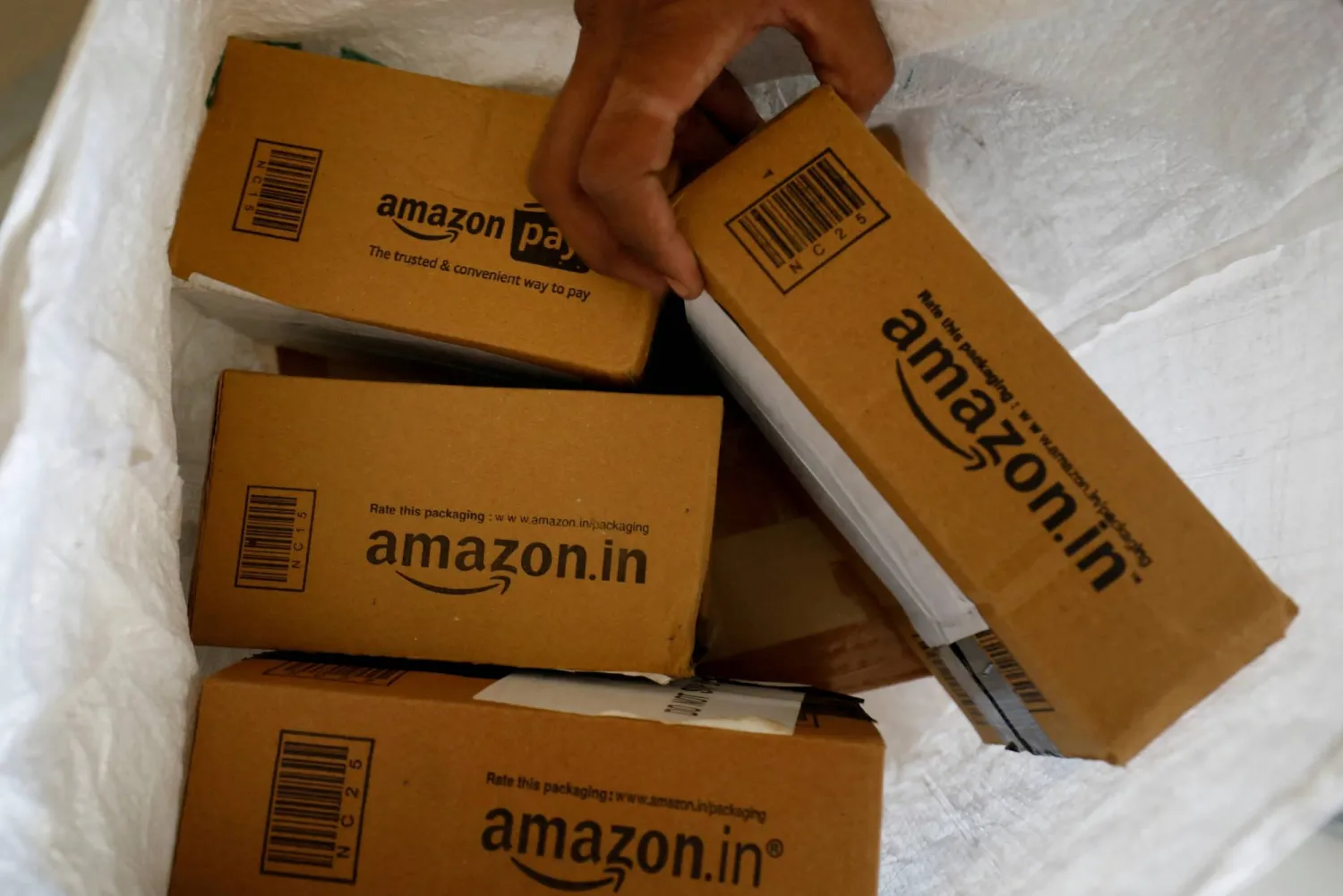
FILE PHOTO: A worker sorts delivery packages in a van outside an Amazon facility in Ahmedabad, India, March 17, 2021. REUTERS/Amit Dave/File Photo
TT

Amazon's Cloud Unit to Invest $13 Billion in India by 2030

FILE PHOTO: A worker sorts delivery packages in a van outside an Amazon facility in Ahmedabad, India, March 17, 2021. REUTERS/Amit Dave/File Photo

Amazon Web Services (AWS), the cloud computing division of Amazon.com Inc, said on Thursday it plans to invest 1.06 trillion rupees ($13 billion) in India by 2030, doubling down on its past investments to cater to an ever-growing demand.

The latest investment will be used to build its cloud infrastructure in India and it will support over 100,000 full-time jobs annually, AWS said.

The company runs two data centers in the Indian subcontinent - one in Mumbai which was launched in 2016, and another in Hyderabad, which started in 2022.

AWS' total planned investment in India adds up to about $16.4 billion by 2030, the company said in a statement.

The cloud platform offers more than 200 services, including storage, robotics and artificial intelligence, Reuters reported.

The proposed investment comes as India steps up efforts to attract more big-ticket investments.

US networking equipment maker Cisco Systems earlier this month said it would start manufacturing from India to diversify its global supply chain, while Apple Inc supplier Foxconn will invest $500 million to set up plants in the southern Indian state of Telangana.

Separately, India's government has been nudging foreign tech companies to store more of their data locally, a move seen as New Delhi's attempt to gain stricter oversight of Big Tech firms. The country is currently in the process of drafting a cloud and data center policy to oversee the sector.

A host of global companies, including Microsoft Corp and Alphabet Inc's Google are ramping up cloud investments in India, betting on the rising digital consumption in one of the fastest-growing markets.


EU: Google Should Allow Third-party Search Engines Access to Data

FILE PHOTO: Google's logo during the CERAWeek energy conference 2026 in Houston, Texas, US, March 24, 2026. REUTERS/Danielle Villasana/File Photo
TT

EU: Google Should Allow Third-party Search Engines Access to Data

FILE PHOTO: Google's logo during the CERAWeek energy conference 2026 in Houston, Texas, US, March 24, 2026. REUTERS/Danielle Villasana/File Photo

The European Commission has sent preliminary findings to Google on proposed measures to comply with the EU's Digital Markets Act, which would allow third-party search engines to access Google search data, including ⁠that of artificial ⁠intelligence chatbots with search functionalities, the commission said on Thursday.

Interested parties have until May ⁠1 to submit their views on the proposed measures, with a final decision to be made in July.

Google, the world's most popular search engine, was charged in March 2025 with ⁠breaching ⁠the Digital Markets Act. It has made its own proposals to mollify rivals and EU regulators, but rivals have complained the measures were insufficient.


Samsung Asks Court to Block Illegal Strike Activities by Unions

A South Korean national flag (L) and a Samsung flag (R) flutter outside the company's Seocho building in Seoul on April 7, 2026. (Photo by Jung Yeon-je / AFP)
TT

Samsung Asks Court to Block Illegal Strike Activities by Unions

A South Korean national flag (L) and a Samsung flag (R) flutter outside the company's Seocho building in Seoul on April 7, 2026. (Photo by Jung Yeon-je / AFP)

Samsung Electronics asked a court on Thursday to block its South Korean labour unions engaging in illegal activities during a planned strike, a spokesperson said, as a wage dispute threatens to disrupt operations at the world's top memory chipmaker.

Samsung did not elaborate on details of its legal action. Unions labelled it a "declaration of war," accusing the company of infringing on its right to strike, which ⁠is protected under the ⁠law.

Unionized workers at Samsung last month voted to authorize strike plans and threatened to walk out for 18 days from May 21, should they fail to agree on a wage deal with management.

The unions also plan to ⁠hold a major rally on April 23, ramping up pressure on Samsung during wage negotiations.

Samsung workers, frustrated by a pay gap with crosstown rival SK Hynix, are calling on Samsung to remove its performance pay cap and link bonuses to operating profit.

The company estimated it made an operating profit of 57.2 trillion won ($38.85 billion) for the January to March period, more than an eightfold ⁠jump ⁠from 6.69 trillion won a year earlier.

Samsung's union leader told Reuters that a potential strike could affect about half the output at Samsung's giant semiconductor complex in Pyeongtaek, south of Seoul, the capital.

A strike at the world's largest manufacturer of memory chips could worsen bottlenecks in global supply of semiconductors, stemming from robust demand for artificial intelligence data center operations that has curbed supply to industries from cars and computers to smartphones.


AI Demand Drives Chipmaker TSMC's Net Profit to Fresh Record

FILE PHOTO: The logo of Taiwan Semiconductor Manufacturing Company (TSMC) is displayed outside of TSMC Museum of Innovation in Hsinchu, Taiwan April 9, 2026. REUTERS/Ann Wang/File Photo
TT

AI Demand Drives Chipmaker TSMC's Net Profit to Fresh Record

FILE PHOTO: The logo of Taiwan Semiconductor Manufacturing Company (TSMC) is displayed outside of TSMC Museum of Innovation in Hsinchu, Taiwan April 9, 2026. REUTERS/Ann Wang/File Photo

Taiwanese chip manufacturer TSMC said Thursday that net profit for January-March leaped to a fresh quarterly record, boosted by the race to develop artificial intelligence technology.

Massive global demand for AI hardware means business is booming for TSMC, the world's biggest contract maker of microchips used in everything from Apple phones to Nvidia's AI processors.

TSMC said its net profit for the first quarter of 2026 rose a whopping 58.3 percent from a year ago to NT$572.5 billion ($18 billion).

The figure trounced estimates of NT$540.20 billion in a Bloomberg survey of analysts.
Governments and tech giants are pouring hundreds of billions of dollars into building new data centers that can run and train AI tools such as chatbots, image generators and agents that can execute tasks.

Last month, Jensen Huang, head of top US chip designer Nvidia, said the entire tech world feels they could develop their AI and grow revenue "if they could just get more capacity".

Ahead of the earnings announcement, Ian Lyall at Proactive Investors said it appeared TSMC is "so deeply embedded in the AI supply chain that macro headwinds are struggling to leave a mark".

"Advanced-node chip production, the bleeding-edge manufacturing that only TSMC can reliably deliver at scale, is running at capacity," he noted.

TSMC is "supplying chips for artificial intelligence accelerators, next-generation smartphones, and the data center build-out that is consuming capital at a pace that has surprised even its most bullish observers", Lyall said.

A weaker Taiwanese dollar had also boosted TSMC's revenues from overseas sales, AFP reported.

On Thursday, TSMC said net revenue for the first quarter came in at NT$1.13 trillion, up 35.1 percent year-on-year.

A note from UBS analysts had predicted strong quarterly results for TSMC but warned that consumer demand was weakening as a result of higher prices caused by a global memory chip shortage fueled by the AI boom.

"Cloud AI demand continues to strengthen, but we think supply constraints will limit meaningful upside for TSMC this year," the UBS team said.

"Middle East tensions add a layer of macro uncertainty, but AI spend should stay insulated, barring a protracted conflict."

The UBS analysts predicted "limited disruption from tight helium supply on TSMC's production".

Helium gas is a key material in the chip supply chain, and Qatar -- one of the countries affected by the war in the Middle East -- is one of its few large-scale producers.

TSMC said Thursday it does not expect the war to impact its supply of chipmaking materials such as helium and hydrogen in the near term.