Tesla Signs Deal for First India Showroom to Sell Imported EVs

Tesla cars are seen at a showroom for the US electric vehicle maker at a mall in the Changning district of Shanghai on February 25, 2025. (AFP)
TT

Tesla Signs Deal for First India Showroom to Sell Imported EVs

Tesla cars are seen at a showroom for the US electric vehicle maker at a mall in the Changning district of Shanghai on February 25, 2025. (AFP)

US electric carmaker Tesla has signed a lease deal to open its first showroom in Mumbai, as it moves towards a goal to sell imported cars in India, registration papers show, after it dropped similar plans last year.

The papers show the company has signed a five-year lease from February 16, 2025 and will pay rent of about $446,000 for the first year for a 4,003 square feet (372 square meter) space, almost the size of a basketball court.

The rent will increase by 5% every year reaching about $542,000 for the fifth year, according to the registered lease document provided to Reuters by analytics firm CRE Matrix.

The showroom will be situated in the Maker Maxity building in the business and retail hub of Bandra Kurla Complex near the city's airport, according to the papers.

Reuters reported last month that Tesla has selected locations for two showrooms in the Indian cities of New Delhi and Mumbai, days after the carmaker's chief Elon Musk met India's Prime Minister Narendra Modi in the US.


ByteDance Quietly Rolls Out SeeDance 2.0 Globally

A smartphone displays the logo of Seedance 2.0, the image-to-video and text-to-video AI model. Lionel BONAVENTURE / AFP/File
TT

ByteDance Quietly Rolls Out SeeDance 2.0 Globally

A smartphone displays the logo of Seedance 2.0, the image-to-video and text-to-video AI model. Lionel BONAVENTURE / AFP/File

Chinese artificial intelligence powerhouse and TikTok creator ByteDance has quietly rolled out its latest video generator SeeDance 2.0 worldwide, while its US rival OpenAI called time on a similar product.

The SeeDance 2.0 model was launched in China last month, both stunning and spooking the entertainment industry with its ability to produce near-Hollywood-quality clips from simple text prompts.

However, it has also sparked concerns over copyright infringement, said AFP.

"We have further expanded Dreamina Seedance 2.0 in more markets in CapCut today, across Africa, South America, the Middle East and Southeast Asia, with more regions coming soon," CapCut, ByteDance's popular video editing tool, posted on X on Thursday.

It said the SeeDance 2.0 model would initially be available to some paid users.

The rollout includes "firm safeguards" to prevent violations of its safety policies, including the unauthorized use of individuals' likenesses or intellectual property, CapCut said.

Major Hollywood production studios including Disney, Paramount, Warner Bros and Netflix, have threatened legal action against Beijing-based ByteDance over accusations of copyright infringement.

Reports this month suggested that backlash had prompted ByteDance to pause SeeDance 2.0's global launch.

It was not immediately clear if ByteDance had resolved those legal issues. The United States is not among the current rollout markets.

ByteDance, which runs popular short video platforms TikTok and Douyin, has invested heavily in AI in recent years against a backdrop of increasing global regulatory scrutiny of such platforms.

ByteDance announced on Friday the sale of Moonton, an important gaming asset, to a subsidiary of Saudi Arabia's sovereign fund for more than $6 billion.

Moonton runs Mobile Legends: Bang Bang, one of Southeast Asia's most popular gaming titles.

ByteDance's move coincides with a broader shift in the AI industry towards more "agentic" tools that focus on performing practical, real-life tasks.

US AI giant OpenAI said on Tuesday it was shutting down its popular consumer-facing video-generating service Sora, a move widely understood to focus more on providing business users with agentic AI capacities.



South Korea to Invest $166 Million in AI Chip Startup Rebellions

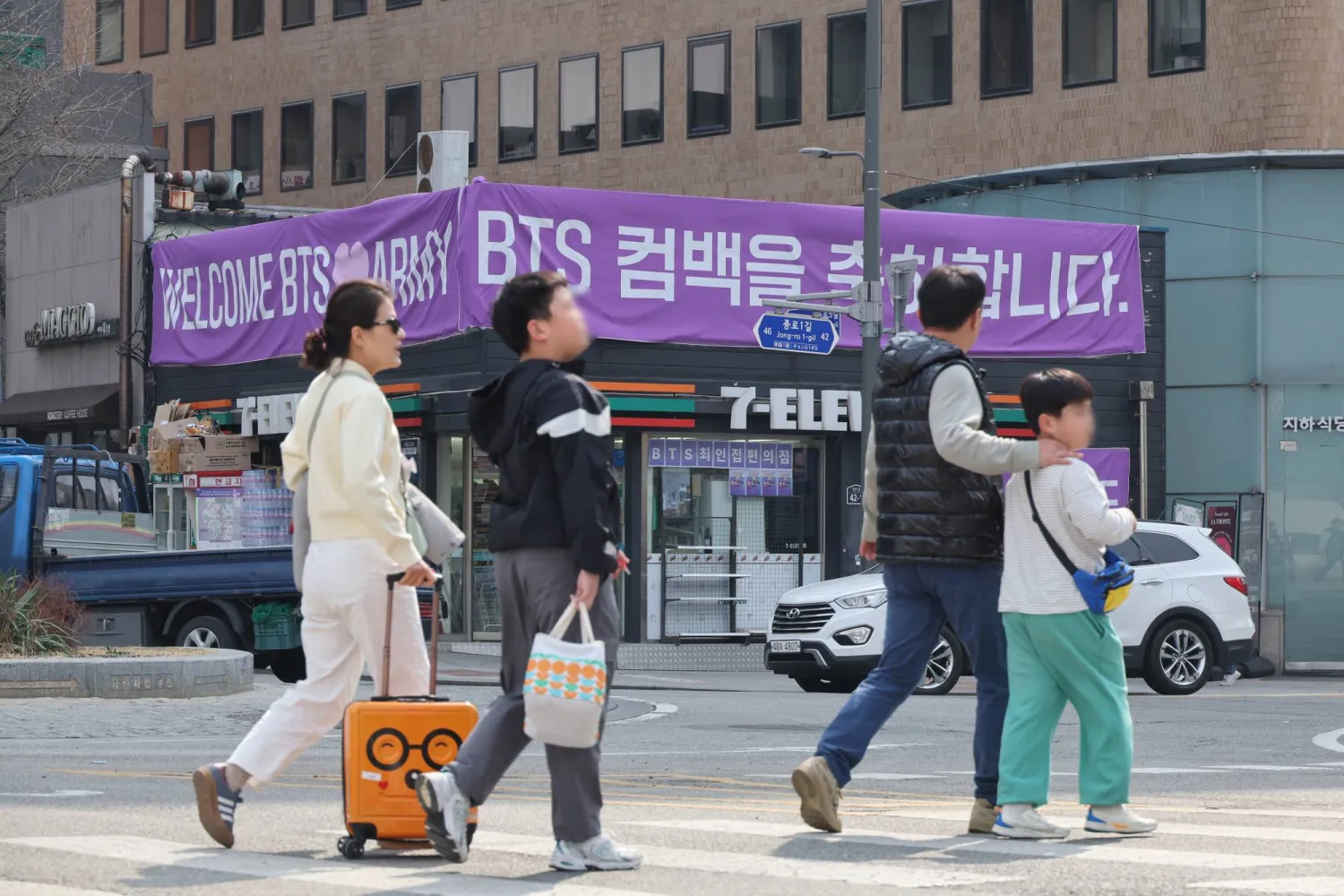
People walk near Gwanghwamun Square in Seoul, South Korea, 22 March 2026. The band performed their comeback concert on 21 March.  EPA/YONHAP
People walk near Gwanghwamun Square in Seoul, South Korea, 22 March 2026. The band performed their comeback concert on 21 March. EPA/YONHAP
TT

South Korea to Invest $166 Million in AI Chip Startup Rebellions

People walk near Gwanghwamun Square in Seoul, South Korea, 22 March 2026. The band performed their comeback concert on 21 March.  EPA/YONHAP
People walk near Gwanghwamun Square in Seoul, South Korea, 22 March 2026. The band performed their comeback concert on 21 March. EPA/YONHAP

South Korea's industry ministry on Tuesday said the Financial Services Commission's advisory board approved a 250 billion won ($166 million) investment in a local artificial intelligence chip startup called Rebellions, part of a government-backed push to nurture a homegrown advanced semiconductor firm.

Here are some details:

South Korea's Financial Services Commission advisory board, which evaluates investments in advanced strategic industries, ⁠approved a 250 ⁠billion won direct investment into Rebellions, an AI chip startup.

Rebellions, founded in 2020, designs neural processing units (NPUs) that handle AI computations.

The decision was made at a ⁠fund management committee meeting for the state-led "National Growth Fund," marking the first direct investment under the country's "K-Nvidia" initiative.

The funding will support Rebellions' mass production of NPU chips and the development of next-generation AI semiconductors, the industry ministry said in a statement.

The "K-Nvidia" project, jointly led by the Financial Services Commission and the ⁠Ministry ⁠of Science and ICT, seeks to nurture a globally competitive AI chip company amid intensifying competition in the sector, which is dominated by US firms like Nvidia.

The move underscores Seoul's efforts to strengthen its position in the AI supply chain and reduce reliance on foreign technology, as demand for high-performance computing chips surges.


Uber, Autonomous Mobility Firms to Launch Europe's 1st Commercial Robotaxis

Aerial photo shows light installation during the Festival of Lights in Zagreb, Croatia, March 18, 2026. REUTERS/Antonio Bronic
TT

Uber, Autonomous Mobility Firms to Launch Europe's 1st Commercial Robotaxis

Aerial photo shows light installation during the Festival of Lights in Zagreb, Croatia, March 18, 2026. REUTERS/Antonio Bronic

Uber Technologies and autonomous mobility companies Verne and Pony.ai have partnered up to launch Europe's first commercial robotaxi service in the Croatian capital Zagreb, with plans to expand to other cities, they said on Thursday.

Robotaxis are rapidly expanding into US cities as companies race to commercialize ⁠autonomous ride-hailing worldwide.

Alphabet's ⁠Waymo remains the early leader, while Tesla hopes its vast manufacturing scale and financial resources could reshape the competitive landscape.

The first ⁠commercial robotaxi service in Zagreb will be launched "soon,” the companies said.

Initial deployment work is underway, including public-road validation.

Pony.ai will provide autonomous driving solutions, while Verne will act as the fleet owner and service operator.

The three companies plan ⁠to ⁠expand the fleet to thousands of robotaxis in European cities over the next few years.

Uber and Nvidia said earlier this month they planned to expand their robotaxi service in 28 cities across North America, Europe, Australia and Asia.