


China Smartphone Sales Drop 13% During 618 Festival as Memory Costs Limit Discounts

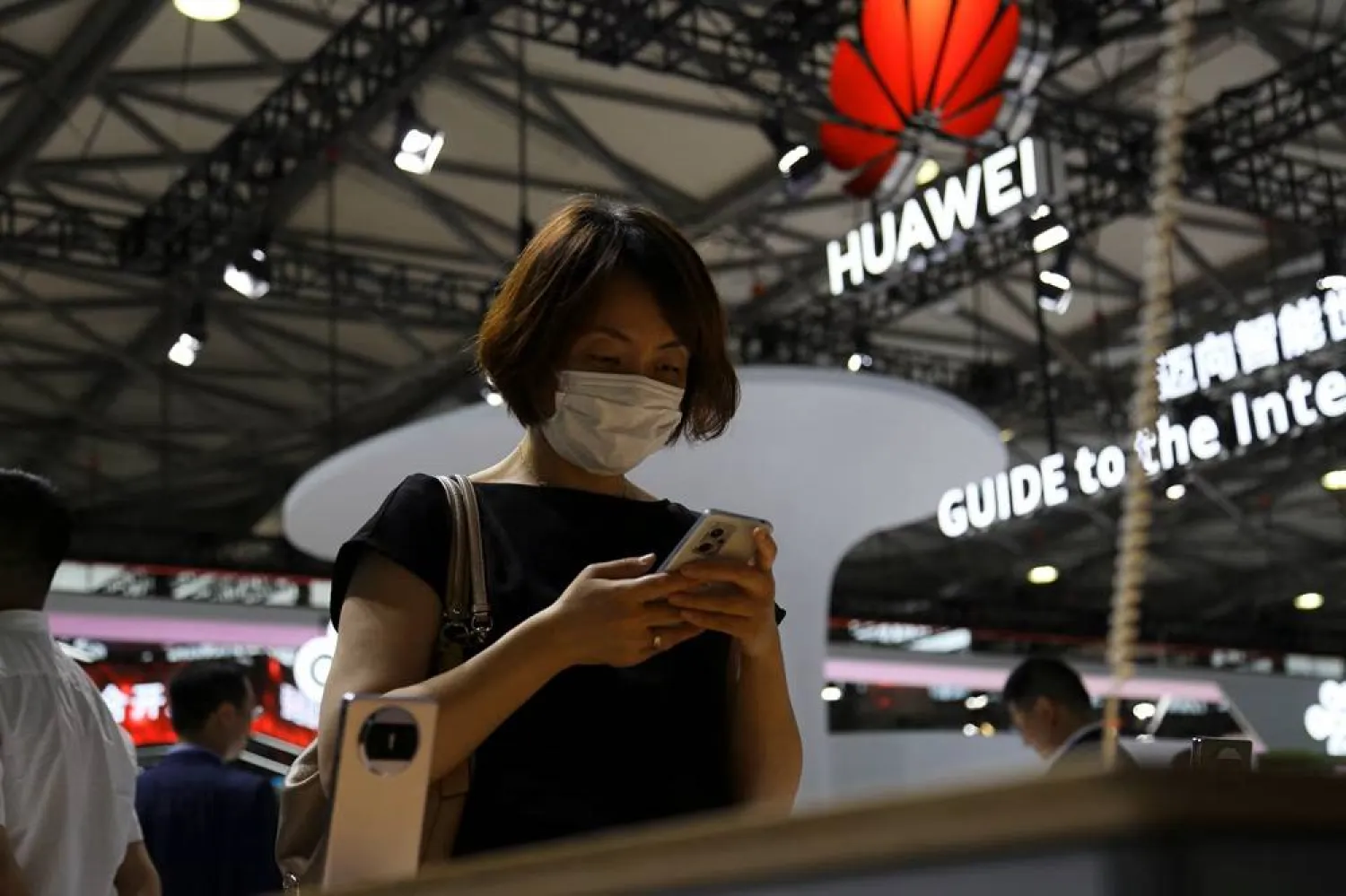
A visitor checks a mobile phone near the Huawei logo during the Mobile World Congress in Shanghai, China June 28, 2023. (Reuters)
TT

China Smartphone Sales Drop 13% During 618 Festival as Memory Costs Limit Discounts

A visitor checks a mobile phone near the Huawei logo during the Mobile World Congress in Shanghai, China June 28, 2023. (Reuters)

Smartphone sales in China fell 13% year-on-year during the month-long 618 shopping festival, as brands raised prices to offset higher memory costs, according to data from Counterpoint Research.

Sales declined from May 26 to June 21, with all major Chinese brands except Huawei posting double-digit drops as fewer promotions compared to last year weighed on demand. Honor sales dropped 33%, while Xiaomi's fell 24%.

Higher memory prices amid a rapid ‌build-out of ‌AI infrastructure have pushed up handset costs this year, leaving brands ‌with ⁠less room to ⁠offer steep discounts during the 618 festival, seen as a barometer for the country's booming e-commerce sector.

"Some older and newer models from Chinese smartphone brands were priced higher than comparable models a year earlier, while discounts during this year's 618 festival were generally less aggressive, both in terms of the size of price cuts and the range of products covered," said Ivan Lam, senior analyst at Counterpoint Research.

"Apple's prices ⁠were broadly unchanged, but its discounts were also smaller."

Huawei Technologies ‌led the market with a 21% share, ‌and was the only major brand to record year-on-year growth during the 618 period, with ‌sales rising 19%.

Its Enjoy 90 Pro Max was its best-selling model. ‌The Mate 80 also performed well, supported by promotions.

Apple's sales fell 9% from a year earlier, although the US tech giant climbed to the No. 2 spot after rolling out incentives about a month ahead of June 18.

The discounts offered savings of up ‌to 2,000 yuan ($295) on the iPhone 17 Pro series through a mix of official price cuts, platform subsidies and trade-in ⁠deals.

Still, Apple's sales ⁠remained lower than a year earlier, partly because promotions for the iPhone 16 series were more aggressive during the same period last year.

The 618 festival, which began as a one-day event marking JD.com's founding on June 18, 1998, has since grown into a month-long sales campaign, with major e-commerce platforms competing for consumer spending.

In recent years, however, China's biggest shopping festivals have struggled to generate their former buzz, as extended discount periods and weak consumer sentiment have curbed appetite for non-essential spending, even at reduced prices.

Counterpoint said the 618 festival helped smartphone sales recover in June from the previous month. But it added that the market was likely to enter a seasonal slowdown afterward and post a double-digit decline in shipments for the year.



Samsung Electronics Denies Report That It Is Exploring US Listing

The logo of Samsung Electronics is seen at the company's store in Seoul, South Korea, April 15, 2025. (Reuters)
TT

Samsung Electronics Denies Report That It Is Exploring US Listing

The logo of Samsung Electronics is seen at the company's store in Seoul, South Korea, April 15, 2025. (Reuters)

Samsung Electronics denied on Tuesday a report that it was in the early stages of exploring a potential US offering of American Depositary Receipts (ADRs).

"Samsung Electronics is not reviewing the possibility of issuing American Depositary ‌Receipts," a ‌Samsung spokesperson said in ‌a ⁠statement.

On Tuesday, Bloomberg ⁠News reported that Samsung has held preliminary discussions with banks, but has not yet made a decision about whether to proceed, ⁠citing people familiar ‌with the matter, ‌adding that the discussions might ‌not result in a listing.

The ‌South Korean chipmaker previously reviewed the possibility of an ADR offering before ultimately deciding against ‌it, though the successful US listing of SK ⁠Hynix has ⁠given Samsung fresh motivation to revisit the idea, the report said.

Last week, rival SK Hynix priced its ADRs at $149 each, raising about $26.5 billion in the largest-ever US listing by a foreign company.


China Smartphone Shipments Fall for Fifth Straight Quarter as Costs Rise

A customer looks at a new Huawei Pura 70 series smartphone, as the series models go on sale at a Huawei's flagship store in Beijing, China April 18, 2024. (Reuters)
TT

China Smartphone Shipments Fall for Fifth Straight Quarter as Costs Rise

A customer looks at a new Huawei Pura 70 series smartphone, as the series models go on sale at a Huawei's flagship store in Beijing, China April 18, 2024. (Reuters)

China's smartphone shipments fell 4.3% to 66 million units in the second quarter from a year earlier, as many manufacturers hiked prices to ‌reflect rising memory ‌and component costs, research firm ‌IDC ⁠said on Tuesday.

It ⁠was the fifth straight quarterly decline, and first-half shipments were down 4.2% from a year earlier.

Huawei Technologies and Apple were the only vendors to post growth in the quarter, with shipments up 19.4% and 24.4%, ⁠respectively.

"Huawei and Apple held their ‌prices steady while ‌competitors were raising theirs, and that gave hesitant buyers ‌a reason to go ahead and purchase ‌in a quarter when most of the market was giving them a reason to wait," said Arthur Guo, a senior analyst at IDC China.

Huawei ‌ranked first with a 22.6% market share, while Apple came second with ⁠an ⁠18.1% share. Xiaomi , which ranked fifth, saw its second-quarter shipments down 21.7%, with Oppo and Vivo seeing shipments fall 9.7% and 11.4%, respectively.

Most Android vendors raised prices or cut back on budget models in response to surging memory chips and other component costs, discouraging consumers from upgrading. The fading effect of government subsidies also removed a prop that had supported demand in earlier quarters, IDC said.


Meta Expands Louisiana Data Center to 5 Gigawatts Compute Capacity

FILE PHOTO: The logo of Meta at the Meta Lab in Los Angeles, California, US, May 20, 2026. REUTERS/Daniel Cole/File Photo
TT

Meta Expands Louisiana Data Center to 5 Gigawatts Compute Capacity

FILE PHOTO: The logo of Meta at the Meta Lab in Los Angeles, California, US, May 20, 2026. REUTERS/Daniel Cole/File Photo

Meta said ‌on Monday its data center in Richland Parish, Louisiana will expand to 5 gigawatts of compute capacity, in a bid to support the social media company's AI ambitions.

Since breaking ground in December 2024, local Louisiana businesses have received more than $1.6 billion ‌in contracts from Meta, ‌the company said.

Here ‌are ⁠some details:

* Meta ⁠said that the data center expansion is an investment of more than $50 billion in the Richland Parish region.

* Last year, US President Donald Trump ⁠had said the company's data ‌center project ‌would cost $50 billion.

* With this ‌expansion, the company said it ‌plans to invest over $1 billion in local infrastructure improvements, including roads, water and wastewater systems.

* Meta, like its ‌Big Tech peers, has been pouring billions of dollars into ⁠AI ⁠data centers and computing power, as demand continues to outstrip supply.

* The company has pledged to invest $600 billion in US infrastructure and jobs over the next three years, as it builds out massive data centers to power CEO Mark Zuckerberg's aggressive bets on AI agent technologies.