


Apple Loses Challenge Against EU Digital Competition Rules

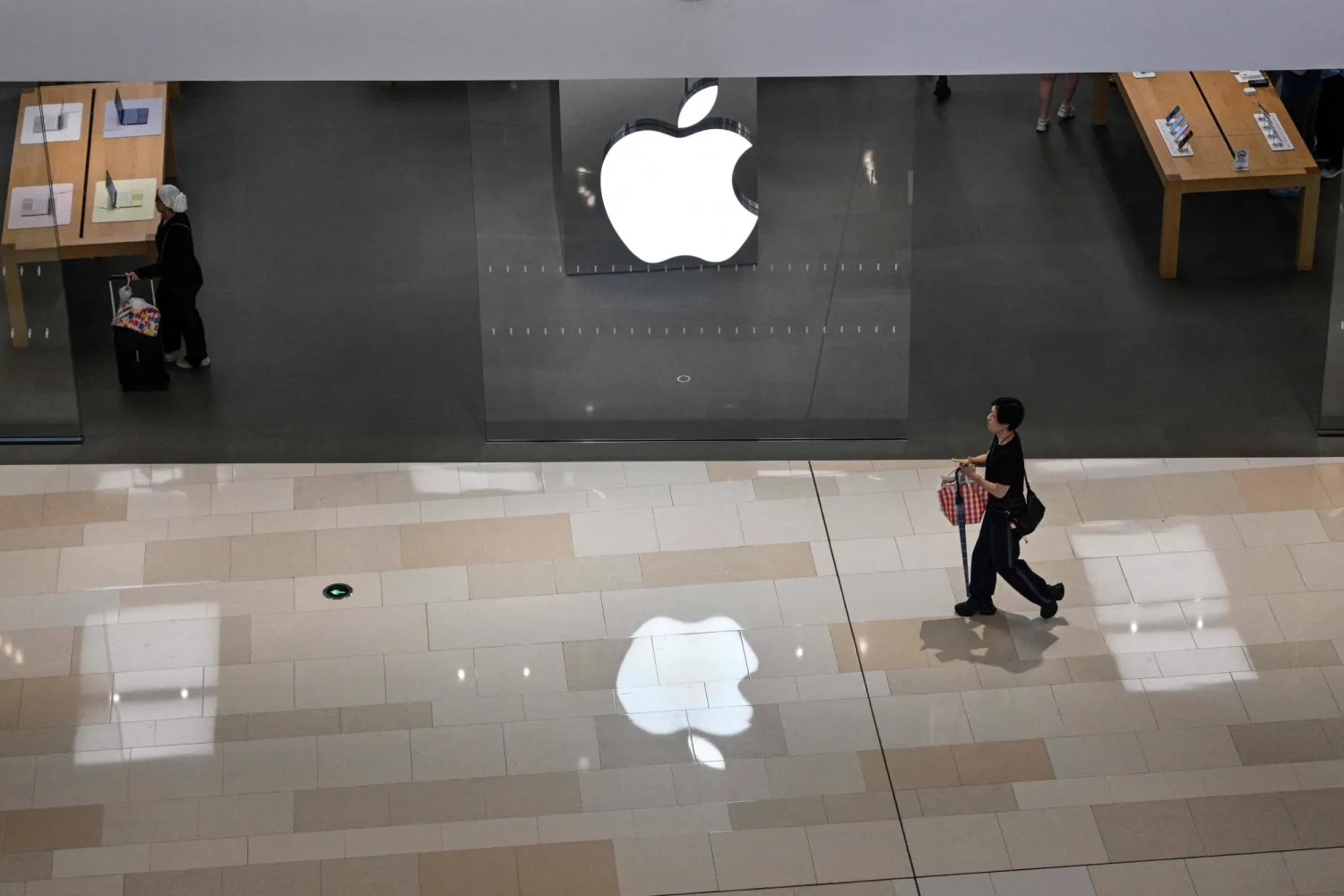
People walk past an Apple store in a shopping mall in the Xuhui district in Shanghai on July 1, 2026. (Photo by Hector RETAMAL / AFP)
TT

Apple Loses Challenge Against EU Digital Competition Rules

People walk past an Apple store in a shopping mall in the Xuhui district in Shanghai on July 1, 2026. (Photo by Hector RETAMAL / AFP)

Apple lost its bid to escape digital competition rules after an EU court on Wednesday rejected the US giant's challenge.

Apple appealed the European Union's decision to apply stricter rules known as the Digital Markets Act (DMA) on its operating system iOS and App Store.

"The General Court dismisses all the actions brought by Apple," the Luxembourg-based court said in a statement. "It confirms the designation of Apple as a gatekeeper in relation to the App Store and iOS."

Companies like Apple are designated a so-called "gatekeeper" under the DMA, and their apps are subject to extra scrutiny as "core platform services".

The DMA comes with a list of do's and don'ts for the world's biggest digital platforms in an attempt to keep them in check and create an open online space.

Apple has been one of the law's fiercest critics, calling on the EU to repeal the DMA last year. The company defended its position after the ruling.

"We firmly believe the DMA's mandate goes beyond what is lawful and proportionate, threatening to erode decades of privacy and security protections we've built and leaving our users vulnerable to new risks," the company said.

"We will continue advocating for the innovation and privacy our European customers deserve," Apple added in a statement.

Apple had also brought a challenge against the EU concerning iMessage but the court found the actions relating to iMessage "inadmissable".

The EU had investigated whether iMessage should also comply with the DMA but ultimately Brussels decided against more rules on the messaging service.

"None of the obligations laid down by the DMA applies to iMessage since that service has not been listed in a designation decision as an important gateway," AFP quoted the court as saying.

A separate case brought by Apple relates to interoperability under the DMA, as it forces companies to make their products accessible to rivals.

The same EU court is still due to rule on interoperability.

The decision is another victory for the European Commission, the EU's digital watchdog, after TikTok and Meta also lost challenges against the DMA.

Chinese-owned TikTok has, however, challenged the lower court's 2024 ruling.

The European Consumer Organization (BEUC) welcomed Wednesday's decision.

"It is good news," BEUC director general Agustin Reyna said, adding: "Anything less would have jeopardized the positive impact the Digital Markets Act is having in creating more choice for consumers online."

He added Apple's "resources would be better spent directed towards complying in full and without delay with the law".


OpenAI Says Powerful New Model to Launch Publicly on Thursday

OpenAI logo is seen in this illustration taken June 11, 2026. (Reuters)
TT

OpenAI Says Powerful New Model to Launch Publicly on Thursday

OpenAI logo is seen in this illustration taken June 11, 2026. (Reuters)

ChatGPT maker OpenAI said its latest powerful artificial intelligence model series will be released to the public on Thursday, as the US government reportedly approved a broader launch.

The company's new offering GPT-5.6 and other cutting-edge AI models, including Anthropic's Mythos series, have drawn concern over their supposedly unprecedented ability to identify software vulnerabilities -- weaknesses in code that hackers can exploit.

OpenAI said in late June it had shared preview access to GPT-5.6 with a limited group of US-only partners at Washington's request.

The GPT-5.6 series comprises three new models: Sol, the company's new flagship; Terra, a mid-range model for everyday work; and Luna, a fast, low-cost option.

"GPT-5.6 Sol, along with Terra and Luna, will launch publicly this Thursday. We're expanding preview access globally now," the company said in an X post Tuesday, without giving further details.

US news outlet Axios reported Tuesday, citing a source familiar with the situation, that the Trump administration had given OpenAI the green light for a broad launch of GPT-5.6, following testing and meetings between the company and government officials.

AFP has contacted OpenAI, the White House and the US Department of Commerce for comment on the Axios report.

It follows a similar story at OpenAI's archrival Anthropic, which last week said it would begin restoring access globally to its most powerful AI models, Fable 5 and Mythos 5, after the US government lifted a restriction on where they could be released.


SDAIA President Highlights Saudi Leadership in Responsible AI Governance During Geneva Meetings

The meetings reviewed ways to strengthen international cooperation in data and AI, boost governance frameworks for emerging technologies, and promote their ethical and responsible adoption. (SPA)
TT

SDAIA President Highlights Saudi Leadership in Responsible AI Governance During Geneva Meetings

The meetings reviewed ways to strengthen international cooperation in data and AI, boost governance frameworks for emerging technologies, and promote their ethical and responsible adoption. (SPA)

President of the Saudi Data and AI Authority (SDAIA) Dr. Abdullah bin Sharaf Alghamdi underscored on Tuesday Saudi Arabia's commitment, under the directives of Prince Mohammed bin Salman bin Abdulaziz Al Saud, Crown Prince, Prime Minister, and Chairman of SDAIA's Board of Directors, to advancing international efforts to strengthen AI governance and promote the responsible and safe use of its technologies in support of humanity and sustainable development.

He made his remarks during separate meetings with Director-General of the International Labour Organization Gilbert F. Houngbo, World Bank Vice President for Digital and AI Sangbu Kim, and Germany's Federal Minister for Digital Transformation Dr. Karsten Wildberger, on the sidelines of the Global Dialogue on AI Governance in Geneva.

The meetings were attended by Saudi Permanent Representative to the United Nations and international organizations in Geneva Ambassador Abdulmohsen bin Khothaila.

The meetings reviewed ways to strengthen international cooperation in data and AI, boost governance frameworks for emerging technologies, and promote their ethical and responsible adoption in support of the United Nations Sustainable Development Goals while helping address future risks affecting societies and labor markets.

Alghamdi highlighted the Kingdom's initiatives to advance AI governance and ethics, most notably the establishment of the International Center for AI Research and Ethics (ICAIRE) in Riyadh under the auspices of UNESCO.

He underlined the Kingdom's efforts to support the responsible adoption of AI through governance frameworks, risk management tools, maturity assessments, and accountability mechanisms that foster trust and encourage innovation.

Alghamdi invited the international officials to participate in the fourth Global Forum on the Ethics of Artificial Intelligence, organized by SDAIA in cooperation with UNESCO and ICAIRE, to be held in Riyadh from September 14 to 17, as part of the Kingdom's Year of Artificial Intelligence.


China Smartphone Sales Drop 13% During 618 Festival as Memory Costs Limit Discounts

A visitor checks a mobile phone near the Huawei logo during the Mobile World Congress in Shanghai, China June 28, 2023. (Reuters)
TT

China Smartphone Sales Drop 13% During 618 Festival as Memory Costs Limit Discounts

A visitor checks a mobile phone near the Huawei logo during the Mobile World Congress in Shanghai, China June 28, 2023. (Reuters)

Smartphone sales in China fell 13% year-on-year during the month-long 618 shopping festival, as brands raised prices to offset higher memory costs, according to data from Counterpoint Research.

Sales declined from May 26 to June 21, with all major Chinese brands except Huawei posting double-digit drops as fewer promotions compared to last year weighed on demand. Honor sales dropped 33%, while Xiaomi's fell 24%.

Higher memory prices amid a rapid ‌build-out of ‌AI infrastructure have pushed up handset costs this year, leaving brands ‌with ⁠less room to ⁠offer steep discounts during the 618 festival, seen as a barometer for the country's booming e-commerce sector.

"Some older and newer models from Chinese smartphone brands were priced higher than comparable models a year earlier, while discounts during this year's 618 festival were generally less aggressive, both in terms of the size of price cuts and the range of products covered," said Ivan Lam, senior analyst at Counterpoint Research.

"Apple's prices ⁠were broadly unchanged, but its discounts were also smaller."

Huawei Technologies ‌led the market with a 21% share, ‌and was the only major brand to record year-on-year growth during the 618 period, with ‌sales rising 19%.

Its Enjoy 90 Pro Max was its best-selling model. ‌The Mate 80 also performed well, supported by promotions.

Apple's sales fell 9% from a year earlier, although the US tech giant climbed to the No. 2 spot after rolling out incentives about a month ahead of June 18.

The discounts offered savings of up ‌to 2,000 yuan ($295) on the iPhone 17 Pro series through a mix of official price cuts, platform subsidies and trade-in ⁠deals.

Still, Apple's sales ⁠remained lower than a year earlier, partly because promotions for the iPhone 16 series were more aggressive during the same period last year.

The 618 festival, which began as a one-day event marking JD.com's founding on June 18, 1998, has since grown into a month-long sales campaign, with major e-commerce platforms competing for consumer spending.

In recent years, however, China's biggest shopping festivals have struggled to generate their former buzz, as extended discount periods and weak consumer sentiment have curbed appetite for non-essential spending, even at reduced prices.

Counterpoint said the 618 festival helped smartphone sales recover in June from the previous month. But it added that the market was likely to enter a seasonal slowdown afterward and post a double-digit decline in shipments for the year.