Meta Ordered to Pay $567 Million in New Mexico for Teen Mental Health Fund

A Meta logo is shown on a video screen at LlamaCon 2025, an AI developer conference, in Menlo Park, Calif., April 29, 2025. (AP)
TT

Meta Ordered to Pay $567 Million in New Mexico for Teen Mental Health Fund

A Meta logo is shown on a video screen at LlamaCon 2025, an AI developer conference, in Menlo Park, Calif., April 29, 2025. (AP)

A New Mexico state court ordered Meta on Thursday to pay $567 million into a teen mental health fund and change how its platforms function for young users after finding the company is to blame for harming children's wellbeing.

Judge Bryan Biedscheid in Santa Fe ruled the company had created a public nuisance in New Mexico, siding with Attorney General Raúl Torrez, a Democrat. Torrez had accused the social media company of designing products to addict young users and failing to protect children from sexual exploitation on its platforms.

The ruling comes five months after a New Mexico jury in an earlier phase of the case ordered Meta to pay $375 million after finding it violated consumer protection law by misrepresenting the safety of Facebook and Instagram for young users.

The case was being closely watched amid a growing wave of litigation accusing social media companies of harming young users. While many lawsuits have been brought by children and families over alleged injuries to individuals, states, municipalities and school districts have also pursued lawsuits seeking broad changes to the industry.

More than 40 states and over 1,300 school districts ‌have filed public nuisance ‌lawsuits against social media companies, seeking damages as well as court orders requiring changes to products and practices.

Biedscheid on ‌Thursday ordered ⁠Meta to implement youth-safety ⁠measures, including monthly limits on teens' use of Facebook and Instagram, restrictions on notifications, tighter controls on adult contact with minors, safeguards for AI chatbots, and enhanced review of child sexual abuse reports, under a decree that will be in place for five years.

Meta said it will appeal the ruling and that it has been working to identify and remove harmful content from its platforms.

"We remain confident in our record of protecting teens online and will continue to defend ourselves against claims that misrepresent the facts," Meta said in a statement.

New Mexico's Torrez said in a statement that Meta chose profit over child safety, and that the ruling was the first to force a social media giant to make changes protecting children.

"This is not just a judgment against one company. It is a blueprint," Torrez said. "Now other states, and other countries confronting the same crisis, ⁠have a roadmap they can follow."

Reuters last year reported on company documents that showed Meta's AI chatbots could "engage ‌a child in conversations that are romantic or sensual," part of a series of investigations into Meta profiting ‌from ads peddling fraud and banned products.

In Thursday's ruling, Biedscheid ordered Meta to prevent children in New Mexico from "engaging in romantic or sexualized interactions with Meta's artificial intelligence chatbots" ‌and to prevent adults in New Mexico from using chatbots to simulate or discuss a sexualized interaction with a child.

PUBLIC NUISANCE

Biedscheid heard three weeks of ‌testimony during the second trial over the lawsuit, which did not involve a jury. It focused solely on whether Meta's platforms created a "public nuisance" under New Mexico law.

Public nuisance claims traditionally have targeted conduct that endangers public health or safety, such as blocking roads or polluting waterways, but state governments have also invoked them in litigation involving tobacco, opioids, climate change, vaping and most recently artificial intelligence.

"(J)ust as noxious pollution produced by the factory can harm the common public right to reasonably clean air, the harmful effects of Meta’s platforms on children do ‌not stay contained by its platforms and, instead, migrate to the internet as a whole and, perhaps most concerning, to the real world and create a common, societal burden on and harm to the affected children and their ⁠families and schools, as well as ⁠hospitals and law enforcement," Biedscheid wrote.

Meta had said at trial it could not have created a public nuisance because it had not interfered with a "public right," such as access to air or water. Meta also argued that its social media platforms are not the only ones used by the state's young residents, and the case ignores the impact of other apps.

It also criticized the changes New Mexico sought, saying in filings many were "technologically impractical or completely impossible," and could force the company to exit the state altogether.

Meta had also argued that New Mexico's claims were barred by Section 230 of the Communications Decency Act, a federal law that generally shields online platforms from liability for user-generated content. Biedscheid rejected that defense, finding the state was challenging Meta's platform features rather than trying to hold the company liable as publisher of third-party content.

However, Biedscheid declined to impose some of the remedies sought by New Mexico, finding that changes to Meta's algorithms and features, such as infinite scroll and autoplay, could infringe the company's rights under the First Amendment to the US Constitution, harm its competitive position, and run afoul of Section 230.

The ruling comes as Meta prepares to face a trial next week in federal court in Oakland, California, over claims by 29 states that it designed Facebook and Instagram to addict children and misled users about their safety, a case that could expose the company to massive damages.

The company is also defending a lawsuit brought by Tennessee in a trial that began in July.

Meta has told investors that legal and regulatory blowback in the US and European Union over youth social media issues "could significantly impact our business and financial results."



Big-Ticket Tech Deals Need to Keep Pace with AI Boom but Risks Remain High, Financial Leaders Say

David Solomon, Chairman and Chief Executive Officer of Goldman Sachs, speaks during the Global Financial Leaders' Investment Summit in Hong Kong, China, November 3, 2026. (Reuters)
TT

Big-Ticket Tech Deals Need to Keep Pace with AI Boom but Risks Remain High, Financial Leaders Say

David Solomon, Chairman and Chief Executive Officer of Goldman Sachs, speaks during the Global Financial Leaders' Investment Summit in Hong Kong, China, November 3, 2026. (Reuters)

Tech companies will need to raise more capital to help meet the enormous demand for the AI industry's growth boom, but there is a risk of an industry correction, global financial leaders said on Tuesday.

Tech stocks globally have faced pressure in recent weeks as growing concerns about AI spending trigger a new wave of selloffs, with combined spending set to exceed $730 billion this year, up from about $700 billion.

Most of the major tech companies were expected to raise more capital to keep up with the enormous likely demand from the AI industry's growth, said Jon Gray, president of Blackstone, which is an active investor in AI infrastructure.

"Now you're in an environment where the demand's running well ahead of supply," Gray said at an investment gathering in Hong Kong, citing "pretty extraordinary" demand for computing power.

"So that gives me a lot of comfort," he added. "Meta and Google and ‌Oracle raising equity ... ‌SpaceX going public, Anthropic going public," Gray said.

"On top of it ... the data centers, the ‌energy ⁠needs are enormous."

STRONG COMPANIES ⁠WITH 'GOOD STORIES'

Despite some AI-related market upheavals, strong companies with "good stories" would still be able to raise capital, though the industry's strong growth could create volatility for investors, said Goldman Sachs Chief Executive David Solomon.

"But things will go wrong too, and we'll get things wrong," he added at the event, the Hong Kong Monetary Authority's Global Financial Leaders' Investment Summit.

"Investors will find situations where they pick wrong, where they lose money ... It's important to have a balanced, diversified view."

JPMorgan Vice Chairman Daniel Pinto said he was bullish on AI, but the market was pricing in revenue and earnings growth for related companies that was too steep.

"I do believe that it has a positive, slow curve and ⁠it may not be as steep as the market is pricing," he said.

"So I think that ‌it could be a correction in the AI sector," he said, adding that ‌other firms with high valuations related to AI could come under pressure as the industry started to recalibrate its expectations.

Last month, S&P said it ‌expected the top six US hyperscalers - Amazon, Microsoft, Alphabet, Oracle, Meta and SpaceX - to spend more than $7 trillion on data centers ‌and other AI-related capex between 2025 and 2030, while having negative free cash flow until at least next year.

Citadel Securities Chief Executive Peng Zhao said the sheer scale of capital and growth in AI was proving difficult for some investors to value correctly, which was adding to volatility in the sector.

"Our ability to really know what this technology will do and its revenue potential is very, very limited due to the fact that we've ‌never seen anything like this," he said.

"It's not so much that people all of a sudden develop a bearish view of what the technology can accomplish, but it's rather the ⁠sudden realization that we can ⁠only know so much ... the numbers involved are so huge."

Morgan Stanley Chief Executive Ted Pick flagged emerging early signs of US markets edging close to a correction, with a majority of stocks in major indices off nearly 10%.

The latest test of investor appetite is a sale of €6 billion ($6.7 billion) in bonds on Monday by Google parent Alphabet .

ASIA-PAC TECH FUNDRAISING MORE THAN TRIPLED

Fundraising by Asia-Pacific tech companies more than tripled to $125.8 billion in the first three quarters of 2026 from $36 billion a year earlier.

The growth was driven by a wave of semiconductor and AI-related deals, such as Chinese chipmaker CXMT’s $9.8-billion IPO and Enflame Technology's $910.6-million listing, LSEG data shows.

Alphabet, Amazon, Microsoft and Meta have signaled that spending on AI will not slow.

In one of the largest debt deals tied to the AI buildout,

Blackstone agreed last week to provide financing of $63 billion with Bank of America, Citi and Morgan Stanley to buy Broadcom's AI chips and networking gear for Anthropic.

The rising cost of capital and some of today's skepticism will slow the pace, however, Gray added.

"But the overall trend is towards greater investment and therefore more needs for multiple forms of capital."

Emmanuel Roman, CEO of asset manager PIMCO, said AI financing deals are attractive, with more coming for the firm.


OpenAI Hires Former US Army Secretary for National Security Role

A person stands next to the logo of ChatGPT, an AI-powered chatbot by OpenAI at Bharat Mandapam, one of the venues for AI Impact Summit, in New Delhi, India, February 17, 2026. (Reuters)
TT

OpenAI Hires Former US Army Secretary for National Security Role

A person stands next to the logo of ChatGPT, an AI-powered chatbot by OpenAI at Bharat Mandapam, one of the venues for AI Impact Summit, in New Delhi, India, February 17, 2026. (Reuters)

OpenAI has appointed former US Army secretary Dan Driscoll to a newly created role focused on advancing the use of artificial intelligence in national security, the company said on Monday.

Driscoll will join OpenAI as senior counselor for national security and will "advise on how advanced AI can strengthen national and cyber security," according to a company statement.

Driscoll stepped down from his US Army post in September following reports of tensions with Defense Secretary Pete Hegseth.

"I'm joining OpenAI to help the United States and our allies put this technology to work responsibly, for the people who keep us safe," Driscoll said in OpenAI's announcement.

"The people who serve deserve the very best tools we can put in their hands," he said, adding that AI can help process information and reduce paperwork.


Argentina’s Milei Pitches a Regulation-Free AI Haven at the End of the World

Argentina's President Javier Milei delivers a statement at the Organization for Economic Co-operation and Development headquarters, ahead of the ''Argentina Week'', an event aimed at promoting investment and business opportunities, in Paris, Oct. 1, 2026. (AP)
TT

Argentina’s Milei Pitches a Regulation-Free AI Haven at the End of the World

Argentina's President Javier Milei delivers a statement at the Organization for Economic Co-operation and Development headquarters, ahead of the ''Argentina Week'', an event aimed at promoting investment and business opportunities, in Paris, Oct. 1, 2026. (AP)

Data centers have become one of the most polarizing issues in the world. Argentina’s president wants to lure as many of them as he can get.

As residents and policymakers in the United States and Europe fight the facilities that power artificial intelligence, President Javier Milei is pitching Argentina as a haven, promising a hands-off approach to draw foreign investment his crisis-prone country needs.

Like his ally, US President Donald Trump, Milei frequently posts AI-generated images on social media. He has proposed creating “nonhuman corporations” run entirely by AI agents.

“We are not going to regulate artificial intelligence,” Milei told the US Chamber of Commerce in Washington last month. “We are going to leave it free.”

Visitor logs obtained by The Associated Press show a steady stream of tech figures meeting with Milei and his aides in recent months, from venture capitalist Peter Thiel to representatives of OpenAI, Amazon, Google, Oracle and data center companies. Foreign Ministry records show that data center developer Crusoe, which helped build OpenAI’s flagship campus in Texas, sought talks this year with Argentine energy officials about US government-backed investments.

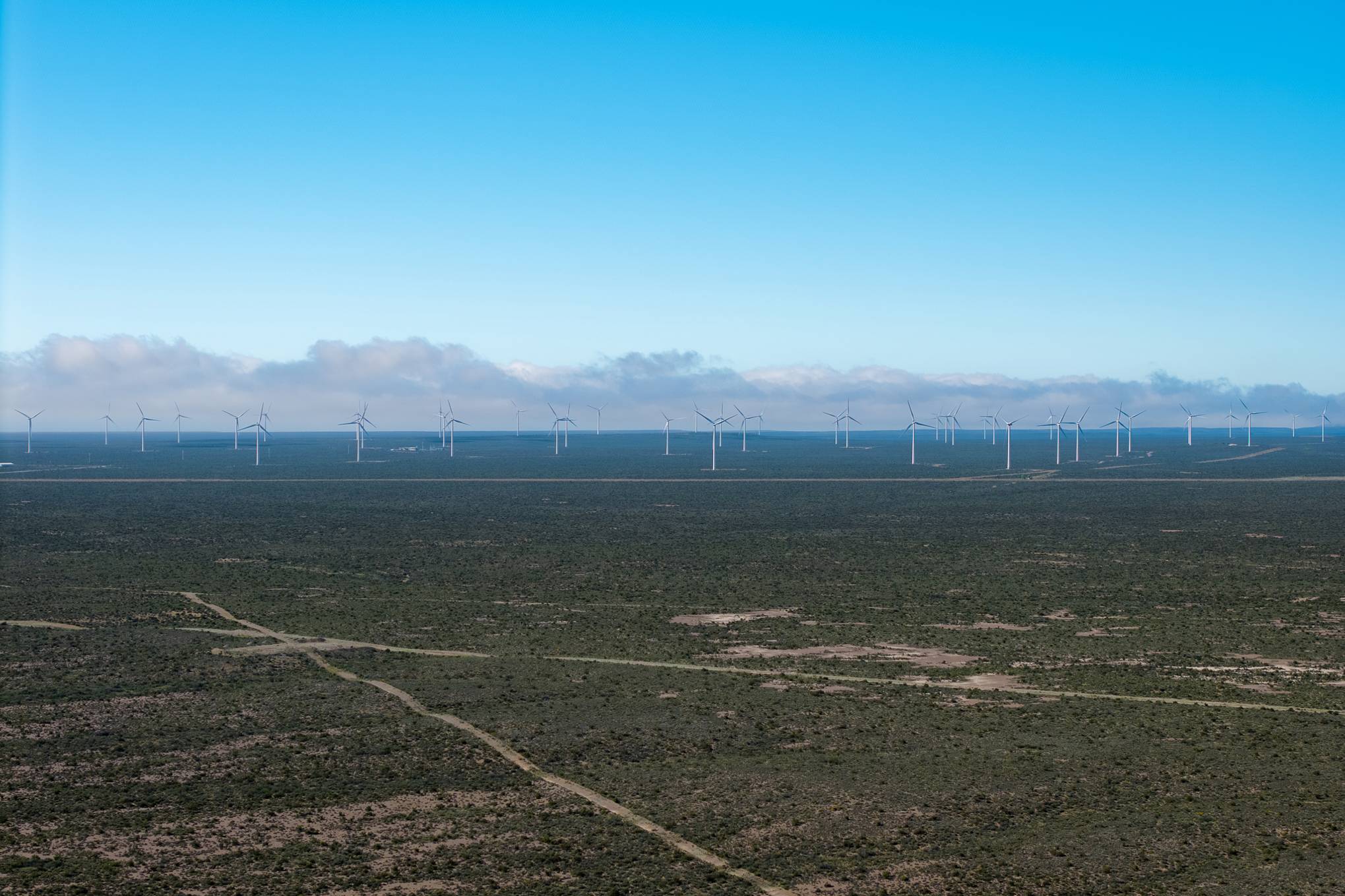
Milei’s hopes rest as much on geography as on ideology. Patagonia offers vast, open plains where noisy server farms can be built far from population centers, a chilly climate to cool the machines, powerful winds to generate electricity and one of the world’s largest shale deposits in Vaca Muerta to fuel power plants.

“In densely populated parts of the US and Europe, there’s a lot of fighting over access to the grid and who should get the electricity,” said Marta Zlotkowska, head of international development at Green Capital, a Polish renewable energy company that plans to build a $3 billion data center in Patagonia to lease to big tech firms for AI computing, though it has yet to secure a customer.

“We compared potential locations for the project around the world and Argentina — well, Patagonia — came out on top in every category," she said.

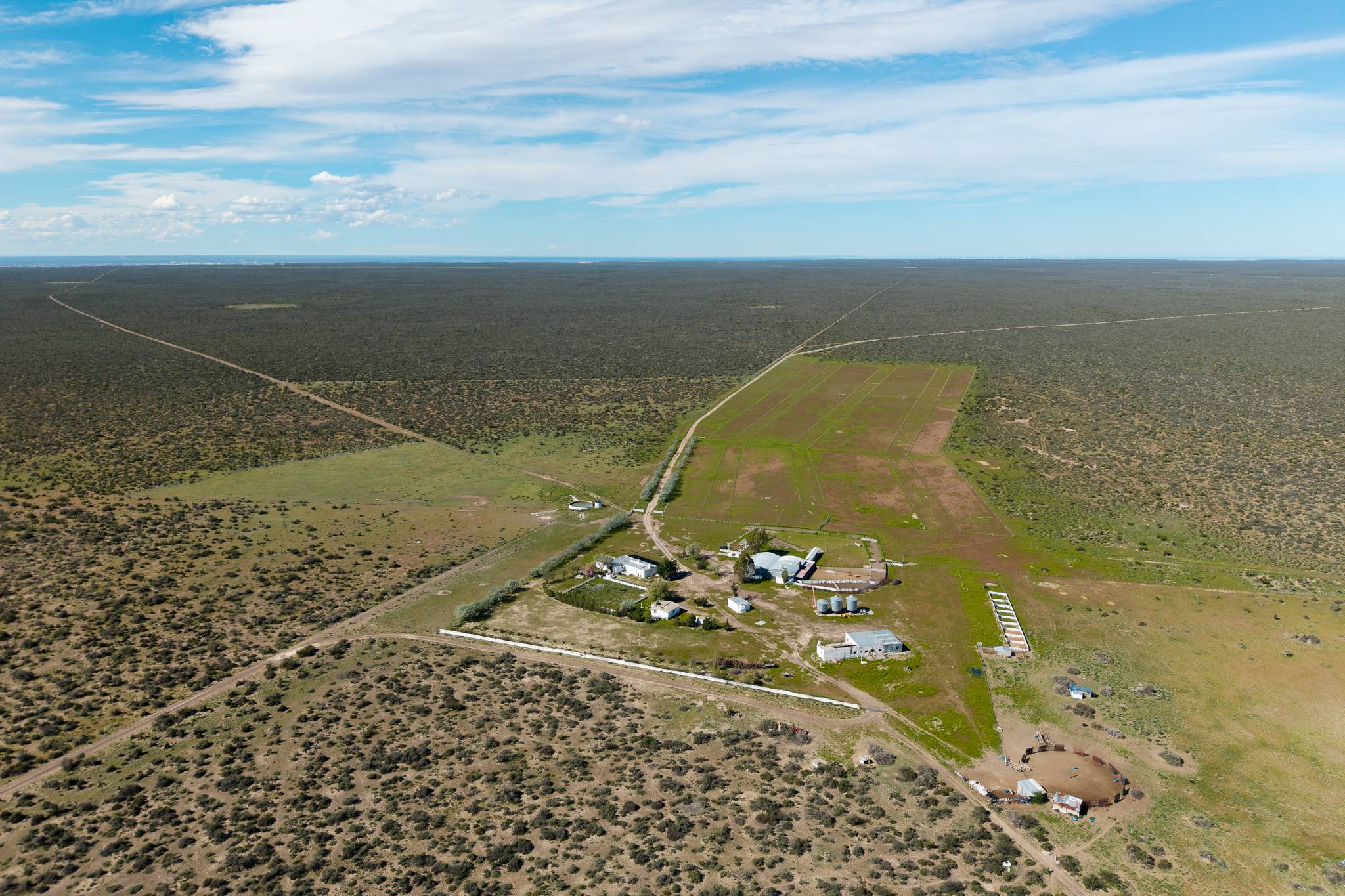
A view of Tatay ranch, one of the properties, picked to host a proposed data center complex near Trelew, Tuesday, Oct. 27, 2026. (AP)

Patagonia’s AI promise

For Argentina’s energy industry, already booming as the Iran war hikes oil prices, data centers represent a tantalizing new market. Pampa Energía, one of the country’s biggest power companies, has announced plans to supply immense amounts of gas-fired power to a data center near Vaca Muerta and is seeking developers.

“Being at the end of the world used to be a disadvantage,” said Rubén Etcheverry, a top official in Neuquén, the Patagonian province home to Vaca Muerta. “But today, faced with energy shortages and rising costs, investors are looking at us.”

To win over companies wary of Argentina’s chronic economic instability, Milei is pushing an incentive scheme that would slash the corporate income tax rate to 15% from 25% for projects of at least $1 billion in AI and other emerging industries. The measure is awaiting Senate approval.

The payoff for Argentines remains unclear. Data centers employ relatively few people. Milei’s proposed incentives don’t require companies to reserve computing capacity for local consumption or to disclose their energy and water use.

“We’re not talking about data centers designed to strengthen Argentine technological sovereignty,” said Alan Rocha Varsanyi, a researcher at Observatorio Petrolero Sur, an Argentine environmental group. “The computing capacity will be exported wherever OpenAI or the other companies need it.”

Blueprints, not yet bulldozers

For all Milei’s hype, Argentina lags behind in the race to become a regional data center hub, as its neighbors tout cheap land, renewable power and expanding fiber-optic connections to US tech giants.

Milei insists his calls for unfettered AI give Argentina an edge at a time when the European Union and a growing number of US states have adopted new regulations. Critics warn he is pushing to deploy AI in Argentina without safeguards against risks ranging from mass surveillance to cyberattacks.

“Without rules, Argentina will become a laboratory — like when companies go to developing countries to test strange drugs they can’t test in major developed countries,” said Nicolás Wolovick, a computer science professor at the National University of Córdoba.

Milei may hear similar concerns next week when Pope Leo XIV, who has warned of AI’s threats to humanity, visits Argentina on his Latin American tour.

Even some in Milei’s own government acknowledge that his anti-regulation stance complicates efforts to build a clear legal framework, with one senior official not authorized to brief media saying companies are waiting for Argentina to settle rules on training AI with copyrighted works and sending personal data abroad.

Some investors are holding back until next year’s potentially tight presidential election, worried that if Milei loses, the next government could unravel his free-market reforms.

“One of our major challenges is getting foreign investors to understand that Argentina remains a friendly place for investment under different political parties,” said Andrés Arbeletche, cabinet coordination secretary for Chubut, a Patagonian province courting several AI mega-projects.

Wind turbines stand on the field near Trelew, Argentina, Wednesday, Oct. 28, 2026. (AP)

Farms of servers and sheep

In remote ranching outposts across the treeless plateau of Chubut province, life revolves around tending flocks on steppes and shearing sheep in sheds. With the wool industry in decline after decades of drought, overgrazing and soaring production costs, some ranchers are betting on a different kind of shed — filled not with fleece but with blinking racks of servers.

“Sheep farmers are looking very hard at what alternatives can be found to bring in more income,” said Francisco Sáenz, an agricultural engineer and fourth-generation sheep farmer whose family is among 14 landowners who have leased a combined 130,000 hectares (about 321,000 acres) to Green Capital for its planned data center. The ranchers expect to keep grazing sheep alongside their colossal future neighbor.

Construction isn’t expected to begin until around 2028. If operated continuously at its projected peak demand, the finished campus would use about 2.7 times as much electricity in a year as the entire city of Buenos Aires consumed in 2025, according to an AP calculation.

Green Capital promises to generate all its own electricity from wind turbines, solar farms and gas-fired generators rather than strain Argentina’s congested grid. Provincial officials are counting on the project to deliver billions of dollars in investment, highly skilled jobs and a market for surplus wind power.

“For us, it is all a benefit, and we give nothing up,” Arbeletche said.

But some residents of Trelew, a dust-blown city near the proposed site, say they have no way to judge those assurances. Environmental studies are still underway, permits are pending and the company hasn’t specified how much water the project would need or how much of its power would come from gas.

“There’s just so little information,” said Cristina Gibón, 46, who fears the environmental toll of data centers. “Maybe we’ll have water until we’re old. But afterward, our children will still be here, and they won’t have those resources.”

Worries like hers are feeding a wider backlash against Milei's courtship of Big Tech. In Trelew, a small group of residents has rallied online and in the main square under the banner “Trelew Free of Data Centers.” In Congress, where lawmakers recently accused Milei of selling off the country at a hearing on billionaire Peter Thiel’s interests in Argentina, the opposition has forced the president to gut a bill easing restrictions on foreign land ownership and has stalled his plan to let AI agents control companies.

Back on his family’s farm, Sáenz sees a familiar Argentine reflex.

“Whenever a foreign company wants to make a major investment in Argentina, there’s a lot of criticism. Many people’s first reaction is to say, ‘No, they’re terrible people coming from the outside to take our resources,’” he said. “I’m not saying big companies are the best thing ever. I’m just saying that when I look at other countries, I see stable economies."