


Study: Climate-driven Tree Deaths Speeding Up in Australia

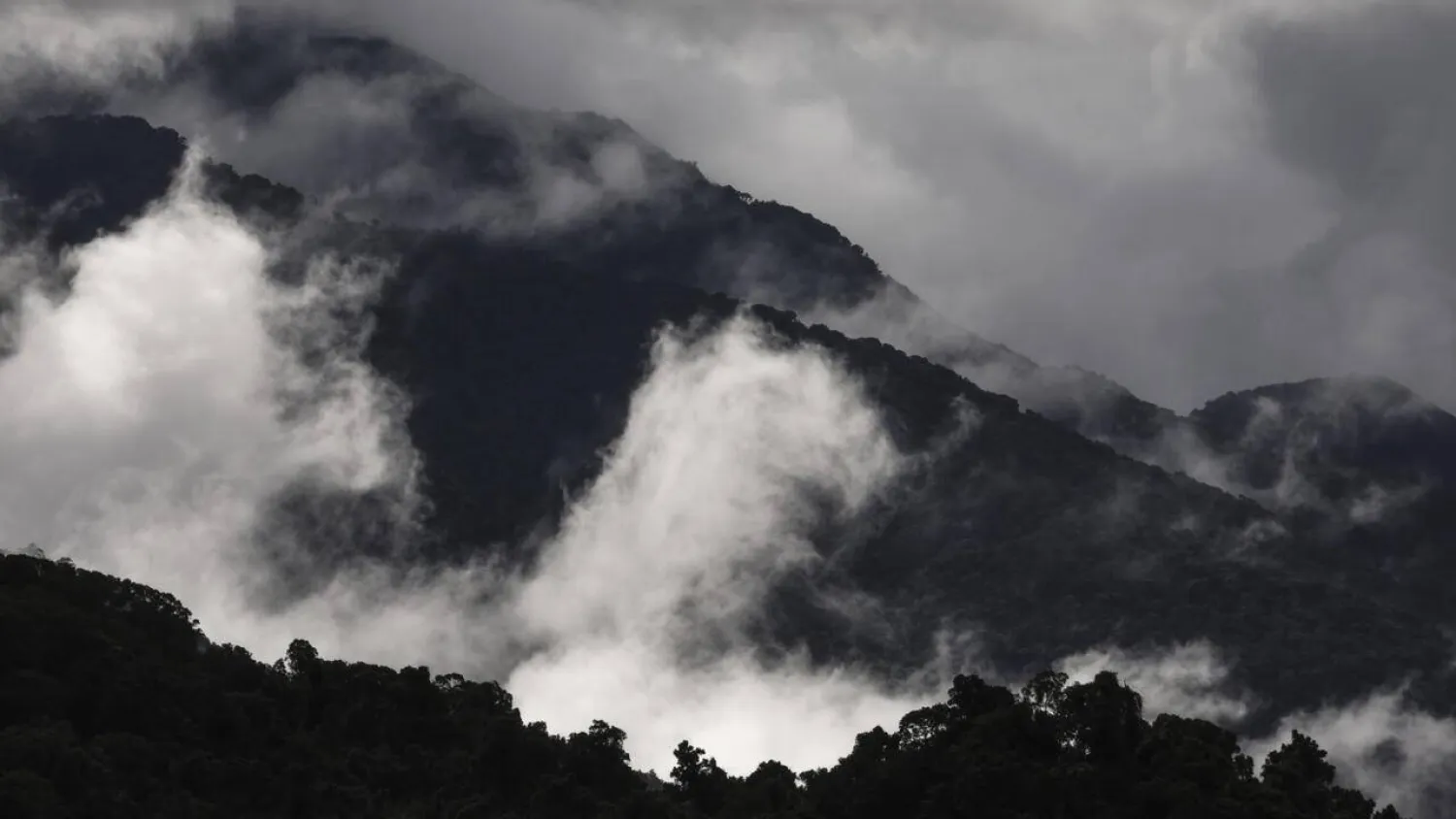
New research show tree mortality is rising across Australia's forest as the climate warms. DAVID GRAY / AFP/File
TT

Study: Climate-driven Tree Deaths Speeding Up in Australia

New research show tree mortality is rising across Australia's forest as the climate warms. DAVID GRAY / AFP/File

Australia's forests are losing trees more rapidly as the climate warms, a new study examining decades of data said Tuesday, warning the trend was likely a "widespread phenomenon".

The research used forest inventory data from 2,700 plots across the country, ranging from cool moist forests to dry savanna.

It excluded areas affected by logging, clearance or fires to examine how "background tree mortality" has changed in recent decades.

"What we found is that the mortality rate has consistently increased over time, in all of the different forest types," said Belinda Medlyn, a professor at Western Sydney University's Hawkesbury Institute for the Environment.

"And this increase is very likely caused by the increase in temperature," she told AFP.

The world has warmed by an average of nearly 1.2 degrees Celsius since the pre-industrial era. Most of this warming has occurred in the last 50 years.

The rate at which trees die off in a forest can vary in response to different types of disturbances, or as forests grow thicker and there is greater competition for resources.

But the research, published in the Nature Plants journal, excluded areas affected by fires or clearing, and also examined the stand basal area -- the sum of the cross-sectional areas of all trees in an area.

"The (mortality) trend over time remains even after we correct for basal area," explained Medlyn, who led the research.

The scale of the increase varied across the four different biomes surveyed, with the sharpest rise in tropical savannas.

There, the number of trees dying on average increased by 3.2 percent a year, from close to 15 per 1,000 in 1996, to nearly double that number by 2017.

The research found that the deaths were not being matched by tree growth, so forest stock overall is declining.

That makes it "very likely that the overall carbon storage capacity in the forests is declining over time", said Medlyn.

And given the trend was observed across four ecosystems -- tropical savanna, cool temperate forest, warm temperate forest and tropical rainforest -- it is likely to be "a widespread phenomenon, not just an Australian thing", she added.

The rising mortality rate tracks warming and drying linked to climate change, and the study found the fastest rise in hotter, dryer regions.

The research comes months after a study found Australia's tropical rainforests were among the first in the world to start emitting more carbon dioxide than they absorb.

Taken together, the findings paint a worrying picture of our continued ability to rely on forests to absorb our emissions.

"Forests globally currently sequester about one-third of anthropogenic carbon dioxide emissions," said Medlyn.

"Our study suggests their capacity to act as buffer will decline over time."


Power Restored to Thousands of Berlin Households After Attack on Lines Causes Several-Day Outage

A person with a candle stands at the window during a power outage in southwest Berlin, Germany, 05 January 2026. (EPA)
TT

Power Restored to Thousands of Berlin Households After Attack on Lines Causes Several-Day Outage

A person with a candle stands at the window during a power outage in southwest Berlin, Germany, 05 January 2026. (EPA)

Power was being restored on Wednesday to thousands of households in Berlin that had been without electricity in freezing temperatures for four days following a suspected far-left attack on high-voltage lines, authorities said.

About 45,000 households and 2,200 businesses lost their supply on Saturday morning after a fire on a bridge that carries high-voltage cables over the Teltow Canal, in the southwest of the German capital, affecting an estimated 100,000 people.

Authorities were able gradually to reconnect many to the network, but several days of work were required to repair the damage. Some 25,500 households and 1,200 businesses were still without power on Tuesday, largely in the prosperous Zehlendorf district.

It was the longest blackout in the city since the end of World War II.

Berlin's power network operator said service was gradually being restored Wednesday to all remaining households, German news agency dpa reported.

Investigators have focused on a written claim of responsibility by a far-left group, headlined “Turning off the juice to the rulers,” which said a gas-fired power plant in Berlin's Lichterfelde district had been “successfully sabotaged.” It claimed that the aim of the action was to strike the fossil-fuel energy industry, not to cause power outages.

Germany's domestic intelligence agency said self-styled “Volcano Groups” have been carrying out attacks on infrastructure in Berlin and the surrounding state of Brandenburg since 2011. A 2024 attack on a pylon that supplies a Tesla factory near Berlin temporarily halted production.


Nostalgia and New Fans as Tamagotchi Turns 30

More than 100 million of the pocket-sized plastic eggs have been sold worldwide since their debut three decades ago. (AFP)
TT

Nostalgia and New Fans as Tamagotchi Turns 30

More than 100 million of the pocket-sized plastic eggs have been sold worldwide since their debut three decades ago. (AFP)

Japan's Tamagotchi toys were a 1990s playground craze and the virtual pets that demand food and attention are still a hit among retro-loving Gen Z and nostalgic parents.

More than 100 million of the pocket-sized plastic eggs have been sold worldwide since their debut, manufacturer Bandai Namco says.

The company is showing off the Tamagotchi's evolution from bouncing black-and-white pixelated characters to color screens and wifi connectivity at a special 30th anniversary exhibition that opens in Tokyo on Wednesday.

Swinging from keychains, the Tamagotchi -- whose name is a portmanteau of the Japanese words for "egg" and "watch" -- has become a popular fashion accessory among young people in recent years, according to Bandai.

Sales of Tamagotchi merchandise, not including video games, rose around sevenfold in five years from 2019, it says.

Rafaela Miranda Freire, a 15-year-old Brazilian tourist visiting Tokyo's Harajuku shopping district with her mother, told AFP she didn't own a Tamagotchi but liked the idea.

"It's really nostalgic and cute. Like some 2000s cute aesthetic," she said, admitting that some people her age "just don't like it or think it's childish".

But old-school toys can be a healthy alternative to social media, Freire said.

"It's good. You just get off the phone and appreciate the small things in life."

- Top toy -

Last year British retailer Hamleys ranked the Tamagotchi in its list of the top 100 toys of all time, alongside the likes of Lego and the Rubik's Cube.

The digital pets, which need attending to when they are hungry, sick or have defecated on the virtual floor, grow up as users care for them -- but can die if they are neglected.

Entering the exhibition through a giant white egg, visitors can view various photo-friendly displays and a history room where they can play with some of the dozens of different models released over the years.

Nearly half of all Tamagotchi unit sales were in Japan, with 33 percent in the Americas but just two percent in other Asia-Pacific countries, Bandai Namco says.

Harajuku shopper Yumeho Akita, 25, told AFP she had good memories of raising her Tamagotchi for several months during her childhood.

"I really wanted one, and I finally got one, so I cherished it and raised the character very carefully," she recalled.

And some parents say they want their children to experience the same.

US screenwriter Justin Piasecki, on holiday in Japan, told AFP he had recently bought Tamagotchis for Christmas for his two daughters, aged four and six.

"They basically have a computer science degree in Tamagotchi at this point," the 41-year-old told AFP. "I thought I would need to show them how to do it, but now they're showing me."


'Magical' Blue Flower Changing Farmers' Fortunes in India

The butterfly pea grows wild across India. (Shutterstock)  
TT

'Magical' Blue Flower Changing Farmers' Fortunes in India

The butterfly pea grows wild across India. (Shutterstock)  

“Until a few years ago, the butterfly pea flower was just another climbing plant in my village,” said Nilam Brahma who lives in Anthaigwlao, a village in the northeastern Indian state of Assam.

Butterfly pea, also known as aparajita in India, grows as a vine and has a striking blue flower.

Around two years ago, Brahma heard that local women were making money selling the flowers, which can be made into tea, or a blue dye, according to BBC.

She decided to join them.

“The results surprised even me. The first time I earned $50 from selling dried flowers, I felt a shock. It made me believe I could control my own future,” she said.

The experiment led to a small business.

“I applied for a small loan and invested in solar dryers. The machines helped me dry flowers faster, preserve their color, and meet the quality standards demanded by buyers,” Brahma added.

Thailand and Indonesia have been the leading growers and consumers of butterfly pea flowers. But there's growing global demand for the flower, which is attracting entrepreneurs in India.

“The global demand for natural colorants is exploding,” explained Varshika Reddy, the founder of THS Impex, which exports natural dyes and additives.

Behind that demand is consumer appetite for natural ingredients and tighter controls in the US and Europe on synthetic food dyes.

In 2021, the US Food and Drug Administration (FDA) approved butterfly pea flower as a food additive.

However, in 2022 the European Food Safety Authority (EFSA) raised safety concerns about using the flower.

Both the EU and the UK classify butterfly pea flower as a "novel" food, meaning it still needs approval for widespread use.

Nevertheless, Indian entrepreneurs still see potential and want to develop India's market.

“The crop is still seen as a backyard ornamental or medicinal plant rather than a commercial commodity,” said Reddy. “There is no structured market awareness, no government classification, and no standard pricing mechanism, making farmers uncertain about returns.”

She is working with farmers to raise production standards.

“We work with a dedicated cluster of farmers and their families in Uttar Pradesh, including a significant number of women farmers. We have established formal contracts... we provide comprehensive agronomy support, including guidance on best farming practices, irrigation management, and crop-specific techniques,” Reddy said.

Others in India have spotted the commercial opportunity.

“When you infuse the flower in hot water, it turns blue, and when you squeeze lemon into it, it turns purple. That felt magical,” said Nitesh Singh, who is based just outside Delhi.

Like Reddy, he thought that the flower had much more potential in India.

“It was here for thousands of years, but nobody knew it could become clean, healthy food,” Singh added.
