


Being a Night Owl May Not Be Great for Your Heart, but You Can Do Something About It

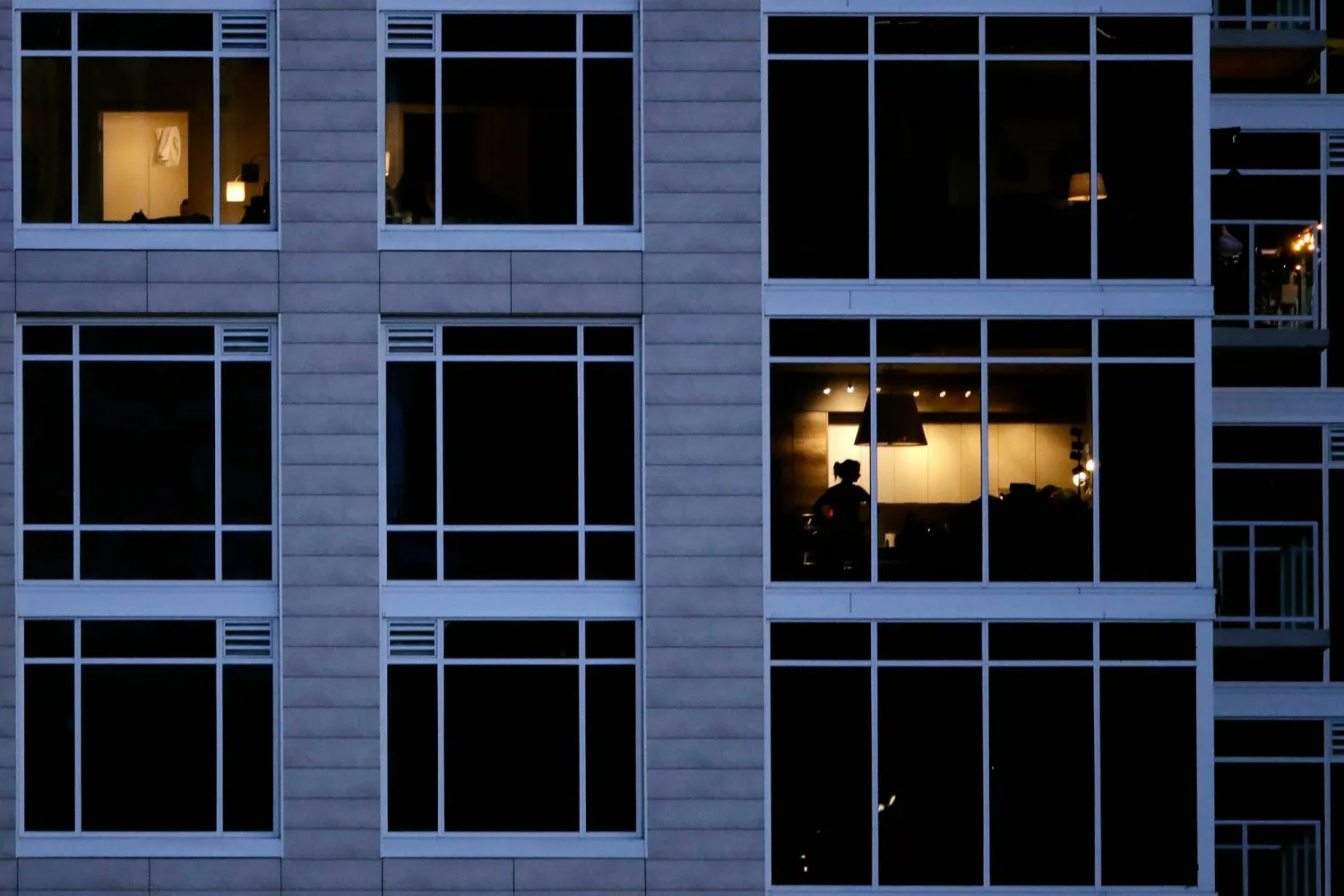
A person looks out of a window in an apartment building in Kansas City, Mo., May 3, 2020. (AP)
TT

Being a Night Owl May Not Be Great for Your Heart, but You Can Do Something About It

A person looks out of a window in an apartment building in Kansas City, Mo., May 3, 2020. (AP)

Being a night owl can be bad for your heart.

That may sound surprising but a large study found people who are more active late at night — when most of the population is winding down or already asleep — have poorer overall heart health than the average person.

“It is not like, that, night owls are doomed,” said research fellow Sina Kianersi of Brigham and Women's Hospital and Harvard Medical School, who led the study. “The challenge is the mismatch between your internal clock and typical daily schedules ” that makes it harder to follow heart-healthy behaviors.

And that’s fixable, added Kianersi, who describes himself as “sort of a night owl” who feels a boost in “my analytical thinking” after about 7 or 8 at night.

Heart disease is the leading cause of death in the US. The American Heart Association has a list of eight key factors that everyone should heed for better heart health: being more physically active; avoiding tobacco; getting enough sleep and a healthy diet; and controlling blood pressure, cholesterol, blood sugar and weight.

Where does being a night owl come in? That has to do with the body's circadian rhythm, our master biological clock. It follows a roughly 24-hour schedule that regulates not just when we become sleepy and when we’re more awake, but also keeps organ systems in sync, influencing things like heart rate, blood pressure, stress hormones and metabolism.

Everybody’s circadian rhythm is a little different. Prior research had suggested night owls might have more health problems, as well as risk factors, like higher rates of smoking and less physical activity, than people with more typical bedtimes, Kianersi said.

To learn more, Kianersi’s team tracked more than 300,000 middle-age and older adults in the UK Biobank, a huge health database that includes information about people’s sleep-wake preferences. About 8% of those people classified themselves as night owls, more active physically and mentally in the late afternoon or evening and up past most people’s bedtime. About a quarter were early-birds, most productive in the daylight hours and likewise early to bed. The rest were average, somewhere in the middle.

Over 14 years, the night owls had a 16% higher risk of a first heart attack or stroke compared to the average population, the researchers found.

The night owls, especially women, also had overall worse cardiovascular health based on meeting the heart association’s eight key factors, the researchers reported Wednesday in the Journal of the American Heart Association.

Unhealthy behaviors — smoking, insufficient sleep and poor diet — appear to be the main reasons.

“It comes down to the problem of a night owl trying to live in a morning person’s world. They’re getting up early for work because that’s when their job starts, but it may not align with their internal rhythm,” said Kristen Knutson of Northwestern University, who led recent heart association guidance on circadian rhythms but wasn’t involved in the new study.

That affects more than sleep. For example, metabolism fluctuates throughout the day as the body produces insulin to turn food into energy. That means it might be harder for a night owl to handle a high-calorie breakfast eaten very early in the day, during what normally would still be their biological night, Knutson said. And if they're out late at night, it can be harder to find healthy food choices.

As for sleep, even if you can't meet the ideal of at least seven hours, sticking to a regular bedtime and wake time also may help, she and Kianersi said.

The study couldn't examine what night owls do when the rest of the world is asleep. But Kianersi said one of the best steps to protect heart health — for night owls and anyone — is to quit smoking.

“Focus on the basics, not perfection,” he said, again, advice that’s good for everyone.


Iceland Looks to End Whale Hunting

Aerial view of a group of Humpback whales (Megaptera novaeangliae) in the Abrolhos Archipelago, Bahia State, Brazil on August 19, 2026. (Photo by Jose OSORIO / AFP)
TT

Iceland Looks to End Whale Hunting

Aerial view of a group of Humpback whales (Megaptera novaeangliae) in the Abrolhos Archipelago, Bahia State, Brazil on August 19, 2026. (Photo by Jose OSORIO / AFP)

Iceland's government will put forward in February a bill that could lead to an end to whale-hunting, a ministry spokesman told AFP on Tuesday.

Iceland is one of three countries in the world that still kills the giant marine mammals, drawing fierce criticism from animal rights groups.

"In February, a bill aimed at amending the law on whale hunting... will go before parliament," a spokesman for Iceland's industry ministry told AFP.

The text would give "special attention to recommendations drawn up concerning a permanent ban on whale-hunting", he said.

Industry Minister Hanna Katrín Frioriksson told local media outlet Visir that whale-hunting was barely profitable, and animal protection was a priority.

She noted that, last year, "nobody went out" to hunt whales despite a permit being given.

This year, however, boats did go out after whales. Yet what they caught "was far below the fixed quota", she said.

Wendy Higgins, spokeswoman for an animal protection group called Humane World for Animals, hailed the proposed bill as a "really important step" towards ending a "cruel" practice.

Iceland, Norway and Japan are the only countries that still authorize commercial hunting of whales.


Trove of Everyday Items Dating Back to 1800s Found at Buckingham Palace

 11 September 2026, United Kingdom, London: Members of the Massed Bands of the Guards Division perform on the forecourt of Buckingham Palace in London during a commemorative Changing of the Guard ceremony marking the 25th anniversary of the 11 September 2001 terrorist attacks. (dpa)
11 September 2026, United Kingdom, London: Members of the Massed Bands of the Guards Division perform on the forecourt of Buckingham Palace in London during a commemorative Changing of the Guard ceremony marking the 25th anniversary of the 11 September 2001 terrorist attacks. (dpa)
TT

Trove of Everyday Items Dating Back to 1800s Found at Buckingham Palace

 11 September 2026, United Kingdom, London: Members of the Massed Bands of the Guards Division perform on the forecourt of Buckingham Palace in London during a commemorative Changing of the Guard ceremony marking the 25th anniversary of the 11 September 2001 terrorist attacks. (dpa)
11 September 2026, United Kingdom, London: Members of the Massed Bands of the Guards Division perform on the forecourt of Buckingham Palace in London during a commemorative Changing of the Guard ceremony marking the 25th anniversary of the 11 September 2001 terrorist attacks. (dpa)

A pair of battered, hobnailed boots and a decades-old newspaper cutting are among a trove of everyday objects unearthed during restoration work at Buckingham Palace, reported the BBC.

The misplaced items are thought to belong to staff who worked at the palace decades ago and were found by workers carrying out the £369 million refurbishment.

A ticket for a “whist drive” - a card game event hosted by the Palace on April 14, 1949 - was found embedded in a lump of brick.

Several betting slips, a bottle of spring water, an empty Silk Cut cigarette carton and a newspaper article about the gang jailed for the 1963 Great Train Robbery were also found under floorboards.

Blank Littlewoods Football Pool betting slips from 1957 and a scrap of West End theatre listings from The Standard newspaper in 1889 were also found, alongside fragments of Minton decorative ceramic tiles from a fireplace hearth, with the design dated to around the mid-1800s, according to BBC.

Among the discoveries was a typed schedule detailing Queen Elizabeth II's plans to host a diplomatic reception in her Silver Jubilee year of 1977.

It revealed the monarch would work the room in a “clockwise direction,” and that aides were asked to encourage the 350 British guests to mingle with the diplomats at the annual gathering.

Also discovered were pages from the Daily Express newspaper in 1966 detailing the “maximum security” prison where the Great Train Robbers were incarcerated.

The article had pictures of Durham Prison, revealing that “the men who were found guilty of stealing a fortune in mailbags spend their week stitching them for nine shillings.”

BBC wrote that King Charles and Queen Camilla are currently residing in Clarence House, which stands beside St James's Palace and was once the Queen Mother's home.

They will not live in Buckingham Palace after the refurbishment is completed.


Europe Puts into Orbit Two Earth Observation Satellites

A Vega-C rocket carrying European satellites FLEX and Sentinel-3C lifts off from the Guiana Space Center in Kourou, French Guiana, on September 15, 2026. (AFP)
TT

Europe Puts into Orbit Two Earth Observation Satellites

A Vega-C rocket carrying European satellites FLEX and Sentinel-3C lifts off from the Guiana Space Center in Kourou, French Guiana, on September 15, 2026. (AFP)

The European Space Agency has successfully put into orbit two satellites designed to better detect extreme weather events linked to climate change, officials said.

The European Vega-C rocket successfully launched the Sentinel-3C and Flex satellites after lifting off from the Kourou space center in French Guiana at 10:21 pm Monday (0121 GMT Tuesday), according to an AFP journalist on the scene.

The two satellites were placed into a sun-synchronous orbit nearly two hours after liftoff.

The first satellite, Flex (Fluorescence Explorer), will provide data on the impact of heatwaves on plant matter.

It will monitor fluorescence, the red light emitted by plants when they carry out photosynthesis, aiming to establish the link between "plant stress and fluorescence" and to "quantify it", head of the Flex program Thierry Huiban told AFP at Thales Alenia Space in April.

The second satellite, the Sentinel-3C from the European Union's Copernicus Earth observation program, will measure the marine environment -- including temperature, wave height and ocean currents -- as well as land use and land cover, aiming to optimize yields to prevent food crises.

Such missions are "essential" in helping with the "climate change we are experiencing", said Simonetta Cheli, Director of Earth Observation Programmes at the European Space Agency (ESA), speaking from Kourou.
