
When 'That Disease' Became Mine

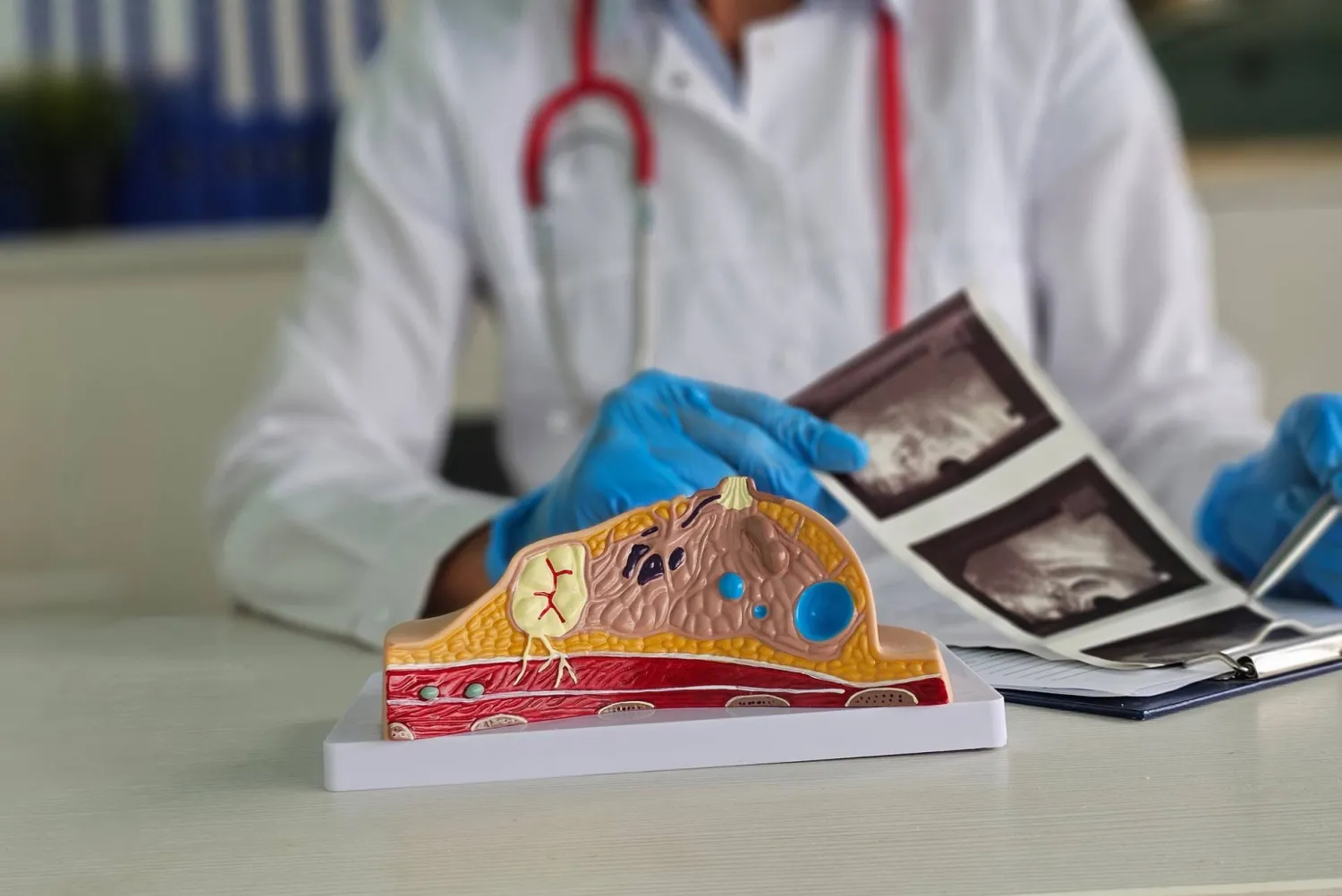
A breast radiologist reviews ultrasound images and examination results. (Shutterstock)
TT

When 'That Disease' Became Mine

A breast radiologist reviews ultrasound images and examination results. (Shutterstock)

No one prepares you for that moment. For that phone call. For the instant you feel the life you have built, with care, patience, and love, beginning to collapse. “I’m sorry... we found cancer cells.” How? Why?

All I could see were the faces of my two daughters. Had I failed them? Would I still be here to watch them grow? Would I still get to be their mother? No one prepares you for the fear that follows those words.

How could this happen? No one in my family has ever had breast cancer. I never skipped my annual checkups. In fact, I had undergone my routine mammogram just one month earlier. It showed nothing. No warning signs. No reason to worry.

So how? How? How? Then time seemed to stop.

A procession of faces flashed before me: my husband, my parents, my siblings, my family, my friends, my colleagues. One question overwhelmed every other thought: How was I going to tell them?

And then came the hardest question of all. How was I going to tell my daughters?

In that moment, I felt I had somehow let everyone down.

My own body, one I had spent years caring for, had betrayed me. It had pulled me into unfamiliar territory, a place I never imagined I would have to enter. I exercise with almost obsessive discipline. I pay close attention to what I eat. I rarely get sick. Even COVID somehow passed me by. So how had this happened?

Once the initial shock began to fade, another part of me took over: the journalist. Instead of asking only, Why me? I began asking the questions I have spent my career asking.

What do the facts say?

What do the numbers tell us?

What are the treatment options?

What are the chances of recovery?

The answers surprised me. Nearly 90 percent of women diagnosed with breast cancer have no inherited genetic mutation linked to the disease and no family history of it. That reality challenges one of the most common assumptions many of us carry: that breast cancer is primarily hereditary. It also made me question the countless medical forms we fill out, where family history often feels like the defining measure of our risk.

I learned something else I wish someone had told me years ago: an annual mammogram may not detect a tumor in its earliest stages, while an MRI can sometimes reveal what other imaging cannot. I knew none of this. I wish I had.

By the grace of God, and because my cancer was caught early, I found myself facing a disease with a clear treatment plan and an excellent prognosis.

What I am going through is deeply personal, and something I would never wish on anyone. My first instinct was to keep it private. I thought that if I didn’t talk about it, perhaps I could pretend that the long road of treatment ahead wasn’t real. Perhaps silence would make it easier.

Instead, the opposite happened. The more I learned, the more I felt a responsibility to speak. I realized that staying silent would not change my reality. But it might deny another woman information that could change hers.

That is why I decided to write. Not because I am asking for sympathy. Not because I am seeking pity. I have been overwhelmed by the love, kindness, and support I have received, and I am deeply grateful for every message, every prayer, and every hand that has reached out to help me.

I am writing because I now understand that my story is not unusual. Thousands of women are living this same experience, quietly, and often alone.

Today, I find myself searching for women who have walked this path before me so I can learn from them. At the same time, I am choosing to make my own journey public in the hope that it may help someone else.

Perhaps another woman, somewhere far away, will read these words before finally scheduling the screening she has postponed for months. Perhaps she will ask for a second opinion. Perhaps she will insist on an MRI after a normal mammogram if something still doesn’t feel right.

Or perhaps she will simply find comfort in seeing me continue to write, continue to work, continue to appear on television, living my life while navigating treatment. I am not afraid of what lies ahead. Treatment will be difficult. There will be hard days. I know that.

But I also know this: I can endure pain. I will fight with everything I have, with my strength, my spirit, my body, and every ounce of determination I possess. I will fight for my daughters. For my husband. For my parents, my siblings, and my family. For my friends, who have become family in this life far from home.

I will fight. Perhaps it will defeat me. Perhaps I will defeat it. But I will never surrender.

To every woman who has fought, or is still fighting, this battle: I stand with you. I may grow tired. I may cry. I may have moments when I feel overwhelmed.

But I will never stop living. I will never stop loving. I will never stop finding joy. And I will never stop doing the work that gives my life purpose.

Breast cancer is now part of my story. But it will not be the ending of it. And I refuse to let it define who I am. I also hope to challenge a mindset that still exists in many of our communities: a fear so deep that people hesitate to even say the word *cancer* aloud, as though speaking its name somehow gives it power.

I believe the opposite is true. Naming it is the first step toward confronting it. Talking about it is the first step toward awareness. Awareness is the first step toward saving lives.

My name is Rana Abtar. I have breast cancer. It is part of my story. It is not my identity. And it will never define the life I choose to live. Because if this disease has entered my life, then I intend to confront it with the one thing it can never understand: A relentless love of life.


Return of Swarming Moth Spectacle Has Australia in a Flutter

This picture taken on October 1, 2026 shows a Bogong moth among the leaves of a tree in Sydney. (Photo by David WILLIAMS / AFP)
TT

Return of Swarming Moth Spectacle Has Australia in a Flutter

This picture taken on October 1, 2026 shows a Bogong moth among the leaves of a tree in Sydney. (Photo by David WILLIAMS / AFP)

Moth swarms so thick they can blot out the stars are fluttering across Australia, heralding a migratory spectacle unseen since the creature's brush with extinction nearly 10 years ago.

The great migration of the Bogong moth was once a yearly feature of the Australian spring, the insects humming down the nation's east coast in their billions as they searched for cooler climes.

But drought, pesticides and habitat destruction triggered an unprecedented collapse that began in 2017, eventually wiping out an estimated 99.5 percent of the Bogong moth population.

While vast clouds of flying bugs might not be everyone's cup of tea, scientists have been delighted to find that the Bogongs are back.

"There have been happy tears in my office because this is what nature should be," said conservation biologist Marissa Parrott.

"People are noticing those big swarms again. They can celebrate what I think is one of nature's great spectacles."

In a good year, four billion moths or more would escape the inland heat to seek shelter in the alpine caves of eastern Australia.

"So many Bogong moths would come through that they could block out the stars and the moon as they went overhead," said Parrott, from Zoos Victoria.

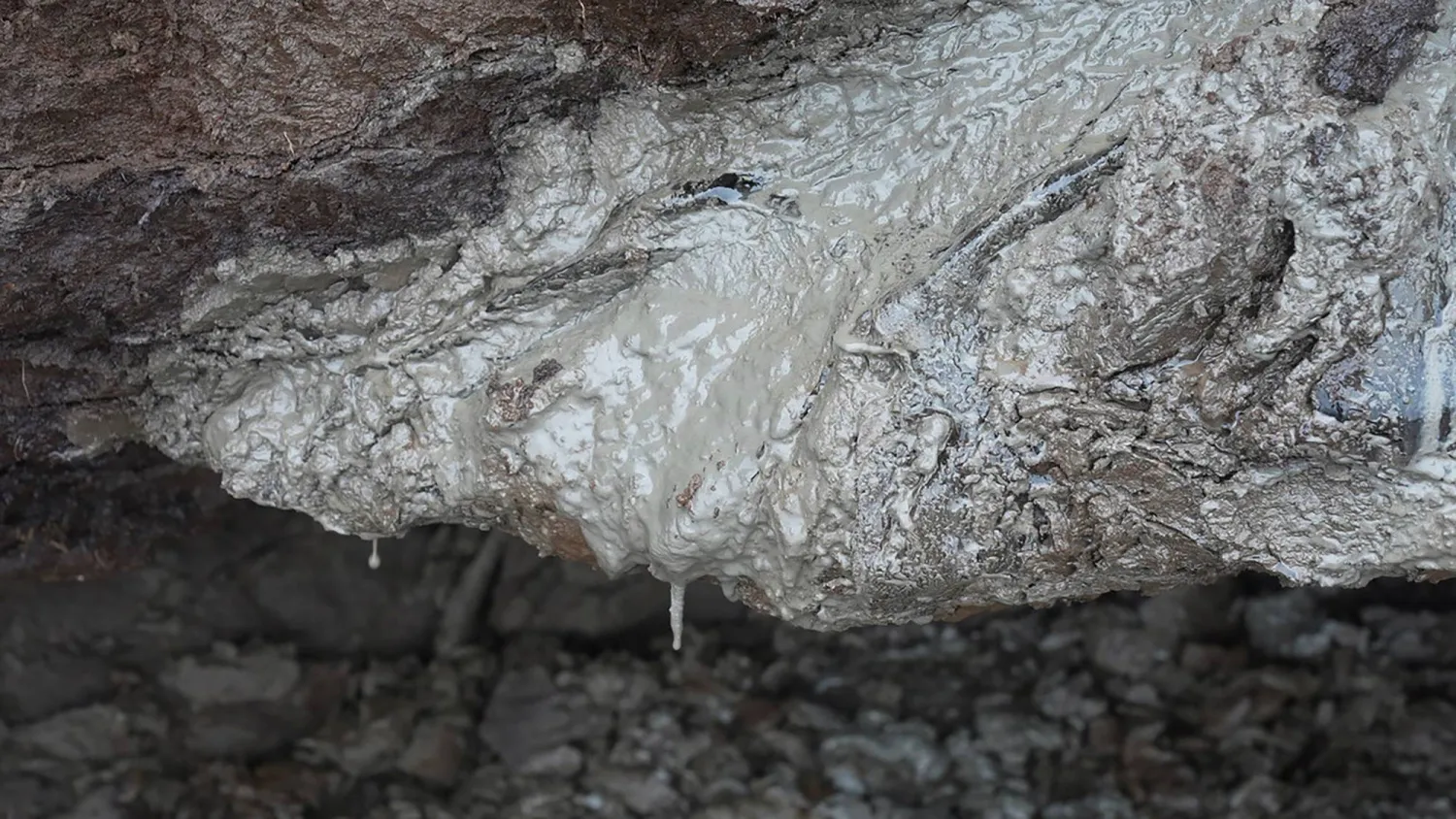
Photos showed how the endangered moths clustered together so densely inside their caves, it was impossible to see the rock beneath.

"They get up into the mountains and into these caves, where they make this beautiful tiling pattern," said Western Sydney University insect researcher Eleanor Drinkwater.

"They cover the walls in this very dense mat of moths.

"They hang out there until the weather starts getting cooler, and they come back down to their breeding grounds."

Their migration has long fascinated scientists, who have puzzled over how they found their way on a journey they only ever make once.

By placing a tether around captive moths and projecting stars on the wall, researchers last year showed how Bogongs used the Milky Way.

They were the first invertebrates -- a broad group of animals including spiders, snails and worms -- shown to use celestial navigation for such long trips.

Bogong moths are thought to help plants spread pollen and are also a key food source for the mountain pygmy possum, a critically endangered cave-dwelling marsupial.

"They are very, very important to Australian ecosystems," Drinkwater said.

Drawn towards the blazing stadium floodlights, Bogong swarms caused havoc at the 2000 Olympic Games in Sydney.

Forecasters warned that heavy rain was about to drench the event's closing ceremony -- only to realize the radar had picked up a cloud of Bogongs, AFP reported.

While the Bogong migration continued in the years following the population crash, scientists were aghast at how few moths were making the journey.

"People described going into the caves and finding barely any moths, and just kind of being in shock," Drinkwater said.

Researchers are still working to better understand what contributed to the Bogong bounce-back, but believe a spate of wetter weather has helped.

With a severe El Nino forecast to send temperatures soaring over summer, scientists hope the rebound is not short lived.

"It's great they're back, and we're really excited they're back," said Drinkwater.


Heat-trapping Gas Once Frozen in Arctic Ground is Slowly Leaking, Warming the Planet

FILE - Permafrost melts on the coast in Newtok, Alaska, Aug. 16, 2024. (AP Photo/Rick Bowmer, File)
TT

Heat-trapping Gas Once Frozen in Arctic Ground is Slowly Leaking, Warming the Planet

FILE - Permafrost melts on the coast in Newtok, Alaska, Aug. 16, 2024. (AP Photo/Rick Bowmer, File)

As Ted Schuur stepped along the edges of Smith Lake, a bubble surfaced from the muck underfoot. And then another.

They're bubbles of methane, a potent heat-trapping gas made from decomposing plants and animals that had once been stuck in Alaska's frigid permafrost. But that frozen ground is thawing because the Arctic is warming four times faster than the rest of the globe. For thousands of years that frozen ground stored dead plants and animals, but the accelerating thaw is allowing them to decay into methane and carbon dioxide.

“Once you start leaking this carbon out, there’s so much in the ground that it’s not going to shut off,” said Schuur, an ecologist at Northern Arizona University, calling it one of climate change's scary tipping points. “Essentially every year is setting a permafrost record.”

There’s three times as much carbon still frozen in permafrost than what’s now in the air, but all over the Arctic those heat-trapping gases are escaping into the atmosphere. Their release adds to what's already in the air from humanity's burning coal, oil and natural gas, changing the delicate balance of how a warming world deals with the buildup of heat-trapping carbon, Schuur said.

Permafrost is ground that stays frozen — below 32 degrees Fahrenheit (zero degrees Celsius) — for at least two years and often for centuries and even millennia. That frozen ground — found in Alaska, Canada, Siberia, Antarctica and high mountain elevations elsewhere — has special advantages, trapping decaying matter, keeping it from turning into greenhouse gases and just being firm enough for communities and industries to build their lives upon.

But warming is undercutting that, The Associated Press reported.

Two different studies project that by the end of this century, those previously trapped gases in permafrost will add nearly half a degree of warming (about a quarter degree Celsius) in addition to warming from the burning of fossil fuels. Over that time period, that'll warm the Earth about as much as a major industrialized country like the United States or the whole of Europe, scientists said.

A sleeping giant awakens “The permafrost system is really like a sleeping giant,” said Gustaf Hugelius, a permafrost expert at Stockholm University.

For thousands of years, when the climate was somewhat stable, the Arctic helped Earth's delicate carbon cycle by acting as a sink. That means plants in the cold areas used to pull some heat-trapping gas out of the air and capture it in the frozen ground, with the Arctic essentially withdrawing more carbon from the air than it added, benefiting the entire globe.

A few years ago, warming caused that balance to shift so that once-frozen ground is venting more heat-trapping gases than it takes in. Instead of reducing climate change, the Arctic is now adding to the problem, said Columbia University ecologist Duncan Menge.

Permafrost thaw, along with other “warming-induced emissions” from fires and changes to wetlands and lakes, are likely to increase warming by 20% by the end of the century, according to a September study co-authored by Arctic ecologist Sue Natali of the Woodwell Climate Research Center.

It may be a small amount, not worthy of scenarios of doom, but it’s something “that we’re going to have to deal with” on top of everything else, said University of Victoria climate scientist Andrew Weaver, who first calculated the half-a-degree of expected permafrost warming in a 2012 study.

What’s troublesome is that when politicians and scientists talk about future warming, they’re usually not accounting for the extra greenhouse gases from permafrost thawing, said Natali and Hugelius. So while the UN says without policy changes the world will warm 2.6 degrees C (4.7 degrees F) above pre-industrial times by the end of the century, it leaves out a few tenths of a degree from thawing permafrost, they said.

Thawing permafrost is not just messing with the planet's carbon balance, it's destabilizing the very land underfoot, making once-rigid ground collapse and sink, Natali said.

Frozen ground that's no longer firm became deadly this summer. Flooding in Nepal killed more than 1,000 people after part of a glacier collapsed, which happened after a heat wave that set records for the location and time of year, according to Berkeley Earth climate scientist Robert Rohde.

Ground that’s solidly frozen holds up mountains and skyscrapers, but once the permafrost thaws, it’s no longer strong enough. That was likely one of several still-to-be-determined factors in the Nepal disaster, said George Washington University permafrost scientist Dmitry Streletskiy, lead author of an August study that found significant permafrost thawing in most of the Northern Hemisphere.

Permafrost in Alaska and other Arctic areas has long supported homes, roads and pipelines, but it’s no longer so reliable. For example, in Galbraith on Alaska’s North Slope, a recently formed 10-foot (3-meter) deep, craterlike hole was visible during a recent foray by scientists.

These holes, known as slumps, occur when ice melts and the land collapses, releasing methane, Natali said. A Woodwell team has identified more than 40,000 of these slumps across the Arctic using satellites, according to scientist Kyle Arndt.

University of Alaska Fairbanks geophysicist Vladimir Romanovsky said when he first started studying permafrost in the 1970s, “everybody believed permafrost was very stable. People thought it was forever.”

Not anymore, he said.

“It took some thousands and tens of thousands of years to sequester this carbon into permafrost,” Romanovsky said. “You need a new ice age to put back this ice into the ground.”

A time capsule to the last ice age is visible under a Fairbanks hill where the US Army drilled a massive permafrost research tunnel. Artificially cooled and used for training, the tunnel's icy walls are dotted with bones of bison and mammoths, producing a sewage-like odor that vividly illustrates where the Arctic methane comes from.

“Every time I go there, I'm reminded of the magnitude of the problem. You smell it. You see it. You feel it all around you,” Natali said. “You see how deep the ice is and just how the carbon is buried and then when you go on top and you see these large thaw features. ... This isn't a problem of 100 years from now. This is a problem of right now.”


When the World Saw van Gogh as ‘a Madman,’ she Saw his Genius

“Four Sunflowers Gone to Seed” Credit...Ilvy Njiokiktjien for The New York Times
TT

When the World Saw van Gogh as ‘a Madman,’ she Saw his Genius

“Four Sunflowers Gone to Seed” Credit...Ilvy Njiokiktjien for The New York Times

By Nina Siegal

It was April 1912, and Helene Kröller-Müller was on a shopping spree. She wasn’t interested in the latest shoes or fashions. She was on the hunt for Vincent van Gogh’s portrait of Madame Augustine Roulin.

She managed to find “La Berceuse,” as the painting is known, at a Paris gallery, and bought it on the spot. The next day, she went from gallery to gallery, looking for more van Gogh paintings, and took home a great haul: 15 in a single trip.

Kröller-Müller, a German heiress, had made it her life’s goal to establish a great public collection of modern art. She became one of the first major collectors to recognize van Gogh’s genius.

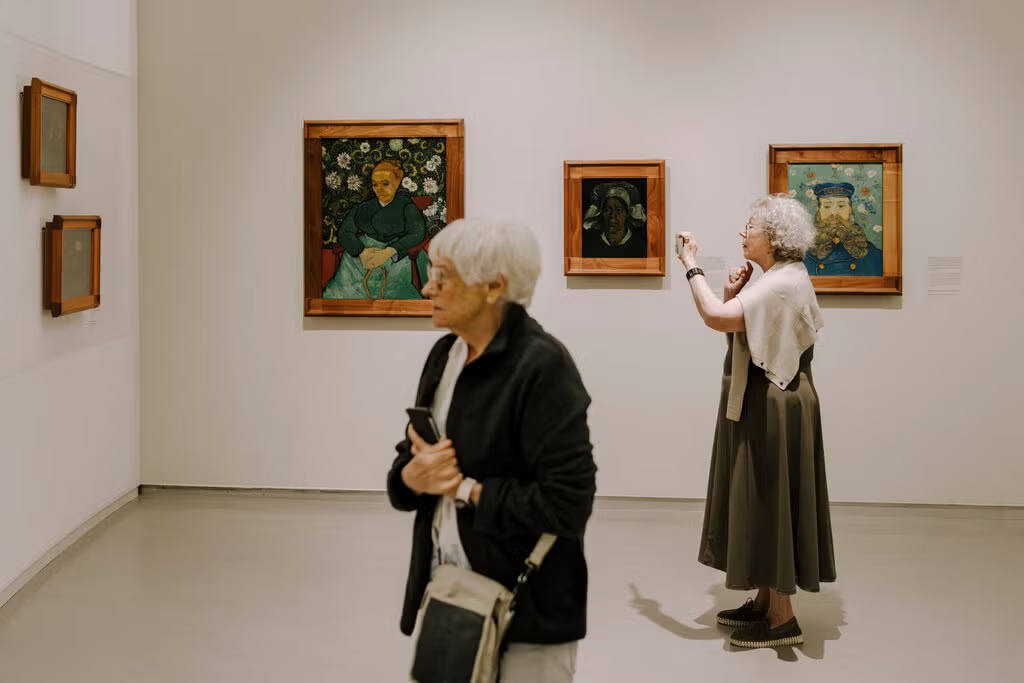
Now, more than a century after that Paris shopping spree, the entire collection of van Gogh paintings she assembled is on view together at the museum she built in the middle of a Dutch forest — for the first time since 1984.

It is the second-largest trove of van Gogh’s works anywhere, after the Van Gogh Museum in Amsterdam, and it was assembled by a woman who took great risks in buying his art at a time when few others dared.

The exhibition “Van Gogh: All Our Paintings” includes works like “La Berceuse,” hanging on the left side of the rear wall. Credit...Ilvy Njiokiktjien for The New York Times

The exhibition at the Kröller-Müller Museum in Otterlo, the Netherlands, called “Van Gogh: All Our Paintings” and running through Jan. 3, presents the whole collection as Kröller-Müller conceived it: an expression of the artist’s development, range and spiritual aspirations.

“This is a rare moment that all the paintings are in the house,” said Benno Tempel, the museum’s director. “It hasn’t happened for such a long time.”

The show is organized around three themes — faith, hope and love — reflecting the spiritual dimension that Kröller-Müller saw in van Gogh’s work. It includes many of his popular works, scattered throughout these broad categories, such as “Café Terrace at Night,” “Portrait of Joseph Roulin” and “The Sower.”

Kröller-Müller, the daughter of a German industrialist, had an early interest in art but had to end her formal education at age 16. At 18, she married one of her father’s employees, who would later take over the family business. Her husband, Anton Müller, encouraged her intellectual pursuits, including her interest in art, a socially acceptable hobby for wealthy women of the era.

“If you were married at the time, you gave all your money and assets to your husband," said the exhibition’s curator, Renske Cohen Tervaert. “So it was quite open-minded of him, in a way, to allow her to follow her dream in this way.”

But Kröller-Müller didn’t collect as a hobbyist. She embraced art with a kind of religious fervor.
She bought her first van Gogh painting in 1908 for 110 guilders — about the price of an exquisite dress, said Eva Rovers, her biographer. Four months later, she bought his “Four Sunflowers Gone to Seed” for 4,000 guilders.

Prices were rising in large part because she was buying so much.

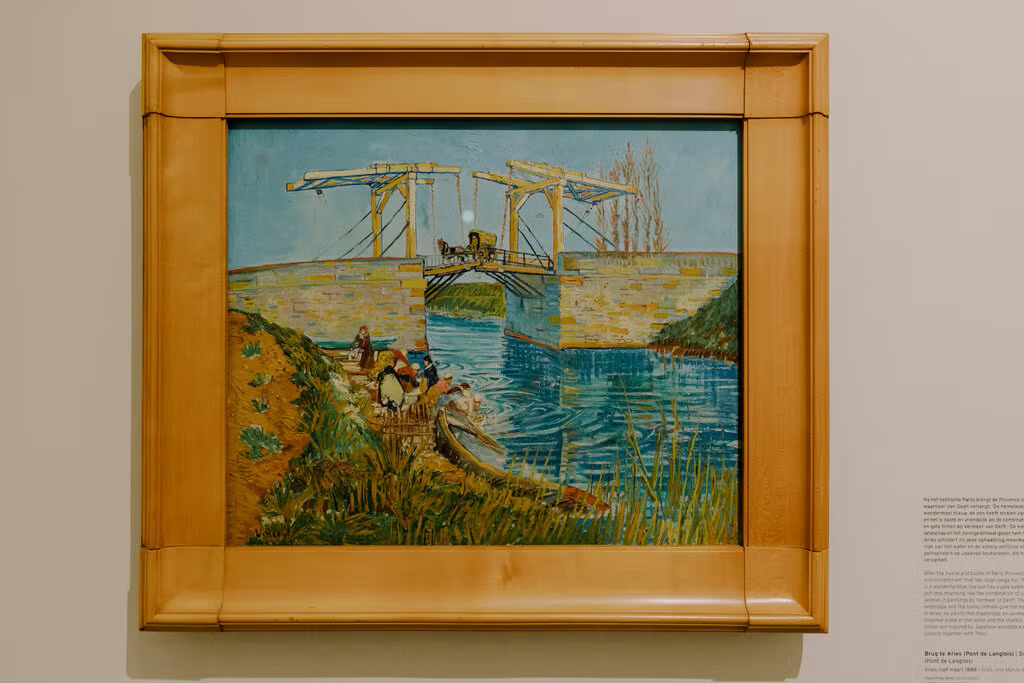
“Bridge at Arles” Credit...Ilvy Njiokiktjien for The New York Times

Kröller-Müller’s collecting philosophy was largely shaped by the art historian Henk Bremmer, with whom she took an art appreciation class, Tervaert said. She added that for Bremmer, the key component of good art was that it made the viewer feel an emotion or experience something spiritual.

Kröller-Müller went looking for art that stirred her spirit and found van Gogh.

Rovers said that van Gogh was not well regarded in the early 20th century. “If the general public knew him at all, they really considered him a madman who could not paint,” she said.

But because van Gogh had been a preacher before becoming an artist, Kröller-Müller regarded him as a man who had found a connection to faith through his art.

“She understood his wish to transcend suffering, and his aim to use art to transcend suffering,” Rovers said.

While most collectors in the Netherlands were buying old masters and 19th-century Dutch painting, Kröller-Müller focused on Cubism, Pointillism and De Stijl artists, including Piet Mondrian, Fernand Léger and Pablo Picasso.

Van Gogh’s work dominated the collection for a simple reason, Rovers said: He “stood at the cradle of the beginning of avant-garde art.” Kröller-Müller built a collection, Rovers added, “that could show the broad variety of his work — landscapes, portraits, cityscapes.”

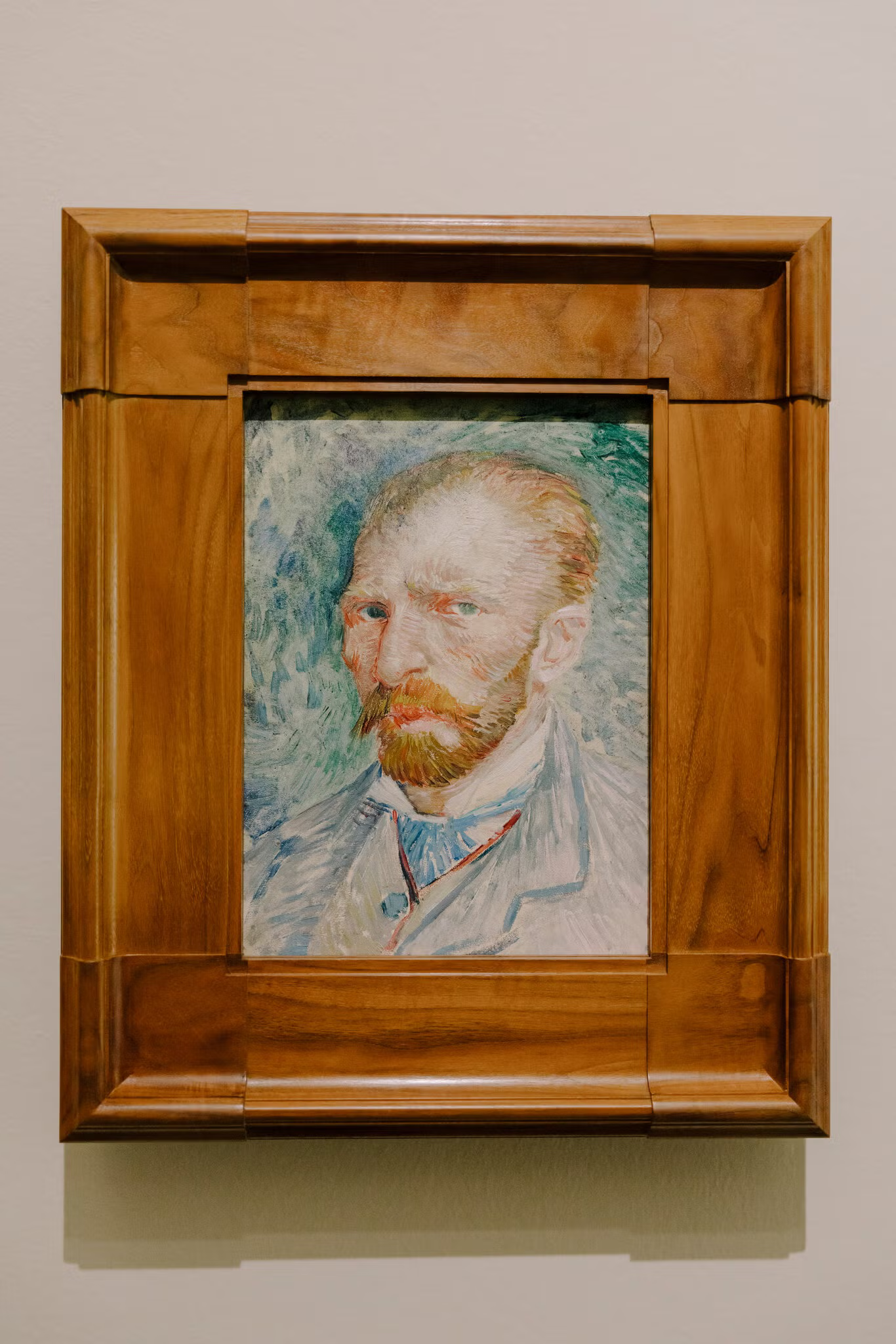
A van Gogh self-portrait from 1887. The show is organized around the themes of faith, hope and love. Credit...Ilvy Njiokiktjien for The New York Times

In the late 1930s, as Europe was approaching World War II, Kröller-Müller’s health was declining, along with her family fortune.

She decided to offer her art collection, worth about 4 million guilders at the time, along with family property in the Veluwe forest, to the Dutch state, as long as it would agree to build a museum to display it. She imagined the museum, with a 62-acre sculpture garden, as a retreat for spiritual and philosophical inquiry.

The result was a rare trove in a remote Dutch forest — now a national park — built around her collection.

The Van Gogh Museum in Amsterdam has more than 200 paintings, but its collection has a different history: It was established to show the collection of the van Gogh family, who owned the artist’s unsold works. The Kröller-Müller represents a collector’s eye.

“The Van Gogh Museum is just what was left over,” Tempel said. “This is a chosen collection.”

The New York Times