Another US Aircraft Carrier in Middle East Waters Ahead of 2nd Round of Iran-US Nuclear Talks 

This photograph released by the US Navy shows a MH-60S Sea Hawk helicopter hovering over the USS Carl Vinson aircraft carrier while operating in the Middle East on April 12, 2025. (Petty Officer 3rd Class Nathan Jordan/US Navy via AP)
TT

Another US Aircraft Carrier in Middle East Waters Ahead of 2nd Round of Iran-US Nuclear Talks 

This photograph released by the US Navy shows a MH-60S Sea Hawk helicopter hovering over the USS Carl Vinson aircraft carrier while operating in the Middle East on April 12, 2025. (Petty Officer 3rd Class Nathan Jordan/US Navy via AP)

A second US aircraft carrier is operating in Mideast waters ahead of the next round of talks between Iran and the United States over Tehran's rapidly advancing nuclear program, satellite photos analyzed Tuesday by The Associated Press showed. 

The operation of the USS Carl Vinson and its strike group in the Arabian Sea comes as suspected US airstrikes pounded parts of Yemen controlled by the Iranian-backed Houthi militias overnight into Tuesday. American officials repeatedly have linked the US' monthlong campaign against the Houthis under President Donald Trump as a means to pressure Iran in the negotiations. 

Questions remain over where the weekend talks between the countries will be held after officials initially identified Rome as hosting the negotiations, only for Iran to insist early Tuesday they would return to Oman. American officials so far haven't said where the talks will be held. 

The stakes of the negotiations couldn't be higher for the two nations closing in on half a century of enmity. Trump repeatedly has threatened to unleash airstrikes targeting Iran's nuclear program if a deal isn't reached. Iranian officials increasingly warn that they could pursue a nuclear weapon with their stockpile of uranium enriched to near weapons-grade levels. 

US Mideast envoy Steve Witkoff, who represented America in last weekend's talks in Oman, separately signaled that the Trump administration may be looking at terms of the 2015 nuclear deal that the president unilaterally withdrew from in 2018 as a basis for these negotiations. He described the talks last weekend as “positive, constructive, compelling.” 

“This is going to be much about verification on the enrichment program, and then ultimately verification on weaponization,” Witkoff told Fox News on Monday night. “That includes missiles, the type of missiles that they have stockpiled there. And it includes the trigger for a bomb.” 

He added: “We're here to see if we can solve this situation diplomatically and with dialogue.” 

Vinson joins Truman as second US aircraft carrier in Middle East 

Satellite photos taken Monday by the European Union's Copernicus program showed the Vinson, which is based out of San Diego, California, operating northeast of Socotra, an island off Yemen that sits near the mouth of the Gulf of Aden. The Vinson is accompanied by the Ticonderoga-class guided missile cruiser USS Princeton and two Arleigh Burke-class guided missile destroyers, the USS Sterett and the USS William P. Lawrence. 

The US ordered the Vinson to the Mideast to back up the USS Harry S. Truman, which has been launching airstrikes against the Houthis since the American campaign started March 15. Footage released by the Navy showed the Vinson preparing ordinance and launching F-35 and F/A-18 fighter jets off its deck in recent days. 

The US Navy's Bahrain-based 5th Fleet, which oversees the Mideast, declined to discuss details of the Vinson's operations. 

Witkoff suggests 3.67% uranium enrichment for Iran  

Meanwhile, Witkoff offered for the first time a specific enrichment level he'd like to see for Iran's nuclear program. Today, Tehran enriches uranium to up to 60% — a short, technical step from weapons-grade levels of 90%. 

“They do not need to enrich past 3.67%,” Witkoff told Fox News. "In some circumstances, they're at 60%, in other circumstances, 20%. That cannot be. 

“And you do not need to run, as they claim, a civil nuclear program where you're enriching past 3.67%. So this is going to be much about verification on the enrichment program, and then ultimately verification on weaponization.” 

The 2015 nuclear deal Iran agreed to with world powers under President Barack Obama saw Tehran agree to drastically reduce its stockpile of uranium and only enrich up to 3.67% — enough for its nuclear power plant at Bushehr. Iran in exchange received access to frozen funds around the world, and sanctions were lifted on its crucial oil industry and other sectors. 

Iran's Javan newspaper, which is believed to be close to its paramilitary Revolutionary Guard, suggested in an editorial Tuesday that Tehran would be open to reducing its enrichment. 

“Something that we have done before, why should we not carry it again and reach a deal?” the editorial asked. “This is not called a withdrawal by Iran from its ideals anywhere in the world.” 

When Trump withdrew from the deal in 2018, however, he pointed at Iran's ballistic missile stockpile as one reason to leave the deal. Witkoff said any deal with Iran would have to include “missiles, the type of missiles that they have stockpiled there and it includes the trigger for a bomb.” 

Iran relies on its ballistic missiles as a hedge against regional nations armed with advanced fighter jets and other American weaponry. Getting it to abandon its missile program likely will be difficult in negotiations. 


NATO: Ukraine Still Receiving Arms Despite Mideast War

NATO Secretary General Mark Rutte via Reuters/File
TT

NATO: Ukraine Still Receiving Arms Despite Mideast War

NATO Secretary General Mark Rutte via Reuters/File

Ukraine is still getting essential defense equipment despite the war in the Middle East, which is depleting stockpiles in Europe and the United States, NATO Secretary General Mark Rutte said Thursday.

"The good news is that essential equipment into Ukraine continues to flow," he told reporters. That included American-made Patriot missile interceptors, which Ukraine desperately needs, he added, AFP reported.

The PURL program, launched last year, allows Ukraine to receive US equipment financed by European countries.

Some 75 percent of the missiles used by Patriot batteries in Ukraine have been supplied through the program, and 90 percent of the munitions used by other air-defense systems, Rutte added.

Rutte called on European countries to increase their own production capacity.

"They need to produce more extra production lines, extra shifts, opening new factories. The money is there," he said.


Germany FM Says 'Encouraging' if US Speaking Directly to Iran

German Foreign Minister Johann Wadephul. (Reuters: File Photo)
TT

Germany FM Says 'Encouraging' if US Speaking Directly to Iran

German Foreign Minister Johann Wadephul. (Reuters: File Photo)

Germany's foreign minister Thursday said it was encouraging if the United States was talking directly to Iran to end the war in the Middle East, but Washington should make its intentions clear.

"I hear that there are signs that the US is speaking directly to Iran. I think that this is encouraging and this is welcome," Johann Wadephul told reporters before heading into the meeting of G7 foreign ministers outside Paris, AFP reported.

With US Secretary of State Marco Rubio set to join the discussions from Friday, he added: "For the German government it is of great importance to know precisely what our American partners are intending."


US Envoy Witkoff Says Iran is Seeking an Off-ramp

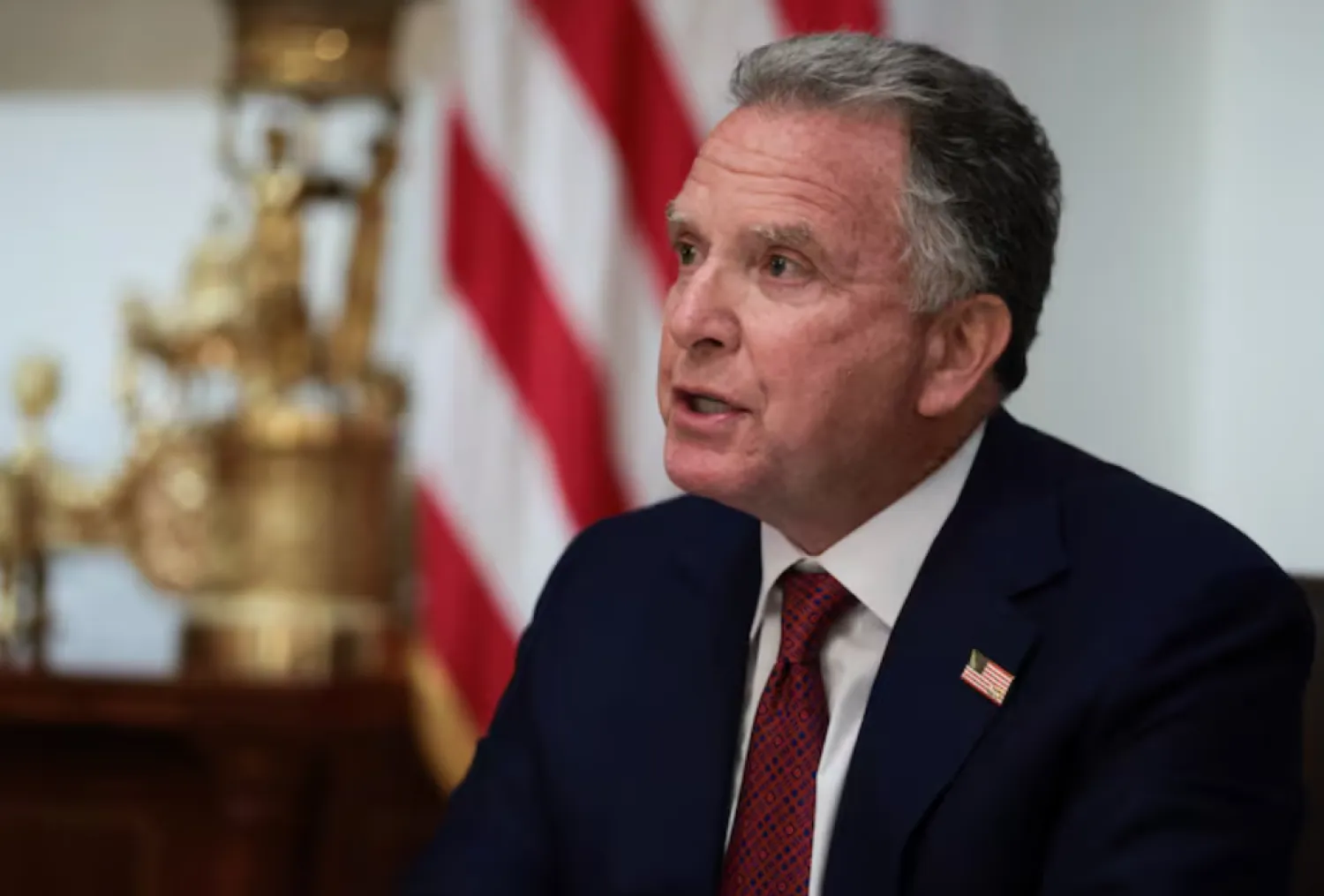
US Special Envoy Steve Witkoff speaks during a cabinet meeting at the White House in Washington, DC, US, March 26, 2026. REUTERS/Evelyn Hockstein
TT

US Envoy Witkoff Says Iran is Seeking an Off-ramp

US Special Envoy Steve Witkoff speaks during a cabinet meeting at the White House in Washington, DC, US, March 26, 2026. REUTERS/Evelyn Hockstein

The United States has sent Iran a "15-point action list" as a basis for negotiations to end the current conflict, US Special Envoy Steve Witkoff said on Thursday, adding that there are signs that Tehran was interested in making a deal.


Witkoff, speaking during a cabinet meeting at the White House, said that the nascent talks could be successful if the Iranians realize there were no good alternatives - a realization Tehran might be coming to, he argued, Reuters reported.


"We will see where things lead, and if we can convince Iran that this is the inflection point with no good alternatives for them other than more death and destruction," Witkoff told reporters.


"We have strong signs that this is a possibility."


Witkoff said Pakistan had been acting as a mediator, confirming statements from Pakistani officials.