


Snapback Threat Deepens Iran-West Tensions Amid Warnings and Diplomatic Standoff

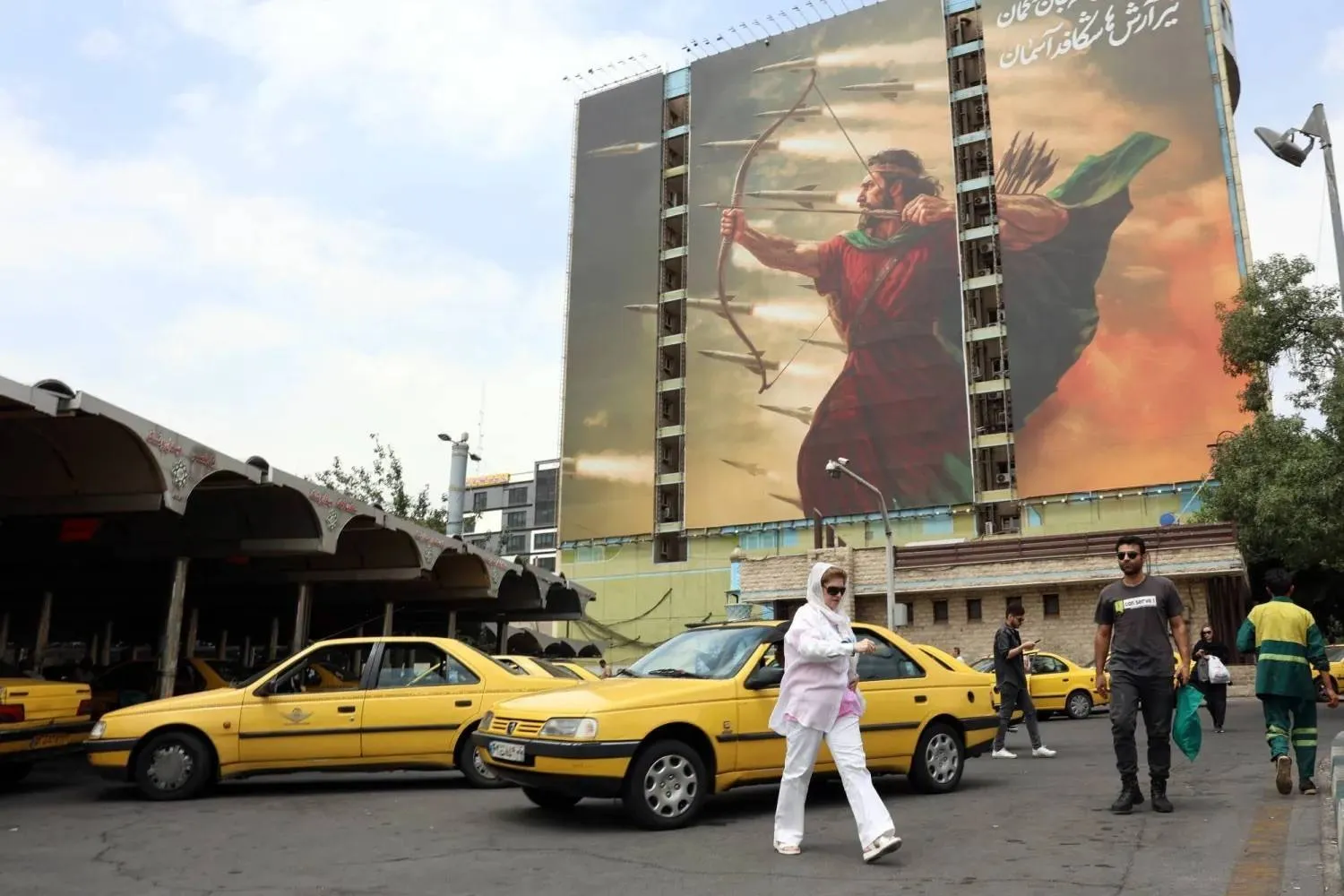
Iranians walk past a propaganda mural in Tehran depicting a figure from Persian mythology launching missiles, Wednesday (EPA)
TT

Snapback Threat Deepens Iran-West Tensions Amid Warnings and Diplomatic Standoff

Iranians walk past a propaganda mural in Tehran depicting a figure from Persian mythology launching missiles, Wednesday (EPA)

Tensions between Iran and Western powers have escalated sharply, as the European trio - Britain, France, and Germany - hinted at reactivating the “snapback” mechanism that would automatically reimpose United Nations sanctions on Iran. The looming decision has sparked strong reactions from Tehran, with Iranian officials warning of potential retaliatory actions that may come as a surprise to some European nations.

According to diplomatic sources cited by the Associated Press, the foreign ministers of the European trio agreed during a phone call with US Secretary of State Marco Rubio earlier this week to reinstate UN sanctions on Iran by the end of August, should no substantial progress be made on the nuclear deal.

The snapback mechanism, part of the 2015 nuclear agreement, allows any signatory to reinstate international sanctions if Iran fails to uphold its commitments. The clause expires on October 18, making this summer a crucial period for decisive action.

In Tehran, the response was swift and stern. Iranian MP Ebrahim Azizi, head of the parliament’s National Security and Foreign Policy Committee, denounced the European move as “a hostile political action.”

He stressed that Iran has “multiple options” and would not hesitate to use them if provoked. “The West must refrain from such a step,” Azizi warned, “and if they go ahead with it, our countermeasures may be unexpected for some Europeans.”

Conservative Iranian newspaper Kayhan went even further, calling for legislation to withdraw from the Nuclear Non-Proliferation Treaty (NPT), framing it as a necessary deterrent step.

Earlier this month, Iran’s parliament passed a law to suspend cooperation with the International Atomic Energy Agency (IAEA), requiring all inspection requests to be coordinated with Iran’s Supreme National Security Council.

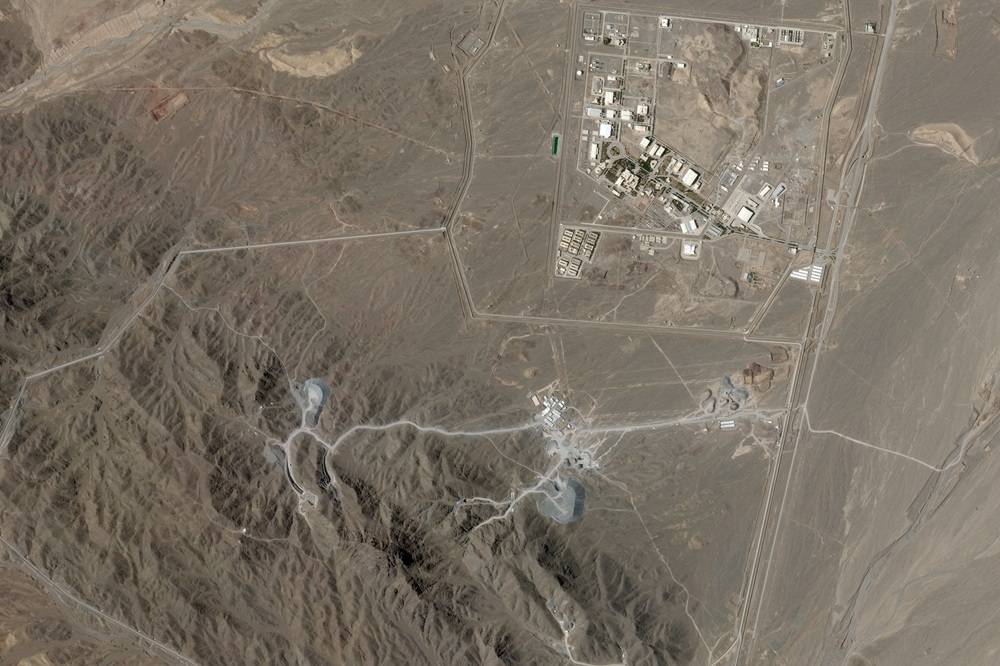
This move came in response to US airstrikes on Iran’s underground Fordow uranium enrichment site, as well as facilities in Isfahan and Natanz, during a 12-day war initiated by Israel on June 13.

Despite the growing tensions, some Iranian figures are urging a return to diplomacy. Mohammad Sadr, a veteran diplomat and member of the Expediency Council, stressed the need for “serious and urgent” negotiations with the European trio.

“Given the limited time before snapback is activated, Iran must work to create conditions that prevent Europe from taking that route,” Sadr said in a media interview.

The UK, France, and Germany are all original signatories of the 2015 nuclear deal, from which US President Donald Trump withdrew in 2018, arguing it was too lenient on Tehran.

Under the agreement, sanctions were lifted in exchange for strict limits on Iran’s nuclear program. The snapback clause allows for the automatic reimposition of sanctions if Iran is found to be non-compliant.

French Foreign Minister Jean-Noël Barrot stated on Tuesday that the trio is now in a position to justify triggering the snapback. Meanwhile, the ambassadors of the three nations met at the German UN mission this week to discuss the situation. Though no specific conditions were disclosed, the discussions signaled growing impatience with Tehran.

According to Yedioth Ahronoth, Israeli Foreign Minister Gideon Sa’ar urged his German and French counterparts to activate the snapback during a meeting on the sidelines of the EU ministerial council in Brussels on Tuesday.

The newspaper reported that Israeli Prime Minister Benjamin Netanyahu has also discussed the issue with multiple world leaders. A senior Israeli official said: “There are no longer valid excuses to delay reimposing sanctions.”

He added that Iran’s previous threats to enrich uranium to 90% are now considered irrelevant. “Even the US now supports the snapback, and the Europeans are inclined to follow suit.”

Iran Executes Man Accused of Spying for Israel

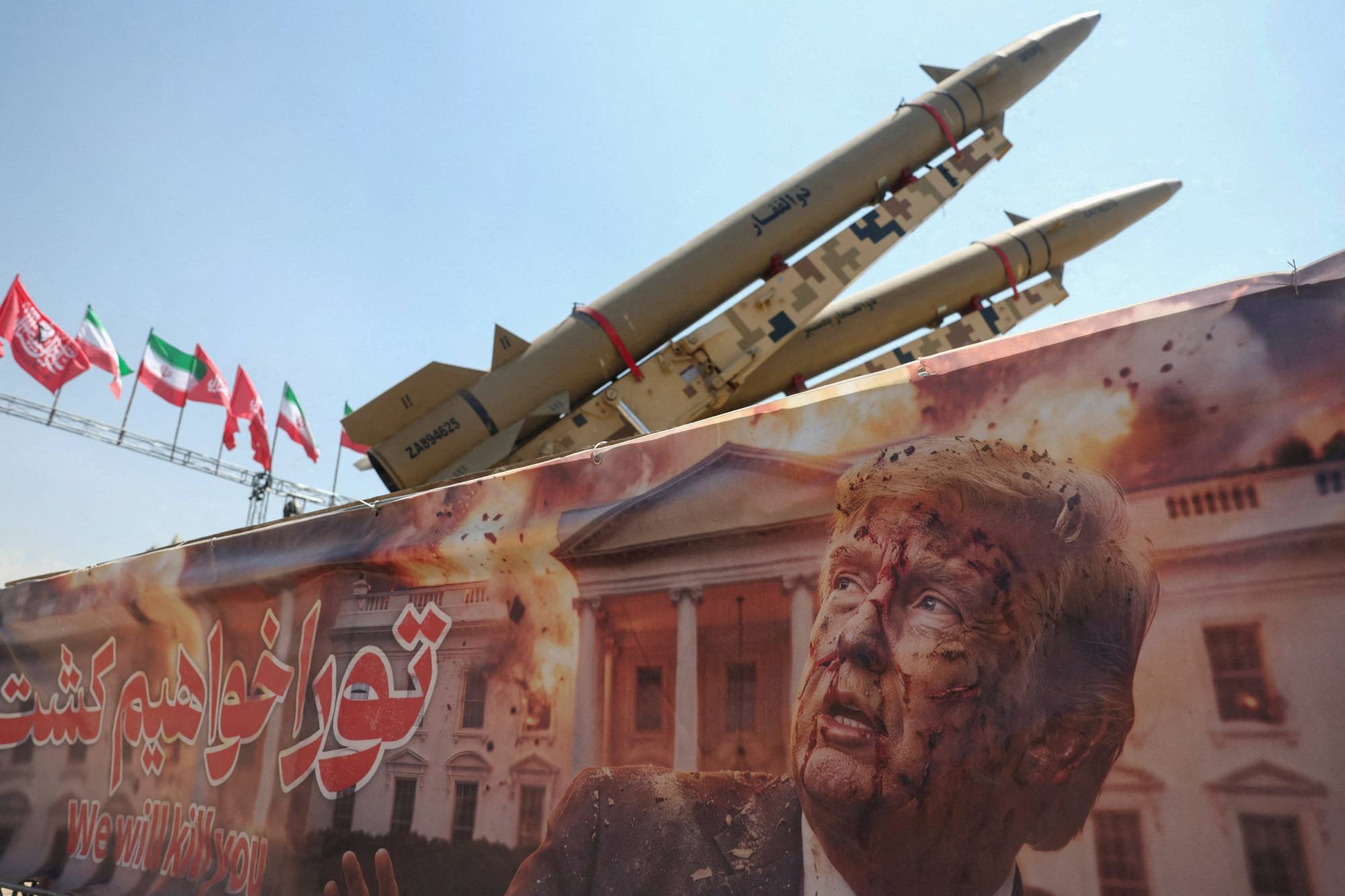
An anti-US and anti-Israeli billboard is displayed on a building in Tehran, Iran, January 4, 2026. Majid Asgaripour/WANA (West Asia News Agency) via Reuters
TT

Iran Executes Man Accused of Spying for Israel

An anti-US and anti-Israeli billboard is displayed on a building in Tehran, Iran, January 4, 2026. Majid Asgaripour/WANA (West Asia News Agency) via Reuters

​Iran executed a man accused of spying for Israel, the Iranian judiciary's media outlet Mizan reported on Wednesday, naming the defendant as ‌Ali Ardestani.

Entangled ‌in a ‌decades-long ⁠shadow ​war ‌with Israel, Iran has executed many people it has accused of having links with Israel's intelligence service and facilitating its operations ⁠in the country.

"The death sentence ‌of Ali Ardestani ‍for the ‍crime of espionage in favor ‍of the Mossad intelligence service by providing the country's sensitive information was carried ​out after approval by the Supreme Court and ⁠through legal procedures," Mizan said.

Executions of Iranians convicted of spying for Israel have significantly increased this year, following a direct confrontation between the two regional enemies in June, when Israeli and US forces ‌struck Iran's nuclear facilities.


China Bans Two Taiwan Ministers for Alleged ‘Independence Activities’, Angering Taipei

A man walks past a screen broadcasting news about military drills conducted by China around Taiwan, in Beijing, China, 30 December 2025. (EPA)
TT

China Bans Two Taiwan Ministers for Alleged ‘Independence Activities’, Angering Taipei

A man walks past a screen broadcasting news about military drills conducted by China around Taiwan, in Beijing, China, 30 December 2025. (EPA)

Beijing banned two Taiwanese ministers from entering ​China for alleged separatist activities related to "Taiwan independence" on Wednesday, prompting an angry response from Taipei, which said it would not bow to "threats and intimidation."

The office described Taiwanese Interior Minister Liu Shyh-fang and Education Minister Cheng Ying-yao as "die-hard Taiwan independence secessionists" and banned them as well as their relatives, from entry. The ban also extends to Hong Kong and Macau.

Beijing claims democratically governed Taiwan as its own territory and has not ruled out the use of force to take control of the island. Taipei strongly objects ‌to Beijing's sovereignty claims ‌and says only Taiwan's people can decide their ‌future.

Taiwan's ⁠Mainland ​Affairs Council ‌issued a strong protest, saying the move gravely undermined cross-strait relations and would only provoke anger among the public.

It accused Beijing of seeking to create a "chilling effect beyond the named individuals, to coerce Taiwanese people into abandoning their determination to uphold the status quo and their democratic freedoms."

China was also attempting to claim jurisdiction over Taiwan by treating such cases as "domestic criminal offences", the council said in a statement, calling the efforts clumsy and ineffective.

"Threats and ⁠intimidation will never shake the resolve of the Taiwanese people to uphold democracy and freedom," it said. "All serious ‌consequences arising from the Chinese Communist authorities' actions that provoke ‍instability in cross-strait relations must be borne ‍entirely by the Chinese side."

China has now listed 14 people as "secessionists", the ‍office's spokesperson Chen Binhua told reporters at a weekly news briefing, in an announcement that comes a week after the Chinese military carried out its most extensive ever war games around the island. The list already includes Taiwan Vice President Hsiao Bi-khim, head of the island's National Security Council ​Joseph Wu and Defense Minister Wellington Koo.

A third person, Chen Shu-Yi, a prosecutor from Taiwan's High Prosecutors Office, was accused of being an accomplice ⁠in alleged separatist activities and will be held "accountable for life".

The spokesperson called on the public to submit evidence and leads on the prosecutor's activities based on which China would impose "severe punishment", without specifying what those measures would be.

Chen said the purpose of the actions against a small number of "Taiwan independence die-hards" was to "fundamentally safeguard national sovereignty and territorial integrity", and that the moves were not aimed at Taiwanese citizens in general.

Taipei has complained about Beijing’s “long-arm jurisdiction” to pressure the Taiwanese people and said Chinese laws do not apply in Taiwan, which has its own judicial system.

China fired dozens of rockets towards Taiwan and deployed a large number of warships and aircraft near the island last week in massive war games around the ‌island, causing dozens of domestic flights in Taiwan to be cancelled and drawing concern from regional allies and the West.


South Korea’s Lee Says He Asked Xi to Play a Mediating Role on North Korea

In this photo released by Xinhua News Agency, visiting South Korean President Lee Jae Myung, left, shakes hands with Chinese President Xi Jinping prior to their bilateral meeting at the Great Hall of the People, in Beijing, Monday, Jan. 5, 2026. (Yue Yuewei/Xinhua via AP)
TT

South Korea’s Lee Says He Asked Xi to Play a Mediating Role on North Korea

In this photo released by Xinhua News Agency, visiting South Korean President Lee Jae Myung, left, shakes hands with Chinese President Xi Jinping prior to their bilateral meeting at the Great Hall of the People, in Beijing, Monday, Jan. 5, 2026. (Yue Yuewei/Xinhua via AP)

South Korean President Lee Jae Myung said on Wednesday that much progress had been ​made in restoring trust with Beijing, and that he had asked Chinese President Xi Jinping to play a role in mediating Seoul's efforts to engage North Korea.

Lee, who held talks with Xi this week, said the Chinese leader had noted patience was needed when they discussed nuclear-armed North Korea. ‌Lee was speaking ‌to South Korean media in ‌Shanghai ⁠with ​his ‌remarks relayed live on television.

The South Korean president said he laid out the efforts - so far without success - that Seoul had been making to engage North Korea in dialogue and improve relations, and asked Xi to play a role to mediate for peace ⁠on the Korean peninsula.

"President Xi acknowledged our efforts so far ‌and said patience is needed," Lee ‍said.
Lee has been on ‍a state visit to China and his ‍meeting with Xi was their second in less than three months.

Lee has sought to open a "new phase" in ties with China, after several frosty years and with South ​Korea's popular cultural exports being shut out of the Chinese market due to a dispute ⁠over a US missile defense system deployment in South Korea in 2017.

"President Xi said 'talk is easy, but action is not so easy,'" Lee said, as he talked about how building trust and respect between countries takes work.

Diplomatic relations are inherently complex in balancing each other's key national interests, Lee said he had told Xi, adding he hoped recent tension between Tokyo and Beijing could be resolved.

Lee said South Korea ‌considered its ties with Japan as important as its relations with China.
