


Libyan ICC War Crimes Suspect Arrested in Germany

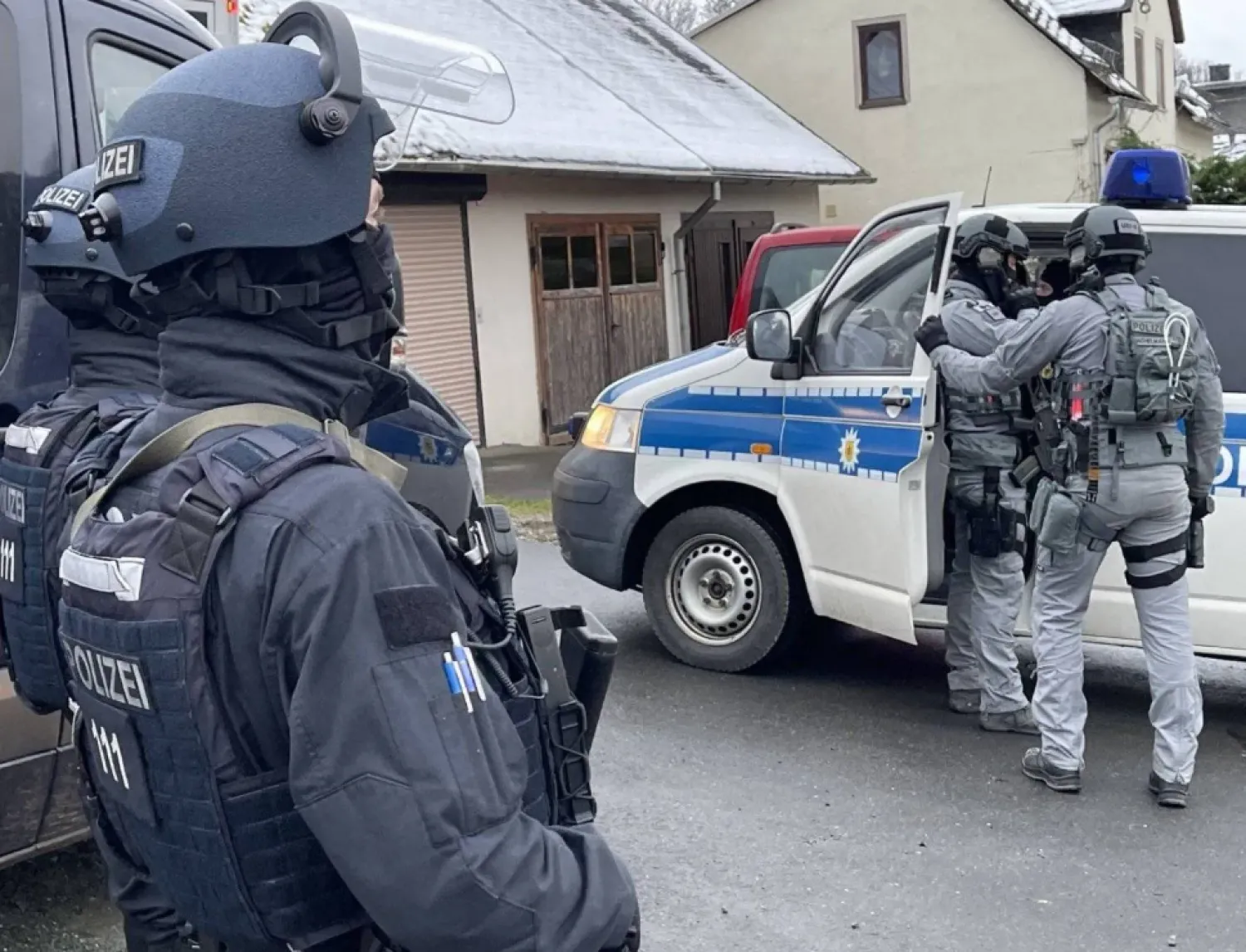
Police in the German state of Thuringia. Reuters file photo
TT

Libyan ICC War Crimes Suspect Arrested in Germany

Police in the German state of Thuringia. Reuters file photo

German authorities have arrested a Libyan war crimes suspect accused of being a senior official at a notorious prison where inmates were routinely tortured and sometimes sexually abused, the International Criminal Court said on Friday.

Khaled Mohamed Ali Al Hishri, alleged to have been a member of the Special Deterrence Force armed group during Libya's civil war, was arrested on Wednesday, German authorities said, Reuters reported.

The ICC said he would remain in German custody, pending the completion of national proceedings.

Prosecutors at the ICC accuse Al Hishri of war crimes and crimes against humanity including murder, torture and rape from February 2015 until early 2020, a period during which he was allegedly one of the most senior officials in the Mitiga prison.

According to the prosecution, Mitiga was the largest detention facility in western Libya, where thousands of detainees were held in cramped cells without basic hygiene and were systematically subjected to brutal interrogations and torture.

Men and women held there also faced sexual violence including rape, the prosecution said.

It is a critical time for the ICC. Its prosecutor and four judges are facing US sanctions in retaliation for an arrest warrant it issued for Israeli Prime Minister Benjamin Netanyahu for alleged war crimes and crimes against humanity in the Gaza conflict. A number of European ICC member states, including Germany, have also criticized the warrant.

In addition to the sanctions, the ICC is also operating without its chief prosecutor Karim Khan, who

stepped aside temporarily two months ago as he faced a probe by United Nations investigators into alleged sexual misconduct.

Khan denies the allegations, and his two deputy prosecutors are running the office in his absence.

In a statement on Friday, the office of the prosecutor said it expected Al Hishri to be transferred to The Hague and added that it stood ready to start his trial.

"This development is so needed at a time of unprecedented turmoil in the field of accountability generally and at the ICC specifically," Kip Hale, an attorney who documented crimes in Libya for the UN, told Reuters.

"Yet, it is most important for the victims of the many atrocity crimes committed at Mitiga prison," he added.

Italy arrested another Libyan ICC suspect, Osama Elmasry Njeem, in January but subsequently returned him to Tripoli, saying the arrest warrant contained mistakes and inaccuracies. He was also accused of crimes committed against detainees in Mitiga prison.

His release sparked outrage among Italian opposition parties and triggered a legal investigation into Prime Minister Giorgia Meloni and several other government members.

The court has been investigating allegations of serious crimes committed in Libya since the outbreak of its civil war in 2011, following a referral by the UN Security Council.



8 Dead, Dozens Wounded in Russian Strike on Ukraine's Odesa Port

A firefighter works at the site of a Russian missile and drone strike, amid Russia's attack on Ukraine, in Odesa region, Ukraine in this handout picture released December 20, 2025. Press service of the State Emergency Service of Ukraine in Odesa region/Handout via REUTERS
TT

8 Dead, Dozens Wounded in Russian Strike on Ukraine's Odesa Port

A firefighter works at the site of a Russian missile and drone strike, amid Russia's attack on Ukraine, in Odesa region, Ukraine in this handout picture released December 20, 2025. Press service of the State Emergency Service of Ukraine in Odesa region/Handout via REUTERS

Eight people were killed and 27 wounded in a Russian missile strike on port infrastructure in Odesa, southern Ukraine, late on Friday, Ukraine’s Emergency Service said Saturday morning.

Some of the wounded were on a bus at the epicenter of the overnight strike, the service said in a Telegram post. Trucks caught fire in the parking lot, and cars were also damaged.

The port was struck with ballistic missiles, said Oleh Kiper, the head of the Odesa region.

Elsewhere, Ukrainian forces hit a Russian warship and other facilities with drones, Ukraine’s General Staff said in a statement Saturday.

The nighttime attack on Friday hit the Russian warship “Okhotnik,” according to the statement posted to the Telegram messaging app.

The ship was patrolling in the Caspian Sea near an oil and gas production platform, The Associated Press reported. The extent of the damage is still being clarified, the statement added.

A drilling platform at the Filanovsky oil and gas field in the Caspian Sea was also hit. The facility is operated by Russian oil giant Lukoil. Ukrainian drones also struck a radar system in the Krasnosilske area of Crimea, which Russia illegally annexed from Ukraine in 2014.


Satellite Imagery Shows ‘Recent Activity’ at Iran Nuclear Facility

An inspector of the International Atomic Energy Agency sets up surveillance equipment at a uranium conversion facility in Iran in 2005. Photograph: Mehdi Ghasemi/AP
TT

Satellite Imagery Shows ‘Recent Activity’ at Iran Nuclear Facility

An inspector of the International Atomic Energy Agency sets up surveillance equipment at a uranium conversion facility in Iran in 2005. Photograph: Mehdi Ghasemi/AP

New satellite imagery shows recent activity at the Natanz nuclear facility that was damaged during June's 12-day war with Israel, according to the US-based Institute for Science and International Security (ISIS).

During the June conflict, the IAEA confirmed Israeli strikes hit Iran's Natanz underground enrichment plant.

The think tank said the satellite imagery from December 13 show panels placed on top of the remaining anti-drone structure at the Pilot Fuel Enrichment Plant (PFEP), providing cover for the damaged facility.

It suggested the new covering allows Iran to examine or retrieve materials from the rubble while limiting external observation.

The Natanz uranium enrichment facility, located some 250 km south of the Iranian capital Tehran, is one of Iran's most important and most controversial nuclear facilities in the Middle East.

Although the facility “likely held several kilograms of highly enriched uranium,” ISIS stressed that such material is “not negligible” in the broader context of Iran’s nuclear capabilities.

While PFEP shows renewed activity, ISIS said it has not observed similar signs at other major nuclear sites, including the underground Fordow facility also damaged in June by airstrikes.

Inspections
On December 15, IAEA chief Rafael Grossi has reiterated that Iran must allow inspectors access to the three key nuclear facilities that enrich uranium and were hit by the US and Israeli airstrikes last June.

Speaking to RIA Novosti, Grossi said the agency’s activities in Iran are very limited. “We are only allowed to access sites that were not hit.”

In October, the head of the UN nuclear watchdog told AP that Iran does not appear to be actively enriching uranium but that the agency has recently detected renewed movement at the country’s nuclear sites.

Grossi said that despite being unable to fully access Iranian nuclear sites, inspectors have not seen any activity via satellite to indicate that Tehran has accelerated its production of uranium enriched beyond what it had compiled before the 12-day war with Israel in June.

“However, the nuclear material enriched at 60% is still in Iran,” Grossi said in an interview at the United Nations headquarters in New York.

“And this is one of the points we are discussing because we need to go back there and to confirm that the material is there and it’s not being diverted to any other use,” he added, “This is very, very important.”

Iran’s Foreign Minister Abbas Araghchi said on December 8 that resuming the agency’s inspections is currently not possible because “there is no protocol or guideline” for inspecting facilities he described as “peaceful.”

ISIS reported on October 3 that new satellite imagery shows that Iran is ongoing construction efforts at a mountainous area just south of the Natanz enrichment site known as Kuh-e Kolang Gaz La, or Pickaxe Mountain.

On Sept. 26, The Washington Post said according to a review of satellite imagery and independent analysis, Iran has increased construction at a mysterious underground site in the months since the US and Israel pummeled its main nuclear facilities, suggesting Tehran has not entirely ceased work on its suspected weapons program and may be cautiously rebuilding.


Rubio: Venezuela Cooperates with Iran, Hezbollah

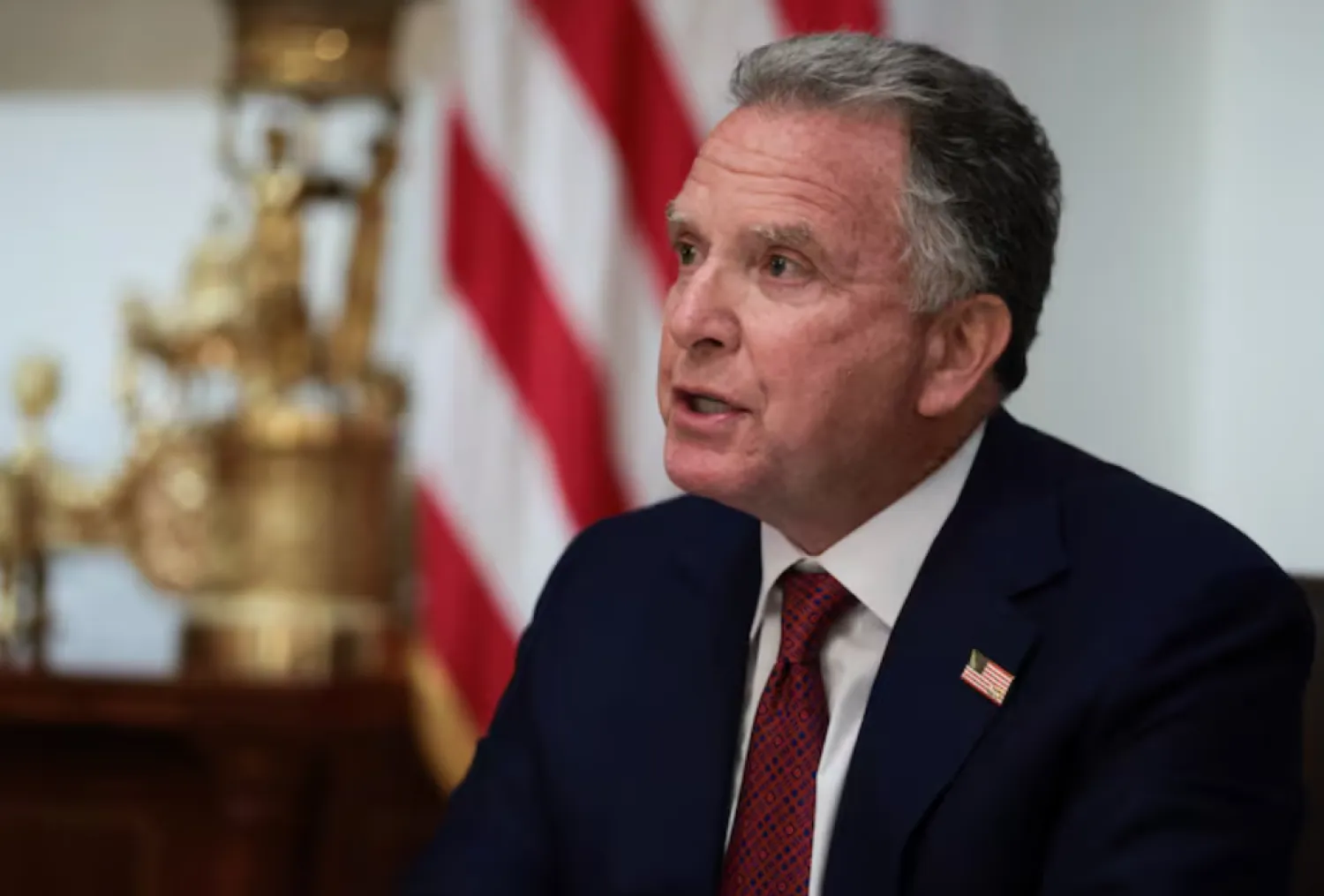
Secretary of State Marco Rubio speaks during a news conference at the State Department, Friday, Dec. 19, 2025, in Washington. (AP Photo/Julia Demaree Nikhinson)
TT

Rubio: Venezuela Cooperates with Iran, Hezbollah

Secretary of State Marco Rubio speaks during a news conference at the State Department, Friday, Dec. 19, 2025, in Washington. (AP Photo/Julia Demaree Nikhinson)

US Secretary of State Marco Rubio has accused the illegitimate regime in Venezuela of cooperating with criminals that threaten the national security of the United States.

Rubio said Friday the regime of President Nicolas Maduro openly cooperates with Iran, Hezbollah, and drug trafficking groups.

“They (Venezuela regime) operate and cooperate with terrorist organizations against the national interest of the United States, not just cooperate, but partner with and participate in activities to threaten the national interest of the United States,” he told reporters at a news conference at the State Department.

According to Rubio, Venezuela is a country that is not just an illegitimate regime that does not cooperate with the US but also a regime that openly cooperates with criminal and terrorist elements, including Hezbollah, Iran and others.

“And clearly these narco groups cooperate openly from there,” the Secretary of State said.

“We have a regime that cooperates with Iran, that cooperates with Hezbollah; that cooperates with narcotrafficking and narcoterrorist organizations, inclusive not just protecting their shipments and allowing them to operate with impunity, but also allows some of them to control territory,” he added.

Earlier, US President Donald Trump said he was leaving the possibility of war with Venezuela on the table, according to an interview with NBC News published on Friday.

“I don't rule it out, no,” he told NBC News in a phone interview.

Trump also said there would be additional seizures of oil tankers near Venezuelan waters, according to the interview. The US seized a sanctioned oil tanker off the coast of Venezuela last week.

“If they're foolish enough to be sailing along, they'll be sailing along back into one of our harbors,” he told NBC News.

On Tuesday, Trump ordered a “blockade” of all sanctioned oil tankers entering and leaving Venezuela, in Washington's latest move to increase pressure on Nicolas Maduro's government, targeting its main source of income, following which Venezuela's government said it rejected Trump's “grotesque threat.”