


Iran to Execute 100 People on Charges of Spying for Israel

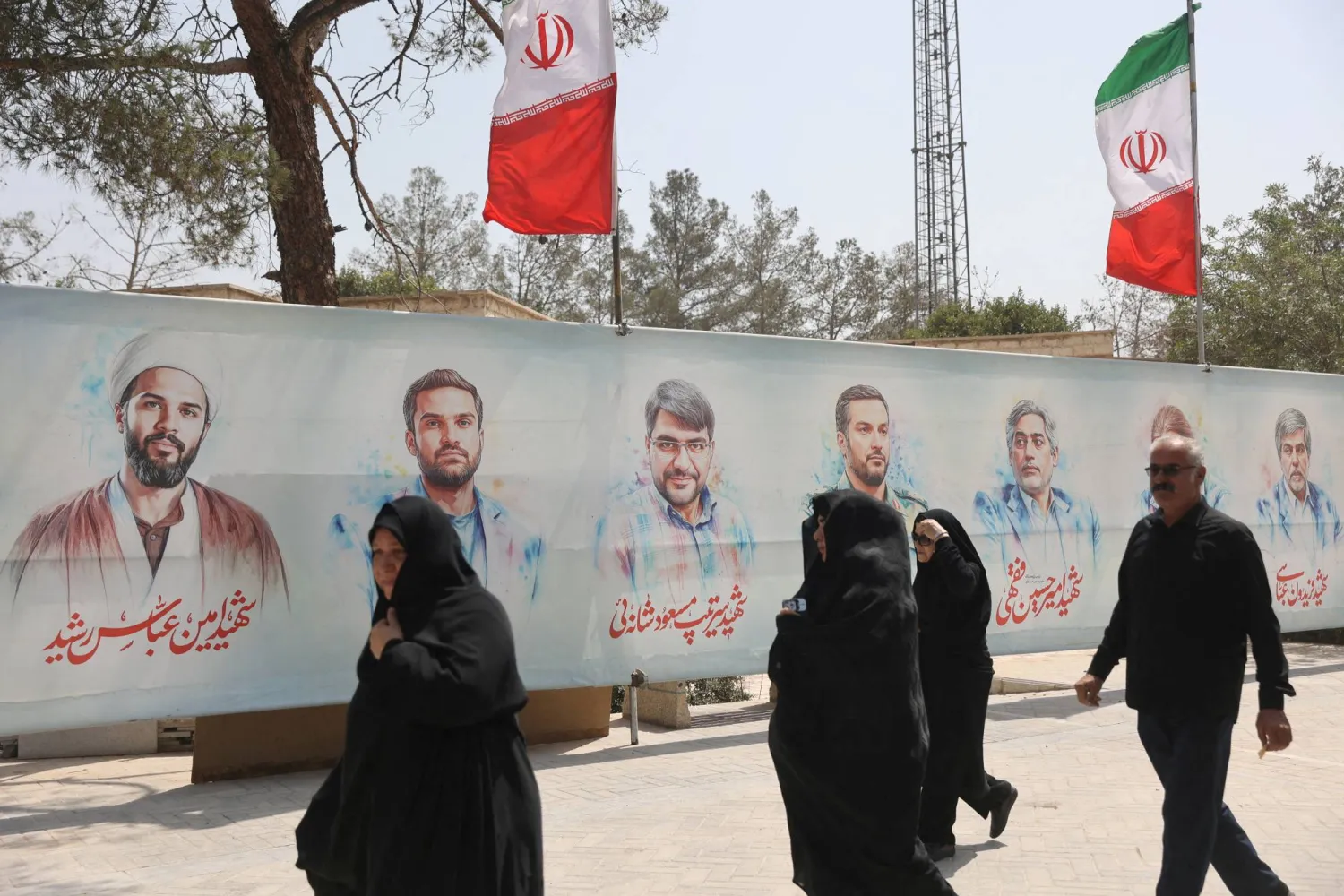
Pictures of Iranian military commanders, nuclear scientists and others killed in Israeli strikes are displayed in Behesht Zahra Cemetery in southern Tehran, Iran, July 11, 2025. Majid Asgaripour/WANA (West Asia News Agency) via REUTERS
TT

Iran to Execute 100 People on Charges of Spying for Israel

Pictures of Iranian military commanders, nuclear scientists and others killed in Israeli strikes are displayed in Behesht Zahra Cemetery in southern Tehran, Iran, July 11, 2025. Majid Asgaripour/WANA (West Asia News Agency) via REUTERS

Media reports said Sunday there are fears in Iran that more than 100 people will be executed on charges of spying for Israel following the Israeli attack on Evin Prison on June 23 and during the 12-day war.

The British newspaper Sunday Times said Iranian authorities have launched a crackdown campaign on the prisoners, especially females.

It said Motahareh Gounei, a 28-year-old dental student arrested for criticizing the state, survived the bombing in Ward 209. “I thought, ‘This is it. I’m dead. I’ll be buried here,’” she said in a phone interview after being released on bail.

She explained that after the explosion, the security agents first transferred them to the quarantine section of Qarchak Prison, and after two days, sent them to a safe house belonging to the Ministry of Intelligence at an undisclosed location.

The Sunday Times wrote that it independently confirmed that before Israel’s attack, an early warning had been given to a prison guard at Evin.

Asghar Jahangir, spokesperson for the Iranian regime’s judiciary, announced on June 29 that in Israel’s attack on Evin Prison, 71 people were killed, including administrative staff, soldiers, convicted inmates, families of prisoners who had come for visits or legal follow-ups, and neighbors living near the prison.

The newspaper said that for the surviving prisoners, the Iranian regime has launched a revenge campaign after the war, seemingly using the prison attack as an excuse to harass and abuse them. Lawyers fear that more than 100 of them may now face execution.

The Times said human rights lawyers believe the attack on Evin Prison gave judges a pretext for vengeance.

“A spirit of vengeance has taken over the judiciary,” one Tehran lawyer, who asked not to be named, told the Times.

“A judge told me: ‘Our generals and officials have been killed, and we should take revenge.’ He didn’t even allow me to speak.”

Rights groups say many of those now marked for execution were jailed for protest activity, not espionage, and their cases rest on confessions extracted under torture.

The Sunday Times wrote that Evin Prison is internationally recognized as a symbol of the Iranian regime’s oppression, a highly secure facility notorious for torture and abuse of detainees.

Political detainees staged hunger strikes, organized discussions and even confronted judges visiting the prison. It became known among activists as Evin University.

According to Sunday Times, the day after Israel’s airstrike, authorities transferred 61 female political prisoners to Qarchak Prison on the outskirts of Tehran. Qarchak lacks clean water, toilets, ventilation, and medical care.

The women live there in 40-degree Celsius heat, with 65 of them crammed into five small rooms in a ward originally designed for temporary holding of new arrivals.

Human rights lawyers believe the Iranian regime is using accusations of spying for Israel as a means to exact revenge on innocent individuals who, under torture by intelligence agencies, have confessed to crimes they never committed.

On August 9, the spokesperson for the Iranian regime’s judiciary introduced 20 citizens arrested after the 12-day war with Israel as “spies and supporters of Mossad,” saying they had been arrested by the Ministry of Intelligence in Tehran and other provinces and that their cases were under review.

Under such circumstances, there is no guarantee of fair trials, especially in cases where defendants have been subjected to physical and psychological torture.

On Saturday, the Iranian Revolutionary Guard said they dismantled a cell connected to the Israeli Mossad in the northeastern province of Khorasan.

The Guards’ Imam Reza Corps said in a statement that, after precise and ongoing intelligence operations conducted by the Guard's intelligence organization in Khorasan, in coordination with the judiciary, eight people linked to the Mossad were identified and arrested.

The statement noted that the suspects had received virtual training from Mossad affiliates, and that during the recent war between Israel and Iran, they sent coordinates of vital and sensitive centers, along with information related to prominent military figures, to Mossad intelligence officers.

The agency said documents suggest the detainees were planning to carry out operations against civilian and military officials, in addition to targeting and sabotaging important centers in the city of Mashhad.



NATO: Ukraine Still Receiving Arms Despite Mideast War

NATO Secretary General Mark Rutte via Reuters/File
TT

NATO: Ukraine Still Receiving Arms Despite Mideast War

NATO Secretary General Mark Rutte via Reuters/File

Ukraine is still getting essential defense equipment despite the war in the Middle East, which is depleting stockpiles in Europe and the United States, NATO Secretary General Mark Rutte said Thursday.

"The good news is that essential equipment into Ukraine continues to flow," he told reporters. That included American-made Patriot missile interceptors, which Ukraine desperately needs, he added, AFP reported.

The PURL program, launched last year, allows Ukraine to receive US equipment financed by European countries.

Some 75 percent of the missiles used by Patriot batteries in Ukraine have been supplied through the program, and 90 percent of the munitions used by other air-defense systems, Rutte added.

Rutte called on European countries to increase their own production capacity.

"They need to produce more extra production lines, extra shifts, opening new factories. The money is there," he said.


Germany FM Says 'Encouraging' if US Speaking Directly to Iran

German Foreign Minister Johann Wadephul. (Reuters: File Photo)
TT

Germany FM Says 'Encouraging' if US Speaking Directly to Iran

German Foreign Minister Johann Wadephul. (Reuters: File Photo)

Germany's foreign minister Thursday said it was encouraging if the United States was talking directly to Iran to end the war in the Middle East, but Washington should make its intentions clear.

"I hear that there are signs that the US is speaking directly to Iran. I think that this is encouraging and this is welcome," Johann Wadephul told reporters before heading into the meeting of G7 foreign ministers outside Paris, AFP reported.

With US Secretary of State Marco Rubio set to join the discussions from Friday, he added: "For the German government it is of great importance to know precisely what our American partners are intending."


US Envoy Witkoff Says Iran is Seeking an Off-ramp

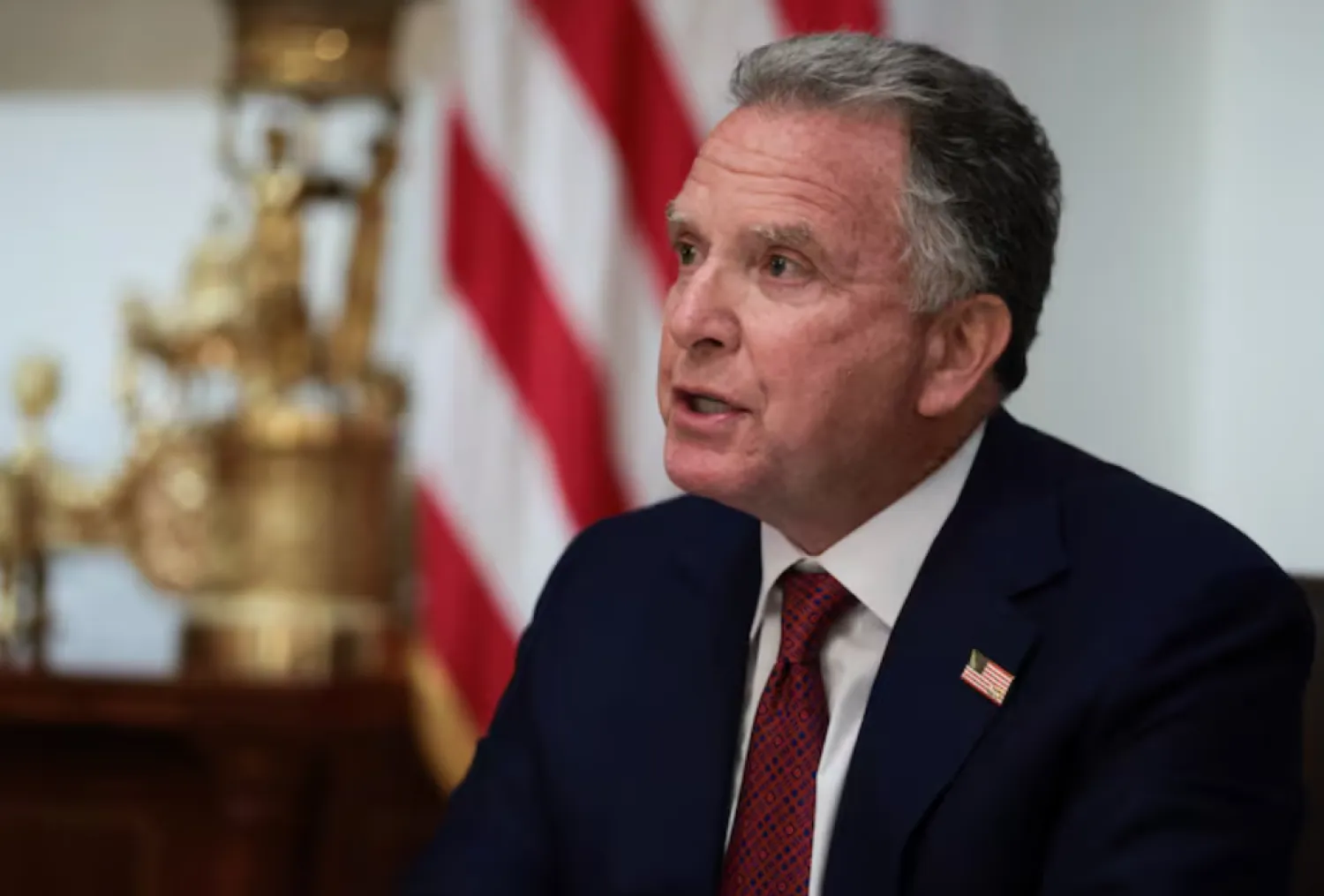
US Special Envoy Steve Witkoff speaks during a cabinet meeting at the White House in Washington, DC, US, March 26, 2026. REUTERS/Evelyn Hockstein
TT

US Envoy Witkoff Says Iran is Seeking an Off-ramp

US Special Envoy Steve Witkoff speaks during a cabinet meeting at the White House in Washington, DC, US, March 26, 2026. REUTERS/Evelyn Hockstein

The United States has sent Iran a "15-point action list" as a basis for negotiations to end the current conflict, US Special Envoy Steve Witkoff said on Thursday, adding that there are signs that Tehran was interested in making a deal.


Witkoff, speaking during a cabinet meeting at the White House, said that the nascent talks could be successful if the Iranians realize there were no good alternatives - a realization Tehran might be coming to, he argued, Reuters reported.


"We will see where things lead, and if we can convince Iran that this is the inflection point with no good alternatives for them other than more death and destruction," Witkoff told reporters.


"We have strong signs that this is a possibility."


Witkoff said Pakistan had been acting as a mediator, confirming statements from Pakistani officials.