


Iran Has Likely Carried Out an Undeclared Missile Test, Satellite Photos Show

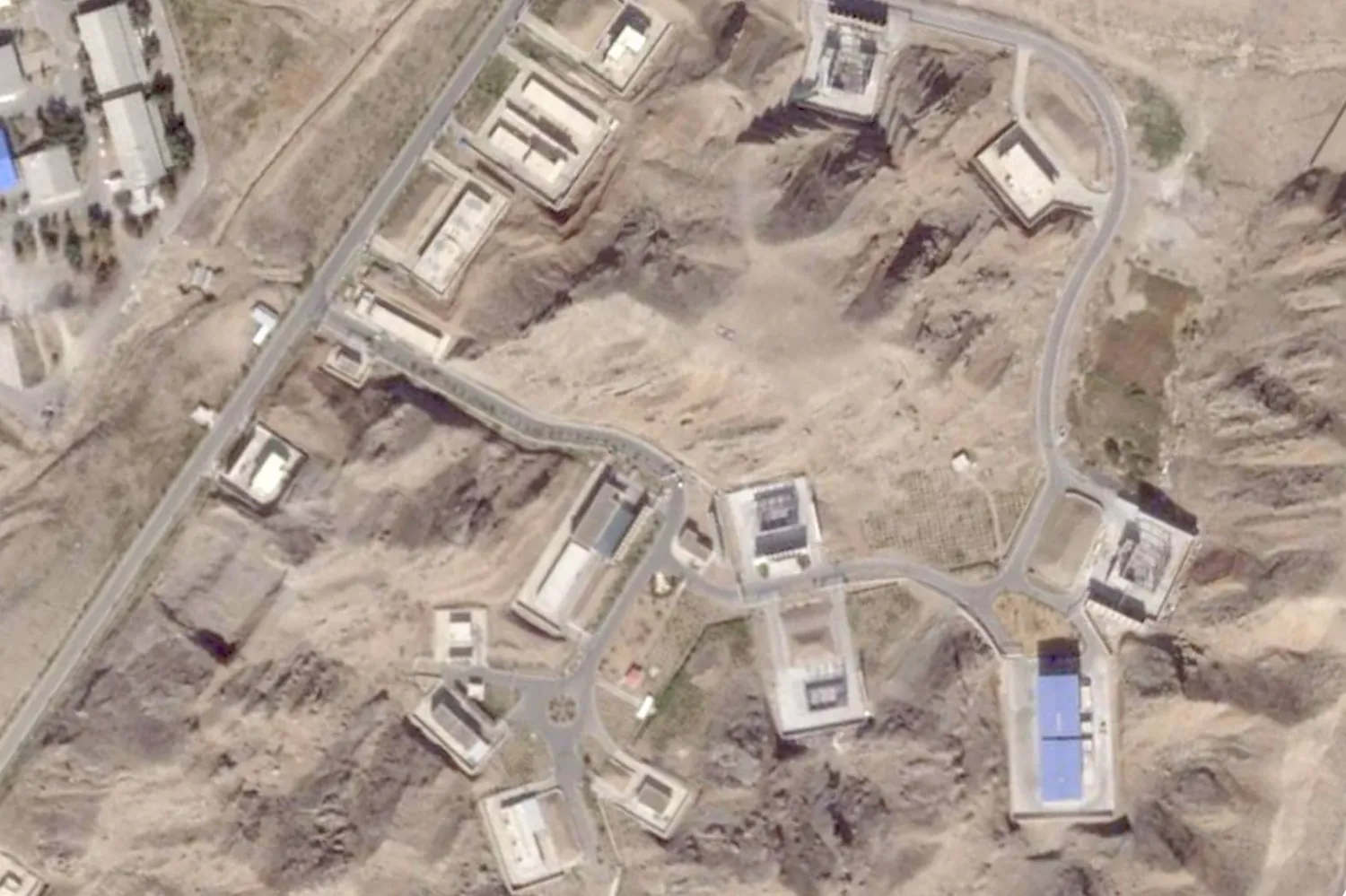
This satellite photo from Planet Labs PBC shows reconstruction efforts at Iran's Parchin solid propellant plant outside of Tehran, Iran, Aug. 28, 2025. (Planet Labs PBC via AP)
TT

Iran Has Likely Carried Out an Undeclared Missile Test, Satellite Photos Show

This satellite photo from Planet Labs PBC shows reconstruction efforts at Iran's Parchin solid propellant plant outside of Tehran, Iran, Aug. 28, 2025. (Planet Labs PBC via AP)

Iran has likely carried out an undeclared missile test at its Imam Khomeini Spaceport, satellite photos analyzed by The Associated Press showed Thursday, underlining Tehran's effort to maintain its weapons program despite the 12-day war with Israel in June.

Iran has not formally acknowledged last week's test at a circular pad that has hosted other major launches by the country's civilian space program. A single lawmaker in Iran's parliament, however, claimed, without offering evidence, that Tehran tested a possible intercontinental ballistic missile.

The test and the claim raise concerns that Iran may be trying to expand the reach of its missiles as tensions remain high ahead of United Nations sanctions, which are likely to be reimposed this weekend over Tehran's nuclear program — as it also repairs missile sites that were struck by the Israelis.

“Israel’s successes in the 12-day war against Iran’s missile attacks reinforced for Tehran the importance of developing more ballistic missiles and qualitatively better versions of them,” said Behnam Ben Taleblu, an analyst at the Washington-based Foundation for Defense of Democracies. The think tank has long been critical of Iran and has been sanctioned by Tehran.

“Consider this part of Tehran’s efforts to build back better, and as quickly as possible,” he added.

Scorch marks seen on the launch pad

On Sept. 18, Iranian social media users posted images of the sky over Semnan province, showing what appeared to be a rocket's contrail at sunset. Iranian officials did not acknowledge what caused the contrail, nor did Iranian state media report on the incident.

Satellite photos taken prior to that by Planet Labs PBC show the circular pad at Imam Khomeini Spaceport — about 230 kilometers (145 miles) southeast of Iran’s capital, Tehran, in Semnan — painted blue ringed with red, white and green lines — the colors of the Iranian flag.

But in satellite images since Sept. 18, the pad appeared discolored, though it wasn't fully clear until a more-detailed Planet image requested by the AP taken this Wednesday. That image shows significant scorch marks, the pattern of which resembled scorching seen at the pad following past launches. When rockets launch, the flames from their engines pour down onto pads.

Fabian Hinz, a research fellow at the International Institute for Strategic Studies, who studies missiles, said the scale of the scorching suggested Iran launched a solid-fuel missile, as burning aluminum oxide particles cause such marks.

The north-south marks suggest a blast deflector being used as well to channel the flames, he said.

The claim of an intercontinental ballistic missile

Iranian parliament member Mohsen Zanganeh, appearing on Iranian state television on Saturday, claimed that the Islamic Republic had launched an intercontinental ballistic missile on Thursday. He portrayed it as a sign of Iran's strength as it faces challenges from Israel and the West.

“We have neither abandoned (nuclear) enrichment, nor handed uranium over to the enemy, nor backed down from our missile positions,” said Zanganeh, a member of parliament's budget committee from Iran's Khorasan Razavi province.

“The night before last we tested one of the country’s most advanced missiles, which until now had not, so to speak, been trialed — and that test was successful,” he said.

“In other words,” he added. "I mean to say that even under these conditions we are conducting a security test of an intercontinental-range missile.”

Zanganeh did not elaborate on where he got his information, nor did he provide any evidence to support his assertion. Iranian parliament members have made exaggerated claims in the past.

Intercontinental ballistic missiles typically have ranges greater than 5,500 kilometers (3,415 miles). That would extend far beyond the range reportedly allowed by Iran's Supreme Leader Ali Khamenei, which is 2,000 kilometers (1,240 miles).

The range of 2,000 kilometers encompasses much of the Middle East, including Israel and American military bases in the region. An intercontinental missile would at least put all of Europe in range. The US military's Central Command, which oversees its Mideast operations, did not respond to a request for comment.

Questions remain over the launch

Despite the lawmaker's claims, there are still many questions surrounding the launch — including just what Iran sent into the sky.

Iran has in the past used the pad to launch solid-fueled missiles called Zuljanah.

The Zuljanah can launch satellites in space. However, the fact that it uses solid fuel and is capable of reaching space has raised concerns by the US government that Iran could potentially build an intercontinental ballistic missile.

“If, as is increasingly being alleged, the test was of a space-launch vehicle, it represents a desire by Tehran to potentially threaten targets outside the Middle East, like the European continent and even the American homeland,” Taleblu said.

Such missiles can deliver nuclear weapons, but Iran long has maintained its nuclear program is peaceful. US intelligence agencies also assess that Iran is not actively pursuing an atomic bomb, though it had been enriching uranium to up to 60% purity — a short, technical step away from weapons-grade levels of 90%. Iran also would need to miniaturize any possible nuclear bomb to put it atop a ballistic missile.

With Iran not formally acknowledging the launch and the erratic contrail that was left behind, the likelihood is that the launch may have failed. There's also no acknowledgment by US space officials of Iran putting any new satellites into space on Sept. 18.

Iran may also have used the launch to signal to the West that it will continue its missile program, despite sanctions and pressure — though without a formal confirmation, it remains unclear just what Tehran was trying to do.

“The problem is that so much happens with Iran,” Hinz said. “It’s hard to say what is coincidental and what is a pattern.”


Russia Pledges ‘Full Support’ for Venezuela Against US ‘Hostilities’

The US Navy replenishment oiler USNS Kanawha (T-AO-196) arrives at port in Ponce, Puerto Rico, amid ongoing military movements, December 21, 2025. (Reuters)
TT

Russia Pledges ‘Full Support’ for Venezuela Against US ‘Hostilities’

The US Navy replenishment oiler USNS Kanawha (T-AO-196) arrives at port in Ponce, Puerto Rico, amid ongoing military movements, December 21, 2025. (Reuters)

Russia on Monday expressed "full support" for Venezuela as the South American country confronts a blockade of sanctioned oil tankers by US forces deployed in the Caribbean, the two governments said.

In a phone call, the foreign ministers of the two allied countries blasted the US actions, which have included bombing alleged drug-trafficking boats and more recently the seizure of two tankers.

A third ship was being pursued, a US official told AFP Sunday.

"The ministers expressed their deep concern over the escalation of Washington's actions in the Caribbean Sea, which could have serious consequences for the region and threaten international shipping," the Russian foreign ministry said of the call between ministers Sergei Lavrov and Yvan Gil.

"The Russian side reaffirmed its full support for and solidarity with the Venezuelan leadership and people in the current context," it added.

"The ministers agreed to continue their close bilateral cooperation and to coordinate their actions on the international stage, particularly at the UN, in order to ensure respect for state sovereignty and non-interference in internal affairs."

The UN Security Council is to meet Tuesday to discuss the mounting crisis between Venezuela and the United States after a request from Caracas, backed by China and Russia.

On Telegram, Venezuela's Gil said he and Lavrov had discussed "the aggressions and flagrant violations of international law being perpetrated in the Caribbean: attacks on vessels, extrajudicial executions, and illicit acts of piracy carried out by the United States government."

US forces have since September launched strikes on boats Washington said, without providing evidence, were trafficking drugs in the Caribbean Sea and eastern Pacific Ocean.

More than 100 people have been killed, some of them fishermen, according to their families and governments.

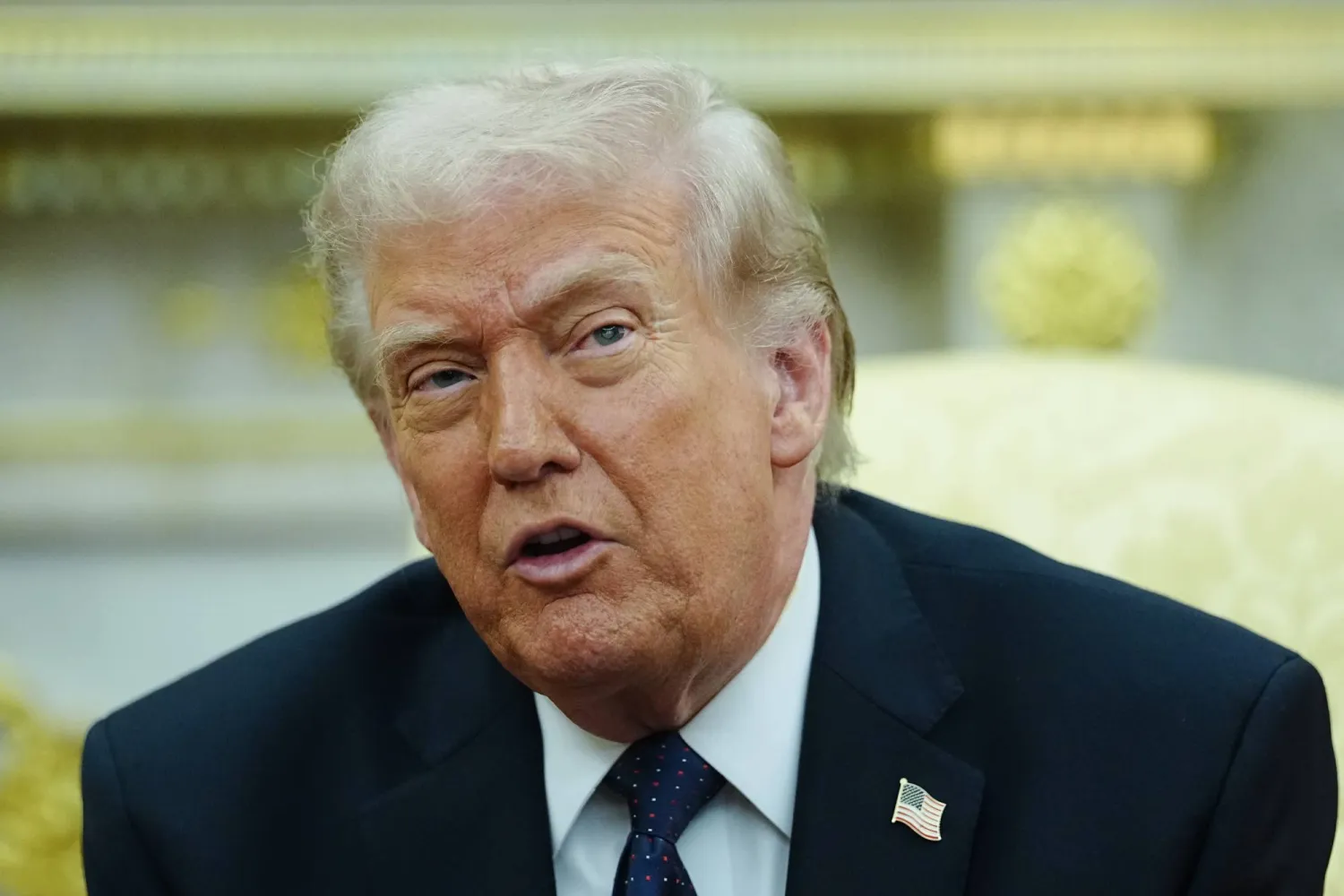
US President Donald Trump on December 16 announced a blockade of "sanctioned oil vessels" sailing to and from Venezuela.

Trump has claimed Caracas under Maduro is using oil money to finance "drug terrorism, human trafficking, murder and kidnapping.

Gil said Lavrov had affirmed Moscow's "full support in the face of hostilities against our country."


Turkish Agents Capture an ISIS Member on the Afghan-Pakistan Border

A Turkish soldier stands guard outside the Silivri Prison and Courthouse complex near Istanbul, Turkey. (File/Reuters)
TT

Turkish Agents Capture an ISIS Member on the Afghan-Pakistan Border

A Turkish soldier stands guard outside the Silivri Prison and Courthouse complex near Istanbul, Turkey. (File/Reuters)

Turkish intelligence agents have captured a senior member of the ISIS terror group in an area along the Afghanistan-Pakistan border, allegedly thwarting planned suicide attacks in Türkiye and elsewhere, Türkiye's state-run news agency reported Monday.

Anadolu Agency said the suspect was identified as Mehmet Goren and a member of the group's Afghanistan-based ISIS-Khorasan branch. He was caught in a covert operation and transferred to Türkiye.

It was not clear when the operation took place or whether Afghan and Pakistani authorities were involved.

The report said the Turkish citizen allegedly rose within the organization’s ranks and was given the task of carrying out suicide bombings in Türkiye, Pakistan, Afghanistan and Europe.

ISIS has carried out deadly attacks in Türkiye, including a shooting at an Istanbul night club on Jan. 1, 2017, which killed 39 people.

Monday's report said Goren’s capture allegedly also exposed the group's recruitment methods and provided intelligence on its planned activities.


Iran Arrests Norwegian-Iranian Dual Citizen

Iran's Evin Prison (File photo: Reuters)
TT

Iran Arrests Norwegian-Iranian Dual Citizen

Iran's Evin Prison (File photo: Reuters)

A Norwegian-Iranian dual citizen has been arrested in Iran, Norway's foreign ministry told AFP on Monday.

"The Ministry of Foreign Affairs is aware that a Norwegian citizen has been arrested in Iran, but due to our obligation to respect confidentiality we cannot provide further details," ministry spokesman Mathias Rongved said in an email.

He confirmed the individual was a dual Norwegian-Iranian national and noted the government advises against travel to Iran.

On its website, the Norwegian government states that Iran does not recognise dual citizenship, and it is "therefore very difficult -- virtually impossible -- for the embassy to assist Norwegian-Iranian citizens if they are imprisoned in Iran".

The US-based Human Rights Activists News Agency (HRANA) identified the dual national as Shahin Mahmoudi, born in 1979.

It said she was arrested on December 14 after being ordered to report to authorities in Saqqez, in Iran's western Kurdistan province.

She is being held at a detention center in Sanandaj, it added.

HRANA said her family had not been informed of the reason for her arrest nor had they received any news of her health and well-being.
