


Russian Air Attacks Hit Ukraine's Gas Sector, Force Kyiv to Import More Gas

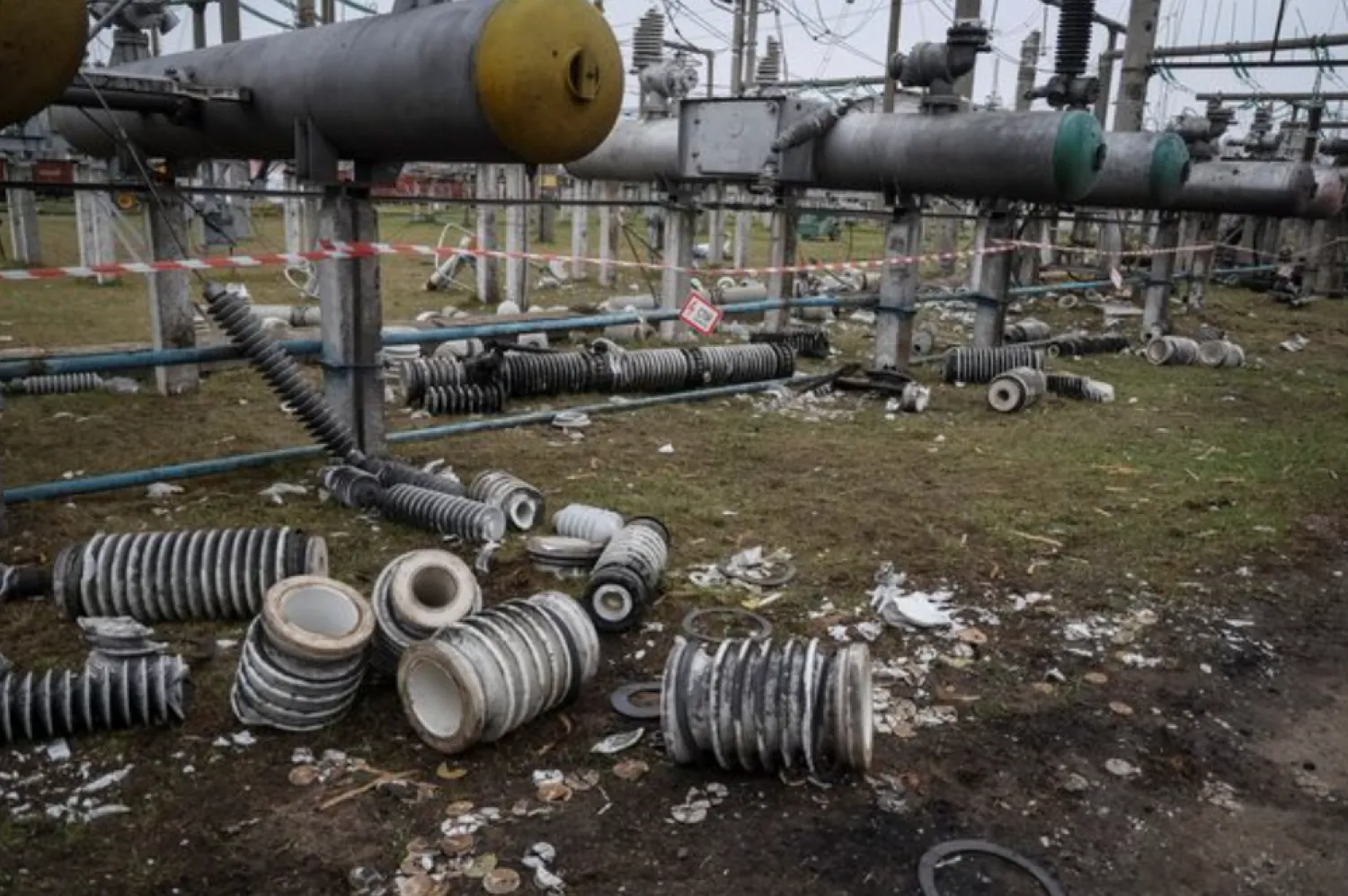
A view shows a high-voltage substation of Ukrenergo damaged by a Russian military strike, amid Russia's attack on Ukraine, in an undisclosed location in central Ukraine November 10, 2022. REUTERS/Gleb Garanich/File Photo
TT

Russian Air Attacks Hit Ukraine's Gas Sector, Force Kyiv to Import More Gas

A view shows a high-voltage substation of Ukrenergo damaged by a Russian military strike, amid Russia's attack on Ukraine, in an undisclosed location in central Ukraine November 10, 2022. REUTERS/Gleb Garanich/File Photo

Russian attacks have forced Ukraine to suspend activities at several major gas facilities this month, the state energy company said on Thursday, leaving Kyiv in need of more imports. Ukraine's President Volodymyr Zelenskiy is due to meet US Donald Trump on Friday, with potential US energy procurement for Kyiv as well as weapon sales believed to be on the table.

In its latest barrage, Russia launched more than 300 drones and 37 missiles to target infrastructure across Ukraine in overnight attacks on Thursday, Zelenskiy said, Reuters reported.

"This autumn, the Russians use every single day to strike at our energy infrastructure," he said on X. Russia has been hitting Ukraine's energy and power facilities for consecutive winters as the war drags into its fourth year, initially focusing on electricity but this year increasingly targeting gas infrastructure.

Sergii Koretskyi, CEO of state energy company Naftogaz, said there had been six major attacks on gas facilities this month alone. The latest hits damaged facilities in several regions with operations halted at some, he said.

"This directly impacts the volume of domestic gas production, which we are forced to cover through imports," Koretskyi said, urging Ukrainians to consume gas economically.

GAS NEEDED FOR COLD MONTHS

Ukraine's cash-strapped government is in talks with international allies to raise funds to import more for the cold autumn and winter months.

Ukraine will need to import at least 6.3 billion cubic metres (bcm) of gas for the 2025/26 winter season and may also have to restrict supplies to consumers, the former head of Ukraine's gas transit operator Serhiy Makogon said.

His forecasts significantly exceed the estimates of the energy ministry, which forecast imports at 4.6 bcm, but stated the need for additional purchases after Russian attacks.

"Everything depends on (Russian) strikes here. If they become even stronger, we will have to import more. Or restrict consumers — industry and heat and power companies," Makogon told Reuters in written comments.

"But you need to start with this figure (6.3 bcm)"

Russia's Defense Ministry confirmed its forces had carried out a "massive strike" on Ukrainian gas infrastructure, which it said was supporting Kyiv's military, in retaliation for what it said were Ukrainian attacks on civilian infrastructure. Kyiv has ramped up its own attacks on Russian targets, including an oil refinery in the Saratov region on Thursday.

"(Russian President Vladimir) Putin has turned a deaf ear to everything the world says, so the only language that can still get through to him is the language of pressure," Zelenskiy said.

Trump Moves to Block Courts from Seizing Venezuelan Oil Revenue in US Accounts

 The sun rises in Caracas, Venezuela, Saturday, Jan. 10, 2026, a week after US forces captured Venezuelan President Nicolas Maduro. (AP)
The sun rises in Caracas, Venezuela, Saturday, Jan. 10, 2026, a week after US forces captured Venezuelan President Nicolas Maduro. (AP)
TT

Trump Moves to Block Courts from Seizing Venezuelan Oil Revenue in US Accounts

 The sun rises in Caracas, Venezuela, Saturday, Jan. 10, 2026, a week after US forces captured Venezuelan President Nicolas Maduro. (AP)
The sun rises in Caracas, Venezuela, Saturday, Jan. 10, 2026, a week after US forces captured Venezuelan President Nicolas Maduro. (AP)

US President Donald Trump signed an executive order aimed at blocking courts or creditors from impounding revenue tied to the sale of Venezuelan oil held in US Treasury accounts, the White House said on Saturday.

The emergency order said the revenue, held in foreign government deposit funds, should be used in Venezuela to help create "peace, prosperity and stability."

The order was signed on ‌Friday, less ‌than a week after US ‌forces ⁠captured Venezuelan leader ‌Nicolas Maduro in Caracas. Several companies have longstanding claims against the country. Exxon Mobil and ConocoPhillips, for example, left Venezuela nearly 20 years ago after their assets were nationalized. Both are still owed billions of dollars.

The order does not mention any ⁠specific company. It declares that the money is the sovereign ‌property of Venezuela held in US ‍custody for governmental and ‍diplomatic purposes and is not subject to private ‍claims.

"President Trump is preventing the seizure of Venezuelan oil revenue that could undermine critical US efforts to ensure economic and political stability in Venezuela," the White House said in a fact sheet.

A US agreement with Venezuela's interim leaders would provide ⁠up to the US, where numerous refineries are specially equipped to refine it.

Trump cited the 1977 International Emergency Economic Powers Act and the 1976 National Emergencies Act as a legal justification.

Trump signed the order the same day he met in Washington with executives from Exxon, Conoco, Chevron and other oil companies as part of a bid to encourage them to invest $100 billion in Venezuela's oil ‌industry.


As Protests Rage, Iran Pulls the Plug on Contact with the World

 This frame grab from a video released Friday, Jan. 9, 2026, by Iranian state television shows a man holding a device to document burning vehicles during a night of mass protests in Zanjan, Iran. (Iranian state TV via AP)
This frame grab from a video released Friday, Jan. 9, 2026, by Iranian state television shows a man holding a device to document burning vehicles during a night of mass protests in Zanjan, Iran. (Iranian state TV via AP)
TT

As Protests Rage, Iran Pulls the Plug on Contact with the World

 This frame grab from a video released Friday, Jan. 9, 2026, by Iranian state television shows a man holding a device to document burning vehicles during a night of mass protests in Zanjan, Iran. (Iranian state TV via AP)
This frame grab from a video released Friday, Jan. 9, 2026, by Iranian state television shows a man holding a device to document burning vehicles during a night of mass protests in Zanjan, Iran. (Iranian state TV via AP)

Just after 8 p.m. Thursday, Iran's theocracy pulled the plug and disconnected the country's 85 million people from the rest of the world.

Following a playbook used both in demonstrations and in war, Iran severed the internet connections and telephone lines that connect its people to the vast diaspora in the United States, Europe and elsewhere. Until now, even while facing strict sanctions over the country's nuclear program, Iranians still could access mobile phone apps and even websites blocked by the theocracy, using virtual private networks to circumvent restrictions.

Thursday's decision sharply limits people from sharing images and witness accounts of the nationwide protests over Iran's ailing economy that have grown to pose the biggest challenge to the government in years. It also could provide cover for a violent crackdown after the Trump administration warned Iran's government about consequences for further deaths among demonstrators.

As the country effectively goes dark, loved ones abroad are frantic for any scrap of news, especially as Iran’s attorney general warned on Saturday that anyone taking part in protests will be considered an “enemy of God,” a death-penalty charge

“You can’t understand our feelings. My brothers, my cousins, they will go on the street. You can’t imagine the anxiety of the Iranian diaspora,” said Azam Jangravi, a cybersecurity expert in Toronto who opposes Iran's government. “I couldn’t work yesterday. I had meetings but I postponed them because I couldn’t focus. I was thinking of my family and friends.”

Her voice cracked as she added: “A lot of people are being killing and injured by Iran, and we don’t know who.”

Even Starlink is likely being jammed

This is the third time Iran has shut down the internet from the outside world. The first was in 2019, when demonstrators angry about a spike in government-subsidized gasoline prices took to the streets. Over 300 people reportedly were killed.

Then came the protests over the 2022 death of Mahsa Amini following her arrest by the country’s morality police over allegedly not wearing her hijab, or headscarf, to the liking of authorities. A monthslong crackdown killed more than 500 people.

While the connectivity offered by Starlink played a role in the Amini demonstrations, the deployment of its receivers is now far greater in Iran. That's despite the government never authorizing Starlink to function, making the service illegal to possess and use.

A year ago, an Iranian official estimated tens of thousands of Starlink receivers in the country, a figure that Los Angeles-based internet freedom activist Mehdi Yahyanejad said sounded right.

While many receivers likely are in the hands of business people and others wanting to stay in touch with the outside world for their livelihoods, Yahyanejad said some are now being used to share videos, photos and other reporting on the protests.

“In this case, because all those things have been disrupted, Starlink is playing the key for getting all these videos out,” Yahyanejad said.

However, Starlink receivers are facing challenges. Since its 12-day war with Israel last June, Iran has been disrupting GPS signals, likely in a bid to make drones less effective. Starlink receivers use GPS signals to position themselves to connect to a constellation of low-orbit satellites.

Amir Rashidi, director of digital rights and security at the Miaan Group and an expert on Iran, said that since Thursday he had seen about a 30% loss in packets being sent by Starlink devices — basically units of data that transmit across the internet. In some areas of Iran, Rashidi said there had been an 80% loss in packets.

“I believe the Iranian government is doing something beyond GPS jamming, like in Ukraine where Russia tried to jam Starlink,” Rashidi said. He suggested Iran may be using a mobile jammer, like it did in previous decades to disrupt satellite television receivers.

The International Telecommunication Union, a United Nations agency, has called on Iran to stop jamming in the past.

Meanwhile, Iran has been advocating at the ITU for Starlink service to the country to be stopped.

Help ‘needs to come soon’

It appears that the majority of information coming out of Iran since Thursday night is being transmitted via Starlink, which is now illegal. That carries dangers for those possessing the devices.

“It’s really hard to use it because if they arrest a person, they can execute the person and say this person is working for Israel or the United States,” Jangravi said.

Not using it, however, means the world knows even less about what's happening inside Iran at a pivotal moment.

“This sort of nonviolent protest is not sustainable when the violence (by security forces) is so extreme,” Yahyanejad said. “Unless something changes in the next two or three days, these protests can die down, too. If there’s any help, it needs to come soon.”


One Dead, Seven Missing After Migrant Boat Sinks off Türkiye

This photograph shows the oil tanker the "Maridive 703" sailing in the search-and-rescue zone of the international waters between Malta and Tunisia, on December 31, 2025. (AFP)
TT

One Dead, Seven Missing After Migrant Boat Sinks off Türkiye

This photograph shows the oil tanker the "Maridive 703" sailing in the search-and-rescue zone of the international waters between Malta and Tunisia, on December 31, 2025. (AFP)

One person died and seven others were missing Saturday after a migrant boat sank in the Aegean Sea off the coast of Türkiye, the Turkish coast guard said.

Thirty-seven passengers on a rubber dinghy which took on water before dawn off the western city of Dikili, north of Izmir, were rescued alive, the coast guard stated.

Dikili, a small seaside resort, faces the Greek island of Lesbos, some 20 kilometers (12 miles) away.

"Search operations ... are continuing to find the seven missing irregular migrants," the coast guard said.

Shipwrecks are common for perilous crossings to the Greek islands, which are a gateway to the European Union.

Nearly 1,900 migrants either disappeared or were found drowned in the Mediterranean in 2025, according to the International Organization for Migration.