



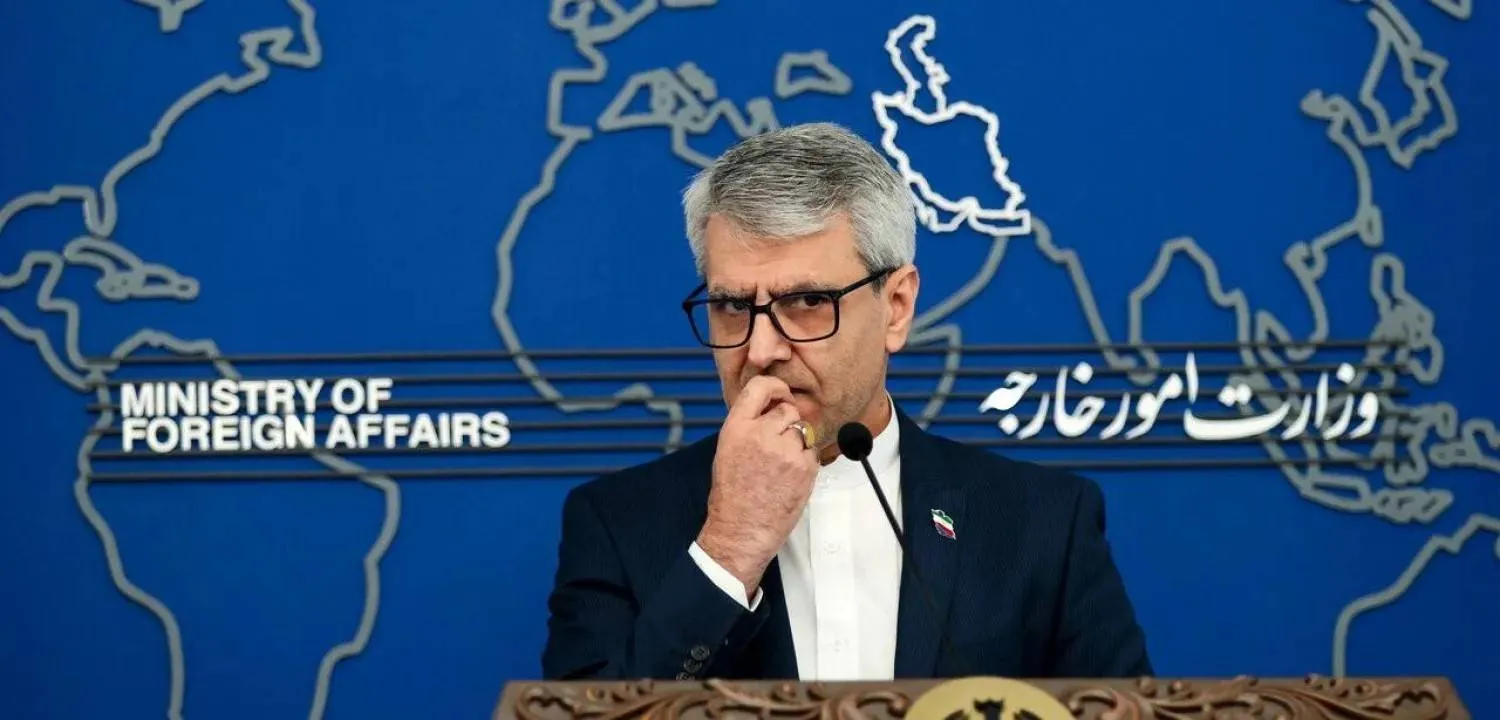

Iran on Sunday said its armed forces are in full readiness to deal with any emergency, while reiterating its continued contacts with the International Atomic Energy Agency to reach a solution to its nuclear file.
On Sunday, Iran's Foreign Ministry spokesperson Esmaeil Baghaei denied the presence of mediation, in the conventional sense, between Tehran and the UN International Atomic Energy Agency (IAEA).
“Iran is in contact with the Agency whenever it is necessary and based on the law passed by parliament,” he said during his weekly press briefing, according to state-run IRNA agency.
Baghaei then commented on IAEA Chief Rafael Grossi, who, last week, asked Iran to uncover the fate of its uranium stockpiles and allow inspectors to return to the country.
“The statements made by Grossi regarding Iran’s stockpile of enriched uranium merely repeat previous claims and do not change existing realities,” he said, calling on the IAEA chief to address parties responsible for the current situation rather than repeatedly singling out Iran.
He then criticized the “unfair approach” by the IAEA and its Board of Governors, noting that they have failed even to condemn US attacks on Iran’s nuclear facilities earlier this year.
“Targeting one side cannot resolve the issue,” Baghaei said, urging the IAEA director general to apply a strictly technical perspective in line with the agency’s statutory mandate.
Iran had 441 kilograms of uranium enriched to 60% level before US and Israeli airstrikes last June hit its key nuclear sites.
Unclear Negotiation Path
Concurrently, there is no clear prospect of nuclear negotiations between Iran and Western countries, which reimposed UN sanctions against Tehran last October.
Commenting on the future of those talks, Baghaei reiterated that diplomacy remains one of Iran’s tools for safeguarding national interests. However, he added, Tehran faces parties that do not value negotiations.
The spokesperson also emphasized that Iran’s armed forces are fully prepared to confront any form of adventurism, and that this message is crystal clear to opposing parties.
Last Thursday, US President Donald Trump told reporters that he is strongly seeking a deal with Iran, but warned that Tehran would face a new US attack if it resumes nuclear activities.
Iran and Venezuela
In a separate development, Baghaei commented on the US seizure of a Venezuelan oil tanker, saying, “We have adopted an official position on this matter. Washington’s action has no legal basis whatsoever.”
The spokesman then rejected claims about Iran's interference in Venezuela's affairs as “utterly irrelevant.”
Last week, Trump said the US has seized a sanctioned oil tanker off the coast of Venezuela.
“We've just seized a tanker on the coast of Venezuela, large tanker, very large, largest one ever, actually, and other things are happening,” said Trump, who has been pressuring Venezuelan President Nicolas Maduro to step down.
In response, the Venezuelan government in a statement accused the US of “blatant theft” and described the seizure as “an act of international piracy.” It said it would denounce the incident before international bodies.
In his weekly briefing on Sunday, Baghaei accused the US of having a long history of regime-change efforts in Latin America and that, in Venezuela’s case, it is “entirely clear” Washington is seeking to impose its will on an independent country. “This behavior violates all principles and rules of international law,” he said.
Commenting on a Wall Street Journal report, which said the US commandos have intercepted a vessel en route from China to Iran, Baghaei said Iranian authorities are awaiting verified details from relevant bodies.
“So far, we have not received any information from competent sources,” he said.


