



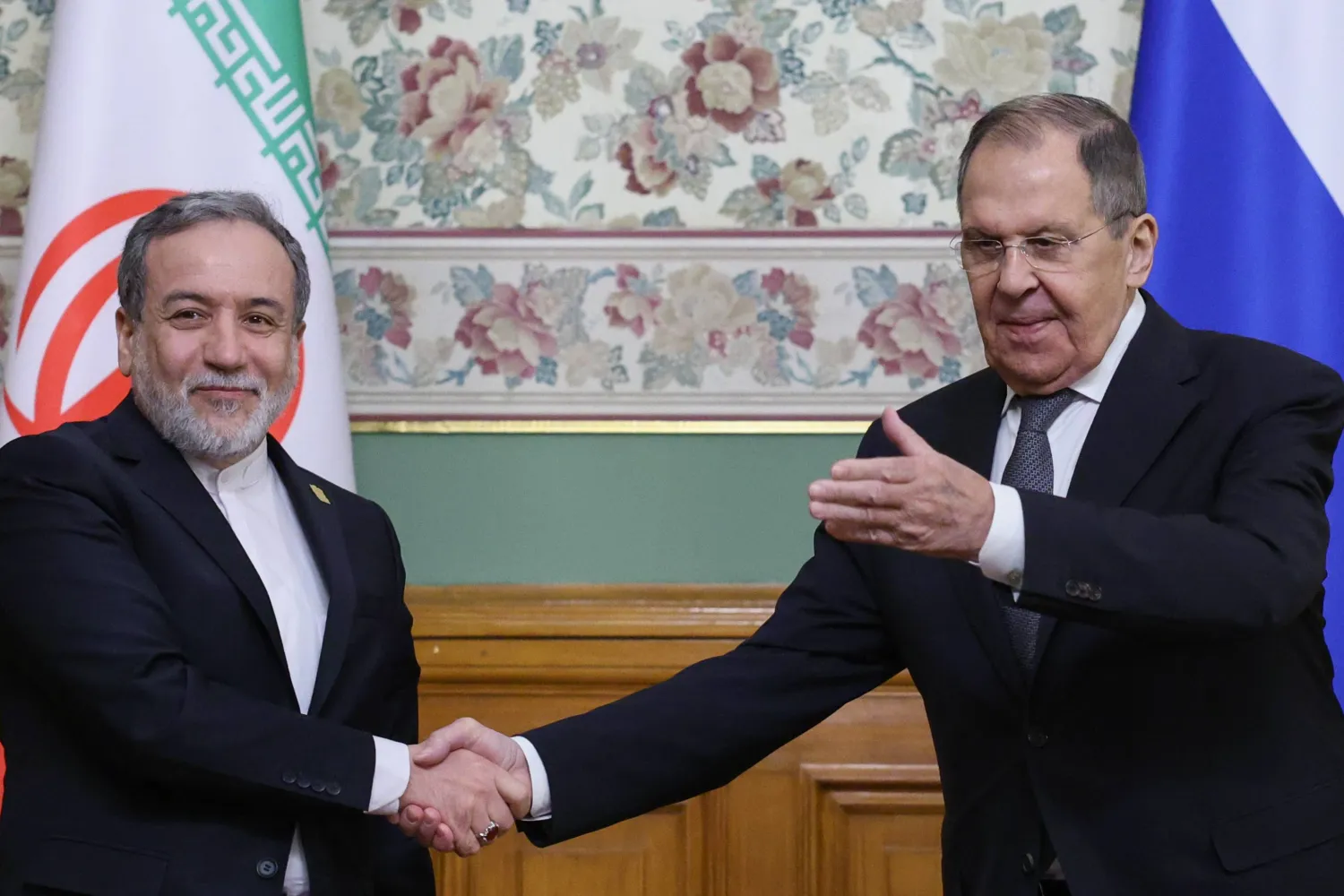

Iran's Foreign Minister Abbas Araghchi on Sunday said Tehran “does not rule out” the possibility of a new Israeli or US attack on its nuclear facilities, but remains “fully prepared, even more than before.”
“This doesn't mean that we welcome another war, but it is exactly to prevent a war. And the best way to prevent war is to be prepared for that. And we are fully prepared,” Araghchi said in an interview with Russia Today (RT).
The minister said Iran has rebuilt everything that was damaged by Israeli and US strikes during the 12-day war in June.
“If they want to repeat the same failed experience, they will not achieve a better result,” he stressed.
Araghchi made the remarks during a visit last week to Moscow, where he held political and diplomatic talks with Russian officials, including his counterpart, Sergei Lavrov.
Araghchi said he is no longer in contact with US Special Envoy for the Middle East Steve Witkoff, revealing that their communication channel has been inactive for months.
Iran and the envoy had held five rounds of talks between April and June. A sixth round, scheduled for June 15, was canceled after Israel launched its strikes on Iran.
Araghchi said that following the war, he maintained contacts with Witkoff. He said that while the US insisted on resuming negotiations, it had adopted what he described as a “very wrong” approach.
Commenting on the US strikes on Iran's nuclear facilities in Natanz and Fordow in June, the FM acknowledged: “Our facilities have been damaged, seriously damaged.”
However, he added: “There is also another fact, that our technology is still there, and technology cannot be bombed. And our determination is also there. We have a very legitimate right to peaceful use of nuclear technology, including enrichment.”
Araghchi reiterated that Iran is ready to provide full assurance that its nuclear program is peaceful as it did in 2015 when Tehran agreed to build confidence over the peaceful nature of its program in exchange of the lifting of sanctions.
He noted that military operations have failed to achieve their goals, while diplomacy was a successful experience.
Asked if he expects Israel will maintain its approach in 2026, the FM replied: “They will continue their aggressive behavior in 2026 due to the full impunity which is given to them by the US and Europeans.”
NBC News reported last week that Israeli officials have grown increasingly concerned that Iran is expanding production of its ballistic missile program, which was damaged by Israeli strikes in June, and are preparing to brief President Donald Trump about options for attacking it again, according to a person with direct knowledge of the plans and four former US officials briefed on the plans.
On Iran’s relations with the International Atomic Energy Agency (IAEA), Araghchi said: “We remain a committed member of the Non-Proliferation Treaty (NPT) and are ready to cooperate with the Agency.”
“We have a simple question for the Agency: Please tell us, how should a nuclear facility that has been attacked be inspected? And there is no answer to this question, because there is no precedent to this,” he added.


