


Iran Official Says 2,000 People Have Been Killed in Unrest

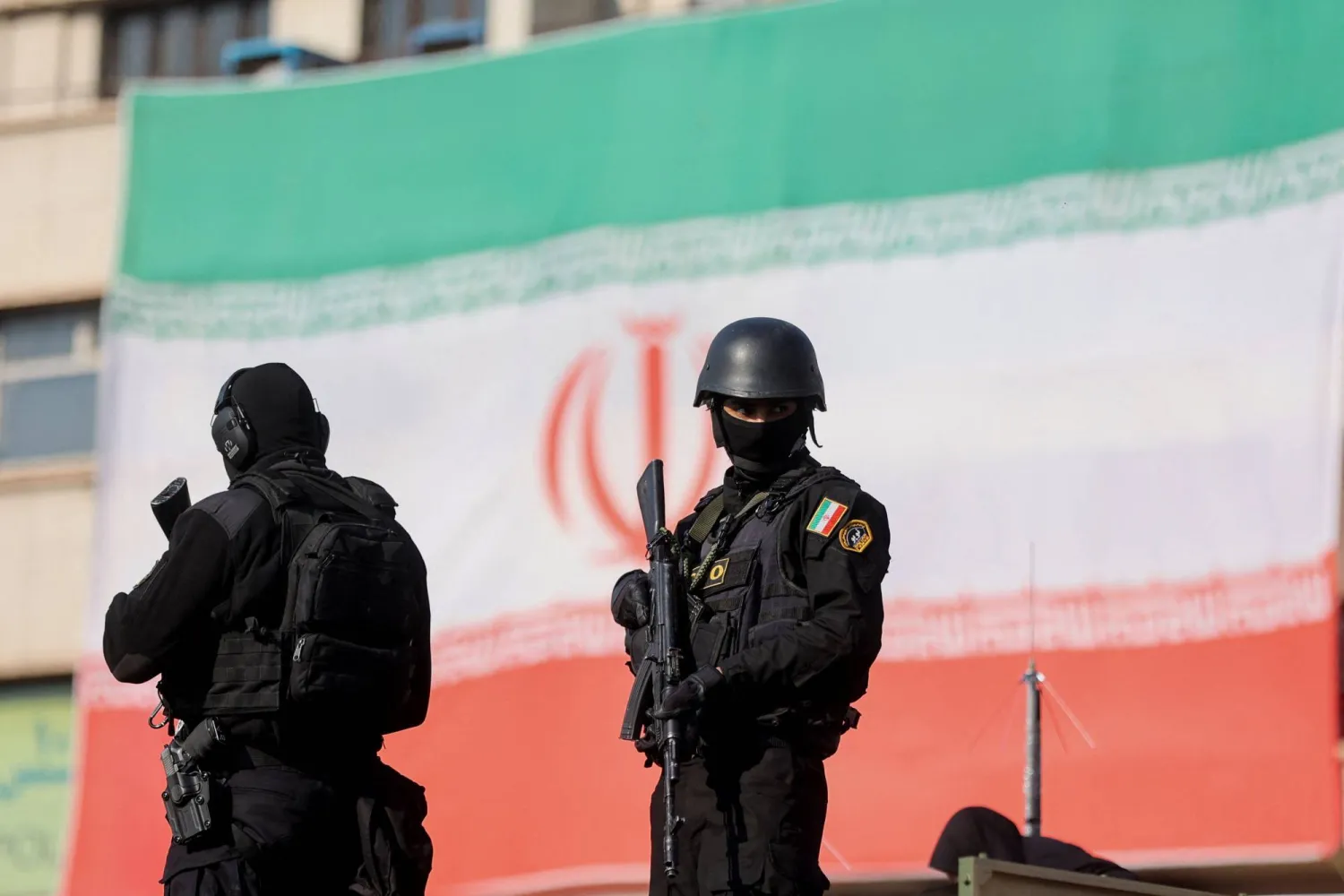
Members of the Iranian police attend a pro-government rally in Tehran, Iran, January 12, 2026. Stringer/WANA (West Asia News Agency) via Reuters
TT

Iran Official Says 2,000 People Have Been Killed in Unrest

Members of the Iranian police attend a pro-government rally in Tehran, Iran, January 12, 2026. Stringer/WANA (West Asia News Agency) via Reuters

About 2,000 people including security personnel have been killed in protests in Iran, an Iranian official said on Tuesday, the first time authorities have acknowledged the high death toll from an intense crackdown on two weeks of nationwide unrest.

The Iranian official, speaking to Reuters, said that people he ​called terrorists were behind the deaths of both protesters and security personnel. The official, who declined to be named, did not give a breakdown of who had been killed.

The unrest, sparked by dire economic conditions, has posed the biggest internal challenge to Iran's clerical rulers for at least three years and has come at a time of intensifying international pressure after Israeli and US strikes last year.

On Monday evening US President Donald Trump announced 25% import tariffs on products from any country doing business with Iran - a major oil exporter. Trump has also said more military action is among options he is weighing to punish Iran over the crackdown, saying earlier this month "we are locked and loaded".

Tehran has not yet responded publicly to Trump's announcement of the tariffs, but it was swiftly criticized by China. Iran, already under heavy US sanctions, exports much of its oil to China, with Türkiye, Iraq, and India ‌among its other top trading partners.

IRAN TAKES DUAL APPROACH TO PROTESTS

While analysts say Iran has ‌ridden ⁠out ​bigger waves ‌of protests, the current unrest comes at a particularly vulnerable moment for authorities given the scale of economic problems.

Underscoring the international uncertainty over what comes next in Iran, which has been one of the dominant powers across the Middle East for decades, German Chancellor Friedrich Merz said he believed the government would fall.

"I assume that we are now witnessing the final days and weeks of this regime," he said on Tuesday, adding that if it had to maintain power through violence, "it is effectively at its end".

He did not expand on whether this forecast was based on intelligence or other assessments.

Iranian Foreign Minister Abbas Araqchi dismissed Merz's criticisms, accusing Berlin of double standards and saying he had "obliterated any shred of credibility".

Despite the nationwide protests and years of external pressure, there are as yet no signs of fracture in the ⁠country's security elite that could bring an end to the clerical system in power since a 1979 revolution.

Iran's authorities have tried to take a dual approach to the demonstrations, calling protests over ‌economic problems legitimate while enforcing a harsh security crackdown.

"The government sees security forces and protesters ‍as its children. To the best of our abilities, we have tried ‍and will try to listen to their voices even if some have tried to hijack such protests," government spokesperson Fatemeh Mohajerani said on Tuesday.

Authorities have ‍accused the US and Israel of fomenting unrest alongside the unidentified people who they call terrorists and who they say have taken over protests.

Parliament member Mohammadreza Sabaghian, who represents an area in Yazd, in central Iran, said the government needed to resolve people's dissatisfaction, warning that otherwise "the same events will occur with greater intensity".

The protests began on December 28 over the fall in value of the local currency and have grown into wider demonstrations over dire economic hardships and defiant calls for the fall of ​the clerical establishment.

A rights group had previously identified hundreds of people killed and said that thousands had been arrested.

INFORMATION BLACKED OUT

Communications restrictions, including an internet blackout over recent days, have hampered the flow of information. The UN rights office said on Tuesday that ⁠phone services had been restored but internet links with Iran remained patchy.

Videos of nighttime clashes between demonstrators and security forces over the past week, including several that were verified by Reuters, have shown violent confrontations with gunfire and burning cars and buildings.

US-based rights group HRANA said that by late Monday 10,721 people had been arrested. Reuters was unable to confirm the figures independently.

Rights groups say they have identified by name hundreds of those killed. Opposition groups outside Iran have said the death toll is far higher than the 2,000 estimated by the Iranian official on Tuesday.

HRANA said it received reports and videos on Monday from Tehran's Behesht Zahra Cemetery where family members of victims "gathered at burial sites and chanted protest slogans".

POTENTIAL DIALOGUE WITH WASHINGTON

Iranian authorities said on Monday they were keeping communication channels with Washington open as Trump considered how to respond to Iran's crackdown.

"We have the duty to do dialogue and we will certainly do so," government spokesperson Mohajerani said on Tuesday.

White House press secretary Karoline Leavitt told reporters on Monday that while airstrikes were one of many alternatives open to Trump, "diplomacy is always the first option for the president".

"What you're hearing publicly from the Iranian regime is quite different from the messages the administration is receiving privately, and I think the president has an ‌interest in exploring those messages," she said.

Foreign Minister Araqchi said Tehran was studying ideas proposed by Washington, though these were "incompatible" with US threats.

"Communications between (US special envoy Steve) Witkoff and me continued before and after the protests and are still ongoing," he told Al Jazeera on Monday. 


UN Rights Office Says Hundreds Killed in Iran Protests

This video grab taken on January 13, 2026 from UGC images posted on social media on January 10, 2026 shows clashes in Mashhad, in northeastern Iran. (UGC/AFP)
TT

UN Rights Office Says Hundreds Killed in Iran Protests

This video grab taken on January 13, 2026 from UGC images posted on social media on January 10, 2026 shows clashes in Mashhad, in northeastern Iran. (UGC/AFP)

The UN human rights chief said on ​Tuesday that he was "horrified" by mounting violence by Iran's security forces against peaceful protesters, with the UN citing its own sources as saying that hundreds have been killed so far.

The country's clerical authorities are ‌facing the biggest ‌demonstrations since 2022 ‌and ⁠on ​Sunday ‌a rights group said that unrest has killed more than 500 people. An Iranian official indicated on Tuesday it was higher, at around 2,000.

"This cycle of horrific violence cannot continue. The Iranian people and ⁠their demands for fairness, equality and justice must ‌be heard," UN High ‍Commissioner for ‍Human Rights Volker Turk said in a ‍statement read out by UN rights office spokesperson Jeremy Laurence.

Asked to comment on the scale of the killings, Laurence, citing ​the United Nations' sources in Iran, said: "The number that we're hearing is ⁠hundreds."

Turk also voiced concern that the death penalty might be used against thousands of protesters who have been arrested.

The unrest has prompted US President Donald Trump to reissue threats to intervene militarily on behalf of Iran's protesters.

"There's concern that (the protests) have been instrumentalized, and they shouldn't be instrumentalized by anyone," ‌said Laurence on a possible US intervention.


Russia Strikes Power Plant, Kills Four in Ukraine Barrage

Ukrainian rescuers work at the site of a Russian strike on a residential area a day before, in Kharkiv, northeastern Ukraine, 03 January 2026, amid the Russian invasion. EPA/SERGEY KOZLOV
TT

Russia Strikes Power Plant, Kills Four in Ukraine Barrage

Ukrainian rescuers work at the site of a Russian strike on a residential area a day before, in Kharkiv, northeastern Ukraine, 03 January 2026, amid the Russian invasion. EPA/SERGEY KOZLOV

Russia battered Ukraine with more than two dozen missiles and hundreds of drones early Tuesday, killing four people and pummelling another power plant, piling more pressure on Ukraine's brittle energy system.

An AFP journalist in the eastern Kharkiv region, where four people were killed, saw firefighters battling a fire at a postal hub and rescue workers helping survivors by lamp light in freezing temperatures.

Ukrainian President Volodymyr Zelensky said "several hundred thousand" households near Kyiv were without power after the strikes, and again called on allies to bolster his country's air defense systems.

"The world can respond to this Russian terror with new assistance packages for Ukraine," President Volodymyr Zelensky wrote on social media.

"Russia must come to learn that cold will not help it win the war," he added.

Authorities in Kyiv and the surrounding region rolled out emergency power cuts in the hours after the attack, saying freezing temperatures were complicating their work.

DTEK, Ukraine's largest energy provider, said Russian forces had struck one of its power plants, saying it was the eighth such attack since October.

The operator did not reveal which of its plants was struck, but said Russia had attacked its power plants over 220 times since Moscow invaded Ukraine in 2022.

Moscow has pummelled Ukraine with daily drone and missile barrages in recent months, targeting energy infrastructure and cutting power and heating in the frigid height of winter.

The Ukrainian air force said that Tuesday's bombardment included 25 missiles and 247 drones.

The Kharkiv governor gave the death toll and added that six people were wounded in the overnight hit outside the region's main city, also called Kharkiv.

White helmeted emergency workers could be seen clambering through the still-smoking wreckage of a building occupied by postal company Nova Poshta, in a video posted by the regional prosecutor's office.

Within Ukraine's second city, Kharkiv Mayor Igor Terekhov said a Russian long-range drone struck a medical facility for children, causing a fire. No casualties were reported.

The overnight strikes hit other regions as well, including the southern city of Odesa.

Residential buildings, a hospital and a kindergarten were damaged, with at least five people wounded in two waves of attacks, regional governor Sergiy Lysak said.

Russia's use last week of a nuclear-capable Oreshnik ballistic missile on Ukraine sparked condemnation from Kyiv's allies, including Washington, which called it a "dangerous and inexplicable escalation of this war".

Moscow on Monday said the missile hit an aviation repair factory in the Lviv region and that it was fired in response to Ukraine's attempt to strike one of Russian President Vladimir Putin's residences -- a claim Kyiv denies and that Washington has said it does not believe happened.


Israel Says It Remains on Alert Because of Iran Protests

A member of the Iranian police attends a pro-government rally in Tehran, Iran, January 12, 2026. Stringer/WANA (West Asia News Agency) via Reuters
TT

Israel Says It Remains on Alert Because of Iran Protests

A member of the Iranian police attends a pro-government rally in Tehran, Iran, January 12, 2026. Stringer/WANA (West Asia News Agency) via Reuters

The Israeli military said on Tuesday it continues to be “on alert for surprise scenarios” due to the ongoing protests in Iran, but has not made any changes to guidelines for civilians, as it does prior to a concrete threat.

“The protests in Iran are an internal matter,” Israeli military spokesperson Brig. Gen. Effie Defrin wrote on X.

Also on Tuesday, Iranian security forces arrested what a state television report described as terrorist groups linked to Israel in the southeastern city of Zahedan.

The report, without providing additional details, said the group entered through Iran’s eastern borders and carried US-made guns and explosives that the group had planned to use in assassinations and acts of sabotage.

Israel attacked Iran’s nuclear program over the summer, resulting in a 12-day war that killed nearly 1,200 Iranians and almost 30 Israelis. Over the past week, Iran has threatened to attack Israel if Israel or the US attacks.
