Suicide Bombing at Mosque on Islamabad's Outskirts Kills, Injures Scores

People shift injured victims of a blast at a mosque to hospitals in Islamabad, Pakistan, 06 February 2026. EPA/SOHAIL SHAHZAD
TT

Suicide Bombing at Mosque on Islamabad's Outskirts Kills, Injures Scores

People shift injured victims of a blast at a mosque to hospitals in Islamabad, Pakistan, 06 February 2026. EPA/SOHAIL SHAHZAD

A massive suicide bombing ripped through a Shiite mosque on the outskirts of Pakistan's capital during Friday prayers, killing at least 30 worshippers and wounding more than 130 people, officials said.

Islamabad police said that an investigation was underway. Rescuers and witnesses said some of the wounded were listed as being in critical condition. Television footage and social media images showed police and residents transporting the injured to nearby hospitals.

No one immediately claimed responsibility for the explosion, but suspicion is likely to fall on militants such as the Pakistani Taliban or ISIS, which has been blamed for previous attacks on Shiite worshippers.

Two police ‍officials said the ‍attacker was stopped at the gate of ‍the mosque before detonating the bomb. They asked not to be identified as they were not authorized to speak to the media.

President Asif Ali Zardari and Prime Minister Shehbaz Sharif condemned the attack in separate statements and extended condolences to the families of those killed.

They instructed that all possible medical assistance be provided for those wounded.

“Targeting innocent civilians is a crime against humanity,” Zardari said. “The nation stands with the affected families in this difficult time.”

Sharif said he has ordered a full investigation. “Those who are responsible must be identified and punished,” he said.

Pakistan’s Interior Minister Mohsin Naqvi also condemned the attack, and asked authorities to ensure the provision of best medical care to the wounded.


Türkiye Arrests Two on Charges of Spying for Israel

File photo: Turkish riot police stand guard in front of the Justice Palace in Istanbul March 31, 2015. REUTERS/Osman Orsal
TT

Türkiye Arrests Two on Charges of Spying for Israel

File photo: Turkish riot police stand guard in front of the Justice Palace in Istanbul March 31, 2015. REUTERS/Osman Orsal

Turkish intelligence has arrested two people on suspicion of spying for Israel's Mossad and providing information that helped the spy agency target its enemies, state news agency Anadolu reported Friday.

Security sources said Mehmet Budak Derya and Veysel Kerimoglu had been arrested in Istanbul, saying they had long been on the radar of Türkiye’s MIT intelligence agency.

Derya, a mining engineer, allegedly first caught the attention of Mossad in 2005 when he opened a marble quarry near the southern coastal city of Mersin and began trading overseas, first contacting him via an individual called Ali Ahmed Yassin in 2012, the sources said.

Investigators said Yassin, who ran an Israeli shell company, invited Derya for a business meeting in Europe in 2013 which is where he allegedly first met Mossad agents, they said.

During the meeting, they discussed the marble trade and suggested he hire a Turkish citizen of Palestinian origin called Veysel Kerimoglu, they said.

The men became friends and allegedly began sharing information with Mossad, who paid Kerimoglu's salary, they said.

Through Kerimoglu, Derya is alleged to have increased his Middle Eastern activities, building social and commercial ties with Palestinians opposed to Israel's policies and allegedly sharing information about them with Mossad.

The men are also alleged to have sent through technical information and photos of premises they were looking to acquire, notably in Gaza.

In early 2016, Kerimoglu is alleged to have suggested to Derya to begin supplying drone parts, with the businessman making contact with Mohamed Zouari who was killed in Tunisia later that year, allegedly by Mossad, investigators said.

Zouari -- an engineer who specialized in drone development for the Palestinian Hamas movement -- was gunned down in his car in the eastern city of Sfax in December 2016.

Late last year, a Tunisian court convicted 18 people in absentia over his murder.

Derya is alleged to have used an encrypted communication system to send technical data to his handlers, and underwent two lie detector tests in 2016 and 2024.

He was arrested while trying to set up a company that would have overseen three Asian shell companies whose aim was allegedly to hide the origins of various products that would have been supplied to buyers on Mossad's radar.

The plan was allegedly discussed in detail at their last meeting in January.

Both suspects are currently being questioned by police, they said.


‘Surprise Strikes’ Loom If US–Iran Talks Collapse

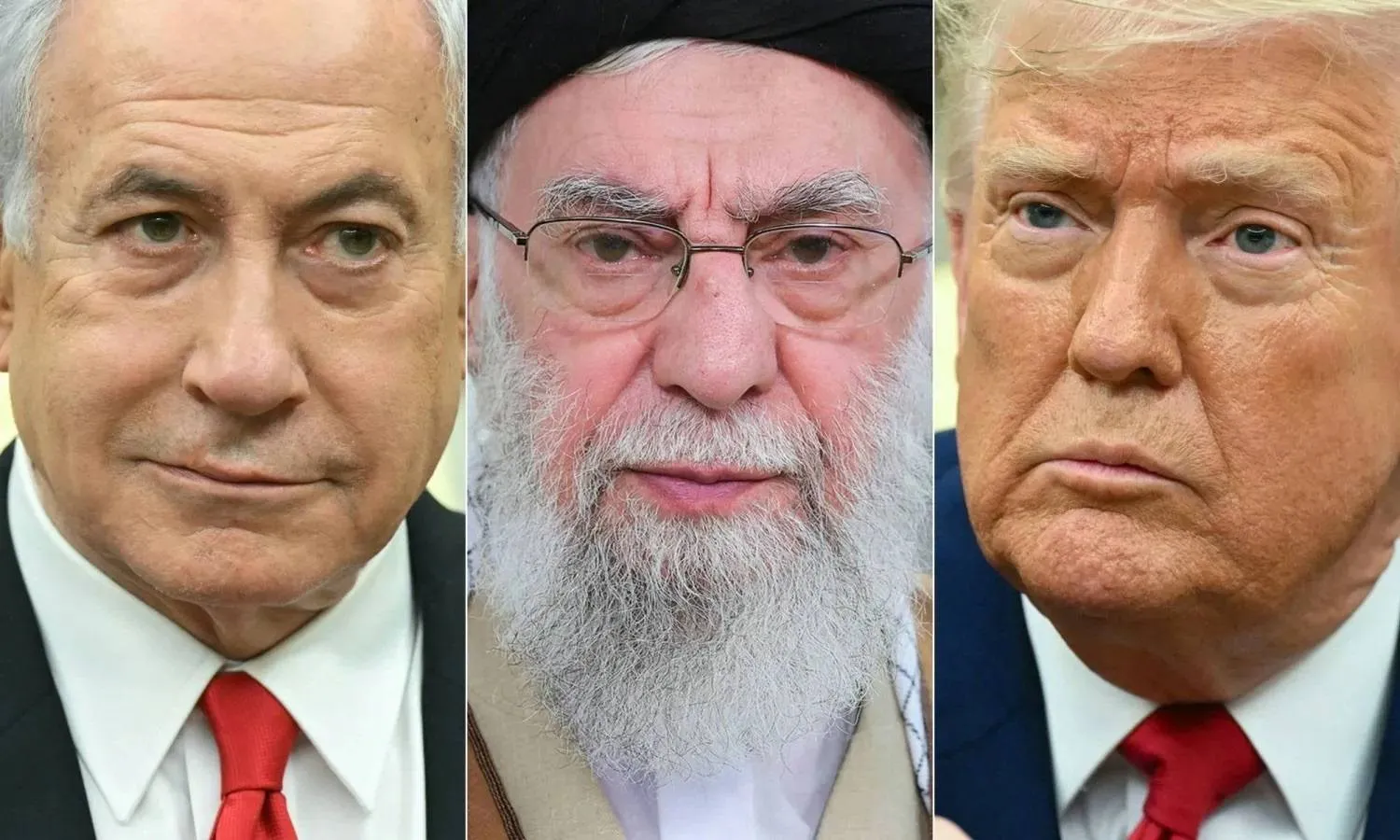
A combined image of US President Donald Trump, Iran’s Supreme Leader Ali Khamenei, and Israeli Prime Minister Benjamin Netanyahu (AFP). 
TT

‘Surprise Strikes’ Loom If US–Iran Talks Collapse

A combined image of US President Donald Trump, Iran’s Supreme Leader Ali Khamenei, and Israeli Prime Minister Benjamin Netanyahu (AFP). 

As anticipation grows over the resumption of US–Iran negotiations in Oman, Israeli Prime Minister Benjamin Netanyahu convened an emergency meeting of Israel’s security cabinet on Thursday to assess scenarios in the event the talks fail and to consider the possibility of renewed military escalation.

Ahead of the meeting, Netanyahu briefed a confidential subcommittee of the Knesset’s Foreign Affairs and Defense Committee, stressing that the Israeli military is prepared to launch a major strike against Iran—one he said could be harsher than the so-called Twelve-Day War.

Israeli media later reported that the discussions reflected growing concern in Jerusalem over the direction of diplomacy with Tehran.

Channel 12 quoted a source familiar with the security cabinet deliberations as saying there is “full coordination with the United States” on Iran-related matters.

At the same time, The Jerusalem Post reported that Israel’s Chief of Staff, Eyal Zamir, told US officials that Israel is ready to carry out “surprise strikes” against targets inside Iran should Tehran “choose the path of war.”

According to the report, Zamir emphasized that any US concessions on Iran’s ballistic missile program would cross a red line for Israel, alongside other red lines linked to Iran’s nuclear activities.

This stance, the newspaper said, helps explain US Secretary of State Marco Rubio’s insistence that the ballistic missile program be included in the agenda of upcoming talks with Tehran. Rubio reiterated earlier this week that negotiations should address both Iran’s nuclear and missile programs.

Iran, however, has pushed back firmly. Ebrahim Rezaei, spokesman for the Iranian parliament’s National Security Committee, said both uranium enrichment and the ballistic missile program are non-negotiable “red lines” for Tehran.

Netanyahu said he does not yet know what decision US President Donald Trump will take regarding a possible military strike on Iran, but expressed confidence that Washington will adopt a tougher approach in the current round of negotiations.

Channel 12 described Israeli satisfaction with the US position as having taken on a “deep strategic dimension,” noting a recent secret visit by Zamir to Washington that Israeli officials have portrayed as significant.

Former national security adviser Tzachi Hanegbi shed further light on the background in remarks at a policy seminar in Herzliya. He said Netanyahu had previously sought to persuade former President Joe Biden to authorize a strike on Iran, but Biden rejected the idea, preferring to exhaust diplomatic options.

Netanyahu later made similar appeals during Trump’s second term, warning of an approaching “zero hour,” yet Trump initially resisted military action, opting instead for sanctions and warnings.

Hanegbi said Trump’s position shifted in June after reviewing the results of Israeli strikes on Iran ahead of the Twelve-Day War and the successful interception of two large-scale Iranian attacks with US assistance, without American casualties or disruption to shipping in the Strait of Hormuz.

He added that Trump was impressed by Israel’s military performance and eventually gave the green light for war, agreeing to join its final phase.

Meanwhile, Israeli political sources told the news site Walla that there is a growing sense in Jerusalem that Washington entered the current negotiations at a poor moment and from a weak position.

They argued that Iran today is more confident and assertive than in 2015, believing its threats of regional escalation were enough to push the United States back to diplomacy.



Senior Russian Officer Hospitalized after Being Shot in Moscow

A person walks along an embankment of the Moskva River near the Kremlin wall in Moscow, Russia February 5, 2026. REUTERS/Anastasia Barashkova
TT

Senior Russian Officer Hospitalized after Being Shot in Moscow

A person walks along an embankment of the Moskva River near the Kremlin wall in Moscow, Russia February 5, 2026. REUTERS/Anastasia Barashkova

A senior Russian officer, Lieutenant General Vladimir Alexeyev, was rushed to hospital after being shot in Moscow on Friday, officials said.

Alexeyev is deputy chief of the Main Directorate of the General Staff at ‌the Defense ‌Ministry.

When mercenary ‌chief Yevgeny ⁠Prigozhin staged ‌a short-lived mutiny in June 2023, Alexeyev was one of the top officials who were sent to negotiate with him.

The Moscow prosecutor's office said Alexeyev ⁠had been shot several times at a ‌residential building in ‍northwest Moscow ‍by an unidentified assailant who fled ‍the scene.

Investigative Committee spokesperson Svetlana Petrenko didn’t say who could be behind the attack on Alekseyev.

Several senior Russian officers have been assassinated since the start of the war in Ukraine, with Moscow blaming the attacks on Kyiv. In some cases, ⁠Ukrainian military intelligence has claimed responsibility.

The most recent officer to be killed was the head of the General Staff's army training directorate, Lieutenant General Fanil Sarvarov, who was killed by a bomb under his car on December 22.

Friday’s attack came a day after Russian, Ukrainian and US negotiators wrapped up two days of talks in Abu Dhabi. The Russian delegation was led by the military intelligence chief, Adm. Igor Kostyukov.