


Sources: Trump Iranian Missile Claim Unsupported by US Intelligence

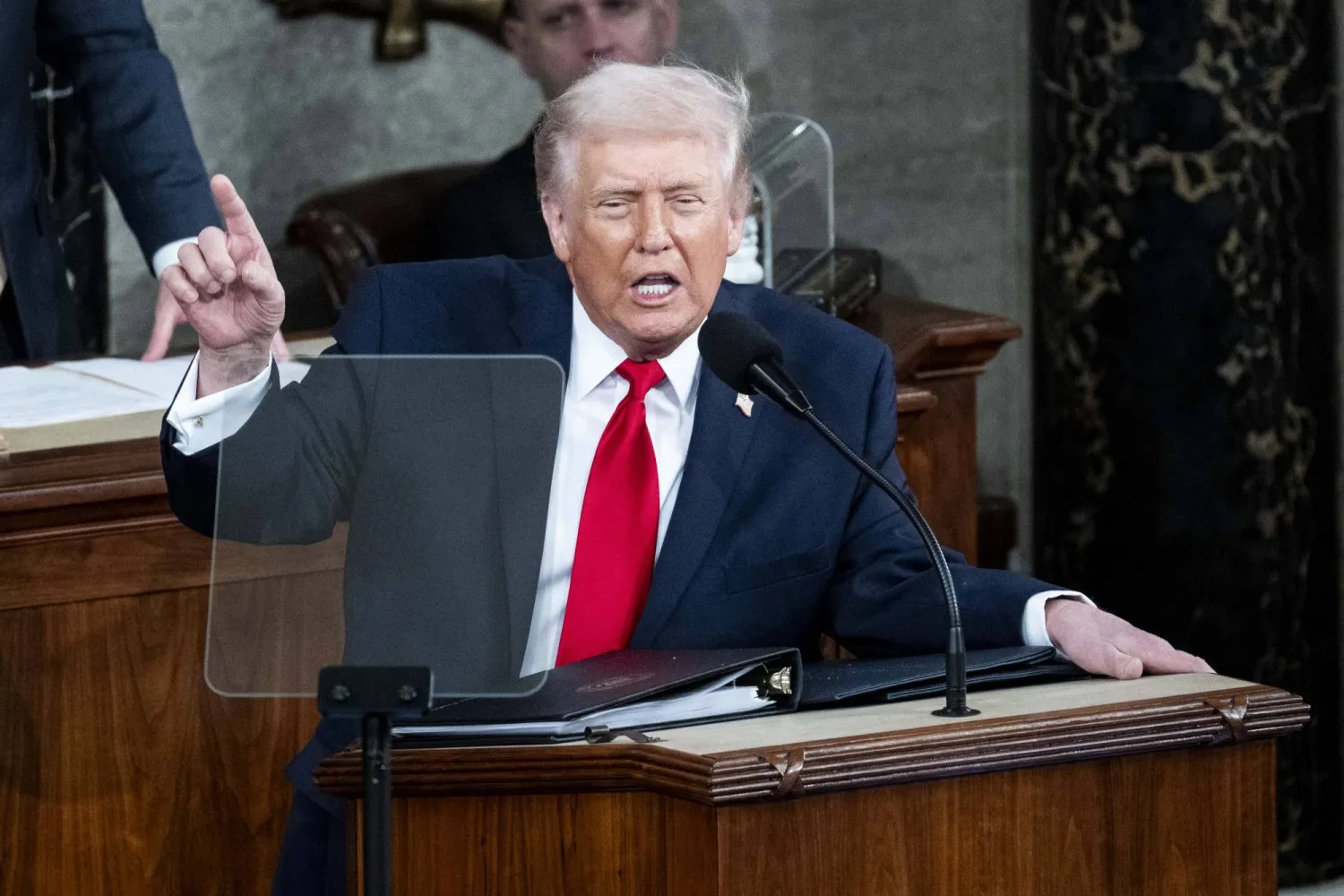
24 February 2026, US, Washington: US President Donald Trump delivers the State of the Union Address in the House chamber at the US Capitol in Washington. Photo: Michael Brochstein/ZUMA Press Wire/dpa
TT

Sources: Trump Iranian Missile Claim Unsupported by US Intelligence

24 February 2026, US, Washington: US President Donald Trump delivers the State of the Union Address in the House chamber at the US Capitol in Washington. Photo: Michael Brochstein/ZUMA Press Wire/dpa

US President Donald Trump’s claim that Iran will soon have a missile that can hit the United States is not backed by US intelligence reports, and appears to be exaggerated, according to three sources familiar with the reports, casting doubt on part of his case for a possible attack on the country.

In his State of the Union address to Congress on Tuesday, Trump began making his case to the American public for why the US could launch strikes against Iran, saying Tehran was “working on missiles that will soon reach” the United States.

But there have been no changes, two sources said, to an unclassified 2025 US Defense Intelligence Agency assessment that Iran could take until 2035 to develop a "militarily viable intercontinental ballistic missile" (ICBM) from its existing satellite-lofting space-launch vehicles (SLV).

“President Trump is absolutely right to highlight the grave concern posed by Iran, a country that chants ‘death to America,’ possessing intercontinental ballistic missiles," said White House spokesperson Anna Kelly.
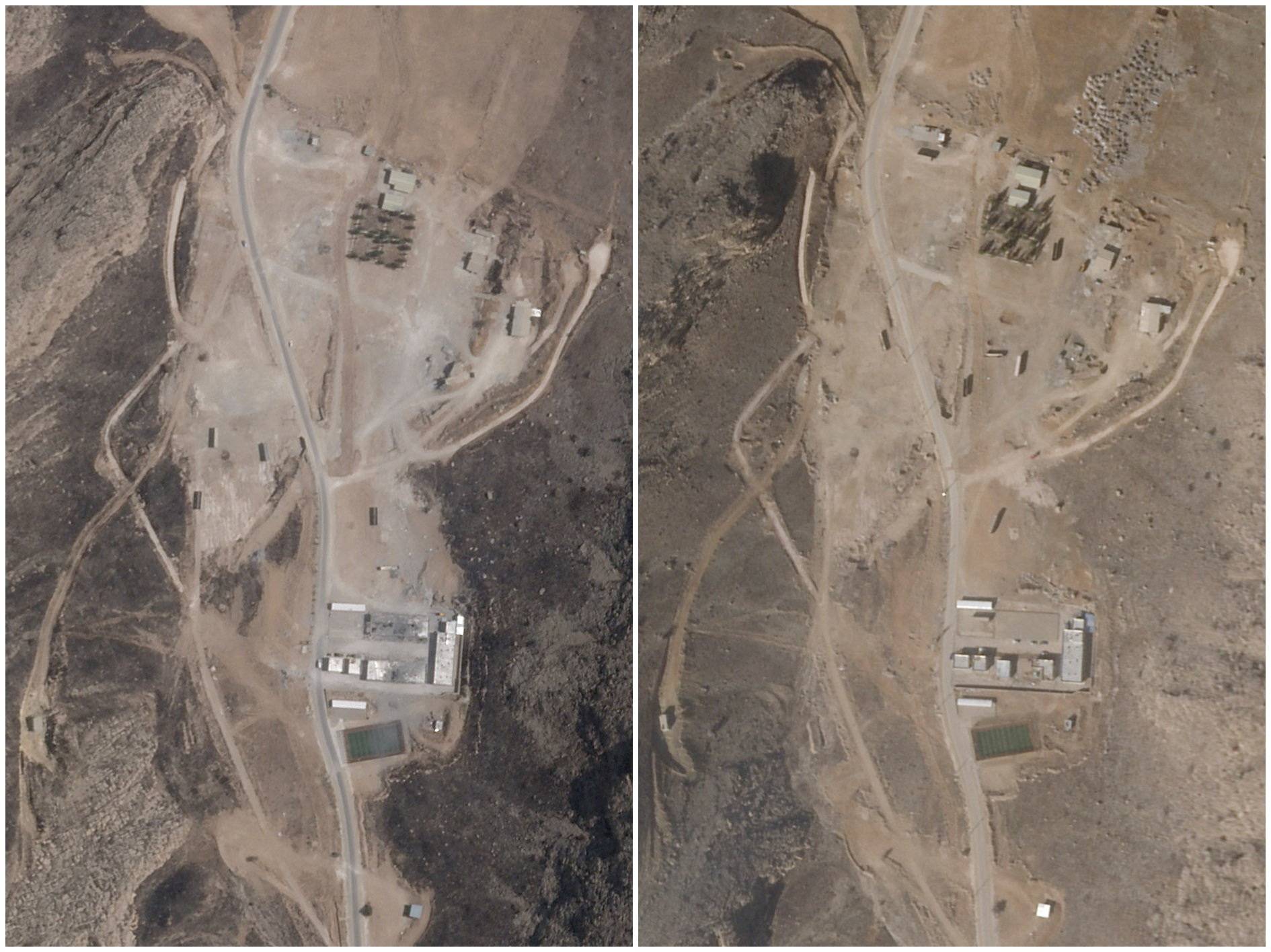
A combination picture of satellite images shows Shiraz South Missile Base in Shiraz South, Iran, before reconstruction, July 3, 2025 (LEFT), and after reconstruction and clearance efforts, January 30, 2026. Planet Labs PBC/Handout via REUTERS

According to Reuters, one source said that even if China or North Korea - which closely cooperate with Iran - provided technological ‌assistance, Iran would probably ‌take up to eight years at the earliest to produce "something that is actually ICBM level and operational."

The ‌sources, ⁠who spoke on ⁠condition of anonymity in order to discuss sensitive intelligence, said they were unaware of any US intelligence assessments that Iran was developing a missile that could soon range the US homeland but did not rule out the possibility of a new intelligence report they were unaware of.

The New York Times first reported that US intelligence agencies believe Iran is probably years away from having missiles that can hit the United States.

In his address ‌on Tuesday, Trump pointed to Tehran's support for militant groups, its killing of protesters and the ‌country's missile and nuclear programs as threats to the region and the United States.

Without providing evidence, Trump said that Tehran was beginning to rebuild the nuclear program ‌that he claimed had been “obliterated” by US airstrikes last June on three major sites involved with uranium enrichment.

US Secretary of State Marco Rubio on ‌Wednesday referred to Iran’s ballistic missile program in less definitive terms than Trump, saying that Tehran is "on a pathway to one day being able to develop weapons that could reach the continental US."

In an interview with India Today TV released on Wednesday, Iranian Foreign Minister Abbas Araghchi denied that Iran was expanding its ‌missile capabilities.

"We are not developing long range missiles. We have limited range to below 2000 kilometers intentionally," he said. "We don’t want it to be a global threat. We only have (them) to defend ourselves. Our missiles ⁠build deterrence."

The US intelligence community and the International Atomic Energy Agency (IAEA), the UN nuclear watchdog, have said that Iran shuttered a nuclear weapons development program in 2003.

But according to the IAEA, Tehran has in recent years continued enriching uranium, including to near weapons-grade.

Trump has threatened to attack Iran if it executes people arrested during nationwide anti-government protests in January or fails to agree a deal on its nuclear program in talks with the US.

David Albright, a former UN nuclear inspector, said Iran was a long way away from being able to mount atop a missile a nuclear warhead-carrying re-entry vehicle that could survive the extreme heat and forces of plunging through Earth’s atmosphere.

"Iran can launch a very long-range missile because of its space launch program," said Albright, the president of the Institute for Science and International Security think tank. "But it needs lots of work to develop an adequate RV (re-entry vehicle)."

Albright and other experts noted that Israeli airstrikes last year and in 2024 had badly damaged key facilities where Tehran produces liquid- and solid-fuel ballistic missiles.



Tram Derails in Central Milan, Leaving One Dead, 40 Injured

Emergency services work at the scene of a derailment on Line 9 in Milan, Italy, Friday, Feb. 27, 2026. (AP)
TT

Tram Derails in Central Milan, Leaving One Dead, 40 Injured

Emergency services work at the scene of a derailment on Line 9 in Milan, Italy, Friday, Feb. 27, 2026. (AP)

One person was killed and around 40 injured, including one in a critical condition, when a tram derailed in central Milan on Friday, a spokesperson for local ‌firefighters said.

The ‌tram, one of ‌the ⁠newest models in ⁠operation in Milan, came off the tracks in Vittorio Veneto street, one of the city's key downtown corridors, crashing into the ⁠window of a shop, the ‌spokesperson ‌Vittorio Di Giacomo told Reuters.

Local ‌emergency services said 13 ‌ambulances were on the scene.

Civil protection teams set up a tent to assist the injured, according ‌to a Reuters eyewitness.

The Milan transport company, ATM, ⁠said ⁠in a statement it was "deeply shocked" by the accident, expressed its sympathy to all those affected and said it was working with judicial authorities to try to understand what caused it.


Bill Clinton to Lawmakers Investigating Epstein: ‘I Saw Nothing’

Members of the media gather outside the Chappaqua Performing Arts Center as the House Oversight Committee conducts a deposition with former US President Bill Clinton as part of the committee's investigation into convicted sex offender Jeffrey Epstein, in Chappaqua, New York, on February 27, 2026. (AFP)
TT

Bill Clinton to Lawmakers Investigating Epstein: ‘I Saw Nothing’

Members of the media gather outside the Chappaqua Performing Arts Center as the House Oversight Committee conducts a deposition with former US President Bill Clinton as part of the committee's investigation into convicted sex offender Jeffrey Epstein, in Chappaqua, New York, on February 27, 2026. (AFP)

Bill Clinton told lawmakers on Friday that he "saw nothing that gave me pause" when he spent time with Jeffrey Epstein, as the former president gave closed-door testimony about his relationship with the late sex offender.

In a prepared statement, Clinton told the House of Representatives Oversight Committee that he would not have flown on the late financier's plane if he had known about his alleged sex trafficking of underage girls, and would have reported him if he did.

"We are only here because he hid it from everyone so well for so long," Clinton said.

Clinton flew on Epstein's plane several ‌times in the ‌early 2000s after he left office and before Epstein's 2008 conviction of ‌soliciting ⁠prostitution from a ⁠minor. A tranche of millions of documents released by the Justice Department includes photos of Clinton with women whose faces are redacted.

"I saw nothing, and I did nothing wrong," Clinton said.

His testimony follows that of his wife, former Secretary of State Hillary Clinton, who told the panel on Thursday that she did not remember ever meeting Epstein and had nothing to share about his sex crimes.

She said she was also asked about UFOs and a 2016-era conspiracy theory during the ⁠seven-hour session.

The panel's Republican chairman, Representative James Comer of Kentucky, said he ‌would ask the former president about the photos released ‌by the Justice Department. The committee is also expected to quiz Clinton about Epstein's involvement with the couple's ‌charitable foundation.

Comer said video of Hillary Clinton's testimony could be released as soon as ‌Friday. Comer repeatedly has said the Clintons are not accused of wrongdoing.

They agreed to testify near their main residence of Chappaqua, New York, after the House threatened to hold them in contempt of Congress for refusing to cooperate. Some Democrats supported the move.

Epstein died in jail in 2019 while facing federal sex-trafficking crimes. His death was ruled a suicide.


Macron to Set Out How France’s Nuclear Arms Could Protect Europe

 French President Emmanuel Macron attends a joint news conference with Slovenia's Prime Minister Robert Golob at the Elysee Palace in Paris, France, Friday, Feb. 27, 2026. (AP)
French President Emmanuel Macron attends a joint news conference with Slovenia's Prime Minister Robert Golob at the Elysee Palace in Paris, France, Friday, Feb. 27, 2026. (AP)
TT

Macron to Set Out How France’s Nuclear Arms Could Protect Europe

 French President Emmanuel Macron attends a joint news conference with Slovenia's Prime Minister Robert Golob at the Elysee Palace in Paris, France, Friday, Feb. 27, 2026. (AP)
French President Emmanuel Macron attends a joint news conference with Slovenia's Prime Minister Robert Golob at the Elysee Palace in Paris, France, Friday, Feb. 27, 2026. (AP)

French President Emmanual Macron is Monday to reveal his vision for how France's nuclear arsenal could bolster defense in Europe, with the continent scrambling to re-arm against an aggressive Russia and as Washington turns away.

The speech by Macron, at France's Ile Longue nuclear submarine base, will be closely watched across Europe, which for decades has relied on the United States' nuclear deterrent but is now increasingly debating whether to bolster its own arsenals.

He is expected to update France's nuclear doctrine, with a member of his team telling AFP to expect "fairly significant shifts and developments" but declining to give any further details.

Macron has previously proposed to consider how France -- the European Union's only nuclear power -- could contribute to protecting Europe.

He said this month he is considering a doctrine that could include "special cooperation, joint exercises, and shared security interests with certain key countries".

Last year, Macron said he was ready to discuss possible deployment of French aircraft armed with nuclear weapons in other European countries.

France maintains the world's fourth-largest nuclear arsenal, estimated at around 290 warheads. Britain, which exited the EU in 2106, is the only other European nuclear power.

By contrast, the United States and Russia, the world's two main atomic powers, have thousands of nuclear warheads each.

Reassurances from US officials that Washington's deterrent would continue to cover Europe under the NATO alliance have done little to quell European fears of fickleness under US President Donald Trump.

"It is clear that we will need to reflect together on how French and British deterrence can fit into a more assertive European defense," Bernard Rogel, who served as top military adviser to Macron, told AFP.

- '27 buttons' -

This month, German Chancellor Friedrich Merz said that he was holding "confidential talks with the French president about European nuclear deterrence".

Britain's Prime Minister Keir Starmer has said the UK's nuclear deterrent already protects fellow NATO members, but stressed that he was "enhancing our nuclear cooperation with France".

But how exactly nuclear cooperation would work between the EU's 27 states is another story.

Rogel insisted that control over the launch decision will remain in French hands.

"I can't see us having 27 buttons. From a credibility standpoint, that just doesn't work," he said.

On top of that, France's austerity drive and strains in the relationship between it and fellow EU powerhouse Germany, have exposed fault lines in any potential security agreement.

This month, German Foreign Minister Johann Wadephul criticized French defense spending, calling for Paris to do more to turn calls for European security sovereignty into concrete action.

"We are looking forward to and eagerly await another speech by the French president," Wadephul added.

But Rafael Loss, a policy fellow at the European Council on Foreign Relations, said leaders should find confidence in European support for strengthening nuclear deterrence.

He said people in Bulgaria, Denmark, Estonia, Germany, Poland, Portugal, Spain and Switzerland now tend to support rather than oppose the idea of developing an alternative European nuclear deterrent.

"French and British nuclear forces -- as the core of a future European strategic deterrent -- likely need to grow in size and change composition (or both)," he wrote.

While a NATO member, France does not make its atomic weapons available to the alliance.

But in his last nuclear doctrine update in 2020, Macron called for dialogue among EU countries about what role the French nuclear deterrent could play.

- 'Expectations' -

NATO's secretary-general at the time, Jens Stoltenberg, dismissed Macron's call for strategic dialogue in Europe, arguing that a "tried and tested" deterrent was already in place.

But the picture changed after Russian leader Vladimir Putin invaded Ukraine in 2022, repeatedly brandishing the threat of Moscow's nuclear arsenal, while Trump has pushed Europe down his list of priorities.

Florian Galleri, a historian specializing in contemporary military studies and nuclear doctrines, also warned that Macron would have to tread carefully, pointing to his low approval ratings one year before the end of his presidency.

"This speech creates expectations," he said. "If it is weak, people will wonder why it was made in the first place. If it is strong, with real changes, the consequences could be significant."

But Macron's address could also spark a domestic political backlash ahead of the 2027 presidential election, in which Marine Le Pen's Euroskeptic far right is seen as having its best chance yet at winning the top job.

"The fear is that it could discredit any form of European dimension," said Galleri.