


Pezeshkian’s Apology to Neighbors Triggers Backlash in Iran

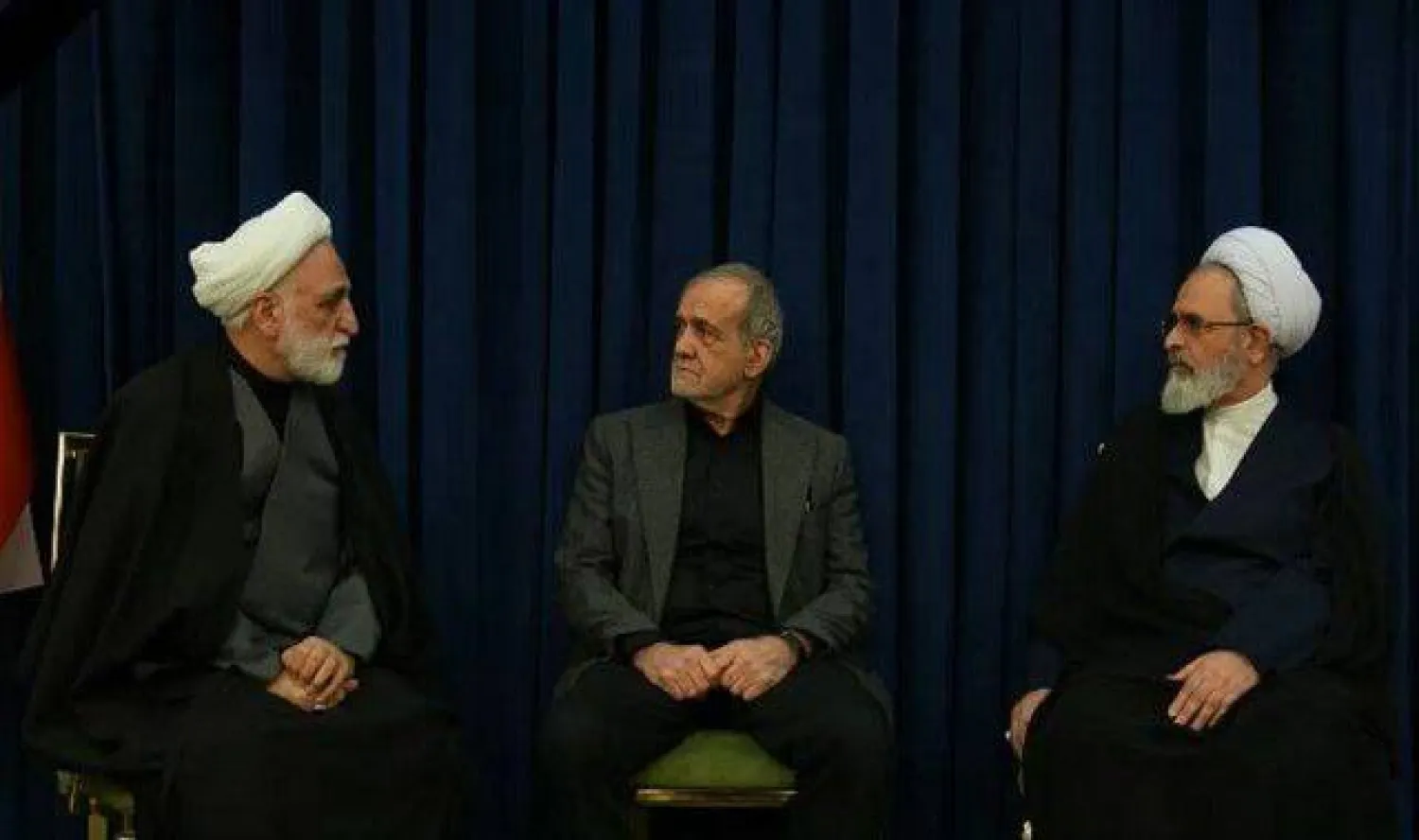
Iranian President Masoud Pezeshkian attends a leadership council meeting with judiciary chief Gholamhossein Mohseni-Ejei and Guardian Council member Ali Reza Arafi last week. (Iranian Presidency)
TT

Pezeshkian’s Apology to Neighbors Triggers Backlash in Iran

Iranian President Masoud Pezeshkian attends a leadership council meeting with judiciary chief Gholamhossein Mohseni-Ejei and Guardian Council member Ali Reza Arafi last week. (Iranian Presidency)

An apology by Iranian President Masoud Pezeshkian to neighboring countries for attacks that struck parts of their territories - and his pledge to halt such strikes unless their soil is used to attack Iran - has triggered sharp political debate within Tehran’s ruling establishment.

Lawmakers swiftly condemned the remarks, while military and judicial officials reiterated that US and Israeli interests across the region would remain legitimate targets. The dispute is unfolding at a delicate moment for Iran, following the killing of Supreme Leader Ali Khamenei.

Pezeshkian framed the apology as a political signal intended to reassure neighbors and prevent a wider regional confrontation. Critics, however, called it “an unjustified concession in the middle of an open war.”

Military and judicial leaders stressed that any US or Israeli base or interest used against Iran would remain a legitimate target — even if located on the territory of other regional states.

The episode has turned the president’s apology from a diplomatic gesture to contain tensions into the center of an internal power struggle, highlighting divisions within Iran’s leadership over the limits and management of the war.

Following Khamenei’s killing, a temporary leadership council assumed his duties. The body consists of Pezeshkian, judiciary chief Gholamhossein Mohseni-Ejei and Guardian Council member Alireza Arafi.

In a televised address, Pezeshkian said the council had decided not to target neighboring states or fire missiles at them unless Iran was attacked from their territory.

“I apologize in my name and on behalf of Iran to neighboring countries that Iran attacked,” he said, adding that Tehran does not intend to assault any state.

He said the Iranian Revolutionary Guard Corps had acted in recent days “based on a field decision” after senior commanders and the supreme leader were killed at the start of the war.

The comments quickly drew pushback. Mohseni-Ejei said evidence gathered by Iran’s armed forces showed that “the geography of some countries in the region has openly or secretly been placed in the service of the enemy,” allowing their territory to be used for attacks against Iran.

“Severe attacks on these targets will continue,” he said, adding that the strategy was already under way and backed by the government and other pillars of the system.

Iran’s military signaled little appetite for de-escalation. The command of Khatam al-Anbiya Headquarters, the joint operations center under the armed forces’ general staff, said that although it had “not carried out any aggression” against neighboring states so far, all US and Israeli bases and interests across land, sea and air in the region remained primary targets.

In a statement, the command said the armed forces “respect the interests and sovereignty of neighboring countries and have not carried out any aggression against them so far.” But it warned that if hostile actions continued, all military bases and interests belonging to the United States and the “Zionist entity” would face powerful strikes from Iranian armed forces.

A spokesman for the headquarters said any location from which attacks against Iran are launched would be considered a legitimate target, warning that any attempt to enter the region “will end at the bottom of the Gulf” and that Tehran “will not retreat” in confronting the United States and Israel.

In parliament, Mohammad Manan Raisi, a lawmaker representing Qom, said the president’s “strange apology to neighboring countries is regrettable.”

Addressing Pezeshkian, he wrote: “When will it be time for you to apologize to the Iranian people for these humiliating positions?”

Raisi added that the Assembly of Experts must urgently announce a new supreme leader, saying the president’s “humiliating statements” showed the need to select one as soon as possible.

“Is it not true that neighboring countries placed their land, property and hotels at the service of our enemies?” he said. “Should our military not have attacked these bases and enemy properties that you now apologize for striking in such a humiliating manner?”

Conservative lawmaker Jalal Rashidi Kouchi wrote on X: “With all due respect, Mr. President, an apology is offered when a mistake has been made... but we made no mistake.”

He said the president’s message lacked firmness, appearing weak in wording, delivery and even body language.

Iran’s foreign ministry also warned regional states against allowing their territory or resources to be used for attacks on Iran.

In a statement, it said international law prohibits using a country’s territory, directly or indirectly, to harm another state, citing UN General Assembly Resolution 3314 defining aggression.

Countries whose territory is used to launch military attacks against a third state bear international legal responsibility, including compensation for direct and indirect damages, the ministry said.

It added that Iran had been compelled, under its “inherent and natural right” of self-defense, to carry out necessary and proportionate defensive operations against the bases and facilities of aggressors in the region.

Those operations target facilities and capabilities that serve as sources or launch points for hostile acts against the Iranian people, the ministry said, adding that US bases in the region had not strengthened security but had instead supported “American aggressors and the Zionist entity.”

The ministry stressed that Iran seeks to maintain and develop friendly relations with regional states based on mutual respect, good neighborliness and respect for sovereignty and territorial integrity. Iranian defensive operations against US bases in the region, it added, should not be interpreted as hostility toward neighboring countries.

Parliament speaker Mohammad Bagher Ghalibaf also weighed in, writing on X that the Islamic Republic’s defense policies are “constant” and rooted in “principles.”

“As long as there are US bases in the region, its countries will not see stability,” he wrote, adding that “all officials and the people are united around this principle.”

The presidency later sought to clarify the president’s remarks. Mehdi Tabatabaei, head of public relations at the presidential office, said the message was straightforward: if regional states do not cooperate with US attacks on Iran, Tehran will not target them.

“The Islamic Republic will not bow to pressure,” he wrote on X. “Our armed forces will respond firmly, according to rules of engagement, to any attack launched from US bases.”


Norway Mourns King Harald as Crowds Gather at Royal Palace

Mourners gather to pay tribute to King Harald V of Norway who passed away, at the Royal Palace square in Oslo on August 28, 2026.  (Photo by Lise ナserud / NTB / AFP) / Norway OUT
Mourners gather to pay tribute to King Harald V of Norway who passed away, at the Royal Palace square in Oslo on August 28, 2026. (Photo by Lise ナserud / NTB / AFP) / Norway OUT
TT

Norway Mourns King Harald as Crowds Gather at Royal Palace

Mourners gather to pay tribute to King Harald V of Norway who passed away, at the Royal Palace square in Oslo on August 28, 2026.  (Photo by Lise ナserud / NTB / AFP) / Norway OUT
Mourners gather to pay tribute to King Harald V of Norway who passed away, at the Royal Palace square in Oslo on August 28, 2026. (Photo by Lise ナserud / NTB / AFP) / Norway OUT

Norwegians were gathering on Saturday to say goodbye to King Harald in front of the royal palace, where he lies in state, with many well-wishers remembering his sense of inclusiveness and tolerance.

Europe's oldest monarch, who emerged from the shadow of his well-loved, extrovert father to become a reformer during more than three decades on the throne, died on Friday at the age of 89, said Reuters.

Late on Friday, throngs pressed the streets of Oslo under the pouring rain to watch the funeral cortege as it left Oslo University Hospital, where Harald passed ‌away, to ‌reach the royal palace.

At a later point, Norwegians ‌will ⁠be able to ⁠pay their respects in front of his coffin inside the royal chapel.

When that happens, his coffin will stand on a purple-draped catafalque, with the family wreath attached and the symbols of monarchy, a crown, sword, scepter and orb, placed on top until the funeral takes place. The date has not yet been made public.

Flags were flying ⁠at half-mast throughout the country and portraits of ‌the late king in gala uniform ‌were everywhere, from bus stops and metro stations to shops, offices and ‌public buildings.

TOLERANCE AND INCLUSIVITY

Many mourners who came on Friday praised Harald's ‌spirit of inclusiveness.

One referred to a speech he delivered in 2016 that went viral worldwide, in which he said: "Norwegians are girls who love girls, boys who love boys and girls and boys who love each other".

"It embodies ‌the way he felt about people and the way he wanted us Norwegians to feel about each ⁠other," said ⁠Mari Eidsvaag, 32, a well-wisher who wore a T-shirt emblazoned with that sentence, a rainbow and a drawing of King Harald.

"I think it's a very important statement, especially these days," she told Reuters outside the palace.

As Norwegians mourned Harald, the transition to a new reign began immediately.

Harald's 53-year-old son became Norway's new king the moment his father passed away. He said he would be known as King Haakon VIII.

King Haakon, who is expected to speak to the nation in a televised address, will take the oath in front of parliament on Tuesday, when he will swear to defend Norway's constitution and laws.


Anti-Migrant Protests in Ceuta Escalate into Clashes with Police

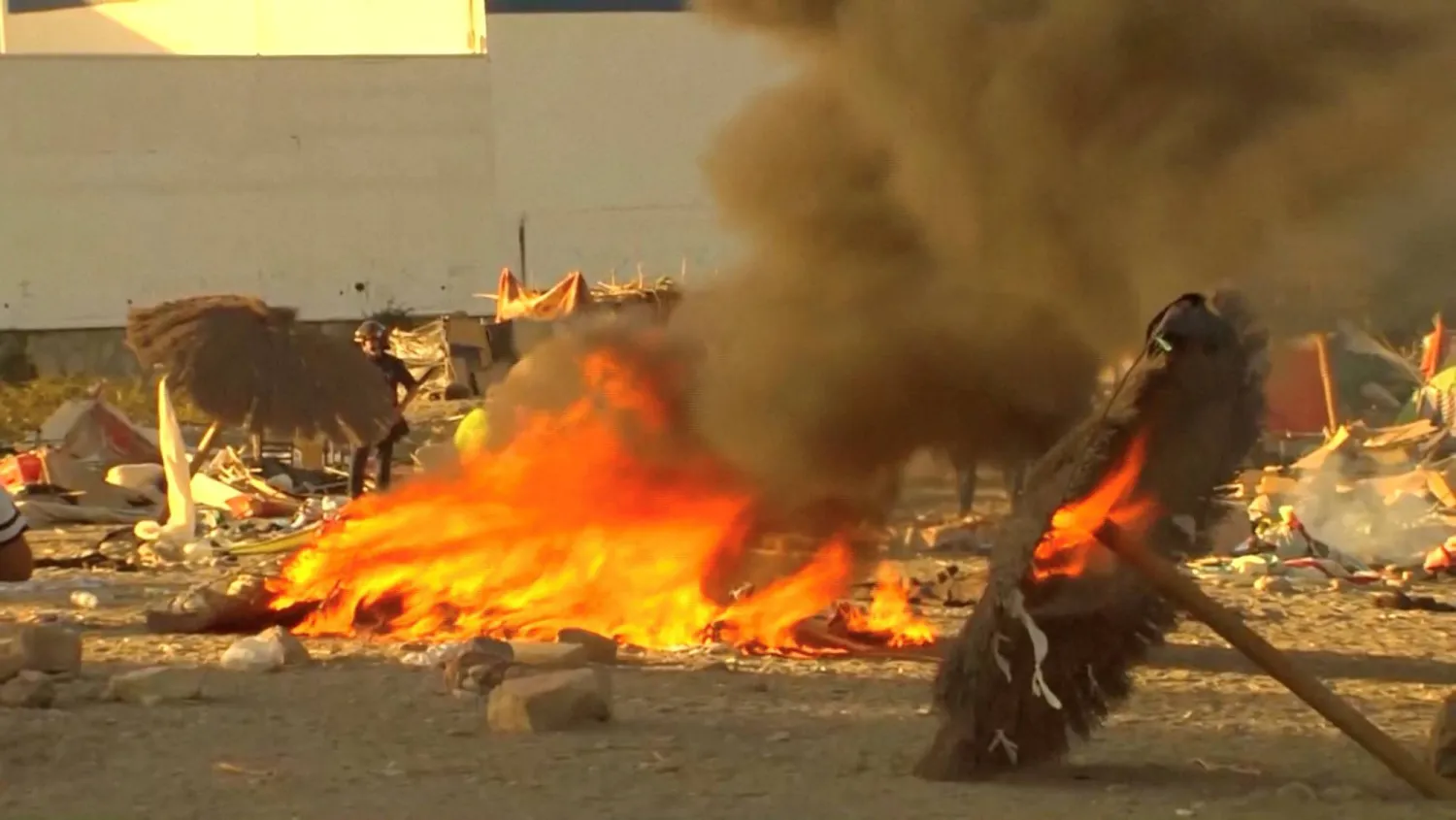
Smoke and flames rise as Ceuta residents destroy a migrant camp by the beach in the Spanish North African enclave on August 27, 2026. (Reuters)
TT

Anti-Migrant Protests in Ceuta Escalate into Clashes with Police

Smoke and flames rise as Ceuta residents destroy a migrant camp by the beach in the Spanish North African enclave on August 27, 2026. (Reuters)

Protests over security in Spain's North African enclave of Ceuta escalated into clashes between locals and police Thursday, a month after a mass influx of migrants from Morocco.

Police charged protesters at a beach after a group of demonstrators moved into the area where migrants have been sleeping, with some belongings set on fire during the disturbances, images broadcast on Spanish public television showed.

Earlier on Thursday, dozens of protesters staged a sit-in to temporarily prevent Red Cross vehicles from reaching the beach to distribute food to hundreds of migrants staying in the area.

Demonstrators, many waving Spanish flags, chanted “They should leave” and “Out with the Red Cross”, before they were dispersed by police.

The incidents come after police late on Wednesday fired tear gas to prevent confrontations between protesters and migrants camping on the beach.

More than 70,000 migrants entered Ceuta in late July, swimming or crossing on foot from neighboring Morocco in a chaotic influx that left scores dead and fueled fresh tensions within the European Union over migration.

Although the vast majority returned to Morocco within hours, thousands remain in the territory, many living rough on the streets.

Residents of Ceuta, which is just 18 square kilometers in size, have held regular demonstrations over what they say are security and hygiene problems linked to the influx.

But tensions have risen after a military vehicle carrying four soldiers was “ambushed” in the early hours of Thursday by about 70 migrants, who attacked it with stones and other objects, a police spokesman in Ceuta told AFP.

The soldiers fled and called for police assistance. Police detained 12 migrants, all Moroccan, the spokesman said.

One soldier suffered minor injuries after being struck by a stone. The motive for the attack was not immediately clear.

“The tension in the city of Ceuta is very high” because there is “no response” from the government and “we feel abandoned,” Kissy Chandiramani, the autonomous city's finance councilor, told news radio SER Thursday.

But she appealed for calm, saying people had the right to protest but warning that growing hostility would not resolve the crisis.

Also, Justice Minister Felix Bolanos appealed for calm, telling lawmakers in Madrid that authorities were working “without rest” to restore normality to the territory.

Prime Minister Pedro Sanchez has faced mounting criticism from Ceuta's authorities and residents, who say Madrid reacted too slowly to the mass arrival.

The government has in recent days moved to expand shelter for migrants and speed up efforts to determine who can be returned to Morocco.

The head of Ceuta's local government, Juan Vivas, said peaceful protests “to demand the return to normality” were justified, but warned that authorities would take action against anyone who commits acts of vandalism.

“We totally reject the use of any kind of violence,” he said in an institutional address.

“No one can or should take the law into their own hands. The defense of Ceuta and the interests of its people can only be pursued through legality,” Vivas added.


Trump Says Russia ‘Is Not Going to Attack NATO Territory’

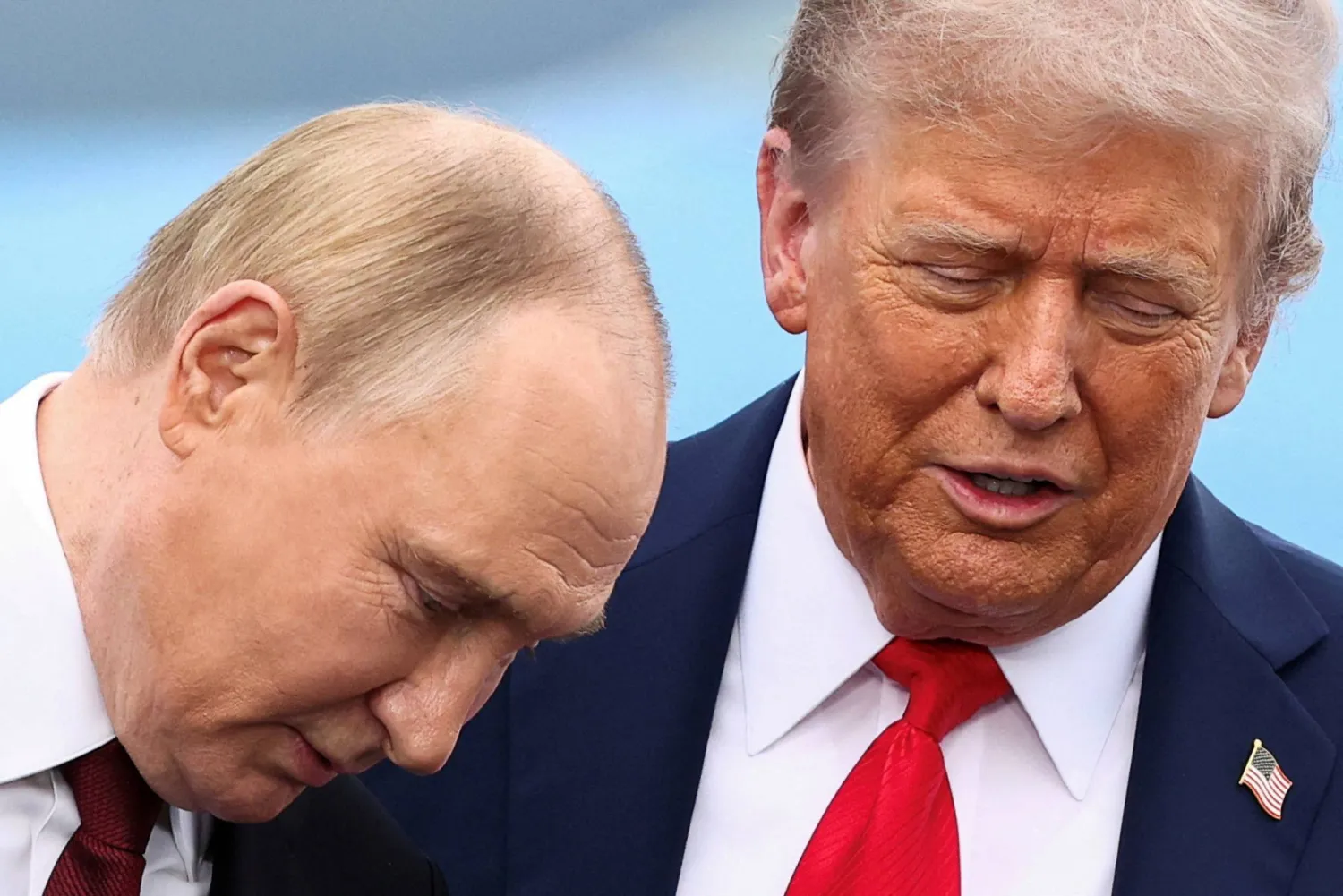
US Donald Trump and Russian President Vladimir Putin at a meeting in Alaska on Aug. 15, 2025 (Reuters) 
TT

Trump Says Russia ‘Is Not Going to Attack NATO Territory’

US Donald Trump and Russian President Vladimir Putin at a meeting in Alaska on Aug. 15, 2025 (Reuters) 

US President Donald Trump on Thursday said Russia is “not going to attack” NATO territory, pushing back against media reports that Washington is concerned about a possible Russian move on Europe.

“I've had good talks with him. He's not going to be attacking a NATO territory,” Trump told reporters in the Oval Office when asked if Russian President Vladimir Putin had agreed not to do so.

Trump's comments came two days after CIA Director John Ratcliffe flew to Moscow for surprise talks that the Wall Street Journal and CBS News had said was an attempt to dissuade Russia from attacking NATO members, amid US intelligence assessments that Moscow could seek to test the alliance.

Last Wednesday, Trump said that Ratcliffe's unannounced trip to Russia was “semi-routine,” downplaying the visit amid speculation that the spy chief had an urgent reason to make an appearance in Russia's capital.

In the interview with Glenn Beck, Trump instead talked about trying to end the Ukraine war, a goal he has pursued without success since returning to office last year.

A senior EU official told AFP on Thursday that European intelligence agencies see no sign Russia is planning a military attack on European NATO countries, after US reports that the head of the CIA warned Moscow not to strike the alliance.

“European services in general do not see any risk of an attack from Russia to the European countries, and this assessment has not changed,” said the official, speaking on condition of anonymity.

Meanwhile, Russia bombarded cities across Ukraine with missiles and drones in an overnight onslaught that ran into the daylight of hours Thursday, when explosions echoed around Kyiv through the morning.

Ukraine is desperately short of US-made Patriot air defense missiles that can counter Russia’s ballistic missiles, and Moscow’s fast-flying jet-powered drones have brought another challenge since the Russian military’s full-scale invasion began 4½ years ago.

On Friday, Ukrainian President Volodymyr Zelenskyy said Ukraine has struck a Russian Tu-95MS missile-carrying aircraft at the Engels base.

“These are the aircraft that are carrying out strikes against Ukraine,” Zelenskyy said on X, adding the strike was carried out by the Alpha unit of Ukraine’s SBU domestic security service.

Ukrainian officials say Russia builds up missile stocks and launches major attacks every few days, hoping to exhaust Ukrainian defenses through the sheer weight of numbers.

In response, Ukraine has hit high-profile targets on Russian soil as the countries inflict mutual destruction.

The Russian Defense Ministry said its forces carried out a “massive” strike on targets in nine Ukrainian cities that began after nightfall on Wednesday.

It described the targets as military-related, including industrial facilities, oil refineries, logistics hubs and port infrastructure.

“Russia continues to invest in missiles and in expanding its war, and that means more countermeasures are needed,” Zelenskyy said on social media, noting promises earlier this week by European countries to provide more air defense assistance.

“It is important that these (measures) are also supplemented by additional ballistic missile defense packages” through European purchases of weapons from the United States, he said.

Though the Russian Defense Ministry insisted only war-related targets were attacked, Russia appears determined to hurt Ukrainian businesses and dent the country's economy through attacks on private enterprise after Ukraine’s long-range drone strikes caused financial difficulties for Moscow.

Russian drones hit three major distribution centers, destroying depots belonging to a toy store chain and a confectionery company, and damaging another run by an electronics retailer, the companies said.

In addition, Moscow continued its efforts to wreck the Ukrainian power grid before the freezing winter months.

Also, people in the southern Ukrainian city of Kherson were urged to leave due to intensifying Russian attacks that risked cutting electricity and heating supplies for an extended period.

“I am once again addressing the residents of Kherson, especially families with children and elderly people: if you have the possibility.., please leave,” regional governor Oleksandr Prokudin wrote on Telegram.

“The enemy is intensifying its attacks every day on the region’s critical infrastructure,” he added.

“Last night, Russian forces again attacked Kherson’s district heating plant with glide bombs... the facility sustained very serious damage. Kherson may find itself without electricity or heating not for hours or days but for a long period,” he said.

Prokudin also wrote that, “Currently, there is no way to destroy these types of drones or the aerial bombs in any region of our country.”

Meanwhile, Ukraine's budget deficit in 2027 could be larger than forecast, requiring additional aid from the European Union as a result, Bloomberg wrote, citing sources.

Talks between Kiev and the International Monetary Fund (IMF) have faced headwinds due to “politically sensitive demands” from the country’s second-largest lender, sources said.

In July, the IMF projected that Ukraine’s deficit would total 17.8% of GDP in 2027 - 3.3 percentage points lower than in 2025. However, this forecast presumes that the Ukraine conflict will end in 2026, the agency noted. “As the war drags on, the figure is expected to be revised upward,” Bloomberg said, citing one of its sources.