Türkiye’s Foreign Minister Hakan Fidan Talks Diplomatic Efforts as Regional War Rages

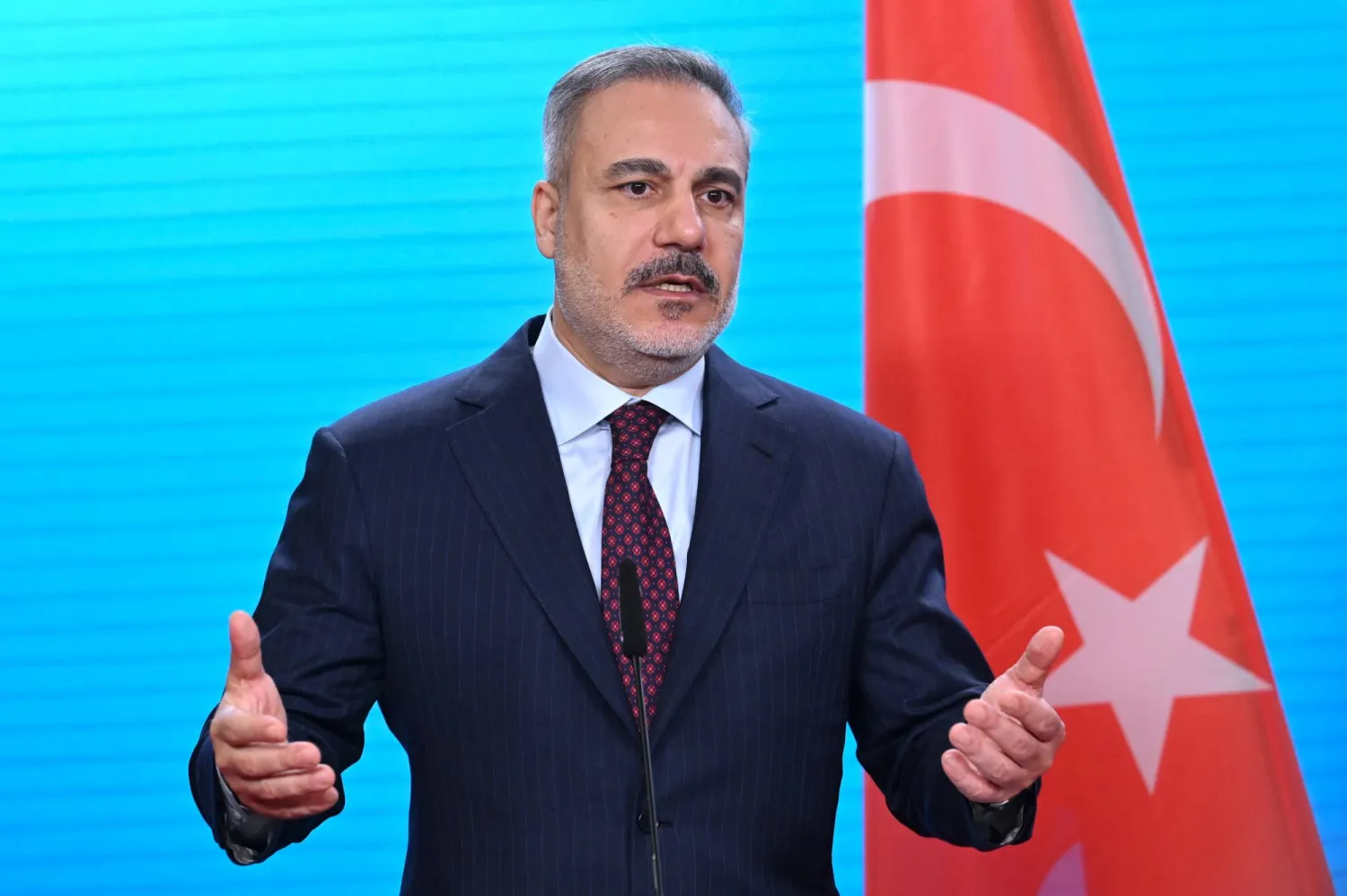
FILED - 28 November 2025, Berlin: Turkish Foreign Minister Hakan Fidan speaks at a press conference in Berlin. Photo: Soeren Stache/dpa
TT

Türkiye’s Foreign Minister Hakan Fidan Talks Diplomatic Efforts as Regional War Rages

FILED - 28 November 2025, Berlin: Turkish Foreign Minister Hakan Fidan speaks at a press conference in Berlin. Photo: Soeren Stache/dpa

Türkiye’s powerful foreign minister said Saturday that there is no serious initiative to resume negotiations between the United States and Iran but that he believes Iran is open to back-channel talks.

The comments by Foreign Minister Hakan Fidan to The Associated Press in an exclusive interview came as Ankara is striving to stay out of the widening war in the Middle East.

Ankara, which has good relations with both Washington and Tehran, had attempted to mediate a solution between them before the US and Israel attacked Iran two weeks ago, triggering the war.

“The conditions are not very much conducive” to diplomacy now, Fidan said. The Iranians “feel betrayed” because for a second time they were attacked while in active negotiations with the US over their nuclear program, he said, but added, “I think they are open to any sensible back-channel diplomacy.”

Fidan, 57, served as Türkiye’s intelligence chief for more than a decade before being appointed foreign minister in 2023.

Key role in formulating Türkiye’s Middle East policy

In that role, he played a key part in shaping Türkiye’s policy in the Middle East, particularly toward Syria, Iraq and Iran. He is considered to be one of President Recep Tayyip Erdogan ’s most trusted advisers and one of the potential candidates to succeed him.

Türkiye has maintained a neutral position in the war, criticizing both the US and Israeli strikes against Iran and Tehran’s retaliatory actions against Gulf states that host US bases. Fidan said he has been attempting to persuade the Iranians to halt those attacks.

Fidan said Türkiye’s top priority is to remain outside of the conflict, even after three missiles believed to come from Iran were intercepted over Türkiye by NATO defenses. Türkiye is a NATO member and an air base in southern Türkiye is used by NATO forces, including US troops.

Iranian officials have insisted that they did not fire at Türkiye, although the available data shows that the missiles came from Iran, the Turkish foreign minister said.

He ruled out a military response at this stage, saying that NATO’s defenses were effective and that Ankara’s “primary objective” is to stay out of the conflict.

“I know that we are being provoked and we will be provoked, but this is our objective,” he said. “We want to stay out of this war.”

Fidan, who has regular contact with Iranian officials, said he does not know the severity of the wounds suffered by Iran’s new Supreme Leader Mojtaba Khamenei in a strike earlier in the war, but that “what we know is that he is alive and functioning.”

Khamenei was appointed to replace his father, Ali Khamenei, who was killed Feb. 28 during the war’s opening salvo.

Fidan said “the process of electing a new leader and the medical conditions of the new leader, it created a gap” in Iran’s power structure and “I think that gap has been filled by the high command of the Revolutionary Guards,” referring to the paramilitary force reporting to the Supreme Leader.

A failed peace initiative

Before the conflict, Türkiye tried to avert a war by offering to host talks in Istanbul that would have brought US, Iran and other regional countries together. Iran later opted for talks mediated by Oman, without the participation of regional actors and focusing solely on its nuclear program — talks that ultimately failed.

Fidan said that Iran had refused to discuss its missile program and the proxy armed groups it backs in the region, including the Lebanese Hezbollah and a group of Iraqi militias — both of which have now waded into the regional war.

Türkiye had proposed that “the Americans and the Iranians can discuss fully the nuclear issue and we as regional countries can come together to discuss the other two with Iran” as part of an initiative to build trust within the region.

Tensions with Israel

Türkiye and Israel have tense relations, with Erdogan becoming one of the most vocal critics of Israel’s actions in Gaza. Türkiye has cut trade ties with Israel and frequently accuses Israel of committing genocide. Israel in turn accuses Türkiye of supporting Hamas, the Palestinian militant group that launched the deadly Oct. 7, 2023 attack in southern Israel.

Since Israel launched its strikes on Iran, some have gone as far as to suggest that Türkiye could be the next target. Fidan dismissed that possibility, while acknowledging that the war in Iran gave Türkiye an increased incentive to step up its own production of weapons and air defenses.

“As long as Netanyahu is there, (Israel) will always identify somebody as an enemy,” he said. “Because they need it to advance their own agenda. If not Türkiye, they would name some other country in the region.”

He criticized Israel’s role elsewhere in the region, including in Syria, where both countries have strategic interests.

Türkiye has been a strong backer of the current government in Damascus led by interim President Ahmad al-Sharaa.

Israel regards al-Sharaa’s government with suspicion and, since it took power in December 2024, Israeli forces have seized control of a swathe of land in southern Syria and launched airstrikes on Syrian military facilities, wiping out much of the country’s arsenal. Israel has said its presence in Syria is meant to secure its border from another Oct. 7-style attack.

“They are after not security, they are after more land,” Fidan said. “So as long as they don’t give up this idea, there will always be a war in the Middle East.”

An ongoing role in Gaza

Türkiye has also sought to play an active role in postwar Gaza. It has joined US President Donald Trump’s Board of Peace — boycotted by many other countries that see it as an attempt to supplant the United Nations and criticize the lack of a role for Palestinians — and has offered to supply troops for an international stabilization force in the battered enclave.

Fidan said it was important for Türkiye to join the Board of Peace, as an “opportunity” to stop the war, although “we are not under the illusion that the Board of Peace will address all the existing issues.”

Fidan said Türkiye has not received a request to contribute troops to the stabilization force, which he attributed to the Israeli opposition, but added, “I think the Americans are quietly trying to settle the issue with the Israelis to allow Türkiye to participate.”

Fidan said however, that Türkiye’s priority was the establishment of an administration committee for Gaza, which is to be made up of 15 politically independent Palestinian administrators.

“We expect them to go into Gaza and start their work,” he said. “This has not started yet, so we need to start from somewhere.”


Takaichi to Attend APEC in First China Trip as PM

Japan’s Prime Minister Sanae Takaichi attends a ceremony for the exchange of signed documents at the Akasaka State Guest House in Tokyo, Japan, 09 November 2026. (EPA)
TT

Takaichi to Attend APEC in First China Trip as PM

Japan’s Prime Minister Sanae Takaichi attends a ceremony for the exchange of signed documents at the Akasaka State Guest House in Tokyo, Japan, 09 November 2026. (EPA)

Japan said Friday that Prime Minister Sanae Takaichi would visit China next week for the first time since she took office last year, attending an Asia-Pacific summit in Shenzhen.

The trip comes at a time of particularly fraught relations between the rival nations after Takaichi suggested in November last year that Japan may intervene in any attack on the island of Taiwan, which China claims as its territory.

"Prime Minister Takaichi is scheduled to visit the Philippines and China from November 16 to 19 to attend ASEAN-related summit meetings and the APEC summit," said deputy chief cabinet secretary Masanao Ozaki.

The visit to China will be her first since becoming prime minister in October last year.

Ozaki said that while at APEC, Takaichi will discuss issues such as "trade and investment, regional economic integration, economic and energy resilience, the digital economy... and present Japan's position on these matters".

But all eyes will be on any interaction with Chinese President Xi Jinping. Analysts say that a bilateral summit between the two leaders is very unlikely.

Multiple Japanese media reported that Tokyo had also asked Russia for a meeting with President Vladimir Putin at the gathering.

Relations between Tokyo and Moscow are at a low point after a Japanese journalist was arrested in Russia on spying allegations last month and assets belonging to Japan Tobacco were seized in the country.

Before the Shenzhen trip Takaichi will head to Manila for a meeting of the 11-nation Association of Southeast Asian Nations.

Ozaki said a Quad meeting -- including the leaders of Australia, India, Japan and the United States -- is being arranged on the sidelines of ASEAN.

China reacted furiously to Takaichi's comments on Taiwan, which came just weeks after she took office.

Beijing warned its citizens against travel to Japan and imposed trade restrictions that have reportedly led to big drops in supplies of vital rare earth minerals to Japanese firms.

Takaichi last month called China an "important neighbor" and pledged to build a stable relationship in a policy address.

But she added that Japan would also "firmly assert our country's positions" and "strongly call for responsible behavior".

While Beijing has refused to have ministerial talks with Takaichi's government, Xi sent a message of condolence to the family of former Japanese prime minister Yasuo Fukuda after he died last month, describing him "a longtime friend of the Chinese people".

In September, China's top diplomat Wang Yi said ties with Tokyo were "waiting to be normalized again" as he met former Japanese foreign minister Takeshi Iwaya, who was leading a trade delegation in Beijing.


Europe Pushes for Seat at Ukraine Peace Talks ‌but Lacks Unified Voice

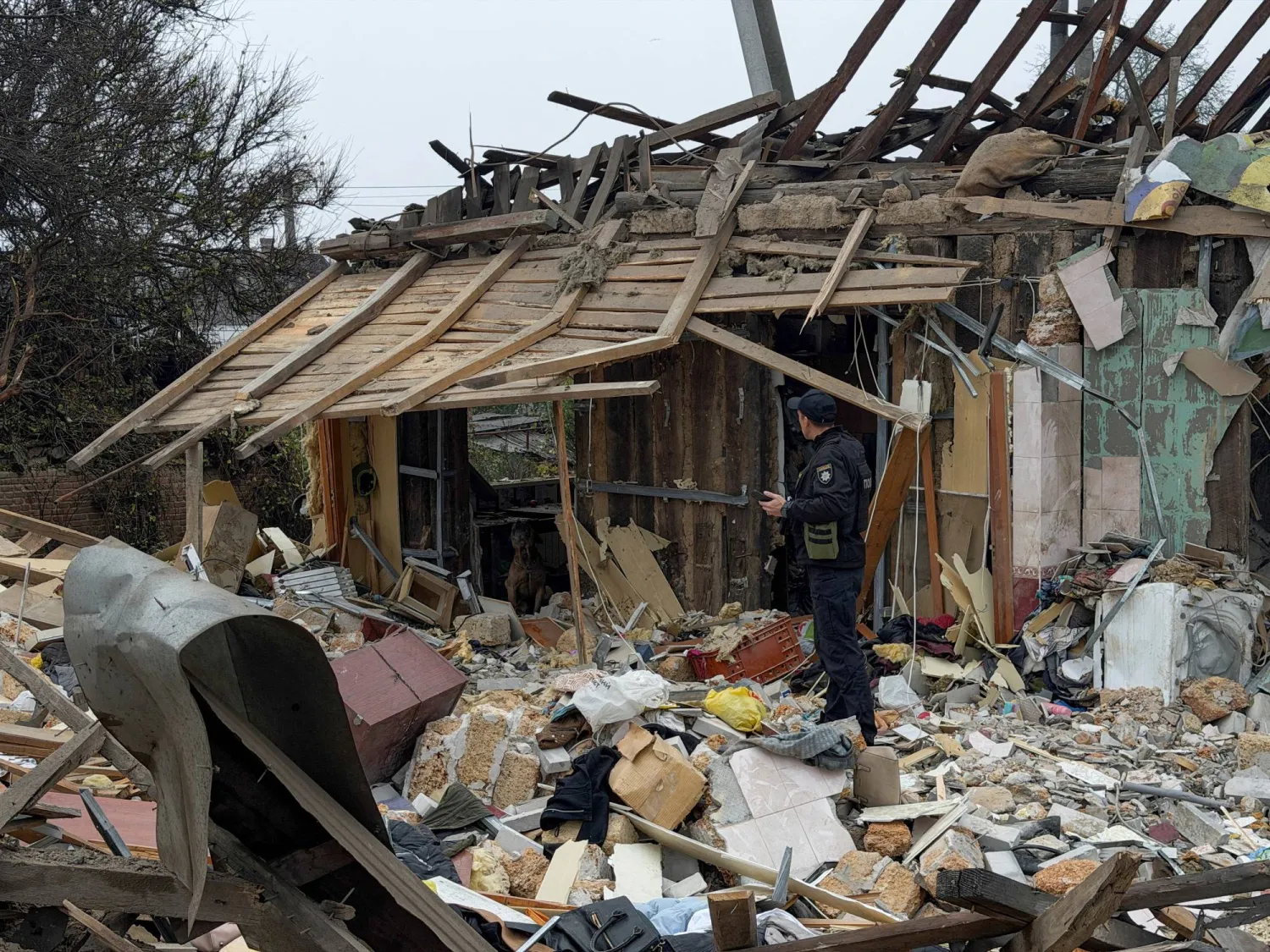
 A police officer inspects the site of a residential house damaged by a Russian military strike, amid Russia's attack on Ukraine, in Zaporizhzhia, Ukraine November 13, 2026. (Reuters)
A police officer inspects the site of a residential house damaged by a Russian military strike, amid Russia's attack on Ukraine, in Zaporizhzhia, Ukraine November 13, 2026. (Reuters)
TT

Europe Pushes for Seat at Ukraine Peace Talks ‌but Lacks Unified Voice

 A police officer inspects the site of a residential house damaged by a Russian military strike, amid Russia's attack on Ukraine, in Zaporizhzhia, Ukraine November 13, 2026. (Reuters)
A police officer inspects the site of a residential house damaged by a Russian military strike, amid Russia's attack on Ukraine, in Zaporizhzhia, Ukraine November 13, 2026. (Reuters)

European nations are seeking an envoy to represent them in talks on ending the Russia-Ukraine war, concerned that a US-backed process will leave them sidelined and Kyiv vulnerable as Moscow and Washington decide the fate of a conflict that has roiled the continent.

Whether Europe should be represented by one person or a team — and who should take on the role — is being debated Friday as leaders from the 27-nation European Union meet at a summit in Dublin. Senior EU officials and politicians have been suggested, but there is not yet a consensus.

What the job might entail is also unclear and contested. But there is broad agreement by governments from the UK to Ukraine on the need for Europe to join the ongoing negotiations involving Moscow, Kyiv and Washington.

“This needs to be resolved," Irish Prime Minister Micheál Martin said as he arrived at the summit, which will include talks on AI as well as the Russia-Ukraine war.

“I would hope that today’s discussions bring clarity around this,” he said. "It needs to be, in my view, finally decided upon within the next week or two.”

Ukraine is eager for support from its European allies, as it's reluctant to leave the talks solely in the hands of a US administration that has often seemed to lean toward Moscow’s views. Russia does not want European countries involved in direct negotiations, complaining they are financing and supplying Ukraine’s military effort.

European leaders also distrust US President Donald Trump to negotiate on their behalf after a series of tense standoffs over trade, Greenland and conflicts in Iran and Ukraine.

“Without Europeans, there is no support for Ukraine,” French President Emmanuel Macron said at a meeting of the European Political Community in Dublin on Thursday. “There is no more US support."

“At the end of the day, we will be the ones to define and decide for our future security as Europeans,” he said.

Europe is broadly aligned but not unified

European leaders fear Russian President Vladimir Putin will press Trump to back a peace settlement that weakens not just Ukraine but broader European security. Putin has demanded NATO troops be pulled back from Russia’s borders and that no European forces be deployed in Ukraine.

British Prime Minister Andy Burnham rejected the idea that Europe was being sidelined during peace negotiations, saying European countries were determined to “put a bit of a ring of steel around Ukrainian President Volodymyr Zelenskyy.”

As envoys from Washington, Moscow and Kyiv met in Abu Dhabi, several European countries, including the UK, France and Germany, attended discussions nearby.

US envoy Jared Kushner and Zelenskyy said after they met in Dublin late Thursday that Europe would be part of the next round of talks. Zelenskyy said Europe would send a negotiating team, adding, "They will have a voice.”

“We cannot conclude this deal without the Europeans being at the table,” Kushner said. He said Putin "is willing to give it a try.”

Supporters of a single envoy, like Italian Prime Minister Giorgia Meloni, argue that the absence of a united European voice has allowed individual countries or small groups to engage in freelance diplomacy.

“There are too many different groupings discussing the issue,” she said.

Meloni has criticized a series of seemingly uncoordinated initiatives, including a call to Putin by Finnish President Alexander Stubb and Norwegian Prime Minister Jonas Gahr Støre, that she said could undermine European interests.

She has increasingly pushed for a common EU representative for Europe to speak with “a single, authoritative voice” and requested a decision by Friday in Dublin to be formalized in December in coordination with non-EU partners in Europe like Britain and Norway.

Martin said that European representation at the negotiations “can't just be European Union” because the Coalition of the Willing — a group of over two dozen countries that have pledged military support to help maintain a future peace in Ukraine — “has involved far more than the European Union.”

“It's a European continentwide issue,” he said.

Kremlin spokesperson Dmitry Peskov argued that for Europe to join peace talks, it first must name a representative. “The Europeans squabble like spiders in a jar. If someone takes the initiative to establish contact with the Russian side, those people face ostracism.”

An old question with no clear answer

The question of who represents Europe is an old one. Europe itself is loosely defined. Is it the 27-nation EU, the 32-nation NATO military alliance made up mostly of European countries, the 29-nation Schengen zone, or the 47-nation European Political Community?

That has frustrated Washington in the past and present.

After this week's US-brokered talks between Ukraine and Russia in the United Arab Emirates, Kushner said that “if Europe could identify one person to speak on their behalf, that would be a bigger achievement than getting the Russians to include them in the negotiation.”

That echoes the famous question often mis-attributed to former US Secretary of State Henry Kissinger: “Who do I call if I want to call Europe?”

Potential candidates from within the EU France, Germany and the UK, the region’s top three economies collectively known as the European trio or E3, have so far been the most engaged European body in negotiations. But while London is deeply involved with Ukraine, the UK left the EU in 2020.

German Chancellor Friedrich Merz said Thursday that the E3 is “a proven format” for diplomacy.

But an E3 envoy would leave out the other 25 EU nations and rankle smaller nations like those that border Russia and Belarus on the bloc’s “eastern flank,” which face constant hybrid threats, including influence campaigns and disruptive drones.

Some back a top EU official for the job. Even inside Brussels, however, there are two leading contenders: European Council President Antonio Costa and EU foreign policy chief Kaja Kallas.

Costa's current role is to represent national leaders. A former prime minister of Portugal, he spent much of the past year visiting capitals across the bloc.

“European security cannot be discussed without a European voice at the table,” Costa said in Dublin on Thursday. “That European voice needs to be a team effort between European nations, the European Union and NATO.”

But earlier this year, Costa faced criticism within the EU after his office set up a hush-hush back-channel with Moscow.

Kallas, a former prime minister of Estonia, could also lay claim to the envoy role.

She said in Dublin that the E3 represents the “big countries” but then asked “who is representing the European Union?"

"Americans are representing American interests. Europeans are representing European interests,” Kallas said, adding that the EU’s foundational treaties are “very, very clear” that she and Costa were appointed in 2024 to represent the bloc in “security matters.”

Kallas, however, has had a bumpy track record with US diplomats as Washington and Brussels sparred over trade and Ukraine. She's also acknowledged tensions between her office, the EU's External Action Service, and the European Commission.

Another name that has been floated is Stubb, the Finnish president. He has warm relations with Trump and met in Oslo with US envoys Steve Witkoff and Kushner in October. A week after that, he called Putin with Støre, the Norwegian prime minister. Stubb spoke with Zelenskyy by phone on Tuesday.

But some leaders deeply distrust the US-brokered talks. Polish Prime Minister Donald Tusk was critical of the negotiations, reflecting a regional pessimism among EU countries formerly dominated by the Soviet Union.

“In my opinion, calling them negotiations is an exaggeration," Tusk said Thursday. “We will not build a new security architecture simply because the Russian president, or someone in the United States, wishes it."


Russia Says Ukraine Drones Kill Four, Kyiv Reports Hospital Hit

Firefighters work at the site of a reported Russian attack, amid Russia's attack on Ukraine, in a location given as Odesa Region, Ukraine, November 9, 2026, in this screengrab taken from a handout video.(State Emergency Service of Ukraine/Handout via Reuters)
TT

Russia Says Ukraine Drones Kill Four, Kyiv Reports Hospital Hit

Firefighters work at the site of a reported Russian attack, amid Russia's attack on Ukraine, in a location given as Odesa Region, Ukraine, November 9, 2026, in this screengrab taken from a handout video.(State Emergency Service of Ukraine/Handout via Reuters)

Russia said on Friday that it shot down nearly 1,200 Ukrainian drones overnight, one of the largest swarms sent by Kyiv that killed four people.

Ukrainian authorities reported that another night of Russian attacks had set a hospital ablaze and killed at least three people.

The deadly attacks came a day after intense shuttle diplomacy in US-led talks to end the war approaching its fifth year.

US envoys Steve Witkoff and Jared Kushner held hours of talks with Russian President Vladimir Putin in Moscow on Thursday before jetting to Dublin to huddle with Ukrainian President Volodymyr Zelensky.

"In the course of the previous night... aerial defense systems intercepted and destroyed 1,198" Ukrainian drones over more than 15 Russian regions, Russia's defense ministry said in a statement.

Four people working in an industrial zone, home to an oil refinery and a chemical factory, died in the southern Volgograd region, local authorities said.

In Ukraine, a hospital in Kyiv was damaged after a Russian attack triggered a fire and forced people to seek shelter. One person was wounded.

In Odesa, two people were killed and five wounded in the overnight barrage, with "private residential houses and cars" damaged, regional governor Oleg Kiper said on Telegram.

A Russian attack on Zaporizhzhia in the southeast killed a 17-year-old boy, acting regional governor Mykhailo Semikin said.

Four people, who rescuers managed to pull from under the rubble, were wounded.

Another Russian strike hit the city of Rivne, in a northwestern region far from the frontline, damaging a kindergarten and wounding six people, including two children.

Ukraine has intensified its retaliatory drone attacks on Russia's energy industry over the past year-and-a-half, seeking to cut the Kremlin's revenues and undermine its ability to finance the war Moscow launched in February 2022.

Russia is heavily targeting Ukraine's own energy grid with aerial barrages, leaving residents across the country without power as temperatures plunge ahead of winter.