


Rubio Reports ‘Slight Progress’ in Iran Talks as Pakistan Army Chief Renews Mediation Efforts

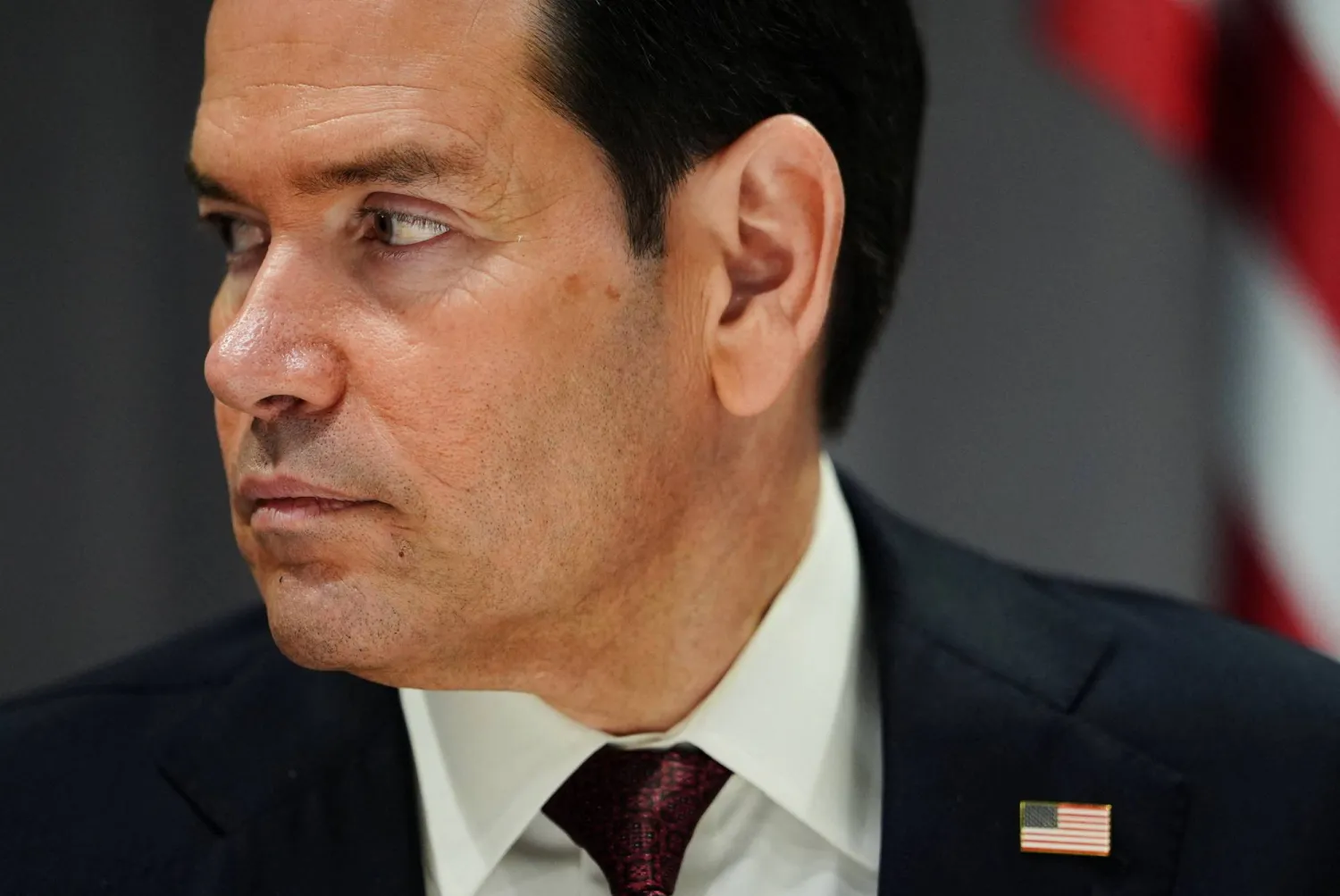
United States Secretary of State Marco Rubio during a signing ceremony on the sidelines of a meeting of NATO foreign ministers in Helsingborg, Sweden, Friday, May 22, 2026. Julia Demaree Nikhinson/Pool via REUTERS
TT

Rubio Reports ‘Slight Progress’ in Iran Talks as Pakistan Army Chief Renews Mediation Efforts

United States Secretary of State Marco Rubio during a signing ceremony on the sidelines of a meeting of NATO foreign ministers in Helsingborg, Sweden, Friday, May 22, 2026. Julia Demaree Nikhinson/Pool via REUTERS

US Secretary of State Marco Rubio said Friday that “slight progress” was made during talks with Iran as Pakistan's army chief traveled to Tehran in a renewed effort to mediate a peace deal and uncertainty loomed over whether war will resume. 

Rubio spoke days after US President Donald Trump said he was holding off on a military strike against the country because “serious negotiations” were underway. Trump has been threatening for weeks that the ceasefire reached in mid-April could end if Iran does not make a deal, with shifting parameters for striking such an agreement. 

The secretary of state made the comment ahead of a meeting of NATO foreign ministers in Helsingborg, Sweden, where the military alliance discussed what role it could play in helping police the Strait of Hormuz once the war is over. 

Rubio said he did not want to exaggerate the progress, saying there had been “a little bit of movement and that's good.” He said the conversations were ongoing. In recent weeks there have been repeated claims of progress, but a deal has stayed out of reach. 

Trump has repeatedly set deadlines for Tehran and then backed off. But he’s also previously indicated he would hold off on military action to allow talks to continue, only to turn around and launch strikes. That happened at the war’s outset, when he ordered strikes in late February shortly after indicating he would let talks play out. 

The president said he called off attacks on Iran this week at the request of Gulf countries, including the leaders of Saudi Arabia, Qatar and the United Arab Emirates. 

Pakistan's army chief in Iran 

In a renewed push for a peace agreement, Pakistan's top army officer arrived Friday in Tehran for talks with Iranian leaders, Pakistani officials and the military confirmed. It's the third round of meetings between Pakistani and Iranian officials in recent days. 

Field Marshal Asim Munir will be joined by Pakistan’s interior minister, who has already met with Iranian leaders in Tehran twice this week. Pakistan has sought a deal between Iran and the US since Munir facilitated face-to-face talks between the two countries in Islamabad last month. 

Still, major sticking points remain. 

Iran has effectively closed the Strait of Hormuz, a vital waterway for the shipment of oil, gas, fertilizer and other petroleum products. The US is blockading Iranian ports and has redirected 94 commercial vessels and disabled four others from mid-April through Thursday, US Central Command said in a social media post. 

At the NATO meeting in Sweden, Rubio said he discussed reopening the strait with other foreign ministers. He said there needs to be a “plan B” if Washington and Tehran fail to reach a deal. 

“Someone’s going to have to do something about it, OK?” Rubio said, insisting that Iran was not going to “voluntarily reopen” the strait. 

The US and Israel have said Iran can never have a nuclear weapon. While regional officials have said Iran offered some nuclear concessions, Trump has said he wants to remove highly enriched uranium from the country and prevent it from developing nuclear weapons. Iran says its nuclear program is for peaceful purposes. 

Tension with Netanyahu  

Trump's decision to give more peace talks a chance sparked tension with Israeli Prime Minister Benjamin Netanyahu. 

An official who spoke on the condition of anonymity because they were not authorized to speak to the media said Thursday that Trump and Netanyahu had a “dramatic” phone conversation Tuesday about the status of the Iranian negotiations and that Israel is angry with Trump’s efforts to strike a deal with Iran. 

The White House declined to comment on the substance or tenor of the call. Trump told reporters after the conversation that Netanyahu “will do whatever I want him to do.” 

The comments are some of the first public signs of daylight between the leaders since they launched the war. 


Israel Defense Minister Says Will Use ‘Force’ Against Iran if It Prevents Lebanon Deal Implementation

 A car with Iranian and Hezbollah flags attached to it as displaced people make their way back to their homes in southern Lebanon following an interim deal between the US and Iran, in Sidon, Lebanon, June 24, 2026. (Reuters)
A car with Iranian and Hezbollah flags attached to it as displaced people make their way back to their homes in southern Lebanon following an interim deal between the US and Iran, in Sidon, Lebanon, June 24, 2026. (Reuters)
TT

Israel Defense Minister Says Will Use ‘Force’ Against Iran if It Prevents Lebanon Deal Implementation

 A car with Iranian and Hezbollah flags attached to it as displaced people make their way back to their homes in southern Lebanon following an interim deal between the US and Iran, in Sidon, Lebanon, June 24, 2026. (Reuters)
A car with Iranian and Hezbollah flags attached to it as displaced people make their way back to their homes in southern Lebanon following an interim deal between the US and Iran, in Sidon, Lebanon, June 24, 2026. (Reuters)

Israeli defense minister vowed on Saturday to respond with "great force" if Iran attacked Israel in an attempt to prevent the implementation of an agreement with Lebanon aimed at securing peace between the two countries. 

"If Iran tries to attack Israel to prevent the implementation of the agreement, we will act against it with great force," Israel Katz said in a video statement, adding that the agreement with Lebanon had dealt a "strategic blow to the Iranian axis". 

Lebanon and Israel, under US sponsorship, signed an agreement on Friday hoping to end hostilities between them, but experts say it does not guarantee Israeli withdrawal from Lebanon and its implementation depends on Hezbollah and its backer Iran. 

Hezbollah leader Naim Qassem condemned the agreement on Saturday, accusing the government of surrendering Lebanese sovereignty and declaring the agreement null and void. 

Lebanon took the historic step of negotiating directly with Israel despite them having no diplomatic relations, as a reaction to Tehran-backed Hezbollah drawing the country into the Middle East war on March 2. 

Israel said it will not leave occupied Lebanese territory unless the group is disarmed. 

Katz added on Saturday that Israeli forces had been ordered to prepare for an extended stay in the so-called occupied security zone in southern Lebanon, after Israel and Lebanon agreed on the framework to end hostilities. 

"The prime minister and I have instructed the army to prepare for an extended stay in the security zone," Israel Katz said in a video statement, referring to an area up to 10 kilometers (six miles) inside the Lebanese territory. 

"The important principle established in the agreement is that there will be no redeployment by Israel in southern Lebanon, no withdrawal, as long as the terrorist organization Hezbollah is not disarmed throughout Lebanon," he said. 


UN Estimates Nearly 6.8 Mn People May Be Affected by Venezuela Quakes

 Buildings damaged by the earthquakes stand three days after earthquakes struck Catia La Mar, Venezuela, Saturday, June 27, 2026. (AP)
Buildings damaged by the earthquakes stand three days after earthquakes struck Catia La Mar, Venezuela, Saturday, June 27, 2026. (AP)
TT

UN Estimates Nearly 6.8 Mn People May Be Affected by Venezuela Quakes

 Buildings damaged by the earthquakes stand three days after earthquakes struck Catia La Mar, Venezuela, Saturday, June 27, 2026. (AP)
Buildings damaged by the earthquakes stand three days after earthquakes struck Catia La Mar, Venezuela, Saturday, June 27, 2026. (AP)

Close to seven million people may have been impacted by the twin earthquakes in Venezuela, which have killed nearly 1,000 people and left tens of thousands missing, the United Nations estimated on Saturday.

The UN migration agency said it had examined available population and damage data and had determined that "up to 6.76 million people could be affected by the devastating earthquakes that struck Venezuela on 24th June".

The projections, which include up to two million people in Caracas alone, "highlight the potentially vast humanitarian impact of the disaster", the International Organization for Migration (IOM) warned in a statement.

Entire buildings have crumbled in La Guaira, located to the north of Caracas, following devastating twin tremors of magnitude 7.2 and 7.5 on Wednesday.

The national death toll stands at 920, while people remain trapped under the rubble in the coastal city and elsewhere.

And UN aid chief Tom Fletcher told AFP Friday that more than 50,000 people were missing.

IOM said it had worked with Microsoft AI for Good Lab on initial satellite mapping analysis, which showed that 31.5 percent of buildings in the town of Catia La Mar had been damaged.

Such assessments, it said, were helping humanitarian responders identify the communities most affected and to prioritize where to deliver life-saving aid, even as ground assessments continue.

"The first hours and days after a disaster are decisive. They shape everything that follows," IOM chief Amy Pope said in the statement.

"IOM is scaling up rapidly: prepositioned relief items are already being deployed, and we are working with the Government and partners to deliver emergency shelter, essential supplies, and protection," she added.

Warning that displacement was sure to rise in the country, which was already facing a humanitarian crisis before the quakes hit, Pope stressed that "a swift response is essential as we deliver life-saving assistance and support the people of Venezuela through the difficult days and months ahead".

The UN migration agency stressed that needs were "immediate and significant", with families who have lost everything requiring everything from emergency shelter, safe water and sanitation services to health care and protection support.

IOM said that it had prepositioned emergency relief supplies in Caracas which were "now being prepared for distribution to communities with the greatest needs".

It called on the international community to act swiftly to support the response, stressing that "timely humanitarian assistance will save lives, alleviate suffering and help affected communities begin the long road to recovery".


Tanker Struck in Hormuz as Iran, US Trade Attacks in Worst Escalation Since Peace Deal

Vessels at the Strait of Hormuz, as seen from Musandam, Oman, June 18, 2026. (Reuters)
TT

Tanker Struck in Hormuz as Iran, US Trade Attacks in Worst Escalation Since Peace Deal

Vessels at the Strait of Hormuz, as seen from Musandam, Oman, June 18, 2026. (Reuters)

A tanker reported being struck by a projectile in the Strait of Hormuz on Saturday, Britain's maritime security agency said, after the United States and Iran each launched strikes in the worst escalation since they signed an interim peace deal.

The warring sides each accused the other of violating the agreement reached two weeks ago to end the four-month-old conflict.

Washington said it hit Iranian targets overnight, while Iran said it had struck targets linked to US forces on Saturday in response.

Saturday's attack on a tanker in the strait followed another on a cargo ship on Thursday that triggered the latest escalation.

Iran has made a fresh bid to assert control over the world's most important energy shipping route, which has begun to reopen over the past two weeks after months of disruption.

Britain's UKMTO maritime security agency said the tanker hit on Saturday had sustained damage to its bridge, with all crew reported safe. The Joint Maritime Information Center, run by a coalition of navies protecting shipping, said it had raised its security ‌threat level as ‌a result of recent incidents.

Iran has not directly commented on reports of specific attacks on ships. But Iranian ‌state ⁠television reported that ⁠the Revolutionary Guards had fired "warning shots" towards unspecified vessels attempting to pass through channels not approved by Iran, and that this was now prompting other ships to seek Iranian permits before attempting to cross the strait.

Bahrain reported an Iranian drone attack. The US military did not immediately respond to the reports.

IRAN ASSERTS CONTROL OVER VITAL STRAIT

Iran has accused the United States of failing to uphold the interim agreement, in particular by failing to sustain a promised ceasefire in Lebanon, which US ally Israel invaded in March in pursuit of the Iran-backed group Hezbollah.

Israel and Lebanon have repeatedly agreed US-brokered ceasefires, the latest of which was announced on Friday. But these have so far had only limited overall impact, with ⁠Israel insisting it will not withdraw from a swathe of territory it has seized and Hezbollah repeatedly rejecting calls ‌to give up its arms as long as Israeli troops remain in place.

Lebanese state television reported ‌an Israeli drone strike on Saturday in the Nabatieh area in the south, which has seen Israeli strikes throughout the conflict.

The Israeli military said it had targeted a ‌person who posed a threat to its forces.

Hezbollah leader Naim Qassem rejected the day-old Israel-Lebanon agreement as surrender, and said it was "null and void".

Mohsen ‌Rezaei, an adviser to Iran's supreme leader, said Washington had violated the war-ending memorandum of understanding by supporting what he called proxy forces in the region and creating tensions in the Strait of Hormuz.

Iranian state television said the Revolutionary Guards had delivered "a decisive response" after US forces hit a communications tower in the port city of Sirik. Iran's Mehr news agency said the Iranian port was operating normally with ‌no damage reported to facilities or equipment.

Bahrain said Iran's latest attacks violated the memorandum of understanding.

Hundreds of ships, including tankers laden with oil, have been blockaded inside the Gulf since war broke out. As they began leaving ⁠through the strait over the past ⁠two weeks, oil prices have tumbled close to pre-war levels on the resulting surge in supply.

But fully resolving the global energy crisis would require sustaining two-way traffic through the strait at pre-war levels, likely to be possible only if shippers accept it as safe.

Washington has been promoting a southern lane along the coast of Oman, while Tehran, which ultimately aims to charge fees for use of the strait, wants ships to use a northern route through its waters and under its control.

Ebrahim Azizi, head of the Iranian parliament's national security committee, said on Saturday that any violation of Iran's shipping instructions would be met decisively.

'VIOLENCE WILL BE MET WITH VIOLENCE,' VANCE SAYS

US Vice President JD Vance, President Donald Trump's chief negotiator on the conflict, said the Americans had adhered to the ceasefire deal, and Iran was to blame for any return to conflict that might result from its actions.

"Iran signed a ceasefire agreement. We have honored it. If they have disagreements about how the MOU is being applied, they can pick up the phone. But violence will be met with violence," Vance said on X.

As has regularly been the case throughout the war, the escalation unfolded over the weekend while markets were closed, giving the sides two days to stake out tough positions and exchange fire without causing any immediate oil price impact.

Previously, including the last two weekends, bitter words on Friday and Saturday were followed by more ameliorative positions from both sides in time for markets to reopen on Monday. Before the renewed outbreak of violence, oil prices fell about 3% on Friday, on course for a steep weekly fall.
