

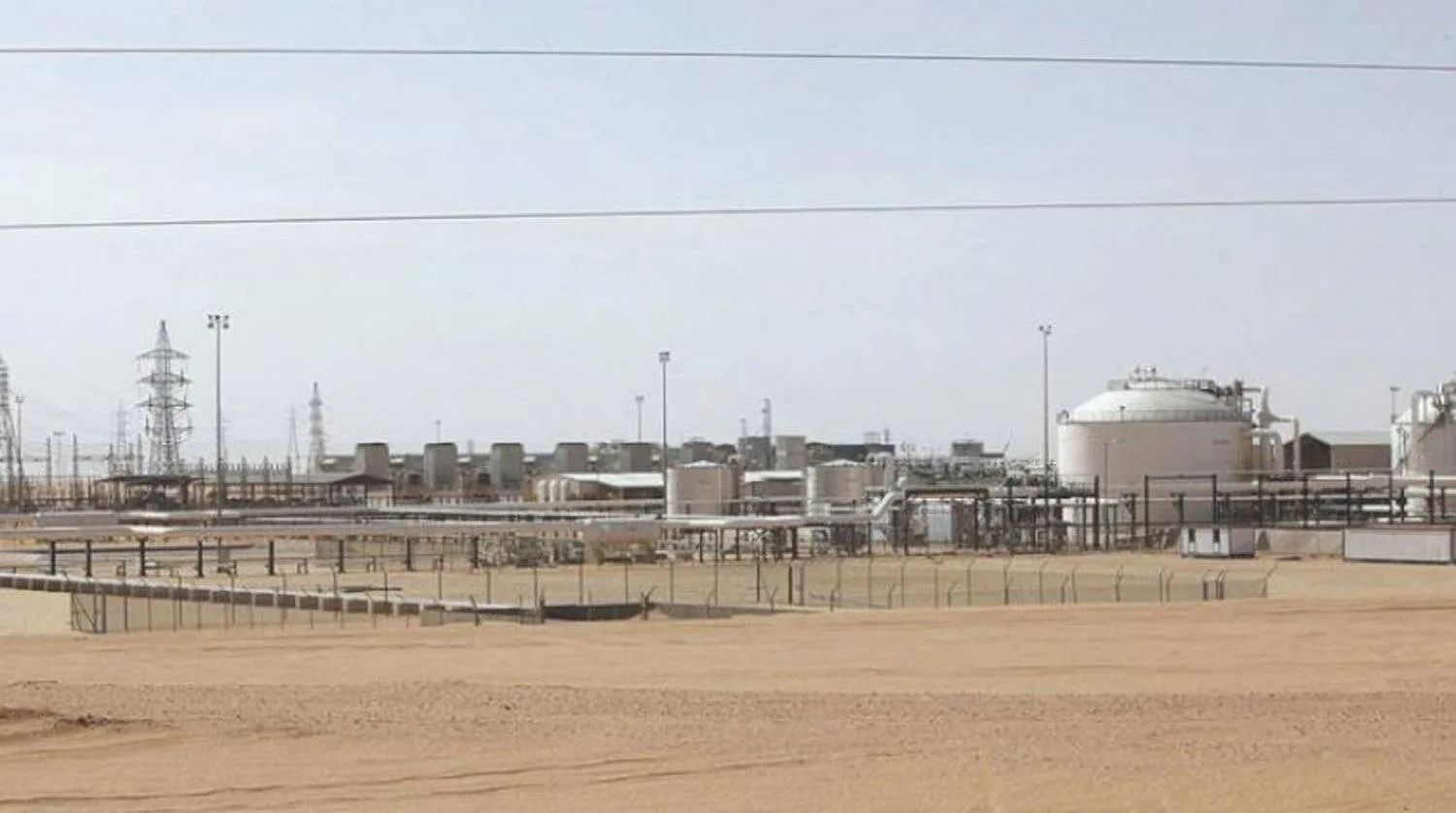

Libya’s Sharara and El Feel Oilfields Have Resumed Saturday Evening

Libyan oilfield AAWSAT AR
TT

Libya’s Sharara and El Feel Oilfields Have Resumed Saturday Evening

Libyan oilfield AAWSAT AR

Production at Libya's Sharara and El Feel oilfields, which were shut on Thursday following the abduction of a former finance minister, has resumed on Saturday evening, four oil engineers and oil ministry said.

Sharara has partially resumed at 30,000 barrels per day out of its usual 290,000, two engineers said. Production will return to normal on Sunday morning, they said, Reuters reported.

The Sharara field, one of Libya's largest production areas with a capacity of about 300,000 barrels per day, has been a frequent target for several political reasons and demands by local protesters.

The field is located in Murzuq basin in southeast Libya. It is run by the state oil firm NOC via Acacus company with Spain's Repsol (REP.MC), France's Total (TTEF.PA), Austria's OMV (OMVV.VI), and Norway's Equinor (EQNR.OL).

El Feel field, which has a capacity of 70,000 barrels per day, is operated by Mellitah Oil and Gas which is a joint venture between the state oil firm NOC and Italy's Eni (ENI.MI).

Sharara and El Feel oilfields, as well as the 108 field, were all closed in a protest by al-Zawi tribe in response to the kidnapping of former finance minister Faraj Bumatari. The 108 oilfield remains shut.

In a message to Reuters on Saturday, the tribe's leader Al-Senussi Al-ahlaiq confirmed the release of Bumatari, who was kidnapped after arriving at Mitiga airport on Tuesday.

The UN- mission in Libya said in a tweet it "reiterates its call for the immediate release of all those arbitrarily detained including civilians, civic activists, political figures & members of security service."

Libya's oil minister Mohamed Aoun told Dubai-based Asharq TV on Saturday that the oilfields' closure had cost the North African country the production of 340,000 barrels.

The oil ministry also said the closures could lead to the declaration of force majeure.

"The loss of confidence in the continuity of Libyan oil supply to the global market will result in a loss of market share for Libyan oil and decreased demand for it," the ministry said in a statement.

Libyan oil output has been subjected to repeated closures for different political reasons and local protesters' demands during the chaotic decade since the 2011 NATO-backed uprising against Muammar Gaddafi.
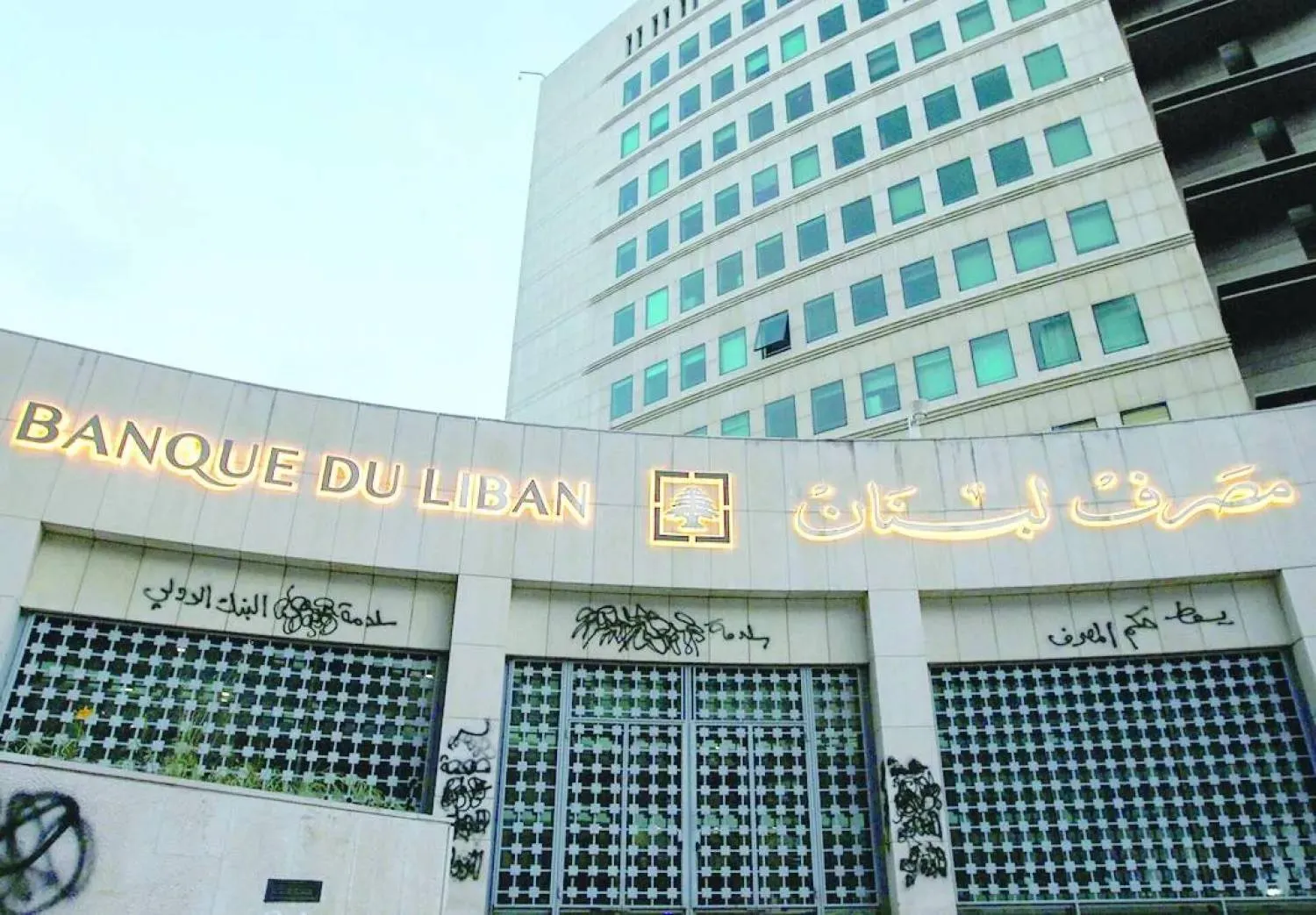



Lebanon Revokes Bank Saderat Iran’s License amid US Pressure

The Banque du Liban headquarters in Beirut (Banque du Liban). 
TT

Lebanon Revokes Bank Saderat Iran’s License amid US Pressure

The Banque du Liban headquarters in Beirut (Banque du Liban). 

Lebanon’s central bank has revoked the local license of Bank Saderat Iran, one of Iran’s largest banks, as Washington intensifies pressure on countries to sever commercial ties with Tehran.

Banque du Liban Governor Karim Souaid told Bloomberg that the decision, taken this week, was intended to demonstrate Lebanon’s determination to protect its banking sector from institutions that could expose it to financial and regulatory risks.

The move follows tighter restrictions imposed on Iran’s financial system by other regional central banks and coincides with mounting US pressure worldwide, according to the governor.

Bank Saderat is one of Iran’s oldest commercial banks, with several branches overseas. In Lebanon, however, it did not operate as a full-scale commercial bank serving the general public or offer the extensive retail banking services typically provided by major Lebanese lenders.

Its operations were largely confined to facilitating certain transfers and financial activities linked to specific networks or entities.

Sanctions targeting Iranian institutions had effectively isolated the bank from major international banking messaging networks, including SWIFT, and global payment systems.

Washington is pursuing a campaign to isolate Iran economically in an effort to force Tehran to accept US terms for ending the war.

Last month, Britain announced it would reject new license applications from Iranian banks subject to US sanctions, including Bank Saderat, which operates a branch near the Bank of England in London’s financial district.

Avoiding financial risks

Speaking on the sidelines of the International Monetary Fund’s annual meetings in Bangkok, Thailand, Souaid noted that larger economies, including the United Arab Emirates and Türkiye, had complied with similar demands to preserve their banks’ ties to the international financial system".

He stressed that Lebanon could not afford the risks associated with failing to take such measures.

The governor acknowledged that some decisions could be politically sensitive but maintained that protecting Lebanon’s banking sector from foreign sanctions and external pressure must take priority.

Souaid also emphasized the need for Lebanon to secure its removal from the Financial Action Task Force’s (FATF) gray list, where it was placed over shortcomings in combating illicit financial flows.

He called for eliminating illicit funds and money-laundering proceeds from the Lebanese economy.

The central bank has hired a specialized US firm to map Lebanon’s cash economy and identify suspicious financial activity, according to the governor.

For years, Bank Saderat and its operations had faced scrutiny from international financial authorities, particularly the US Treasury Department, which regarded it as a potential financial conduit for regional groups such as Hezbollah.

Despite that pressure, its Lebanese branch maintained a legal presence under a longstanding license issued by Banque du Liban, even as Washington repeatedly called for its closure and the complete severing of its financial channels.

IMF negotiations

Lebanon is seeking to revive its economy after a financial collapse that led it to default on approximately $30 billion in international bonds in 2020.

The country is holding talks with the IMF over a potential loan, seen as a crucial step toward economic recovery.

Souaid described efforts to clean up the financial sector as an important issue in those negotiations.

Although such measures are not among the IMF’s formal conditions for a potential support package, he explained that international lenders and donors participating in any program would nevertheless expect Lebanon to maintain a financial sector free of illicit activity.


China Says Israel Should Stop Its 'Forced Establishment' of West Bank Settlements

Cattle gather in an enclosure at a farm run by Israeli settlers near the Palestinian town of Duma in the Israeli-occupied West Bank, on October 13, 2026. (Photo by Ilia YEFIMOVICH / AFP)
TT

China Says Israel Should Stop Its 'Forced Establishment' of West Bank Settlements

Cattle gather in an enclosure at a farm run by Israeli settlers near the Palestinian town of Duma in the Israeli-occupied West Bank, on October 13, 2026. (Photo by Ilia YEFIMOVICH / AFP)

Chinese Foreign Minister Wang Yi told Israeli President Isaac Herzog that Israel should stop and reverse its "forced establishment" of West Bank settlements, China's foreign ministry said in a statement on Friday.

China has consistently held that the Palestinian question is the greatest historical injustice of this ‌century, Wang ‌told Herzog during a meeting ‌in ⁠Azerbaijan, the ministry ⁠added.

Wang had earlier said that promoting peace and reconciliation in the region is the "cornerstone" of China's Middle East policy

China believes that the "two-state solution" is the right path ⁠to a resolution and the ‌immediate priority ‌is to fully open access to the ‌Gaza Strip so a humanitarian "catastrophe" ‌is not allowed to spread, Wang added

At the same time, Israel should stop and reverse its forced establishment of ‌settlements in the West Bank, he said

China is ⁠willing ⁠to work with the international community to push all parties to return to dialogue and consultation as soon as possible and seek a political settlement of the conflict, Wang added

China has long been a supporter of the Palestinian cause and Beijing also has close ties with Israel's main regional foe, Iran.


Jbessa Gas Export Pipeline Targeted in Northeastern Syria, Fire Erupts, SANA Reports

File: Flames rise at Tishreen thermal power plant following an explosion, near Otaybah, Syria, September 30, 2026, in this screengrab from video obtained from social media. Social Media/via REUTERS
TT

Jbessa Gas Export Pipeline Targeted in Northeastern Syria, Fire Erupts, SANA Reports

File: Flames rise at Tishreen thermal power plant following an explosion, near Otaybah, Syria, September 30, 2026, in this screengrab from video obtained from social media. Social Media/via REUTERS

The Jbessa gas export pipeline in northeastern Syria was targeted in the al-Arabidi area, causing a fire, state news agency SANA reported on Thursday citing the director of the Syrian Petroleum Company's media office.

The company said in a statement that the 16-inch ‌pipeline exploded at ‌5.15 p.m. in an ‌area ⁠about 60 km ⁠from the city of Shaddadi. It did not specify the cause of the explosion, according to Reuters.

Technical teams isolated the damaged section by closing valves at the Jbessa gas plant and the ⁠Deir Ezzor gas station ‌in the al-Bughailiya area, ‌while firefighting and safety crews headed to ‌the site to secure the area, ‌the company said.

The extent of the damage and whether gas supplies had been disrupted were not immediately clear.

The explosion ‌followed a separate incident on Thursday morning in which the Baniyas-Homs ⁠oil ⁠products pipeline was damaged near the village of Hudeida in the western Homs countryside in what the company described as sabotage aimed at stealing fuel.

That incident caused a gasoline leak, the company said, adding that work was continuing to repair the damage and restore the line to service.