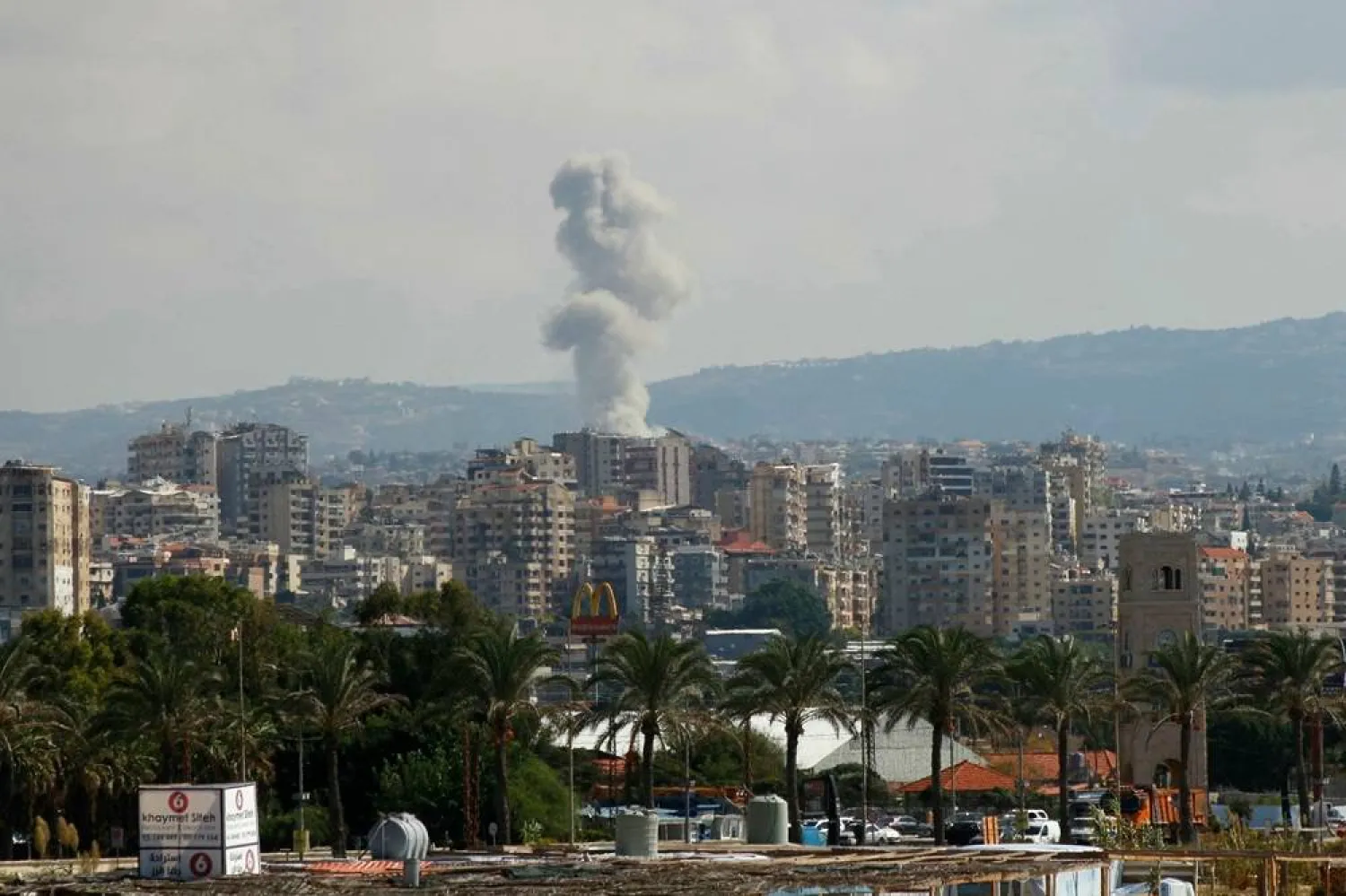
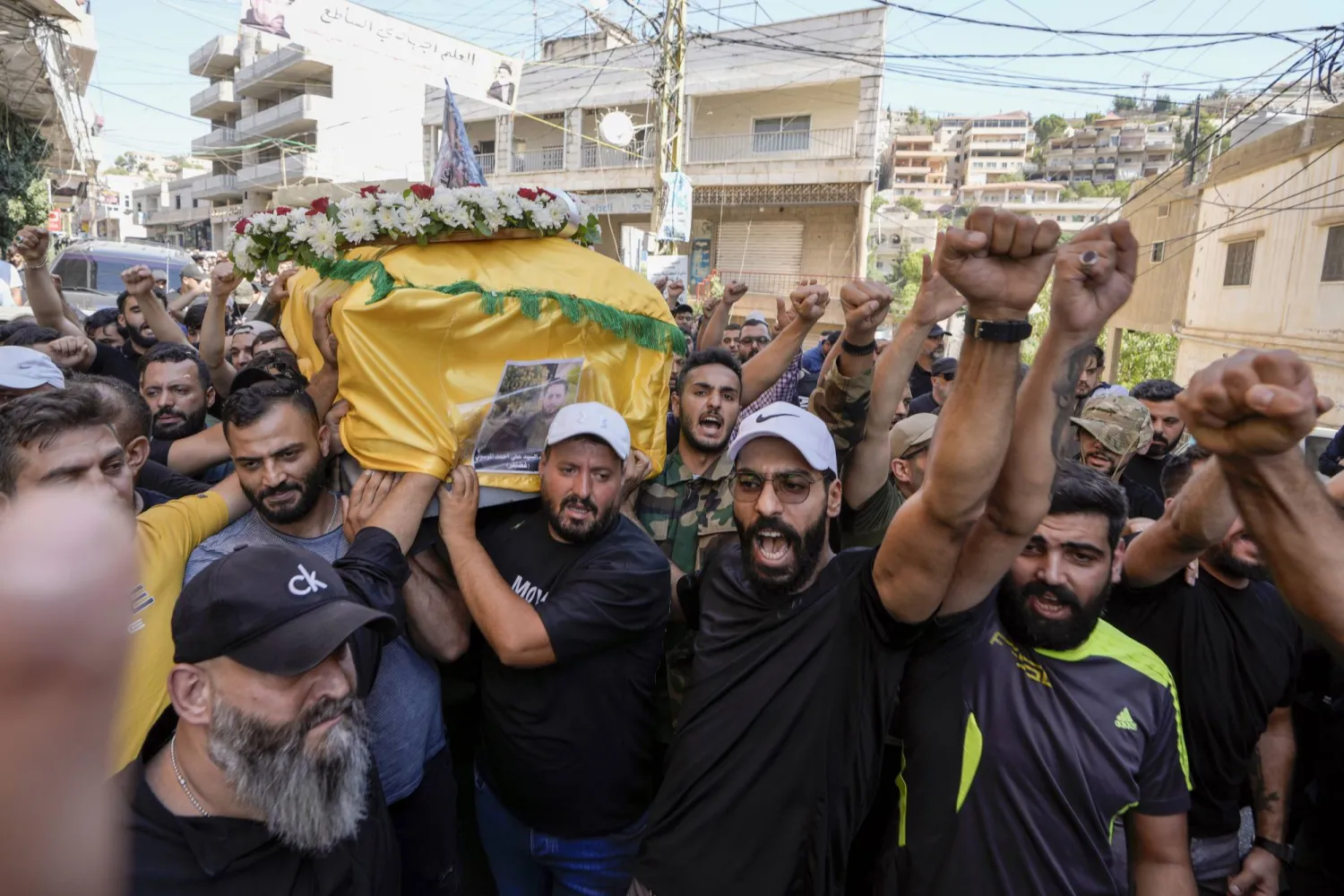
Since the Oct. 7, 2023 attacks, the confrontation in the Middle East has not been limited to missiles and drones, but has expanded to a parallel front no less dangerous: the architects of narratives and psychological warfare.
Military spokesmen and media figures emerged, some masked, some officers, others operating in the shadows. Together, they formed the backbone of the “resistance” narrative, shaping the battle over narrative, imagery, and public perception under the broad umbrella of forces allied with Iran.
They were not merely voices for their factions or armies. They acted as architects of an integrated discourse, waging a war that targeted adversaries and audiences alike. Beneath them operated sprawling networks of platforms, activists, and media arms that reproduced and amplified messaging across digital and traditional media, reinforcing the narratives of Iran’s regional allies.
As military operations escalated, from Gaza to Lebanon and on to the latest war involving Iran, this apparatus came under concentrated strikes. Some of its most prominent figures were removed, leaving the axis narrative without many of its key voices.
Naeini, architect of “cognitive warfare”
Ali Mohammad Naini, spokesman for Iran’s Revolutionary Guards, was killed at dawn on Friday, March 20, 2026, in a US-Israeli strike, removing one of the most prominent figures behind the force’s messaging during one of the war’s most sensitive phases.
Naini, 69, had served as the Guards’ official spokesman and deputy for public relations since July 2024, a role that extended beyond traditional media duties to managing political messaging and consolidating the institution’s narrative at home and abroad.
Hours before his death was announced, Fars, the news agency affiliated with the Revolutionary Guards, attributed remarks to him saying the missile industry deserved “full marks.”
Naini stood out during the 12-day war in June 2025 and in the current conflict as a key architect of “psychological warfare” in Iran’s official discourse.
In his media appearances, he framed the confrontation as a multi-layered war, psychological, cognitive, technological, and military, stressing the importance of narrative, imagery, and public perception in shaping battlefield outcomes.
He repeatedly highlighted the media's role in “telling the story of the battlefield” and countering the adversary’s “cognitive warfare,” arguing that the opposing side aimed not only to strike military capabilities but also to dismantle the state and weaken internal cohesion.
Before his death, Naini continued to warn of “surprises” and emphasized Iran’s capacity for deterrence. His killing, therefore, marked not only a media loss, but also a blow to a figure who managed the battle of messaging and psychological influence alongside the military campaign.
“Askari,” the shadow envoy
“Abu Ali al-Askari” was less an individual than a complex media and security function. He acted as a conduit between battlefield decision-making and media messaging, and as a tool for setting the political tempo in line with Iran’s vision in Iraq.
His death was announced on March 16, 2026, after rocket attacks targeted sites in Baghdad, including a house in the Karrada district believed to be hosting a meeting of armed faction leaders. There were also indications he may have been targeted in other strikes east of the capital.
Even so, his identity and the circumstances of his death remained shrouded in the ambiguity that underpinned his influence.
His role extended to setting rules of engagement, defining the political weight of local Sunni and Kurdish actors, and signaling pressure on Iraq’s external alignments, including ties with the Arab world, the Gulf, and the broader international environment.
In that sense, he functioned as an effective instrument guiding Iraq’s political process toward outcomes aligned with Iran’s approach.
Abu Ubaida, the masked voice
Abu Ubaida became a prominent media symbol through his masked appearances and rhetoric that blended threat with psychological mobilization. Over two decades, he led the Qassam media apparatus and helped establish a distinct visual and vocal identity that resonated widely.
His prominence grew sharply during Israel’s 2014 war on the Gaza Strip, which lasted about 55 days. During that conflict, he served as a key link between fighters in tunnels and various combat units, as well as between Gaza’s population and the outside world.
He gained broad popularity within Palestine and across the Arab world for his credibility. He was not prone to exaggeration in describing military operations and was noted for his eloquence and command of Arabic.
Abu Ubaida’s first recorded appearances date back to 2002 and 2003, when he was introduced as a field official in the Qassam Brigades. He later held his first news conference on Oct. 2, 2004, at al-Nour mosque in northern Gaza, where he announced a series of operations carried out against Israeli forces and tanks under the banner “Days of Rage.”
He was killed on Aug. 30, 2025, in an Israeli airstrike targeting a building in Gaza City’s Rimal neighborhood, where he was present, according to the Israeli account.
Mohammad Afif, the message craftsman
Mohammad Afif was among Hezbollah’s leading media strategists, overseeing media relations and shaping political messaging over many years, and maintaining close ties to the group’s leadership.
His role became particularly prominent after the killing of Hezbollah leaders in 2024, when he stepped in to fill a sensitive media vacuum.
Some commentators likened him to former Iraqi Information Minister Mohammed Saeed al-Sahhaf, arguing that he projected “illusory heroics” and that his messaging diverged from reality.
Researchers say Afif held media responsibilities within Hezbollah for more than 30 years, served as a media adviser to Hassan Nasrallah, built extensive ties with Lebanese and Arab journalists, helped develop the group’s media operations, and at one stage managed Al Manar television.
His assassination, they said, marked a significant escalation in Israeli efforts to pressure the resistance in Lebanon.
Afif was killed on Nov. 17, 2024, in an Israeli strike on a building in Beirut’s Ras al Nabaa district, one of several attacks targeting Hezbollah’s media infrastructure.
Abu Hamza, Saraya’s masked spokesman
Abu Hamza was one of the most prominent media figures among Palestinian factions, serving as the military spokesman for Saraya al-Quds since 2014.
He adopted a direct, tightly focused rhetoric linking military operations to psychological impact, particularly in relation to the issue of prisoners.
His real name, Naji Maher Abu Saif, was revealed only after his death, following years in which he was known simply as “the masked man” to protect his identity.
He was killed on March 18, 2025, in an Israeli airstrike targeting his home in central Gaza, which also killed several members of his family.ch