


West Bank Palestinians Fear Gaza-Style Clearance as Israel Squeezes Jenin Camp 

A boy watches Israeli troops during a military operation inside the Jenin refugee camp, West Bank, 24 February 2025. (EPA)
TT

West Bank Palestinians Fear Gaza-Style Clearance as Israel Squeezes Jenin Camp 

A boy watches Israeli troops during a military operation inside the Jenin refugee camp, West Bank, 24 February 2025. (EPA)

Israeli bulldozers have demolished large areas of the now virtually empty Jenin refugee camp and appear to be carving wide roadways through its once-crowded warren of alleyways, echoing tactics already employed in Gaza as troops prepare for a long-term stay.

At least 40,000 Palestinians have left their homes in Jenin and the nearby city of Tulkarm in the northern West Bank since Israel began its operation just a day after reaching a ceasefire agreement in Gaza after 15 months of war.

"Jenin is a repeat of what happened in Jabalia," said Basheer Matahen, spokesperson for the Jenin municipality, referring to the refugee camp in northern Gaza that was cleared out by the Israeli army after weeks of bitter fighting. "The camp has become uninhabitable."

He said at least 12 bulldozers were at work demolishing houses and infrastructure in the camp, once a crowded township that housed descendants of Palestinians who fled their homes or were driven out in the 1948 war in what Palestinians call the "Nakba" or catastrophe at the start of the state of Israel.

He said army engineering teams could be seen making preparations for a long-term stay, bringing water tanks and generators to a special area of almost one acre in size.

No comment was immediately available from the Israeli military but on Sunday, Defense Minister Israel Katz ordered troops to prepare for "a prolonged stay", saying the camps had been cleared "for the coming year" and residents would not be allowed to return.

The month-long operation in the northern West Bank has been one of the biggest seen since the Second Intifada uprising by Palestinians more than 20 years ago, involving several brigades of Israeli troops backed by drones, helicopters, and, for the first time in decades, heavy battle tanks.

"There is a broad and ongoing evacuation of population, mainly in the two refugee camps, Nur Shams, near to Tulkarm and Jenin," said Michael Milshtein, a former military intelligence official who heads the Palestinian Studies Forum at the Moshe Dayan Center for Middle Eastern and African Studies.

"I don't know what the broad strategy is but there's no doubt at all that we didn't see such a step in the past."

Israel launched the operation, saying it intended to take on Iranian-backed armed groups including Hamas and Islamic Jihad that have been firmly implanted in the refugee camps for decades, despite repeated Israeli attempts to root them out.

But as the weeks have gone on, Palestinians have said the real intention appears to be a large scale, permanent displacement of the population by destroying homes and making it impossible for them to stay.

"Israel wants to erase the camps and the memory of the camps, morally and financially, they want to erase the name of refugees from the memory of the people," said 85-year-old Hassan al-Katib, who lived in the Jenin camp with 20 children and grandchildren before abandoning his house and all his possessions during the Israeli operation.

Already, Israel has campaigned to undermine UNWRA, the main Palestinian relief agency, banning it from its former headquarters in East Jerusalem and ordering it to stop operations in Jenin.

"We don't know what is the intention of the state of Israel. We know there's a lot of displacement out of the camps," said UNRWA spokesperson Juliette Touma, adding that refugees had the same status regardless of their physical location.

'MILITARY OPERATION'

The camps, permanent symbols of the unresolved status of 5.9 million Palestinian refugees, have been a constant target for Israel which says the refugee issue has hindered any resolution of the decades-long conflict.

But it has always held back from clearing them permanently. On Monday, Israeli Foreign Minister Gideon Saar denied that the operation in the West Bank had any wider purpose than combating armed groups.

"It's military operations taking place there against terrorists, and no other objectives but that," he told reporters in Brussels where he met European Union officials in the EU-Israel Association Council.

But many Palestinians see an echo of US President Donald Trump's call for Palestinians to be moved out of Gaza to make way for a US property development project, a call that was endorsed by Prime Minister Benjamin Netanyahu's cabinet.

Nabil Abu Rudeineh, spokesperson for Palestinian President Mahmoud Abbas, said the operation in the northern West Bank appeared to be repeating tactics used in the Gaza, where Israeli troops systematically displaced thousands of Palestinians as they moved through the enclave.

"We demand that the US administration force the occupation state to immediately stop the aggression it is waging on the cities of the West Bank," he said.

Israeli hardliners inside and outside the government have called repeatedly for Israel to annex the West Bank, a kidney-shaped area around 100 kilometers long that Palestinians see as the core of a future independent state, along with Gaza.

They have been heartened by the large number of strongly pro-Israel figures in the new US administration and by Trump himself, who said earlier this month that he would announce his position on the West Bank within weeks.

Destruction from Two Wars Strains the Lebanese State

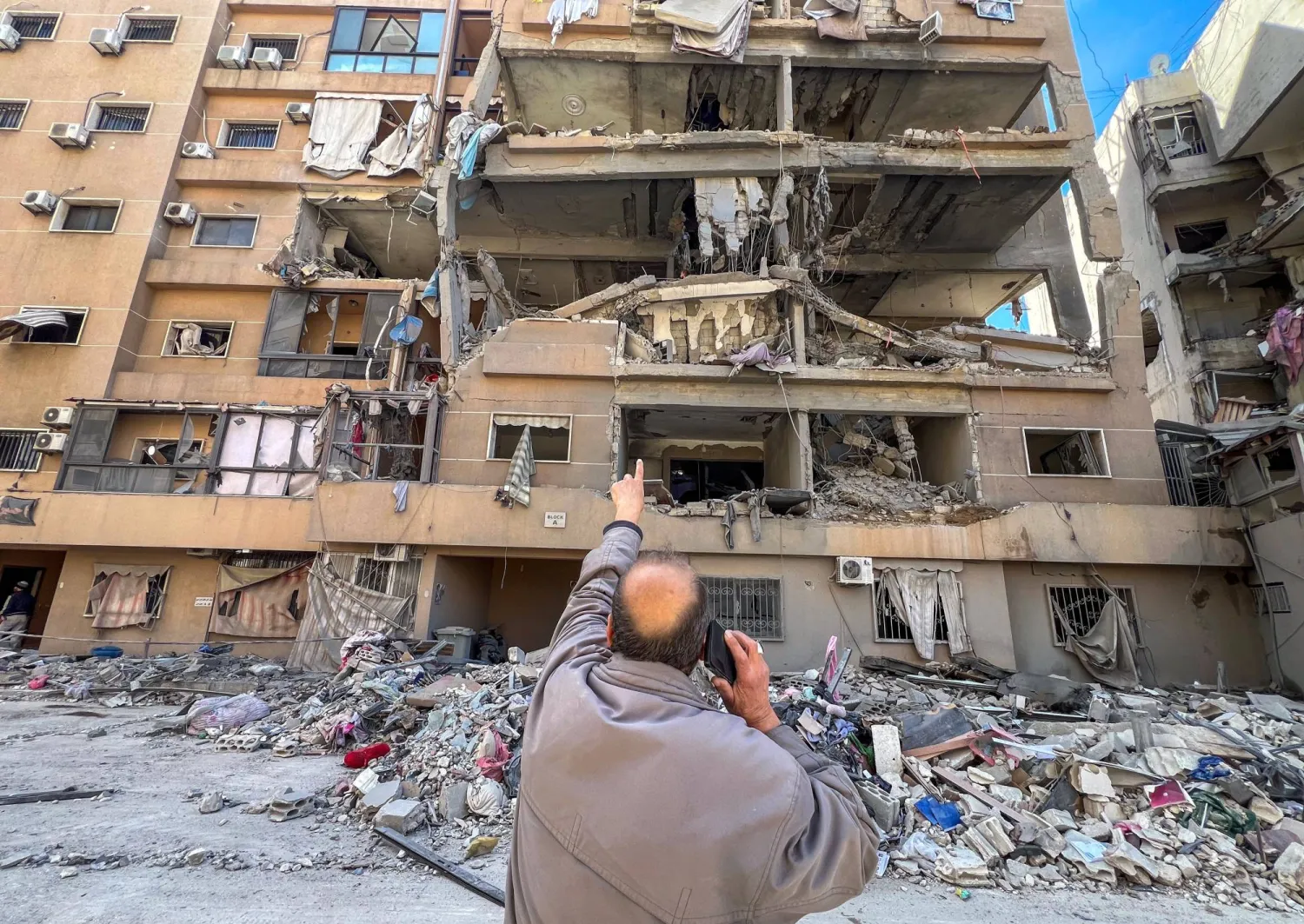
A man points at a building damaged by Israeli strikes in Beirut's southern suburbs, Lebanon, March 28, 2026. Picture taken with a mobile phone. REUTERS/Stringer
TT

Destruction from Two Wars Strains the Lebanese State

A man points at a building damaged by Israeli strikes in Beirut's southern suburbs, Lebanon, March 28, 2026. Picture taken with a mobile phone. REUTERS/Stringer

A pattern of systematic destruction pursued by Israel in the current war is becoming clearer by the day, extending in both context and objectives from the previous conflict and pushing entire Lebanese regions and governorates toward a “scorched earth” reality. The scale and nature of the targeting no longer suggest localized operations or limited military objectives.

Israeli operations are no longer confined to destroying sites, depots, and warehouses belonging to Hezbollah. They now extend to targeting entire built-up areas and residential neighborhoods, hindering the return of residents and prolonging displacement. This serves as a pressure tactic against Hezbollah’s support base on the one hand, and against the Lebanese state and its institutions on the other.

Lebanon was already unable to secure the resources needed for reconstruction after the previous war, making the task today even more difficult amid the massive and accumulating losses of the current conflict. The outlook is further darkened by the absence of any serious indications of external funding sources for recovery and reconstruction, as most countries that traditionally provided support are preoccupied with their own domestic conditions and major crises resulting from the ongoing war in the region. This makes it likely that Lebanon will be left to face its fate alone, burdened with costs far beyond its capacity- unless those concerned succeed in including a reconstruction funding clause in any potential ceasefire agreement.

Israeli Destruction Strategy

Former Lebanese minister Nasser Yassin points to a “strong similarity in the destruction strategy adopted by Israel between the previous war and the current one, particularly in terms of targeting buildings and facilities it claims belong to Hezbollah.” He notes that “the target bank often appears to be the same, with buildings struck in the previous war being targeted again.”

He adds that “what differs from the 2023–2024 war is the deliberate targeting of bridges to sever areas south of the Litani River and to pressure the Lebanese state,” adding: “Targeting official facilities may be partly linked to military plans and partly intended to pressure the state. This is a dangerous indicator that will impose high costs and cause additional direct losses amounting to billions of dollars.”

Yassin told Asharq Al-Awsat that “what Lebanon obtained after the previous war was a $250 million loan from the World Bank, in addition to $50 million allocated in the public budget- amounts that fall far short of the funding required for reconstruction.”

He adds that “this reality will worsen after the current war, as state revenues are insufficient. Gulf countries that typically contributed to reconstruction are now part of the war and are facing daily attacks from Iran, while major economic activity has been disrupted, shifting their focus more toward internal affairs. This is in addition to a political environment that may not be conducive to funding reconstruction, as successive governments have not demonstrated seriousness in implementing reforms.”

He adds: “Western countries also face their own challenges due to the repercussions of the Russia-Ukraine war and inflation driven by the regional conflict.”

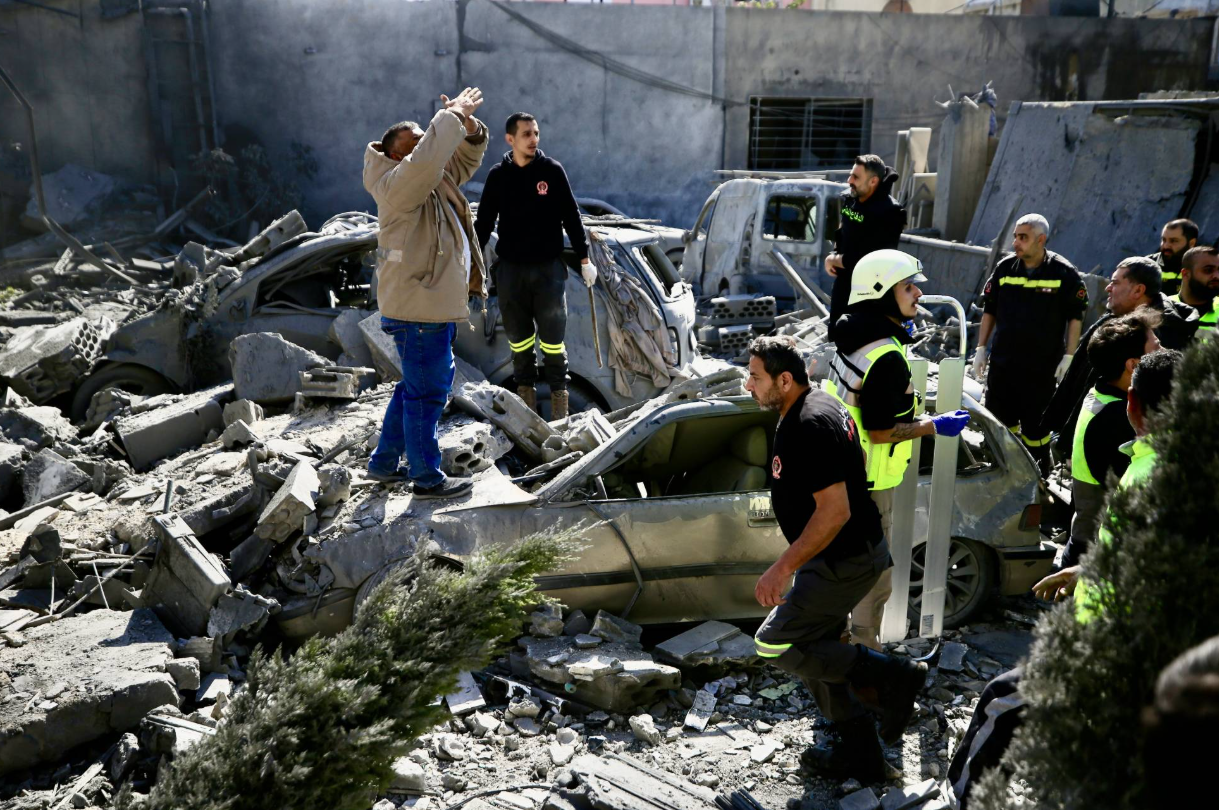
Civil defense personnel at a site targeted by Israeli shelling in the Saksakieh area of ​​southern Lebanon (EPA)

Preliminary Estimates of the Scale of Destruction

The continuation of the war makes it difficult to assess the full extent of newly inflicted damage less than a month after its onset. However, research Specialist at Information International Mohammad Chamseddine points to an initial picture indicating the destruction of “4,500 units in the south and 1,600 units in Beirut’s southern suburbs completely, in addition to various levels of damage to 12,000 units.” He notes that “what distinguishes the current Israeli approach from the previous war is that it is more intense and the scale of destruction is greater.”

According to Chamseddine , the number of housing units that sustained minor or moderate damage in the previous war reached 317,000, while 51,000 units were completely destroyed, including 9,000 in the southern suburbs, 1,500 in the Bekaa, and 22,000 in the border strip area.

The World Bank previously estimated that the direct cost of the last Israeli offensive on Lebanon reached approximately $14 billion, noting the destruction and damage of more than 100,000 housing units, in addition to severe damage to infrastructure and public facilities.


Palestinian Authority Condemns East Jerusalem Evictions

A Palestinian man (R) watch a settler family walks past a group of Israeli police officers as 11 Palestinian families in the Batan al-Hawa area of Silwan are evicted to make room for Israeli settlers, in the predominantly Arab neighbourhood of Silwan, in East Jerusalem on March 25, 2026. (Photo by Odd ANDERSEN / AFP)
TT

Palestinian Authority Condemns East Jerusalem Evictions

A Palestinian man (R) watch a settler family walks past a group of Israeli police officers as 11 Palestinian families in the Batan al-Hawa area of Silwan are evicted to make room for Israeli settlers, in the predominantly Arab neighbourhood of Silwan, in East Jerusalem on March 25, 2026. (Photo by Odd ANDERSEN / AFP)

The Palestinian Authority has condemned the recent eviction of multiple families from their homes in east Jerusalem and urged the international community to take "firm measures" to halt the displacements.

Several families were removed from their homes in the neighborhood of Silwan in Israeli-annexed east Jerusalem on Wednesday, AFP journalists saw.

Silwan has for decades been the target of a policy allowing Jews who lost property before the establishment of Israel in 1948 to reclaim it.

Israeli rights group B'Tselem said the evictions were the start of "a large wave of displacement affecting around 2,200 people" and were part of a policy aimed at "Judaizing the neighborhood".

In a statement released late on Friday by official news agency WAFA, the PA's foreign ministry "condemned the escalation by Israeli occupation authorities of forced eviction measures".

It said 15 families had been evicted from the hilltop neighborhood south of Jerusalem's Old City.

It also called on the international community to take "firm and more decisive steps to prevent the continuation of forced displacement against the Palestinian people".

Israeli authorities have evicted many Palestinian families from the area in recent years, while further families await the enforcement of eviction orders.

Hundreds of settlers, whose presence is illegal under international law, live among around 50,000 Palestinians in Silwan.

Their presence in the neighborhood dates back to the 1980s.

Israel captured east Jerusalem in 1967, later annexing it and declaring it part of its undivided capital, a move not recognized by the UN or most of the international community.

Palestinians aspire to make it the capital of a future Palestinian state.


Palestinian Brothers Killed in Israeli Strike on Gaza

Mourners react during the funeral of Palestinians killed in an Israeli strike, according to medics, in Gaza City, March 28, 2026. REUTERS/Dawoud Abu Alkas
TT

Palestinian Brothers Killed in Israeli Strike on Gaza

Mourners react during the funeral of Palestinians killed in an Israeli strike, according to medics, in Gaza City, March 28, 2026. REUTERS/Dawoud Abu Alkas

An Israeli airstrike killed two Palestinian brothers Saturday morning in the Gaza Strip, hospital authorities said.

The strike hit the men close to the Showa roundabout in Gaza City’s Shijaiyah neighborhood, according to the Al-Ahly hospital.

The area is close to the so-called Yellow Line which separates Israeli-controlled areas across the Gaza Strip from the rest of the enclave.

Israel’s military did not immediately respond to a request for comment.
