


SARI Global Depicts Alarming Israeli Retaliatory Attack on Houthis

Firefighters work as huge fires erupted at a cement factory in Yemen after the Israeli military said it carried out airstrikes against Hodeidah Port and its vicinity.  AL-MASIRAH TV/Handout via REUTERS
Firefighters work as huge fires erupted at a cement factory in Yemen after the Israeli military said it carried out airstrikes against Hodeidah Port and its vicinity. AL-MASIRAH TV/Handout via REUTERS
TT

SARI Global Depicts Alarming Israeli Retaliatory Attack on Houthis

Firefighters work as huge fires erupted at a cement factory in Yemen after the Israeli military said it carried out airstrikes against Hodeidah Port and its vicinity.  AL-MASIRAH TV/Handout via REUTERS
Firefighters work as huge fires erupted at a cement factory in Yemen after the Israeli military said it carried out airstrikes against Hodeidah Port and its vicinity. AL-MASIRAH TV/Handout via REUTERS

Israeli retaliatory strikes on a missile fired by Yemen's Houthis on Sunday near the country's main international airport, are likely to target military and political headquarters and dual-use assets such as airports, ports, and power stations, the SARI Global center said on Monday.

The center, which provides a comprehensive suite of crisis management, security analysis, and risk mitigation solutions for non-governmental organizations, companies and embassies, warned the Israeli retaliatory strikes could block or slowdown humanitarian aid flows through Hodeidah port, affecting distribution of fuel and food.

The report came shortly before the Israeli army carried out retaliatory airstrikes against Yemen's Hodeidah Port on Monday.

According to SARI Global, the Houthi strikes matter because the Ben Gurion airport has faced attempted drone and missile raids since late 2023.

Yet, it said, every previous projectile was intercepted before crossing the fence.

“Sunday’s blast is therefore the first confirmed Houthi weapon to detonate on airport grounds,” it warned.

Also, the Center said Sunday’s attack on Ben Gurion shows that the Houthis now possess missiles accurate enough to strike a pinpoint civil target and that Israel’s layered defense remains vulnerable to saturation or high-speed profiles.

It said the attacks reveal that a comparatively low-cost missile forced the shutdown of a strategic Israeli asset and created broad commercial disruption.

The Center added that the pattern of similar missile attacks shows a steady progression from harassment of Eilat in 2023 to sustained maritime pressure through 2024, followed by longer-range and higher-speed strikes against critical Israeli infrastructure in 2025.

It then predicted that Israeli and potentially US-led retaliatory strikes are likely to reprise the same operational logic seen in 2024, targeting not only missile infrastructure but also dual-use assets such as airports, ports, and power stations suspected of facilitating Houthi logistics or receiving Iranian material support.

Based on both historical precedent and current Houthi command and logistics structures, the Center listed areas considered high-risk for near-term airstrikes, including the Sanaa Capital District, which hosts political and military headquarters, and the airport previously targeted in December 2024.

Also, it said retaliatory strikes could hit the Harf Sufyan area in the Amran Governorate, known to host long-range missile launch infrastructure, in addition to the Hodeidah and Salif/Ras Kanatib ports, both critical entry points for fuel and goods and were struck in 2024 under claims of missile logistics use.

Israel could also target Hezyaz and surrounding power infrastructure, which are vulnerable to repeated targeting to disrupt command, control, and emergency response capabilities.

“If any of these high-value locations are hit in the coming escalation, humanitarian operations could be immediately and severely impacted,” the Center warned.

It said likely consequences include the suspension of international and humanitarian flights into and out of Sanaa International Airport, the disrupting staff rotations, supply inflow, and medical evacuations, and the blockage or slowdown of humanitarian aid flows through Hodeidah Port, affecting distribution of fuel, food, WASH supplies, and medicines for millions in northern governorates.

In addition, attacks would lead to civilian casualties and mass displacement due to urban strikes in Sanaa and Hodeidah, straining shelter capacities and compounding protection risks and to disruption of electricity and communications infrastructure, especially if power stations or fuel depots are retargeted.

The Center said humanitarian agencies must prepare for both direct operational disruption and indirect effects through broader conflict spillover by planning alternative logistics routes through Aden or Mukalla and prepositioning essential staff and supplies in more stable locations to ensure program continuity.

Humanitarian agencies should also ensure staff safety and evacuation readiness, update relocation and evacuation plans for personnel in Sanaa and Hodeidah and ensure all teams have access to backup communications, satellite phones, and alternate power source.

According to SARI Global’s analysis, the potential scale of Israeli retaliatory operations carries regional implications.

As in previous cycles, it said deep strikes in Yemen may provoke further Houthi retaliation via missiles and drones targeting Red Sea shipping lanes, Israel, or US naval assets.

It noted that while access and safety planning remain critical, so too does coordinated risk communication with donors, local authorities, and community actors to maintain humanitarian space and mitigate reputational or operational backlash amidst intensifying hostilities.


Türkiye Holds Military Funeral for Libyan Officers Killed in Plane Crash

The Libyan national flag flies at half-mast in Tripoli on December 24, 2025, after the head of Libya's armed forces and his four aides died in a plane crash in Türkiye. (AFP)
TT

Türkiye Holds Military Funeral for Libyan Officers Killed in Plane Crash

The Libyan national flag flies at half-mast in Tripoli on December 24, 2025, after the head of Libya's armed forces and his four aides died in a plane crash in Türkiye. (AFP)

Türkiye held a military funeral ceremony Saturday morning for five Libyan officers, including western Libya’s military chief, who died in a plane crash earlier this week.

The private jet with Gen. Muhammad Ali Ahmad al-Haddad, four other military officers and three crew members crashed on Tuesday after taking off from Ankara, Türkiye’s capital, killing everyone on board. Libyan officials said the cause of the crash was a technical malfunction on the plane.

Al-Hadad was the top military commander in western Libya and played a crucial role in the ongoing, UN-brokered efforts to unify Libya’s military.

The high-level Libyan delegation was on its way back to Tripoli, Libya’s capital, after holding defense talks in Ankara aimed at boosting military cooperation between the two countries.

Saturday's ceremony was held at 8:00 a.m. local time at the Murted Airfield base, near Ankara, and attended by the Turkish military chief and the defense minister. The five caskets, each wrapped in a Libyan national flag, were then loaded onto a plane to be returned to their home country.

Türkiye’s military chief, Selcuk Bayraktaroglu, was also on the plane headed to Libya, state-run news agency TRT reported.

The bodies recovered from the crash site were kept at the Ankara Forensic Medicine Institute for identification. Justice Minister Yilmaz Tunc told reporters their DNA was compared to family members who joined a 22-person delegation that arrived from Libya after the crash.

Tunc also said Germany was asked to help examine the jet's black boxes as an impartial third party.


Syrian Foreign Ministry: Talks with SDF Have Not Yielded Tangible Results

SDF fighters are seen at a military parade in Qamishli. (Reuters file)
TT

Syrian Foreign Ministry: Talks with SDF Have Not Yielded Tangible Results

SDF fighters are seen at a military parade in Qamishli. (Reuters file)

A source from the Syrian Foreign Ministry said on Friday that the talks with the Kurdish Syrian Democratic Forces (SDF) over their integration into state institutions “have not yielded tangible results.”

Discussions about merging the northeastern institutions into the state remain “hypothetical statements without execution,” it told Syria’s state news agency SANA.

Repeated assertions over Syria’s unity are being contradicted by the reality on the ground in the northeast, where the Kurds hold sway and where administrative, security and military institutions continue to be run separately from the state, it added.

The situation “consolidates the division” instead of addressing it, it warned.

It noted that despite the SDF’s continued highlighting of its dialogue with the Syrian state, these discussions have not led to tangible results.

It seems that the SDF is using this approach to absorb the political pressure on it, said the source. The truth is that there is little actual will to move from discussion to application of the March 10 agreement.

This raises doubts over the SDF’s commitment to the deal, it stressed.

Talk about rapprochement between the state and SDF remains meaningless if the agreement is not implemented on the ground within a specific timeframe, the source remarked.

Furthermore, the continued deployment of armed formations on the ground that are not affiliated with the Syrian army are evidence that progress is not being made.

The persistence of the situation undermines Syria’s sovereignty and hampers efforts to restore stability, it warned.


Terrorist Attack on Mosque in Syria’s Homs Draws Wide Condemnation

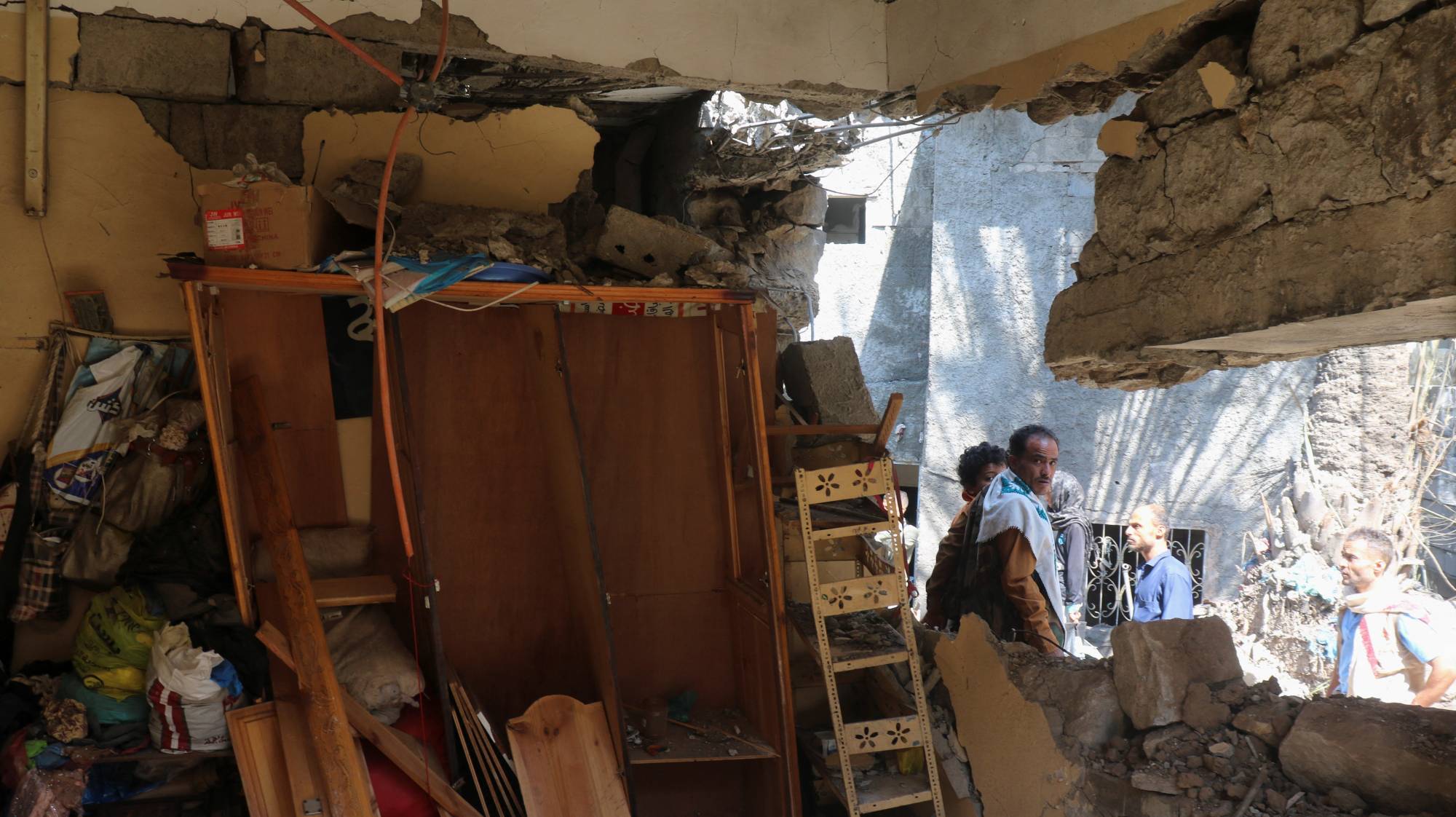
 A view shows an interior of a damaged mosque after several people were killed in an explosion in Homs, Syria December 26, 2025. (Reuters)
A view shows an interior of a damaged mosque after several people were killed in an explosion in Homs, Syria December 26, 2025. (Reuters)
TT

Terrorist Attack on Mosque in Syria’s Homs Draws Wide Condemnation

 A view shows an interior of a damaged mosque after several people were killed in an explosion in Homs, Syria December 26, 2025. (Reuters)
A view shows an interior of a damaged mosque after several people were killed in an explosion in Homs, Syria December 26, 2025. (Reuters)

Condemnations poured in across the Arab world and international community of the terrorist attack that targeted a mosque in Syria’s Homs city on Friday.

An explosion killed at least eight worshippers with the extremist group Saraya Ansar al-Sunna claiming responsibility.

In a statement on Telegram, the group said its fighters “detonated a number of explosive devices” in the Imam Ali Bin Abi Talib Mosque in the central Syrian city.

Syria's interior ministry said in a statement that “a terrorist explosion” targeted the mosque and that authorities had “begun investigating and collecting evidence to pursue the perpetrators of this criminal act.”

The Saudi Ministry of Foreign Affairs condemned the attack, stressing the Kingdom’s “categorical rejection of terrorism and extremism in all their forms, including attacks on mosques and places of worship and the targeting of innocent civilians.”

It expressed the Kingdom’s “solidarity with Syria in this tragic incident and its support for the Syrian government’s efforts to uphold security and stability.”

Türkiye slammed the attack, saying it stands by Syria and its efforts to support stability, security and unity “despite all the provocations.”

The Iraqi Foreign Ministry strongly condemned the “heinous terrorist attack,” saying Baghdad rejects all forms of terrorism, violence and extremism regardless of their motives.

It slammed the attack against civilians and places of worship, saying they aim to create instability and sow strife in society.

The ministry underlined Iraq’s support for regional and international efforts aimed at eliminating terrorism and drying up its sources of funding.

The United Arab Emirates condemned the attack, saying it rejects all forms of violence and terrorism that aim to undermine security and stability.

Jordan’s Foreign Ministry slammed the attack, voicing its full support to Syria in its reconstruction process “based on principles that ensure its territorial unity, sovereignty, security and stability.”

In Beirut, President Joseph Aoun slammed the Homs attack, saying Lebanon stands by Syria in its war on terrorism. He offered his condolences to the Syrian people.

Qatar slammed the attack, saying it fully stands by the Syrian government and all the measures it takes to preserve security.

France said the blast was an “act of terrorism” designed to destabilize the country, while United Nations Secretary General Antonio Guterres condemned the “unacceptable” attack and said the perpetrators should be brought to justice.
