


US Congressman Discusses with Syrian President Return of Body of American Killed in Syria

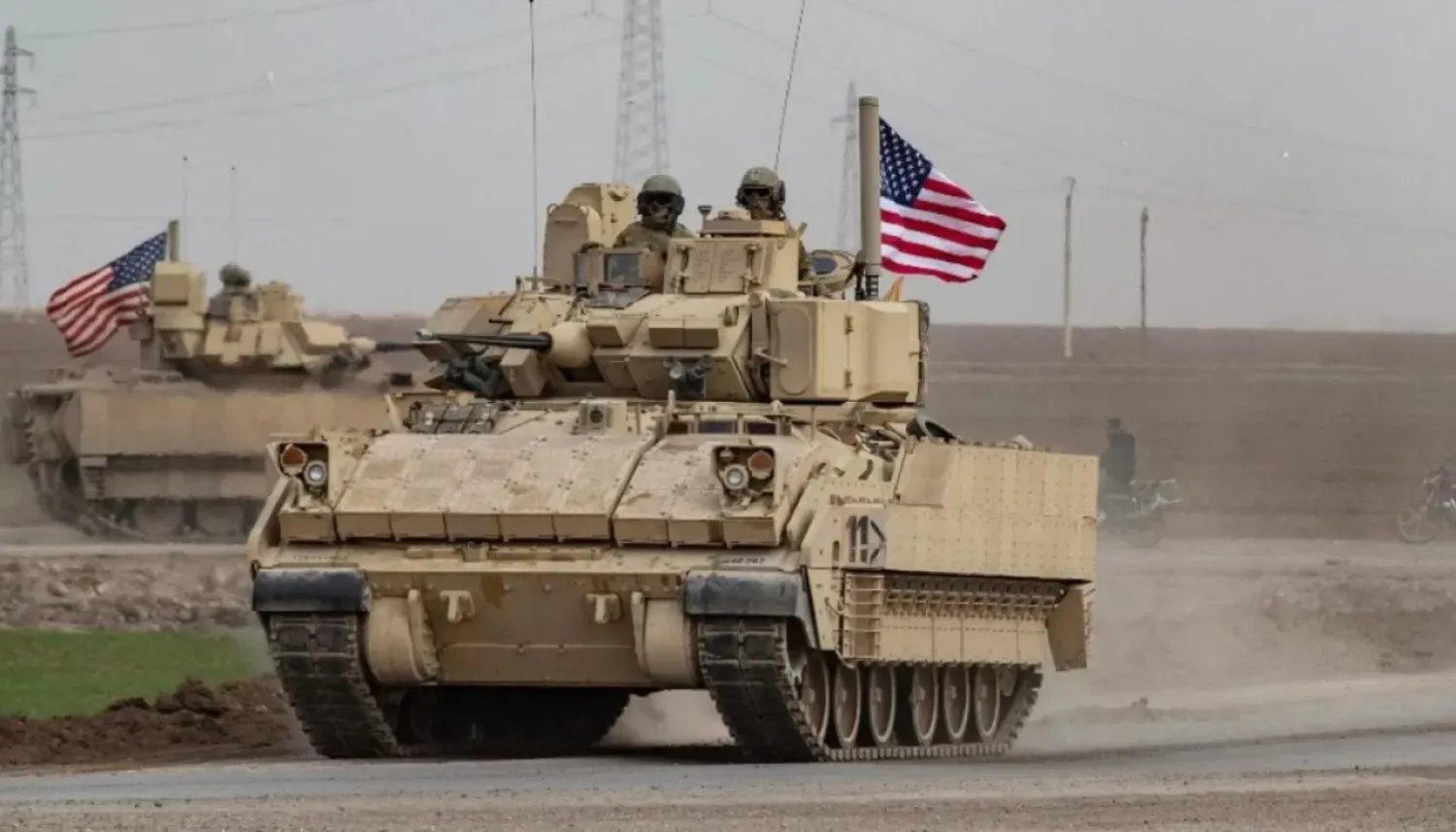
US forces patrol for children of suspected ISIS members in the town of Tal Maaruf in Syria's northeastern Hasakeh province, on 15 December 2022. Photo: AFP
TT

US Congressman Discusses with Syrian President Return of Body of American Killed in Syria

US forces patrol for children of suspected ISIS members in the town of Tal Maaruf in Syria's northeastern Hasakeh province, on 15 December 2022. Photo: AFP

US Congressman Abraham Hamadeh made a brief visit to Syria where he discussed with the country’s interim president the return of the body of an American aid worker who was taken hostage and later confirmed dead in the war-torn country, his office said Monday.

Hamadeh’s visit to Syria comes as a search has been underway in remote parts of the country for the remains of people who were killed by the ISIS group that once controlled large parts of Syria and Iraq before its territorial defeat six years ago, The AP news reported.

Kayla Mueller, 26, was captured in northern Syria in August 2013 and her family and US officials confirmed her death more than a year later. Hamadeh, an Arizona Republican, has vowed to return Mueller’s body — which has not yet been found — to her family.

Hamadeh’s office said he was in Syria for six hours to meet President Ahmad al-Sharaa to discuss the return of Mueller’s body to her family in Arizona. The statement added that Hamadeh also discussed the need to establish a secure humanitarian corridor for the safe delivery of medical and humanitarian aid to the southern province of Sweida that recently witnessed deadly clashes between pro-government fighters and gunmen from the country’s Druze minority.

Dozens of foreigners, including aid workers and journalists, were killed by ISIS militants who declared a so-called caliphate in 2014. The militant group lost most of its territory in Iraq in late 2017 and was declared defeated in 2019 when it lost the last sliver of land it controlled in east Syria.

Since then, dozens of gravesites and mass graves have been discovered in northern Syria containing remains and bodies of people ISIS had abducted over the years.

American journalists James Foley and Steven Sotloff, as well as humanitarian workers Mueller and Peter Kassig are among those killed by ISIS. None of the remains is believed to have been found.

Mueller, from Prescott, Arizona, was taken hostage with her boyfriend, Omar Alkhani, after leaving a Doctors Without Borders hospital in Aleppo, Syria, where he had been hired to fix the internet service for the hospital. Mueller had begged him to let her tag along because she wanted to do relief work in the war-ravaged country. Alkhani was released after two months, having been beaten.

In 2015, the Pentagon said Mueller died at the hands of ISIS and not in a Jordanian airstrike targeting the militant group as the extremists claimed earlier.



Syrian Army on Alert after SDF Armed Groups Detected East of Aleppo

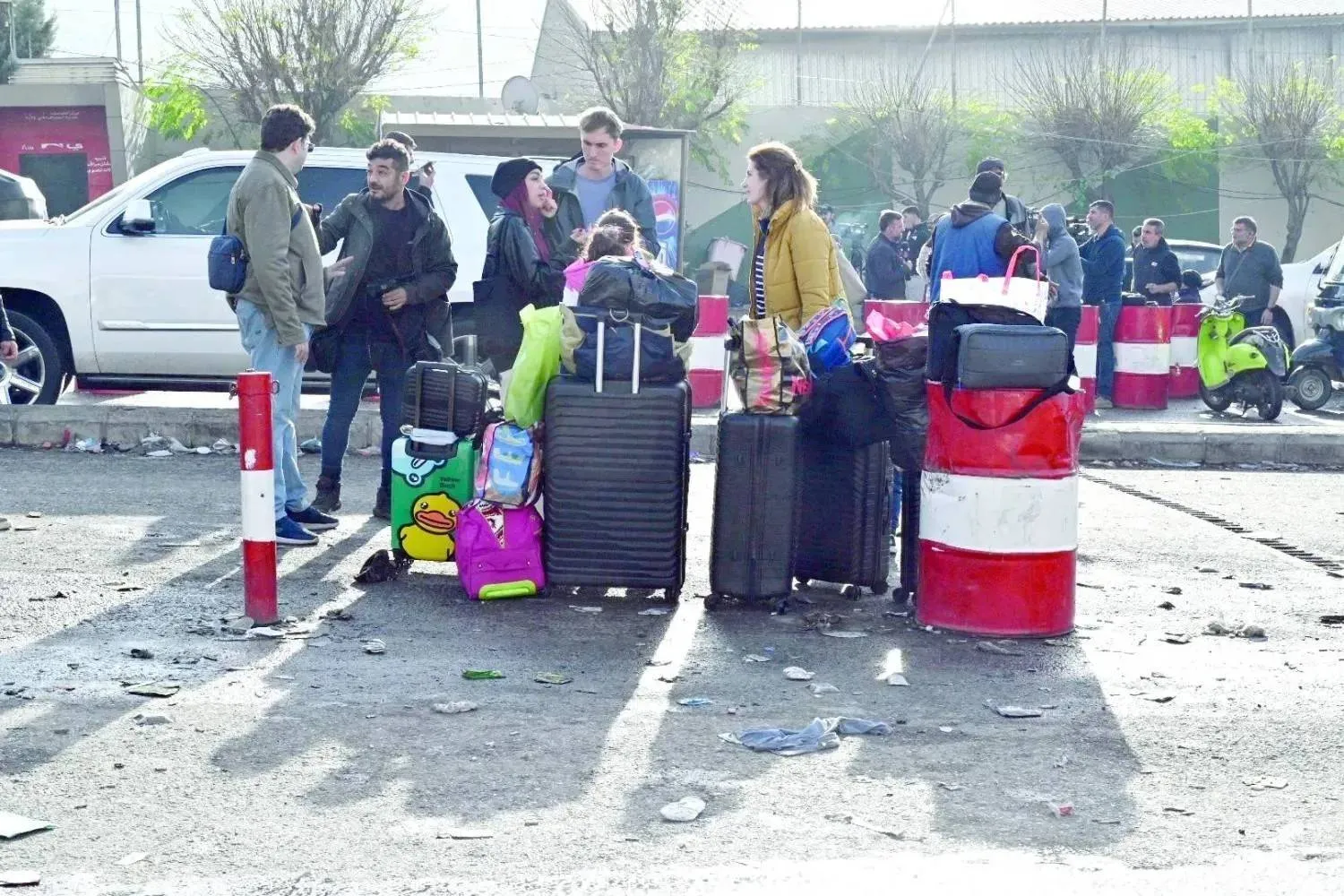
People walk down a street as a car drives by following a ceasefire which ended days of fighting between Syrian security forces and Kurdish fighters in the Kurdish-majority Sheikh Maqsoud neighborhood, of the northern city of Aleppo on January 11, 2026. (AFP)
TT

Syrian Army on Alert after SDF Armed Groups Detected East of Aleppo

People walk down a street as a car drives by following a ceasefire which ended days of fighting between Syrian security forces and Kurdish fighters in the Kurdish-majority Sheikh Maqsoud neighborhood, of the northern city of Aleppo on January 11, 2026. (AFP)

The Syrian army went on alert on Sunday after detecting armed groups aligned with the Syrian Democratic Forces (SDF) east of Aleppo city.

In statements to the SANA state news agency, the Operations Command said that the nature and objectives of these military reinforcements and troop concentrations brought by the SDF to eastern Aleppo have not yet been identified.

The Command added that Syrian army forces have been placed on full alert, deployment lines east of Aleppo have been reinforced, and all necessary measures have been taken to be ready for all possible scenarios.

First responders on Sunday entered a contested neighborhood in the northern city of Aleppo after days of deadly clashes between government forces and Kurdish-led forces. Syrian state media said the military was deployed in large numbers.

The clashes broke out Tuesday in the predominantly Kurdish neighborhoods of Sheikh Maqsoud, Achrafieh and Bani Zaid after the government and the SDF, the main Kurdish-led force in the country, failed to make progress on how to merge the SDF into the national army. Security forces captured Achrafieh and Bani Zaid.

The fighting between the two sides was the most intense since the fall of then-President Bashar Assad to opposition groups in December 2024. At least 23 people were killed in five days of clashes and more than 140,000 were displaced amid shelling and drone strikes.

The Kurdish fighters have now evacuated from the Sheikh Maqsoud neighborhood to northeastern Syria, which is under the control of the SDF.

However, they said in a statement they will continue to fight now that the wounded and civilians have been evacuated, in what they called a “partial ceasefire.”


Hadhramaut Governor to Asharq Al-Awsat: Saudi Stance Was Decisive, Situation Is Calm

Governor of Yemen's Hadhramaut governorate Salem al-Khanbashi. (Asharq Al-Awsat)
TT

Hadhramaut Governor to Asharq Al-Awsat: Saudi Stance Was Decisive, Situation Is Calm

Governor of Yemen's Hadhramaut governorate Salem al-Khanbashi. (Asharq Al-Awsat)

Governor of Yemen's Hadhramaut Salem al-Khanbashi stressed that the situation in the governorate was returning to normal in wake of the recent developments and withdrawal of the Southern Transitional Council (STC) forces.

In remarks to Asharq Al-Awsat from his office in Mukalla, he said: "The general situation is calm and stable. Work is underway to resume operations at various public administrations."

"Security measures have also been intensified, especially over the possession of weapons," he added.

He revealed that several suspects involved in looting and the possession of heavy weapons have been arrested.

"Life is gradually returning back to normal and the situation will improve," he stressed.

On Saudi Arabia's role, Khanbashi credited the Kingdom with helping move forward the issue of the STC withdrawal from Hadhramaut in record time.

Coordination with the Kingdom continues, he added.

He also noted that a meeting was held with senior Hadhramaut officials with leaders of the "Hadhramaut elite brigades" to discuss returning the forces to their former military positions.

Coordination with Saudi Arabia is at a "very high level", he revealed. Hadhramaut has received pledges from senior Saudi officials that major projects will be implemented in the governorate to develop infrastructure.

On restructuring the local authority, Khanbashi stressed: "Measures have been taken against officials who had openly expressed their support to the STC or who had taken contentious political positions."

Commenting on the conference Riyadh will be hosting on the southern issue, he said the Hadhramaut leadership has met with several members of the Hadhramaut National Council to discuss the issue.

The details of the talks and mechanism to choose representatives have not taken shape yet, he told Asharq Al-Awsat.

Expanded meetings with various political and social figures will be held in the governorate in the coming days with the aim of coming up with a unified vision that represents Hadhramaut at the conference, he added.

He noted the historic differences that exist between Hadhramaut and other southern governorates that should be taken into consideration and discussed.

On the issue of the Hadhramaut airports, he said the Riyan Airport is ready and expected to resume operations in the next two days.


Yemen's Al-Alimi Urges Limiting Possession of Weapons to State to Focus on Confronting Houthis

Chairman of Yemen's Presidential Leadership Council (PLC) Dr. Rashad al-Alimi. (Saba)
TT

Yemen's Al-Alimi Urges Limiting Possession of Weapons to State to Focus on Confronting Houthis

Chairman of Yemen's Presidential Leadership Council (PLC) Dr. Rashad al-Alimi. (Saba)

Chairman of Yemen's Presidential Leadership Council (PLC) Dr. Rashad al-Alimi said on Sunday that his country has entered a new decisive phase in restoring state institutions and ending armed coups.

The process of handing over military camps in Hadhramaut and al-Mahra governorates to legitimate authorities is a step towards imposing state monopoly over weapons, he added.

He made his remarks during a meeting in Riyadh with British Ambassador to Yemen is Abda Sharif.

The formation of a supreme military council will help unify all armed forces and military and security formations under the defense and interior ministries, al-Alimi went on to say.

The formation of the committee sends a message that the state has not veered off its national priorities and that the process to hand over military camps was the right call in protecting the internal front, he stressed.

The move aims to protect the internal front and focus state efforts in confronting the Iran-backed Houthi coup either through peaceful means or war, he added.

He discussed with Sharif the latest local developments and efforts to restore order in the liberated governorates.

He hailed the positive role the UK has played in supporting Yemen's unity and legitimate authorities, as well as peace and humanitarian efforts.

Moreover, al-Alimi described as "brave" the Southern Transitional Council's decision to dissolve itself.

It marked a "pivotal moment that reflects a realization of the sensitivity of the current phase and the danger of sliding into internal conflicts that would weaken the internal front against the confrontation against the real threat," he said.

The next phase demands that all national, civilian and military forces align with the state and legitimate authorities and the rule of law, he demanded.

Al-Alimi also highlighted Saudi Arabia's central role in easing the escalation and sponsoring intra-southern Yemen dialogue. This is an extension of its economic and humanitarian support to Yemen.