

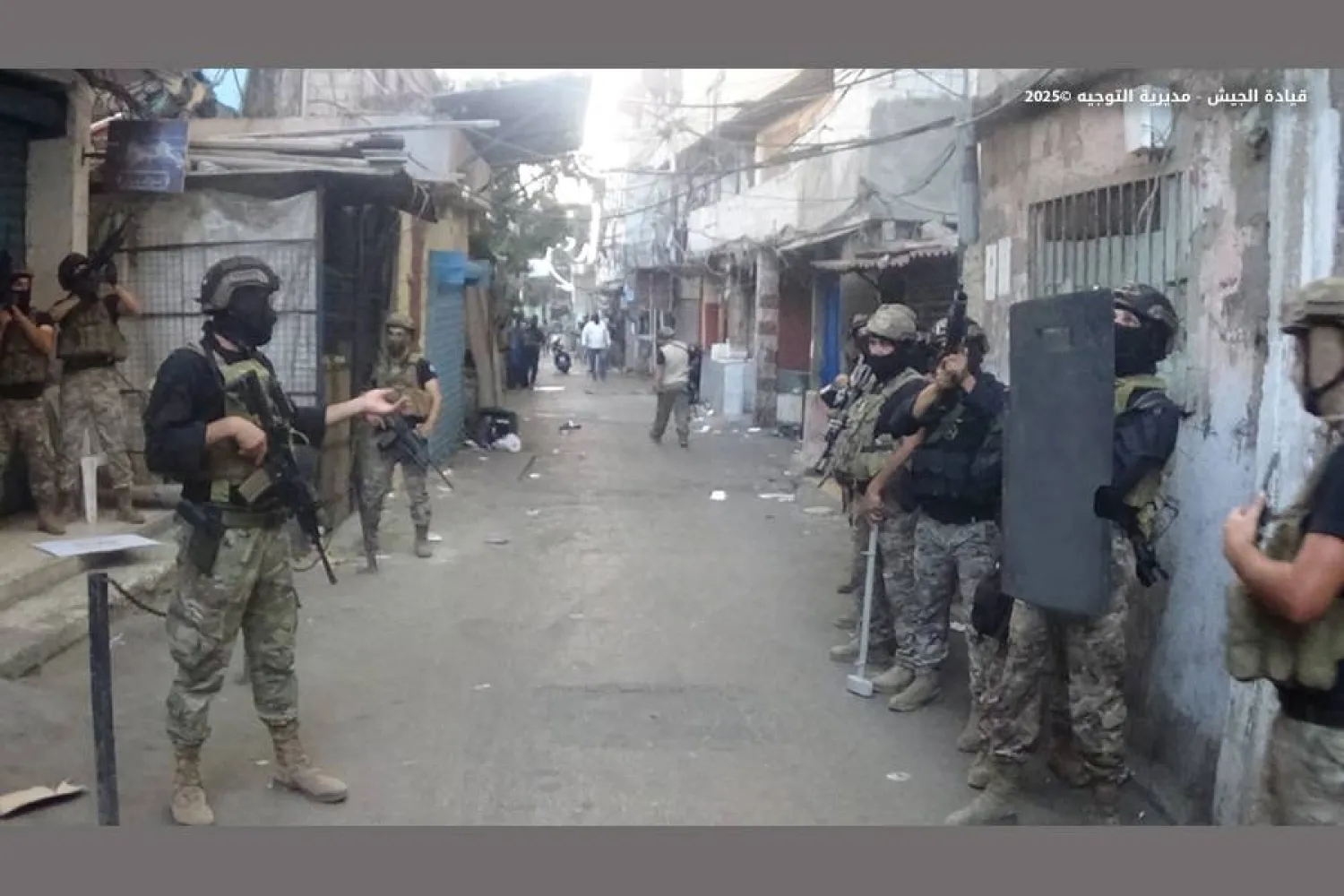

In a First, Lebanese Army Carries Out Security Operation Inside Palestinian Camp

Members of the military inside the Shatila camp. (Lebanese army)
TT

In a First, Lebanese Army Carries Out Security Operation Inside Palestinian Camp

Members of the military inside the Shatila camp. (Lebanese army)

In an unprecedented move since the 1969 Cairo agreement, the Lebanese army carried out a major security operation inside the Shatila Palestinian refugee camp in Beirut.

The military arrested several suspects wanted for drug smuggling, seizing large quantities of narcotics, as well as weapons.

With Egyptian sponsorship, the Cairo agreement was held between the Lebanese state and Palestinian Liberation Organization and says the army is barred from entering Palestinian camps in Lebanon. Palestinian factions in the camps would handle their own affairs inside the camps.

In return, the factions were expected to respect certain guidelines and rules.

In a statement on Friday, the army said it carried out its operation following months of investigations. It busted a drug dealing gang that was operating throughout the country.
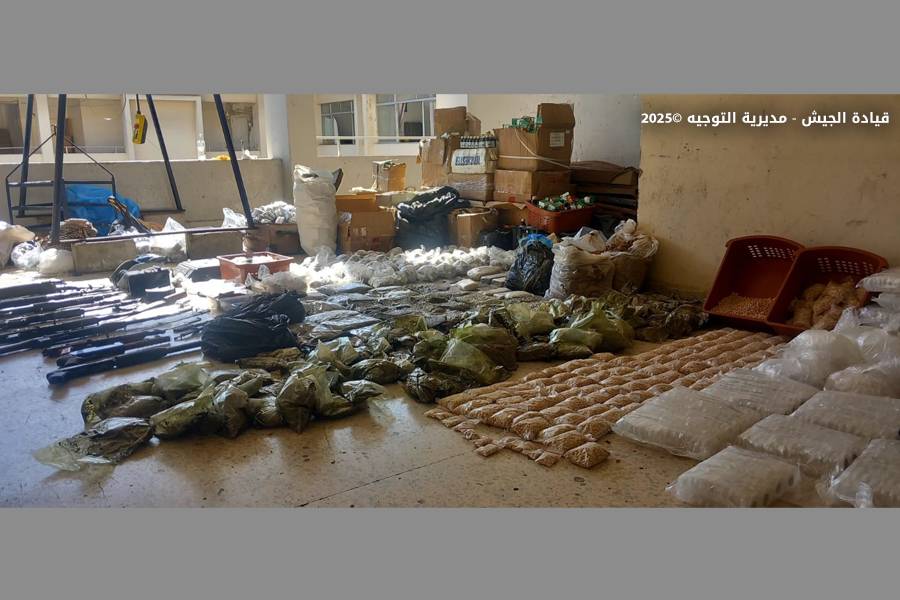
Drugs that were seized during the raid. (Lebanese army)

Clashes ensued with the suspects, leaving several of them wounded. Fifty-five were arrested, including Lebanese, Syrian and Palestinian nationals. The military also seized drugs, weapons and ammunition during the raid.

Investigations are underway with the detainees.

The raid followed months of intermittent clashes between drug gangs inside the Shatila camp and its surroundings. The Palestinian factions were unable to contain the fighting.

A security source told Asharq Al-Awsat that the military carried out its operation without coordinating with the factions, instead relying on the element of surprise.

The raid is part of a wider “great war” the army is waging against the drug trade, especially against criminals deemed “untouchable”.

“There are no red lines for the army to arrest anyone or enter any area,” stressed the source.

The military has been carrying out a crackdown on the drug trade in recent weeks, shutting drug factories. Raids have been carried out in the eastern Baalbek region, leading to one of the country’s largest drug busts.

In a post on the X platform, the Interior Ministry said combating drugs was a “national priority,” saluting the army’s efforts to that end.
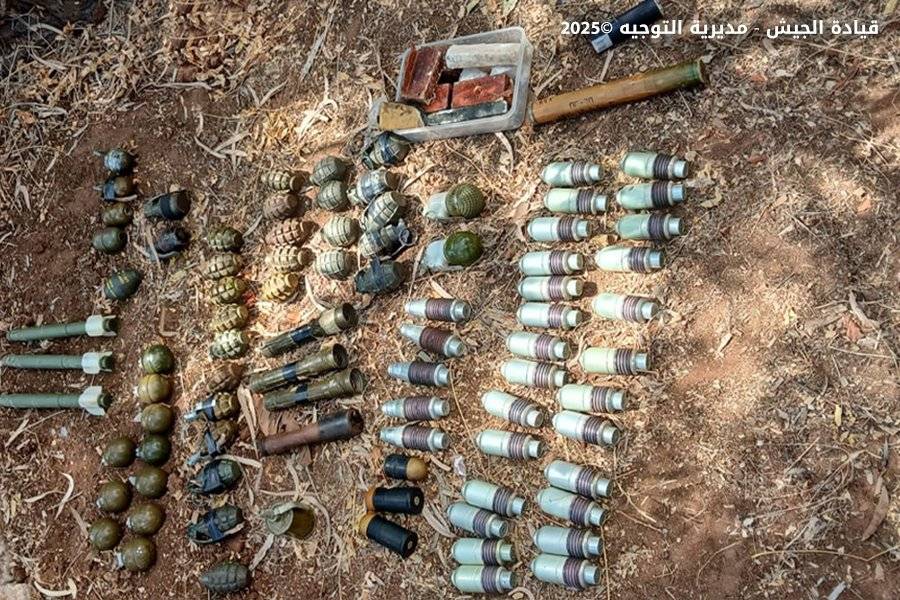
Weapons that were seized during the raid. (Lebanese army)

In remarks to Asharq Al-Awsat deputy Secretary of the Palestinian Fatah movement in Lebanon Dr. Serhan Serhan hailed the army’s “heroic” operation.

The Palestinians have long called on the Lebanese security agencies to put a stop to the drug trade inside the camp.

“The Shatila camp was once known as the camp of martyrs, but unfortunately, in recent years, it has come to be known as the drug camp. We hope the army will follow up on its measures to resolve this issue completely,” he added, saying it enjoys Fatah’s support.

Fatah has “no problem” in the military carrying out raids in other camps across the country, “because at the end of the day, we are guests in Lebanon and the camps are subject to Lebanese sovereignty and laws,” he stressed.


Türkiye Says Syrian Government Could Use Force Against Kurds

 Türkiye's Foreign Minister Hakan Fidan answers questions from reporters during a news conference in Istanbul, Türkiye, Thursday, Jan. 15, 2026. (AP)
Türkiye's Foreign Minister Hakan Fidan answers questions from reporters during a news conference in Istanbul, Türkiye, Thursday, Jan. 15, 2026. (AP)
TT

Türkiye Says Syrian Government Could Use Force Against Kurds

 Türkiye's Foreign Minister Hakan Fidan answers questions from reporters during a news conference in Istanbul, Türkiye, Thursday, Jan. 15, 2026. (AP)
Türkiye's Foreign Minister Hakan Fidan answers questions from reporters during a news conference in Istanbul, Türkiye, Thursday, Jan. 15, 2026. (AP)

The Syrian government army could use further force against Kurdish militants after a flare-up in violence in northern Syria, the foreign minister of neighboring Türkiye, a strong backer of the Syrian authorities, said on Thursday.

More than 150,000 people have fled from two Kurdish-run pockets of Syria's northern city of Aleppo during five days of fighting between government forces and ‌Kurdish fighters. ‌Syria's health ministry says at least 23 ‌people ⁠have died.

Türkiye has itself threatened a potential military operation against the Syrian Kurdish groups it calls terrorists.

It says the Kurdish-led Syrian Democratic Forces (SDF) must integrate into the central government under a nearly year-old agreement that has stalled.

"I hope it doesn't come to ⁠that point ... but when problems are not solved through dialogue, unfortunately, I see from ‌here that the use of force is ‍also an option for the ‍Syrian government," Foreign Minister Hakan Fidan told a press conference in ‍Istanbul.

The violence in Aleppo has deepened one of the main faultlines in Syria, where President Ahmed al-Sharaa's promise to unify the country under one leadership after 14 years of war has faced resistance from Kurdish forces wary of his government.

Syria's military has declared a handful of Kurdish-held towns in the north as a "military zone" ⁠and said all non-state factions stationed there should leave the area.

On Wednesday and Thursday, it dispatched fighters and military equipment to the zone and opened a humanitarian corridor for people to flee.

Fidan said that the SDF must show good intentions and break out of a cycle of violence. Türkiye says the SDF is aligned with the outlawed Kurdistan Workers Party militant group, which is involved in a peace process with Ankara.

Fidan added that the peace process with the PKK should not become a missed opportunity, and Ankara hopes it ‌will continue.


Sudan Food Aid Could Run Out as Peace Efforts Stall

According to the UN, more than 21 million people are now facing acute food insecurity, with two-thirds in urgent need of assistance. (AFP)
TT

Sudan Food Aid Could Run Out as Peace Efforts Stall

According to the UN, more than 21 million people are now facing acute food insecurity, with two-thirds in urgent need of assistance. (AFP)

Food aid in Sudan is set to run out by the end of March unless new funding is secured, the United Nations said Thursday, raising fears for millions caught up in the world's largest hunger crisis.

Nearly three years of fighting between the army and paramilitary Rapid Support Forces have left tens of thousands dead, 11 million displaced and repeated attempts at peace blocked.

Efforts led by the US and regional mediators -- Egypt, Saudi Arabia and the United Arab Emirates, known as the Quad -- have failed to secure a ceasefire, as both sides wrestle for territorial gain.

A high-level meeting on Wednesday in Cairo brought together officials from the Quad countries, as well as the UN, European Union and regional organizations to discuss peace efforts, which have seen little progress.

"By the end of March, we will have depleted our food stocks in Sudan," said Ross Smith, the World Food Program's Director of Emergency Preparedness and Response.

"Without immediate additional funding, millions of people will be left without vital food assistance within weeks."

According to the UN, more than 21 million people -- almost half of Sudan's population -- are now facing acute food insecurity, with two-thirds in urgent need of assistance.

The UN's children agency UNICEF said last week that millions of children have been pushed "to the brink of survival" and humanitarian aid remains "far from sufficient" amid funding shortfalls and ongoing hostilities.

- 'Absolute minimum' -

In December, outgoing UN refugee chief Filippo Grandi said a wave of "drastic, irresponsible" aid cuts inflicted unnecessary suffering on those in need.

Smith said WFP has been forced to cut rations to the "absolute minimum for survival" and warned that previous "hard-earned gains" in hard-to-reach areas risk being reversed.

WFP says it urgently needs $700 million to continue its operations through June.

A UN-backed assessment confirmed last year that famine had taken hold in el-Fasher, the capital of North Darfur, which was overrun by the paramilitary forces in October.

On Wednesday, US senior advisor for Arab and African affairs Massad Boulos said the UN delivered more than 1.3 metric tons of humanitarian supplies to el-Fasher, the first such delivery since the city was besieged in May 2024.

But aid agencies warn that a deteriorating security situation across Darfur continues to jeopardize the delivery of desperately needed assistance.

Famine has also been confirmed in Kadugli, in neighboring Kordofan, now a key battleground in the conflict.

In Dilling, around 130 kilometers (80 miles) north, the UN says civilians are likely experiencing famine conditions, though insecurity has prevented formal declaration.

The UN warned that 20 more areas across Darfur and Kordofan are at risk.

- Renewed peace talks -

In November, US President Donald Trump pledged to help end the conflict, but his promise has yet to materialize.

In Egypt, the UN Secretary General's Sudan envoy Ramtane Lamamra met Wednesday with Boulos and other diplomats as part of the fifth meeting of the Consultative Mechanism to Enhance and Coordinate Peace Efforts.

Lamamra called it "a key and timely opportunity for international actors to align efforts and renew collective engagement", but a diplomatic source told AFP there are no new truce proposals currently on the table.

Egyptian Foreign Minister Badr Abdelatty said on Wednesday that there was a consensus on a humanitarian truce and the rejection of "foreign interference".

But he also emphasized what he described as Egypt's "red lines" and readiness to defend its southern neighbor's territorial integrity.


Int’l Momentum Builds for Paris Conference to Support Lebanese Army, Enforce Arms Monopoly

Lebanese President Joseph Aoun chairs a meeting with representatives of the “Quintet” at the Presidential Palace in Beirut (AFP). 
TT

Int’l Momentum Builds for Paris Conference to Support Lebanese Army, Enforce Arms Monopoly

Lebanese President Joseph Aoun chairs a meeting with representatives of the “Quintet” at the Presidential Palace in Beirut (AFP). 

The announcement of a conference to support the Lebanese Army, scheduled to be held in Paris on March 5, has gathered notable international momentum, bolstered by the backing of the so-called “Quintet” comprising Saudi Arabia, the United States, France, Egypt, and Qatar.

The conference is widely seen as part of a broader effort to strengthen the army’s ability to carry out its mandate, particularly enforcing the state’s exclusive control over weapons and dismantling Hezbollah’s military infrastructure.

The announcement came amid intensified Arab and international diplomatic engagement with Beirut, after Lebanon pledged last week to move to the second phase of its plan to confine weapons to official state institutions.

The government tasked the Lebanese Army with drafting an implementation plan by early February.

Lebanese ministerial sources following the issue told Asharq Al-Awsat that the diplomatic backing “has given the announcement strong momentum and significantly improved the conference’s prospects for success.”

Following a meeting at the presidential palace between President Joseph Aoun, Saudi Foreign Ministry adviser Prince Yazid bin Farhan, and French envoy and former foreign minister Jean-Yves Le Drian, and attended by several ambassadors, including that of the United States, presidential spokesperson Najat Charafeddine said the talks focused on preparations for a conference to support the Lebanese Army and Internal Security Forces.

She announced that the conference would be held in Paris on March 5 and opened by French President Emmanuel Macron, adding that participants agreed to step up contacts to ensure the widest possible participation.

In the run-up to the conference, meetings are expected between the Lebanese Army command and donor countries to assess needs and requirements. The sources noted that discussions in Baabda also addressed Lebanon’s plan to implement the arms monopoly. Representatives of countries supporting Lebanon urged authorities to accelerate the plan’s various stages.

Paris had previously hosted a meeting on December 18 attended by Army Commander Rodolphe Haykal and envoys from Saudi Arabia and the United States, focusing on ways to support the army and verify progress on the ground in dismantling Hezbollah’s weapons.

Since the government approved the arms-monopoly plan last August, Lebanon has received promises of an international support conference amid severe shortages in equipment, manpower, and technical capabilities.

Lebanon’s plan faces two principal obstacles: the limited capabilities of the Lebanese Army and Hezbollah’s refusal to relinquish its weapons.

While the Paris conference aims to address the army’s resource constraints, ministerial sources said Hezbollah’s rejection would not affect international support, stressing that assistance “is not conditional on the party’s cooperation,” though cooperation would increase donor enthusiasm.

According to official statements, the Baabda meeting was attended by the US ambassador, the ambassadors of Saudi Arabia, Egypt, Qatar, and France, as well as a Qatari assistant foreign minister.

Le Drian later met Prime Minister Nawaf Salam to brief him on preparations for the Paris conference and reaffirm France’s support for financial reform legislation and the restoration of deposits.

He also met Speaker of Parliament Nabih Berri, who praised French and international efforts to support Lebanon and its army, reaffirmed Lebanon’s commitment to Resolution 1701, and warned against continued Israeli violations of Lebanese sovereignty and the ongoing occupation of parts of southern Lebanon.
