
Regional and international reactions continued to pour in over a draft resolution the United States plans to present to the UN Security Council, calling for the creation of an international security force in the Gaza Strip for at least two years.
The proposal, aimed at stabilizing Gaza after years of conflict, has sparked disagreements among key powers and raised concerns that divisions could delay or derail its approval.
According to the US-based website Axios, Washington circulated the draft to several Security Council members on Monday. The text, described as “sensitive but not classified,” would authorize the United States and other participating countries to manage Gaza’s security and administration until the end of 2027, with an option to extend the mandate.
A US official told Axios that the force would be “executive rather than peacekeeping,” stressing that its primary task would be to secure Gaza, oversee disarmament, and dismantle or prevent the reconstruction of militant and military infrastructure.
The force would also seek the permanent disarmament of non-state armed groups in the territory.
Bishara Bahbah, a US-Palestinian mediator, told Asharq Al-Awsat earlier this week that there were four major points of contention among Security Council members regarding the composition and mission of the proposed force. These differences, he said, could make it difficult for the five permanent members - the US, Britain, France, Russia, and China - to reach agreement on the resolution.
A diplomatic source from a mediating country also told Asharq Al-Awsat that Washington might proceed to form the force independently if the Council fails to approve the measure, an approach favored by Israel but opposed by Arab mediators and guarantor states.
Under the draft plan, the international force would secure Gaza’s borders with Israel and Egypt, protect civilians and humanitarian corridors, and train a new Palestinian police force that would gradually assume responsibility during a transitional period.
Israel would, in turn, withdraw from additional parts of Gaza as the Palestinian Authority undertakes reforms to enable long-term governance of the territory.
The force is expected to include troops from several nations and operate under a unified command, in coordination with Egypt, Israel, and a proposed “Peace Council” for Gaza.
The Washington Post quoted a source as saying that Washington hopes to move swiftly, aiming to deploy the first contingent before the end of the year. The Trump administration reportedly views the establishment of such a force as a “critical step” toward post-war stabilization.
Diplomats said the text still requires clarification, particularly regarding the force’s rules of engagement and the specific areas of deployment. The draft mentions a role for Israeli security units in the disarmament process, but sets no clear timetable or benchmarks.
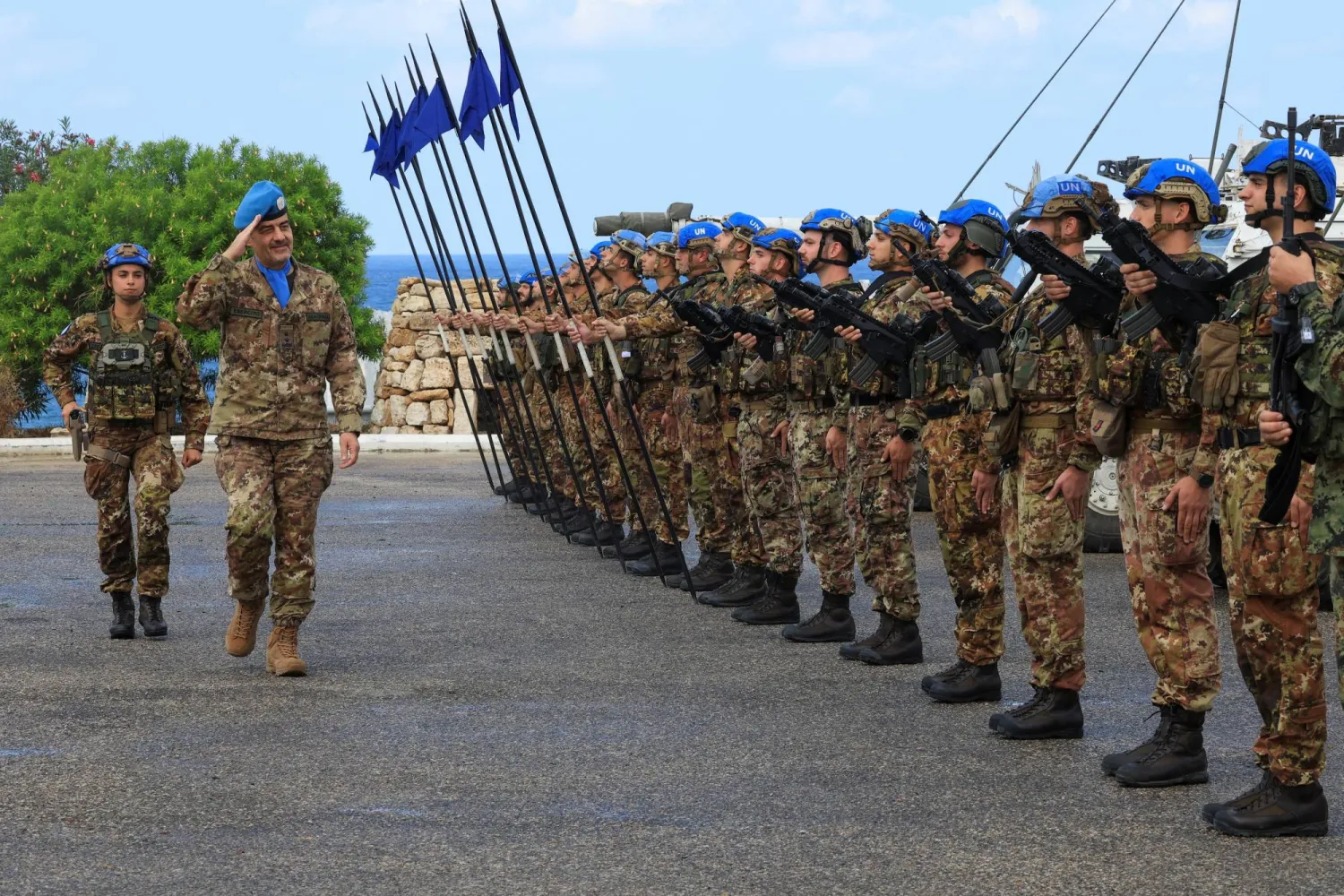
The resolution, which the US mission hopes to bring to a vote next week, does not invoke Chapter VII of the UN Charter - allowing the use of military force - but instead relies on Chapter VI, which governs peaceful settlement of disputes. This would make it similar to the UN Interim Force in Lebanon (UNIFIL).
A Western diplomat told Asharq Al-Awsat: “We are committed to ensuring the rapid implementation of the second phase of President Trump’s plan. Consultations are ongoing with the US, European, and regional partners, but discussions remain inconclusive.”
Palestinian and Israeli officials have both expressed reservations.
Palestinian sources told Asharq Al-Awsat that the Palestinian Authority will consult with Arab states to seek amendments to the US draft. “We welcome the establishment of the force through the Security Council,” one official said, “but we want clearer terms regarding the mandate, duration, and the Authority’s role in enabling Palestinian governance.”
Israeli media, citing government sources, reported that while the draft leans toward Israeli preferences, Tel Aviv still opposes having the force created through a Security Council resolution.
Israel also objects to any Turkish participation, but might accept the inclusion of a Palestinian police unit.
Israeli officials believe that Indonesia, Pakistan, and Azerbaijan are likely to provide troops for the mission. Members of the Knesset’s Foreign Affairs and Defense Committee were recently briefed that soldiers from those countries - and possibly others - would form the initial composition of the proposed stabilization force.