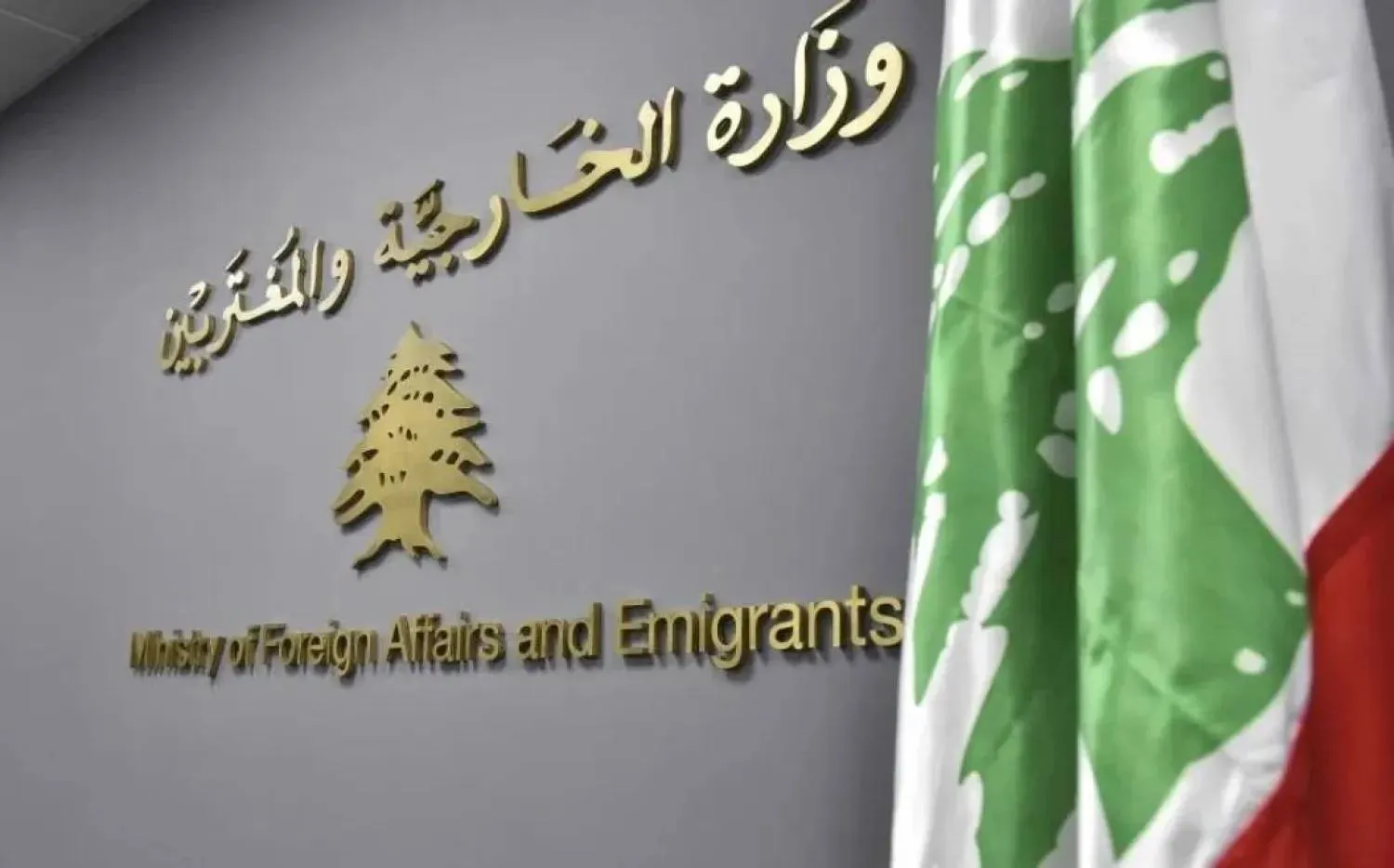

Lebanon's foreign ministry said on Tuesday it had withdrawn its approval of the Iranian ambassador's accreditation, giving him until Sunday to leave the country, drawing Hezbollah's condemnation.
The ministry said in a statement that it had summoned the Iranian charge d'affaires in Lebanon and informed him of "the Lebanese state's decision to withdraw approval of the accreditation of the appointed Iranian ambassador, Mohammad Reza Sheibani, and declare him persona non grata, demanding that he leave Lebanese territory no later than next Sunday".
The ministry said it had also summoned Lebanon's ambassador to Iran "in light of what the Lebanese state described as Tehran's violation of diplomatic norms and established practices between the two countries", after Beirut accused Iran's Revolutionary Guards of commanding Hezbollah's operations in its war against Israel.
The government has accused Hezbollah of dragging Lebanon to war after it fired rockets at Israel on March 2 in wake of the killing of Iran's supreme leader Ali Khamenei at the beginning of the conflict.
Israel has said that some of its strikes have targeted IRGC officials operating in the country.
Hezbollah called the expulsion of the ambassador a "sin", and demanded the authorities "immediately reverse" the move.
"Hezbollah calls on the President of the Republic and the Prime Minister to demand that the Minister of Foreign Affairs... immediately reverse this decision because of its dangerous repercussions," the Iran-backed group said in a statement, calling the move a "national and strategic sin".
A source from Hezbollah told AFP that "the foreign minister's decision violates the most basic diplomatic norms and is an insult to the Shiite community in Lebanon".
"The foreign minister must retract it, and we will ask the Iranian ambassador to remain in Beirut and consider the decision null and void," the source added.
Israeli Foreign Minister Gideon Saar welcomed Lebanon's decision to expel the envoy as a "justified and necessary step" and urged the government to take steps against Hezbollah.
The Foreign Ministry clarified in a separate statement that its decision does not constitute a severing of diplomatic relations with Iran, but rather "a measure against the ambassador for violating diplomatic protocol and his obligations as an appointed ambassador to Lebanon".
The ministry accused him of making statements "interfering in Lebanon's internal politics and evaluating the decisions taken by the government".
Earlier this month, Lebanon summoned the Iranian charge d'affaires for a meeting after the Guards claimed responsibility for a coordinated missile attack with Hezbollah on Israel.
Beirut decided on March 5 to ban any activity by the Iranian Revolutionary Guards in the country.
The government also took the unprecedented step of imposing a ban on Hezbollah military activities and called on the group to hand over its weapons to the state.
Israel has said it has struck Guards operatives in Lebanon in recent weeks, including on Monday.
On Tuesday, it said it had killed a member of the Quds Force overseas branch of Iran's Revolutionary Guards, Mohammed Ali Kurani, in a strike near Beirut the day before.
A Lebanese security source told AFP that Kurani was from Lebanon and a security officer in Hezbollah.