


Lebanon PM Says Working to Get Israeli Troop Withdrawal

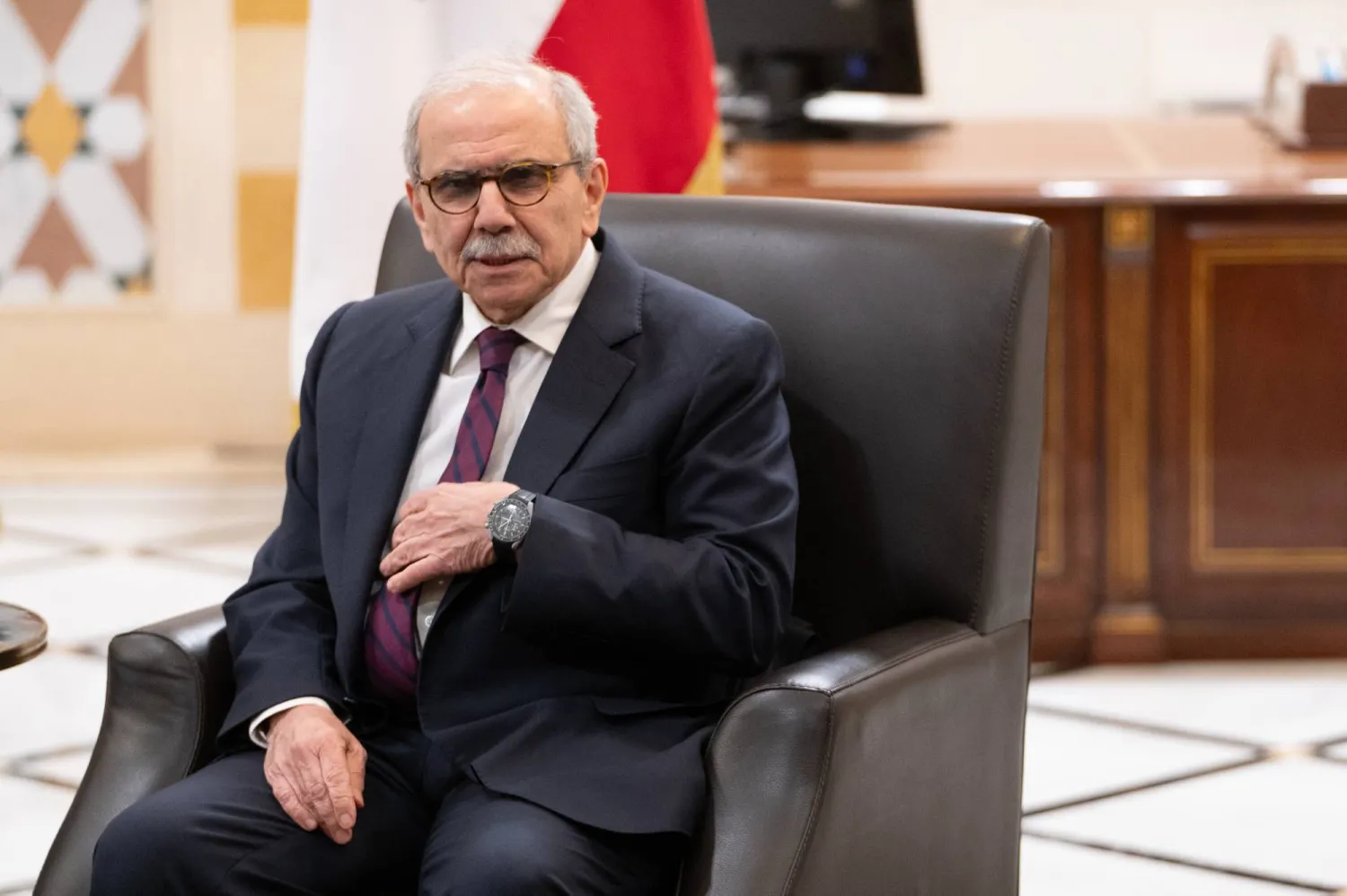
FILED - 16 February 2026, Lebanon, Beirut: Lebanese Prime Minister Nawaf Salam is pictured during a meeting at the Prime Minister's office. Photo: Markus Lenhardt/dpa
TT

Lebanon PM Says Working to Get Israeli Troop Withdrawal

FILED - 16 February 2026, Lebanon, Beirut: Lebanese Prime Minister Nawaf Salam is pictured during a meeting at the Prime Minister's office. Photo: Markus Lenhardt/dpa

Lebanese Prime Minister Nawaf Salam said Sunday he was working to stop the Israel-Hezbollah war, even as Israeli premier Benjamin Netanyahu told troops in south Lebanon that the fight there was far from over.

The Lebanese Red Cross said in a statement that one of its paramedics had been killed in the south, said AFP.

They said its teams had been "directly targeted by an Israeli drone" while on a humanitarian mission, even though "the ambulances and their crews bore the protective Red Cross emblem".

Secretary general of the International Federation of Red Cross and Red Crescent Societies, Jagan Chapagain, said he was "appalled and saddened" at the killing of a second Lebanese Red Cross volunteer in weeks.

The United Nations peacekeeping force UNIFIL said an Israeli tank rammed its vehicles on two occasions, "in one case causing significant damage".

Israel says the fragile temporary ceasefire in the wider Middle East war does not apply to its battle with Iran-backed Hezbollah in Lebanon.

It has kept up its attacks on the country as the militants fight back.

"We will continue to work to stop this war, to ensure the Israeli withdrawal from all our lands," Salam said in a televised address.

"We are continuing our efforts... to negotiate to stop the war," he added, ahead of planned talks on Tuesday in Washington between Lebanese, Israeli and US officials.

Lebanon was pulled into the Middle East conflict when Hezbollah fired rockets at Israel after US-Israeli strikes killed Iran's supreme leader.

Israel has responded with massive strikes and a ground invasion.

- 'Accountability' -

Netanyahu said Sunday that Israeli forces had eliminated the threat of an invasion by Hezbollah militants during a visit to troops in southern Lebanon.

But he added: "There is still more to do, and we are doing it.

"The war continues, including within the security zone in Lebanon," Netanyahu said in a video released by his office.

Israeli officials have repeatedly said that Israel wants to establish a "security zone" in south Lebanon to help prevent Hezbollah attacks.

Lebanon's state-run National News Agency (NNA) reported Israeli attacks on dozens of locations in the south on Sunday, with additional strikes on the adjacent West Bekaa area.

The health ministry raised the war's overall toll to more than 2,050 dead, including 165 children and more than 80 health workers.

The Lebanese Red Cross condemned attacks on its personnel as "clear and blatant violations of all provisions of international law".

Before Sunday's deadly mission, which also wounded another paramedic, "the necessary contacts were made with UNIFIL for protection and safe passage", it said.

Israel's military has repeatedly accused Hezbollah of using ambulances for military ends.

Lebanon's health ministry also said an Israeli strike on Qana killed five people, including three women, and wounded 25 others.

An AFP photographer in the southern town saw significant destruction as an excavator worked to clear debris and first responders carried a body out from under the rubble.

- 'Moral obligation' -

In south Lebanon's Bazuriyeh, Hassan Berro, a rescue worker from the Risala Scout association -- which is affiliated with the Hezbollah-allied Amal movement -- said: "Our emergency center was hit and completely destroyed, along with all its contents, including beds and medical equipment."

The AFP photographer saw windows shattered and debris covering several hospital beds in the building, where walls and ceilings were also damaged.

Also Sunday, the Israeli army accused Hezbollah of using a hospital compound in south Lebanon's Bint Jbeil "for military purposes".

Hezbollah said it had launched attacks on Israeli targets across the border and inside Lebanon, including against troops in Bint Jbeil, where the NNA reported heavy fighting.

Pope Leo XIV, who visited Lebanon late last year, expressed his closeness to the Lebanese people on Sunday.

He said there was a "moral obligation to protect the civilian population from the atrocious effects of war"


Jordan, Syria Sign 20 Agreements to Boost Ties

Jordan’s King Abdullah II receives the Syrian ministerial delegation participating in the Jordan-Syria Higher Coordination Council, in the presence of Crown Prince Hussein bin Abdullah II (Royal Court)
TT

Jordan, Syria Sign 20 Agreements to Boost Ties

Jordan’s King Abdullah II receives the Syrian ministerial delegation participating in the Jordan-Syria Higher Coordination Council, in the presence of Crown Prince Hussein bin Abdullah II (Royal Court)

Jordan and Syria signed more than 20 bilateral agreements and memorandums of understanding on Sunday, marking a significant step toward restoring strategic ties that had been frozen since the outbreak of the Syrian conflict in 2011.

Jordanian diplomacy has dealt pragmatically with restoring relations with Damascus after years of rupture caused by the war, which ended with the fall of the former Syrian regime and the departure of Bashar al-Assad to Moscow in late 2024.

Meetings of the second session of the Jordanian-Syrian Higher Coordination Council, held in Amman, reflected an advanced stage of renewed cooperation across a range of bilateral issues and a shared desire to achieve mutual economic gains.

A Jordanian government source told Asharq Al-Awsat that the talks, chaired by the two countries’ foreign ministers, resulted in the signing of more than 20 agreements and memorandums covering economic and key strategic projects. The source said the outcome demonstrated “the Syrian side’s seriousness in pursuing a genuine partnership with Jordan.”

The meetings take on added importance amid regional security, military and economic repercussions stemming from the ongoing conflict between Iran on one side and Israel and the United States on the other, as countries increasingly search for alternative trade routes to secure supply chains for goods and energy.

Jordan views its border with Syria as a gateway for exports to Türkiye and Europe, while Damascus sees Jordan as a safe corridor for its goods to Gulf countries.

Strategically, the cooperation is expected to support major projects such as electricity interconnection and a planned railway link that Jordan is preparing to launch in the near future. It also includes restoring Jordan’s water rights, which, according to sources, had been curtailed by the former Syrian authorities for around four decades.

Security remains a shared concern for both countries. During the Syrian conflict, Jordan bore the burden of securing its 375-kilometer border alone after southern Syria descended into instability due to the activity of militias and armed factions of various affiliations.

Officials say that progress on economic partnerships depends on maintaining stability in southern Syria. Jordan continues to support security efforts there, including closely monitoring smuggling activity and responding to threats along the border.

At a joint news conference on Sunday, Jordanian Foreign Minister Ayman Safadi and his Syrian counterpart Asaad al-Shaibani said defense and security coordination had made “significant progress” in addressing shared challenges, including drug and arms smuggling and attempts to undermine stability.

Safadi said the two sides had agreed on a joint roadmap aimed at reinforcing stability in Sweida and southern Syria.

Jordan’s King Abdullah II reaffirmed support for Syria’s efforts to preserve security, stability, sovereignty and territorial integrity during a meeting with the visiting Syrian ministerial delegation. Crown Prince Hussein bin Abdullah II was also present.

The king stressed the need to continue developing economic and trade relations and strengthening security cooperation in a way that serves mutual interests. He described the council’s second session as an important step toward advancing ties and called for effective implementation of the agreements reached.

The council covers 20 key sectors and aims to elevate Jordanian-Syrian relations to a comprehensive strategic partnership. Discussions addressed cooperation opportunities in water, transport and energy, with the king highlighting the importance of regional integration and joint Arab projects to enhance cooperation.

Safadi said the meetings reflected the political will of King Abdullah and Syrian President Ahmad al-Sharaa to strengthen bilateral relations and build an integrated strategic partnership.

He described the gathering as “the largest Jordanian-Syrian meeting in history,” noting that more than 30 ministers took part. He said agreements and memorandums had been signed and cooperation discussed across more than 21 sectors.

Safadi reiterated Jordan’s support for Syria’s reconstruction and its sovereignty over all its territory, describing the current moment as “historic” for Syria. He said Jordan would stand by Syria throughout the rebuilding process.

He also condemned what he described as Israeli actions undermining Syria’s security and called for continued joint efforts to confront shared challenges and threats.

For his part, Shaibani described Jordan as a “strategic partner” for his country. He said reconstruction in Syria would require between $250 billion and $400 billion, stressing the need for cooperation with Jordan and regional countries to address those needs.


Masoud Barzani’s Party Rejects Result of Iraqi Presidential Vote

Iraqi Parliament (X)
TT

Masoud Barzani’s Party Rejects Result of Iraqi Presidential Vote

Iraqi Parliament (X)

The Kurdistan Democratic Party (KDP), led by Masoud Barzani, has rejected the election of Nizar Amidi as Iraq’s president, worsening political tensions in the Kurdistan Region and across the country.

The party has instructed its representatives in the federal government and parliament to return to the region for consultations.

Kurdish sources close to the KDP allege that armed factions represented in parliament helped secure quorum for the vote. Electing a president requires a two-thirds majority, meaning at least 220 of 329 lawmakers must be present.

On Saturday, parliament elected Amidi, the candidate of the Patriotic Union of Kurdistan (PUK), after more than four months of deadlock driven by disputes between the two main Kurdish parties over the post, as well as broader disagreements over forming a new Kurdistan Regional Government.

The session was boycotted by the KDP and the State of Law Coalition, headed by former prime minister Nouri al-Maliki, underscoring widening divisions among Kurdish and Shiite factions within the Coordination Framework.

In a statement issued after the vote, the KDP said it would not recognize Amidi’s presidency and accused parliament of violating its own rules.

“The election process was conducted in a manner inconsistent with the council’s internal regulations,” the party said, arguing that the session agenda was set without proper adherence to procedure.

The KDP also objected to the selection of the candidate itself, saying the presidency is a national Kurdish entitlement rather than the prerogative of a single party. It accused the PUK of unilaterally nominating Amidi and securing backing from other Iraqi factions.

“We do not consider a person chosen in this way to represent the Kurdish majority,” the statement said.

The party added that its lawmakers and officials would return to the Kurdistan Region to “assess the situation and hold consultations,” without clarifying next steps or whether the move could further delay the formation of a regional government.

Days earlier, Barzani had warned against proceeding with the presidential vote before Shiite factions agreed on a candidate for prime minister. Writing on X, he said moving ahead on one constitutional post while leaving another unresolved was “unacceptable,” and called for a synchronized process ensuring participation by all parties.

Independent Kurdish journalist Saman Noah described the KDP’s response as unprecedented and likely to deepen an already severe political crisis in the Kurdistan Region.

“The current trajectory is unprecedented and will further complicate conditions in a region facing major structural challenges,” Noah wrote on Facebook, citing the failure to form a government for more than 18 months, a parliament effectively suspended for years, and worsening economic conditions.

He said recurring disputes over the presidency — often marked by party interests overriding broader Kurdish priorities — have significantly weakened Kurdish political leverage in Baghdad.

Questions have also emerged over whether the parliamentary session met quorum requirements.

Writer and researcher Kifah Mahmoud said the vote may have violated legal standards, citing lawmakers including Ikhlas al-Dulaimi who claimed fewer than 180 members were present.

“If accurate, that would fall well short of the required 220,” Mahmoud said, describing the session as a “serious breach” that risks further undermining trust in Iraq’s political process.


Bread Shortage Deepens in Gaza as Hamas Accuses Israel of ‘Engineering Starvation’

A Palestinian girl carries bread in Deir al-Balah, central Gaza Strip, last December. (AFP)
TT

Bread Shortage Deepens in Gaza as Hamas Accuses Israel of ‘Engineering Starvation’

A Palestinian girl carries bread in Deir al-Balah, central Gaza Strip, last December. (AFP)

A bread shortage in Gaza is worsening as Israeli restrictions on the entry of supplies continue to affect bakeries that had reopened following an October ceasefire.

The flow of aid and food supplies, including from the World Food Program (WFP), has declined further over the past month, amid Israeli measures that coincided with the outbreak of war with Iran.

Officials from Hamas accuse Israel of deliberately reducing aid as part of what they describe as a policy of “engineering starvation.”

Long queues at distribution points across Gaza underscore the difficulty of obtaining bread, with scuffles reported among residents vying for a single daily bundle.

Saed al-Laham, 41, from Al-Shati Camp west of Gaza City, said he spends more than three hours each day waiting in line for one bundle of bread, not enough for his family of six.

“Many times, I return to my tent, where I live with my family after our home was destroyed, without getting any bread because supplies run out and quantities are decreasing day by day,” he told Asharq Al-Awsat.

Flour is also increasingly scarce. A 20-kilogram sack that sold for about 20 shekels a month ago has surged to 140 shekels in recent days, he revealed.

Gaza is facing multiple crises alongside the bread shortage, including a sharp decline in already rationed cooking gas supplies. Distribution has slowed to once every three months instead of every six weeks, while firewood and other basic means of preparing food are largely unavailable.

Riham Salem, 52, from the Al-Nasser neighborhood in Gaza City, described similar struggles. She said she is forced, like many women, to vie with men in crowded lines to secure bread for her family of nine.

She has one sack of flour but cannot use it due to high firewood prices and the lack of gas and electricity.

Hassan Abu Riyala, deputy economy minister in the Hamas-run government, said Saturday that international support for bread production in Gaza had fallen by more than 60 percent, reducing daily output.

He noted that the territory consumes about 450 tons of flour per day. The WFP had been supplying 350 tons, but deliveries have dropped to about 200 tons in recent months.

“Israel controls the entry of goods and aid, allowing only limited quantities, including commercial flour, leading to a sharp decline in essential supplies,” he stated.

The WFP had been providing flour and diesel fuel to more than 30 contracted bakeries across Gaza, about 28 of which are still operating. But the drop in supplies is raising fears of renewed famine conditions, particularly as flour distribution to households by international and Arab organizations has largely stopped due to Israeli restrictions at border crossings.

Sources in the Hamas-run government and civil society groups said WFP officials had informed bakery owners they could no longer provide diesel to keep bakeries running, suggesting they import flour through private traders — a process also constrained by Israeli controls.

The Hamas-run government media office accused Israel of imposing a “total siege” on Gaza as part of a deliberate and escalating policy of “engineering starvation,” by tightly controlling the flow of essential goods, especially bread.

In a statement Sunday, it said the World Central Kitchen had halted its flour support entirely after previously supplying 20 to 30 tons of bread daily. It added that the World Food Program had reduced flour deliveries from 300 to 200 tons per day, while other organizations had also suspended bread and flour assistance, worsening the crisis.

About 30 bakeries are currently producing roughly 133,000 bundles of bread daily, including 48,000 distributed free and 85,000 sold at subsidized prices through 142 outlets. These quantities fall far short of demand, the statement read.

Hamas spokesman Hazem Qassem said continued restrictions on aid, including flour, are a “blatant violation” of the ceasefire agreement, which stipulated specific aid volumes that Israel has allowed only partially.

Separately, the “Global Sumud Flotilla,” a pro-Palestinian activist convoy, postponed its planned departure Sunday from Barcelona to Gaza due to bad weather, organizers said. The vessels will temporarily move to a nearby port until conditions improve.

Around 40 boats had been scheduled to depart Barcelona as part of a renewed attempt to reach Gaza, following a similar mission last year.
