Houthi Expansion in Western Yemen Brings Arrests and Crackdowns

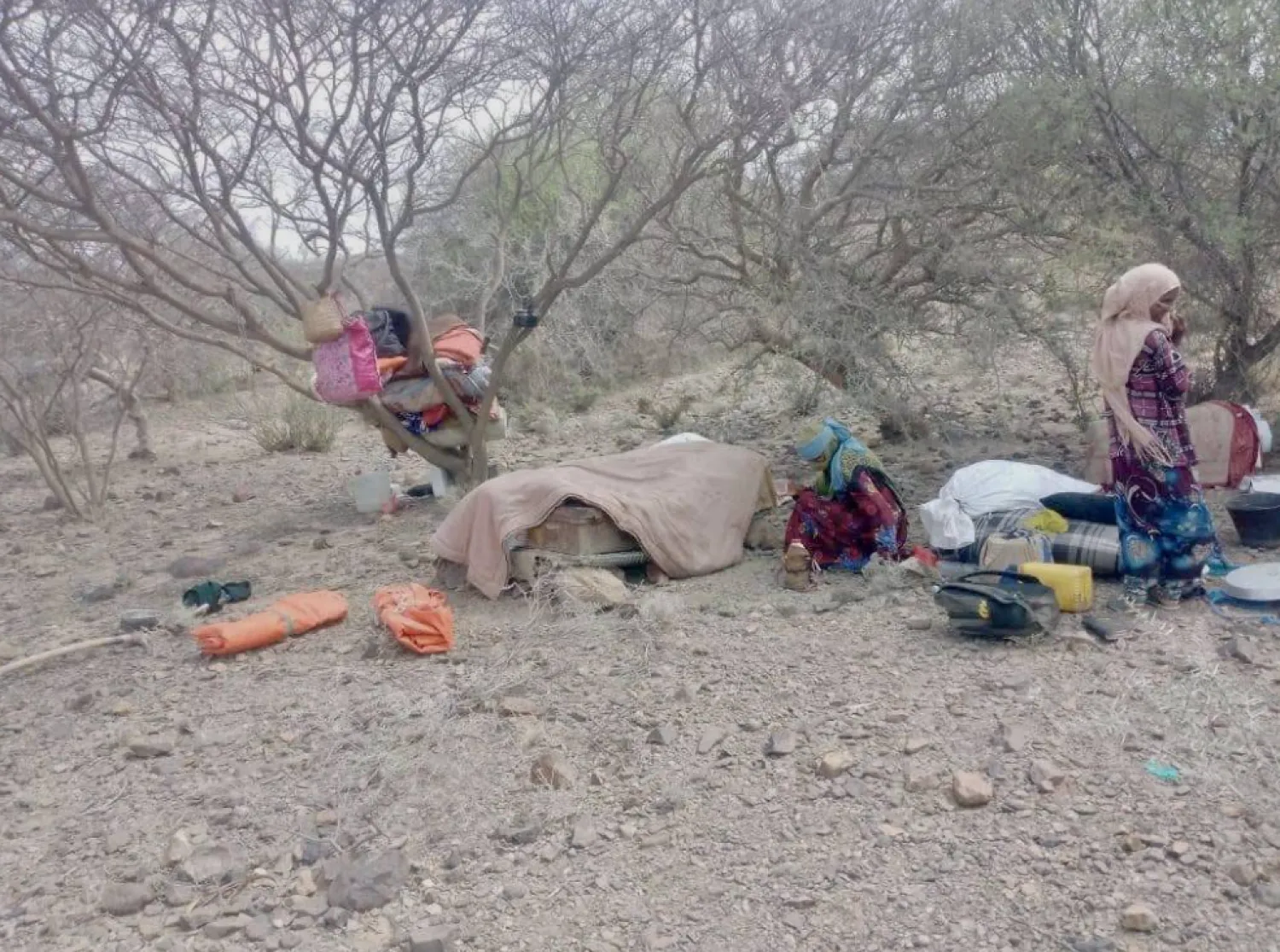
Trees became a refuge for those fleeing Houthi reprisals (local media)
TT

Houthi Expansion in Western Yemen Brings Arrests and Crackdowns

Trees became a refuge for those fleeing Houthi reprisals (local media)

With little time to think, thousands of civilians in western Taiz province and southern Hodeidah found themselves facing a choice between staying or leaving after the Houthis carried out raids and arrests in the villages and population centers they entered, amid fears of reprisals and looting targeting residents and their property.

Residents recorded distressing scenes of thousands of families fleeing villages and areas in western Taiz and southern Hodeidah. Some fled on foot, while others traveled in cars and on motorcycles, with some taking whatever livestock and belongings they could save.

Residents told Asharq Al-Awsat that for many families, displacement was not a planned decision but an urgent escape from fear, leaving behind their homes, land, and livelihoods.

Those unable to leave found themselves trapped in a state of panic and anxiety as raids and arrests continued, alongside reports of residents' property being looted and stolen.

According to accounts from local residents, areas including Al-Wazi'iyah, Hays, Al-Khokha, Al-Zuhari, Al-Haymah, Yakhtul, and Mokha, as well as the areas stretching along the coast between Al-Haymah and Mokha, have been experiencing turmoil and displacement since the Houthis entered them.

The accounts said Houthi fighters carried out raids and arrested a number of residents, while property was also looted and stolen. Other accounts reported that families were being held hostage and pressured to force relatives who were fighters to return and surrender themselves and their weapons.

According to the sources, the Houthis have carried out reprisals against residents in Mokha district in Taiz province and the city of Al-Khokha in Hodeidah province, accusing them of supporting the internationally recognized government. Others were targeted based on allegations made by Houthi operatives seeking to settle old scores with some of those targeted in the campaign.

The sources said Abdullah Al-Fadhli and Alaa Al-Omaisi, two Houthi security and intelligence officials in the area, are leading part of these campaigns.

Fleeing into the Unknown

In Al-Wazi'iyah district, residents said thousands of people were displaced as the Houthis entered the district, fleeing what they described as the group's brutality and arrests in difficult humanitarian conditions. Displacement from the district and other areas is still continuing.

Abdul Jabbar Ali Hadi, a resident of the area, said the events unfolded suddenly, leaving residents with little time to absorb what was happening.

"No one understood what had happened. Within moments, it was as if the whole district had erupted, and everyone wanted to leave," he told Asharq Al-Awsat.

Abdul Jabbar described a scene in which fear and chaos became intertwined. While some residents tried to save their children, others attempted to take their livestock with them. Women were crying as everyone searched for a way out. He added that those who could not find a vehicle had to leave on foot, wearing nothing but the clothes they had on.

Abdul Jabbar was among those who left the area in search of a safe place, but he was initially unable to take his family with him. He said he reached safety in the clothes he was wearing after his mother insisted on not leaving without her sheep.

His mother was forced to walk on foot with her sheep until evening, when she reached the Al-Sabriyah area, where she spent the night. At 10 p.m., Abdul Jabbar took a motorcycle to look for her. After finding her, he returned to his location, and the family continued their journey the following morning.

The man described those moments as filled with sorrow, saying the departure left behind "pain, memories, a life, land whose soil we loved, homes, belongings, love and loyalty."

Along the way, he saw vehicles carrying displaced families moving without pause, motorcycles, and hundreds of displaced people walking on foot, alongside sheep, cows, camels, and donkeys, in a scene reflecting the scale of the chaos and suffering accompanying the flight.

Lost Children and Displaced People Without Shelter

After Abdul Jabbar contacted his family, he was told that fuel had become scarce in Al-Wazi'iyah, raising fears about their ability to continue the journey. He was forced to rent a motorcycle from a distant area and send a fuel container to his family. Once it arrived, the family was able to set out on a journey lasting several hours along rough roads before reaching a safe place.

The risks accompanying the displacement went beyond the loss of property. Abdul Jabbar recalled that a girl no older than five became separated from her family during the journey. After her disappearance was reported through social media groups, her family spent hours anxiously searching for her before she was reunited with them the following day.

The girl's story was one of many manifestations of the fear experienced by families, at a time when keeping family members together and getting them to safety had become a priority above everything else.

Abdul Jabbar summed up the experience of displacement in words reflecting the scale of what displaced families lost within a matter of hours. He said they left without money, provisions, or extra clothes, carrying nothing but what he described as "a person's determination, resilience, patience, and dignity."

He added that they were prepared to endure anything, even if they had to live under trees. But what hurt him most, he said, was seeing the tears of the elderly and "the humiliation of men."

The displacement journey is not simply a move from one place to another. For families forced to leave, it is a sudden uprooting from an entire way of life, including homes, memories, livelihoods, and possessions, and replacing it with an unknown road marked by fear and hardship.

Urgent Need

As displacement continues, families who have fled their areas remain in urgent need of safety, shelter, food, water, and fuel, as well as protection and the reunification of families separated during their flight, particularly children and elderly people.

Against the backdrop of this suffering, the harshest reality is that many civilians did not leave in search of a better life. They left because staying was no longer a safe option.

In a related development, local authorities in the interim capital Aden and the provinces of Abyan and Lahj issued a joint statement saying that the armed forces had overcome the state of shock and confusion, regained their balance, and were fully prepared to confront any challenges, amid what they described as popular support and social momentum to confront the Houthis and thwart the ambitions of "Iran's project in the region."

The statement said authorities would continue to monitor security and public services, ensure state institutions continued to perform their duties, confront terrorist threats, protect citizens and property, and maintain security and stability in coordination with the relevant government, security, and military authorities.

The authorities called on residents to remain calm and vigilant, ignore rumors, obtain information from official sources, cooperate with the relevant authorities, and report any suspicious movements or activities.

They pledged to make the security and stability of citizens their highest priority, affirming that they would continue to fulfill their duties and responsibilities to safeguard security in Aden, Abyan, and Lahj and ensure that state institutions continued to carry out their functions.


Baghdad Suspects Israel Targeted Chinese Air Defense Systems Held by Iraqi Factions

An image taken from a video released by Iraqi factions showing a drone they used in an attack on a US base.
TT

Baghdad Suspects Israel Targeted Chinese Air Defense Systems Held by Iraqi Factions

An image taken from a video released by Iraqi factions showing a drone they used in an attack on a US base.

Sources said Baghdad suspects that two sites storing Chinese-made man-portable air defense systems were targeted in airstrikes last week, as officials examine an intelligence assessment suggesting that the US-Israeli war against Iran may have already resumed, even before the official start of hostilities, but on Iraqi soil.

On October 17, the Popular Mobilization Forces (PMF) announced that it had contained a fire caused by an explosion at a stockpile of damaged ammunition inside one of its facilities in the East Canal area of Baghdad. It said five people sustained minor injuries and that an investigation was underway to determine the circumstances of the incident.

More than a week has passed without the findings of the investigation being announced. However, an Iraqi government official who was not authorized to speak publicly said the relevant authorities were still examining the circumstances of the explosion.

Chinese Air Defense Systems

Sources told Asharq Al-Awsat that the two sites were suspected of having come under attack, destroying a large shipment of Chinese-made air defense systems that had recently arrived from Iran and been transferred to Iraqi factions loyal to Tehran.

One source explained that "the armed faction that selected the site to store the air defense systems believed it would be extremely difficult to access or detect."

The source added that "the suspected attack occurred shortly after the shipments arrived at the two storage sites."

Another source revealed that the explosion followed a series of blasts that began on October 1 and targeted warehouses belonging to armed factions in various areas around Baghdad, including facilities storing drones designed for suicide attacks and reconnaissance.

According to the sources, several armed factions have been actively transferring advanced air defense systems and drones from Iran to Iraq over the past few weeks and storing them at facilities under their control.

Unconfirmed reports had suggested that secret shipments from China to Iran included heat-seeking man-portable air defense systems designed to counter low-flying aircraft, including helicopters and drones.

On July 28, China's Foreign Ministry categorically denied reports of deals involving the sale or shipment of Chinese-made missiles and air defense systems to Iran.

Repositioning

The factions' activities coincided with the participation of several of them in the government led by Ali al-Zaidi, following reports that US approval had enabled their inclusion after they were granted an extension until June 30, 2027, to comply with a deadline for bringing weapons under state control.

Two people close to the leader of an armed faction told Asharq Al-Awsat that "Iran-aligned groups were exploiting the declared truce with the Americans to reposition themselves and transfer strategic weapons."

Israel May Be Behind the Attack

It remains unclear how the strikes were carried out, whether by fighter jets or drones.

Conflicting reports have described sorties by Israeli fighter jets, supported by aerial refueling aircraft, through Iraqi airspace near the Iranian border. However, this information has not been independently confirmed.

A security official told Asharq Al-Awsat that authorities in Baghdad had sufficient grounds to believe Israel was behind the strikes on the warehouses, although they had yet to determine how the attacks were conducted.

An Iraqi official said the government was focused on investigating the incident because of the extensive damage inflicted on the two sites and surrounding areas.

The official confirmed that the government did not yet possess conclusive information identifying those responsible for the attack.

He added that Prime Minister Ali al-Zaidi and senior military commanders were working to gather further information about the strikes and determine whether they were linked to reports of Israeli violations of Iraqi airspace that began after the withdrawal of coalition forces on September 30, 2026.

The information, including reports that the air defense systems had reached Iraq, could not be independently verified.

Asharq Al-Awsat sought comment from the Iraqi government spokesperson and security media officials regarding the strikes, the extent of the damage and whether investigators had uncovered evidence identifying those responsible. No response had been received by the time this report was prepared.

The War May Have Already Begun

A senior political adviser said the attack reflected an assessment within Iraqi intelligence circles that the resumption of the US-Israeli war against Iran may already have begun, albeit quietly and without an official announcement, on Iraqi territory.

According to this assessment, the operation involves targeting the supply lines of armed factions and disrupting weapons shipments to prevent them from participating in any renewed regional confrontation.

A senior figure in the Coordination Framework said leaders of ruling political parties had believed for weeks that a renewed war between Washington and Tehran would begin with the complete destruction of the military capabilities of Iraqi armed factions.

Iraqi factions placed particular emphasis on violations of Iraqi airspace when a truce was announced in conjunction with the withdrawal of US forces.

On September 30, the secretary-general of Kataib Hezbollah announced the group's commitment to suspending military operations but excluded what he described as "attacks involving aircraft and hostile violations of airspace" until government air defenses were fully established.

On Saturday, the group calling itself the Islamic Resistance in Iraq said it had "documented 171 violations of Iraqi airspace by combat and reconnaissance aircraft since the beginning of October 2026."

The Coordination Framework official told Asharq Al-Awsat that Iranian Revolutionary Guard Corps officials had instructed leaders of Iraqi armed factions to step up preparations to establish a defensive line "against hostile combat aircraft."


Israeli Forces Displace Hebron Families after Deadly Attack

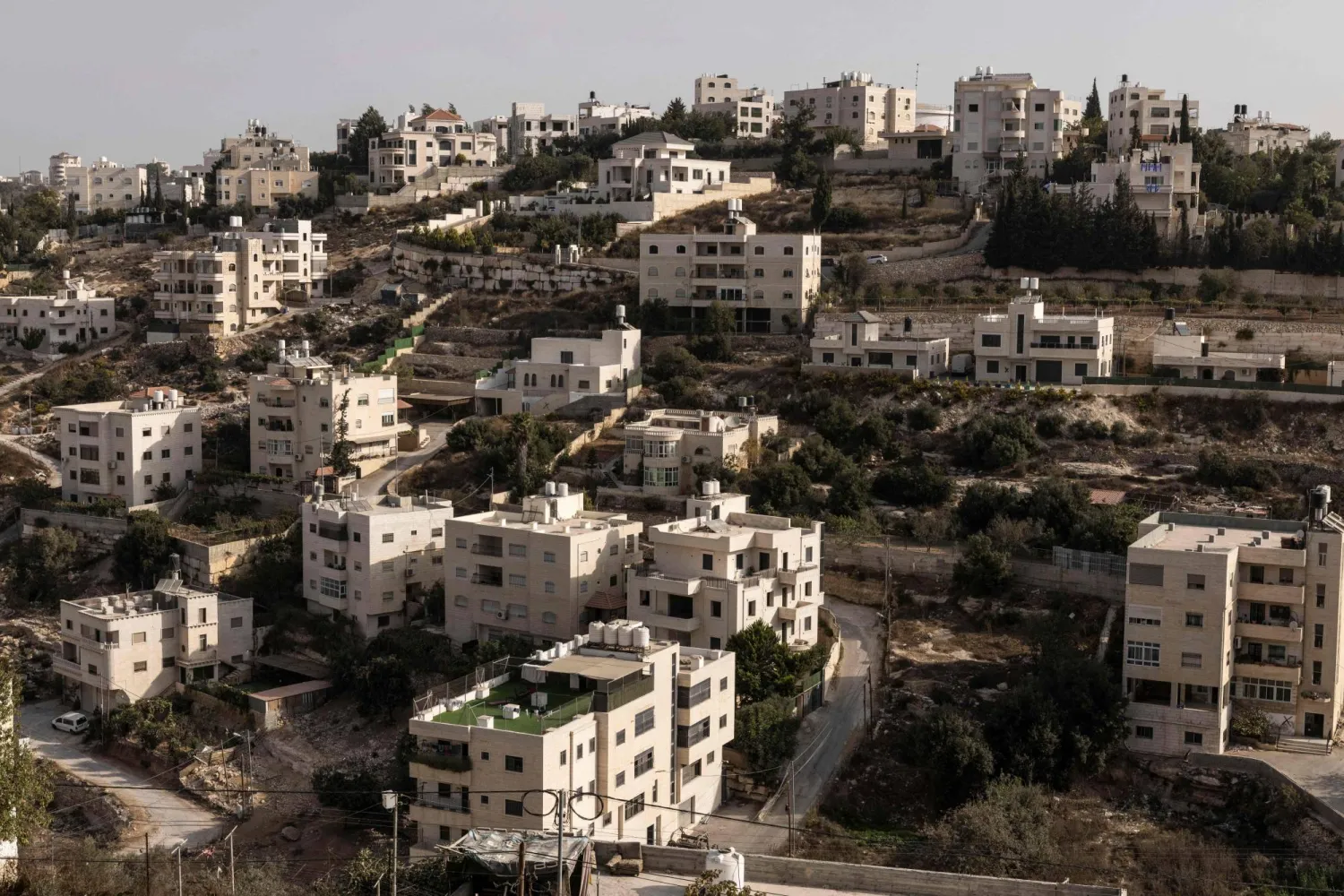
This picture shows empty residential buildings after the Israeli army forced Palestinians to evacuate the Ein Deir Baha neighborhood in occupied West Bank city of Hebron on October 24, 2026. (Photo by JOHN WESSELS / AFP)
TT

Israeli Forces Displace Hebron Families after Deadly Attack

This picture shows empty residential buildings after the Israeli army forced Palestinians to evacuate the Ein Deir Baha neighborhood in occupied West Bank city of Hebron on October 24, 2026. (Photo by JOHN WESSELS / AFP)

Israeli forces pushed into the occupied West Bank city of Hebron on Saturday and displaced around 250 families, some in the middle of the night, vowing to exact a heavy price for a deadly attack on soldiers.

The Palestinian Authority called for international pressure on Israel to protect residents, who said soldiers announced the evacuations over loudspeakers late at night as they packed what they could and left.

Days before tight elections, Prime Minister Benjamin Netanyahu said he was planning an operation on a scale not seen since Israel first occupied the West Bank in 1967, after Palestinian militants killed two Israeli soldiers on Friday at a checkpoint.

In the Hebron neighbourhood of Ein Deir Baha, nestled between two hills, vacated buildings were marked by X's and the streets were deserted, save a pair of Israeli military vehicles. Israeli flags were draped on a house on the slope apparently taken over by troops.

Higazi Shawer al-Tamimi, 70, a shopkeeper who sells live chickens and feed and plays a leadership role in the neighbourhood, said he was awakened at 1:00 am by soldiers and a senior officer who said he had to leave.

"I asked them how long the evacuation would last. They said: 'Until further notice.'"

He told AFP he had only short time to pack, adding that for some residents, getting out of the neighbourhood was an ordeal.

"For example, my wife's mother, who is 90 years old and lives in the area, had to be carried out because she is ill," he said.

- 'Why should I be displaced?' -

To Tamimi, this is only happening because Netanyahu wants to win the election on "the blood of the Palestinian people".

He said people were not going anywhere. "I have lived through all the stages of the occupation, and I will die here."

The Palestinian Authority said it was mobilising its diplomats to seek "urgent international action that goes beyond condemnation" to prevent forced displacement.

Tamimi's brother, Khaled Shawer al-Tamimi, 68, was staying with his son after the evacuation order.

"The army was announcing through loudspeakers: 'Leave the area.' So we left."

He told AFP he was surprised to hear Friday's assailants came from the neighbourhood, which he described as middle-class and law-abiding.

"We have never seen or even heard a single gunshot being fired," he said from his son's sitting room as children flitted about.

"Why should I be displaced from my house?" he continued. The attackers "are the ones who carried out the act, and if the Israeli government wants to punish them, it can punish them."

Israeli forces have already demolished some buildings in the immediate vicinity of where the attack took place, and the Tamimis said they did not know if their homes would meet the same fate.

Hebron governor Khaled Dudin told AFP the army started in the attackers' neighbourhood "but there is no guarantee that the operation will not expand", calling it a form of "collective punishment".

The governor said 150 families had been affected, while Hebron mayor Youssef al-Jaabari and local activist Issa Amro put the figure at 250.

- Netanyahu promises PA 'surprise' -

The Israeli military said it was "conducting precise, targeted and thorough searches" focused on the area of the two gunmen, who were both killed in a firefight. It added that the operation would last several days.

But Netanyahu suggested that bigger action was coming.

Asked if he agreed with the idea of dismantling the Palestinian Authority, as has been suggested by his far-right national security minister Itamar Ben Gvir, Netanyahu referred to Israeli military operations in Gaza, Lebanon, Syria and Iran.

"We transformed the Middle East," he said, repeating a common campaign refrain, in an interview with i24News.

"There is a very big surprise for the Palestinian Authority as well."

There is no evidence that the Palestinian Authority had any involvement in Friday's attack.

Netanyahu has linked the assailants to Hamas, the militant group in Gaza that carried out the October 7, 2023 attack, the deadliest in Israel's history.

Hamas, while not claiming credit, hailed Friday's attack on soldiers and called on Palestinians to carry out more.

The attack came amid rising tensions in the West Bank as Israeli settlers, who enjoy strong support from Netanyahu's far-right allies, ramp up seizures of Palestinian land and attacks.

Rights group Yesh Din reported 672 incidents of settler violence over the past 26 days, nearly half related to the annual olive harvest.

Polls show Netanyahu is neck and neck with an opposition bloc led by Gadi Eisenkot, a centre-right former military chief who also opposes a Palestinian state but has promised to crack down on settler violence.


Hezbollah Renews Pledge Not to Intervene in Support of Tehran

Lebanese Parliament Speaker Nabih Berri during a session to discuss the government (National News Agency)
TT

Hezbollah Renews Pledge Not to Intervene in Support of Tehran

Lebanese Parliament Speaker Nabih Berri during a session to discuss the government (National News Agency)

Lebanese are watching closely to see how Hezbollah will respond if US President Donald Trump follows through on his threat to launch a "devastating" military strike against Iran after the US midterm elections.

The question is whether the Lebanese group will honor its pledge not to intervene in support of Tehran this time or repeat what happened last March, when it fired six rockets at Israel in retaliation for the assassination of Iranian Supreme Leader Ali Khamenei, despite having previously assured Parliament Speaker Nabih Berri that it would stay out of the conflict.

Hezbollah Will Not Intervene to Support Iran

Asharq Al-Awsat has learned that Hezbollah has once again informed Berri that it will not intervene in support of Iran if war breaks out. Berri subsequently conveyed this assurance to President Joseph Aoun.

Iranian Deputy Foreign Minister Saeed Khatibzadeh also told a group of lawmakers aligned with the Shiite duo during his recent visit to Beirut that Tehran would not ask Hezbollah to intervene if the United States attacked Iran in accordance with Trump's threat.

He said Iran was capable of defending itself and had "made considerable progress in preparing to prevent the attack from achieving its objectives."

Lebanese parliamentary sources told Asharq Al-Awsat that Khatibzadeh "was clear that Iran would not seek Hezbollah's assistance given the imbalance of power between the group and Israel, since its intervention would not change the course of the confrontation."

The sources said Khatibzadeh told the lawmakers that Iran understood the delicate situation in Lebanon and had no intention of asking Hezbollah to involve itself in an unequal confrontation.

They pointed to a US warning conveyed to Aoun during a telephone call with Secretary of State Marco Rubio, which the Lebanese president subsequently relayed to Berri and Prime Minister Nawaf Salam.

The sources said Hezbollah could not afford the consequences of a backlash from its own support base, prompting it to exercise caution and align itself with Berri's position.

The group would be unable to absorb another wave of displacement resulting from Israeli Defense Minister Israel Katz's threat to expand the security zone in southern Lebanon, potentially extending attacks to Beirut's southern suburbs and displacing approximately one million Shiites.

Hezbollah is already struggling to accommodate displaced residents, providing financial assistance to ease the pressures they face.

The sources stressed that the broader Shiite community would not remain silent if Hezbollah decided to intervene for a second time in support of Iran, as it did last March in violation of its pledge to Berri.

That reversal embarrassed Berri in his dealings with Aoun and Salam, after he had assured both leaders that Hezbollah would not intervene.

Berri had based those assurances on a message from Hezbollah Secretary-General Naim Qassem, conveyed through regular communication between Qassem's political aide, Hussein Khalil, and Berri's political adviser, MP Ali Hassan Khalil.

Intervention Would Trigger a Crisis Within the Shiite Duo

The sources said Qassem's failure to honor his commitment not to intervene had created a crisis of confidence within the Shiite duo, the alliance between Hezbollah and Berri's Amal Movement.

The dispute became public and raised legitimate questions about who actually makes decisions within Hezbollah and whether the Iranian Revolutionary Guard Corps holds the ultimate authority, given its influence inside the group.

They noted that Hezbollah's leadership had initially informed the relevant parties, particularly Berri, that the group had nothing to do with the rocket launches.

However, it refrained from issuing a public statement to that effect, which could have enabled Washington to intervene with Israel to prevent a retaliatory response.

The sources added that although Hezbollah's leadership had avoided issuing a statement, Berri was surprised when the group's military media office released an announcement claiming responsibility for the rockets in retaliation for Israel's assassination of the elder Khamenei.

Israel subsequently expanded its occupation to include territory south of the Litani River, extending toward Beaufort Castle and the surrounding towns.

No Direct Communication Between Berri and Qassem

The sources also reflected on Berri's remarks that his relationship with Hezbollah had been closer under its former secretary-general, Hassan Nasrallah, and that there was neither an older nor a younger brother in the relationship.

They said Berri had maintained direct communication with Nasrallah, who possessed the ability to intervene with Iran's leadership and secure a response to Berri's concerns about developments in Lebanon and the regional axis of resistance.

The sources explained that Lebanon's current security conditions, particularly the increasing number of Israeli assassinations targeting Hezbollah's political and military leaders, do not permit direct communication between Berri and Qassem.

Instead, communication takes place daily through their respective aides.

This has prevented the relationship from developing the level of personal political chemistry needed to contain emerging disagreements, unlike the relationship that existed between Berri and Nasrallah.

Political Coexistence Within the Shiite Duo

According to the sources, relations between the two pillars of the Shiite duo are governed by a form of political coexistence, or cohabitation, in which both sides maintain their differences while seeking to prevent clashes between their supporters, although such confrontations have occasionally occurred.

The sources said Berri's remarks about his relationship with Hezbollah were also directed at other political forces, encouraging them to meet him halfway rather than treating the Shiite duo as a single political party with which compromise is impossible.

They quoted Berri as telling visitors that Lebanon currently faces two enemies: Israeli occupation and sectarianism.

This, they said, explains his continued emphasis on strengthening domestic stability, avoiding inflammatory rhetoric, preventing divisions among Lebanese communities and addressing the public in a moderate tone.

Berri opposes attempts by political factions to score points against the Shiite duo under the pretext that settling political scores with the alliance is necessary.

Visitors quoted him as saying that resisting Israeli occupation, which could be prolonged, requires all parties to meet halfway and focus on strengthening the domestic front by prioritizing national unity.

That, he argued, requires everyone to move away from the sectarian rhetoric that dominates political discourse.

According to the sources, Berri differs from Hezbollah in both words and actions.

He serves as a political pillar supporting the government's survival and continuity and has not hesitated to intervene when necessary to preserve civil peace, which he considers a red line, alongside the military institution.

This explains his insistence on rejecting the use of street protests to bring down the government, as well as his efforts to encourage Hezbollah to engage in dialogue with Aoun.

Although Berri does not support direct negotiations with Israel, the sources said his position differs from that of his ally in several respects.

Beyond maintaining communication with Aoun and Salam, he rejects threats and accusations of treason.

He has also criticized Hezbollah for failing to respond to calls to withdraw from the Ali al-Taher hills to facilitate the deployment of the Lebanese army.

Other differences include Berri's opposition to Hezbollah's military intervention in support of Gaza and Iran, his support for ministers affiliated with his movement who endorsed the principle of exclusive state control over weapons, and his backing of the ban on Hezbollah's military and security wing.

His parliamentary bloc also voted to grant the government confidence for a third time, unlike Hezbollah lawmakers, who withdrew from the session.

The sources expressed surprise that other political forces had not shown greater openness toward Berri.

They questioned with whom a political settlement could be reached, should conditions eventually allow one to emerge, if Berri continued to be included in the political campaigns directed against Hezbollah.

They argued that engaging with Berri was more necessary than ever, particularly because direct channels of communication with Hezbollah remain severed.

This explains why Arab and foreign envoys visiting Beirut continue to meet him.

It is not because Berri carries a mandate from Hezbollah, which sometimes disregards his commitments, but because of his position within Lebanon's political system and his considerable influence within the Shiite political landscape.

His approach to major issues on Lebanon's political agenda often differs from Hezbollah's.

The latest example was his intervention to prevent an internal government crisis over whether explosives seized in Dahr al-Baydar should be referred to the Judicial Council before investigations were completed.

Berri and his lawmakers refrained from taking a position on the matter out of consideration for Hezbollah.

The question remains: Will Hezbollah honor its pledge this time, or will it once again intervene in support of Iran under pressure from the Iranian Revolutionary Guard Corps?