



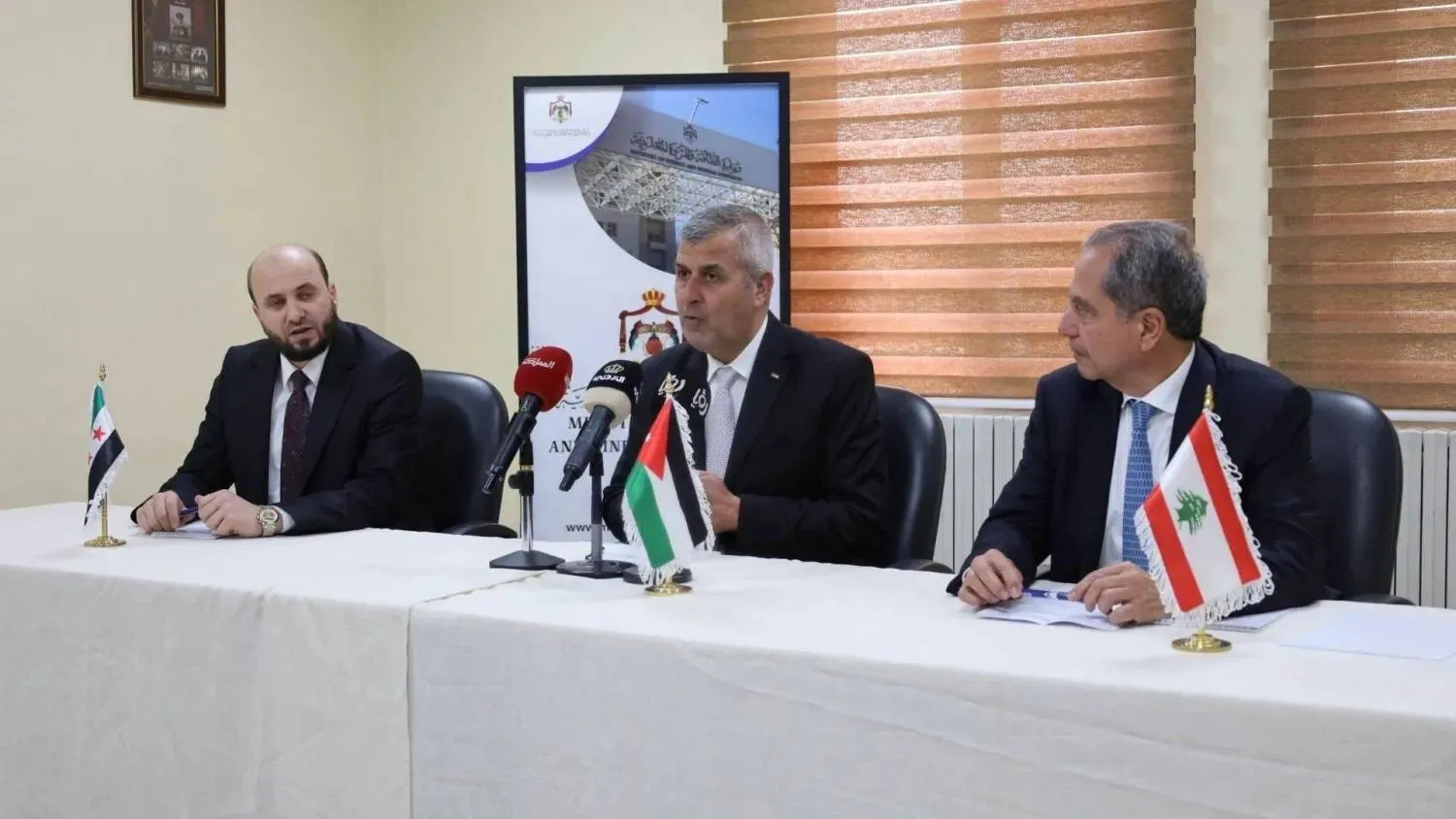

Jordan’s Energy Minister Saleh al-Kharabsheh announced on Monday that an agreement has been reached for a gas exchange between Jordan, Syria and Lebanon, using infrastructure in Amman to import liquefied natural gas before pumping it to Syria through the Arab Gas Pipeline.
The Jordanian capital hosted a high-level trilateral ministerial meeting on Monday bringing together Kharabsheh, Syrian Energy Minister Mohammed al-Bashir, and Lebanon’s Energy and Water Minister Joe Saddi.
The meeting set the stage for final steps on electricity interconnection projects and natural gas supplies.
As Jordan moves to cement its position as a regional energy hub, Syria and Lebanon appear closer to benefiting from the rehabilitation of the Arab Gas Pipeline and long-stalled electricity interconnection networks.
Syria signed several agreements in January to secure gas for power generation, including a deal to import around 140 million cubic feet per day from Jordan to support its electricity grid. It also signed two memorandums of understanding with Egypt to supply natural gas and petroleum products for electricity generation.
Kharabsheh said joint efforts had reached an advanced stage, paving the way for full implementation details to be announced soon.
Technical teams have completed the necessary studies to rehabilitate networks, he added, stressing that cooperation has moved beyond planning to tangible progress.
This includes importing global gas via Jordan, regasifying it and pumping it into Syria, helping stabilize the country’s energy system.
He said work is now focused on completing similar arrangements with Lebanon after gas networks are repaired, to ensure a smooth transition toward comprehensive electricity interconnection projects.
Bashir said progress had been made in rehabilitating key sections of the Arab Gas Pipeline, which has positively impacted the stability of Syria’s electricity grid and improved service levels.
On electricity interconnection, he noted that several links with Lebanon are ready and technical assessments with Jordan have been completed.
Damascus is working to remove remaining technical obstacles to ensure the rapid transit of gas and electricity to Lebanon, supporting its power generation.
Infrastructure in Syria and Jordan will be used to improve gas supplies to Lebanon, he added.
Saddi described the trilateral cooperation as “an indispensable strategic option” to rebuild the country’s struggling energy sector on sustainable foundations.
He expressed optimism about a near-term timeline that would allow Lebanon to access reliable and lower-cost energy sources, easing the heavy economic burden caused by the fuel crisis and poor power generation.
The ministers stressed that the cooperation goes beyond technical aspects, representing a model for regional integration serving the strategic interests of the three countries.
They agreed to maintain close coordination to finalize contractual arrangements ahead of the full flow of energy, in a move expected to help ease the geopolitical “energy shock” affecting the region.


