


Faith Ringgold, Pioneering Black Quilt Artist and Author, Dies at 93

Artist Faith Ringgold poses for a portrait in front of a painted self-portrait during a press preview of her exhibition, "American People, Black Light: Faith Ringgold's Paintings of the 1960s" at the National Museum of Women in the Arts in Washington, June 19, 2013. (AP)
TT

Faith Ringgold, Pioneering Black Quilt Artist and Author, Dies at 93

Artist Faith Ringgold poses for a portrait in front of a painted self-portrait during a press preview of her exhibition, "American People, Black Light: Faith Ringgold's Paintings of the 1960s" at the National Museum of Women in the Arts in Washington, June 19, 2013. (AP)

Faith Ringgold, an award-winning author and artist who broke down barriers for Black female artists and became famous for her richly colored and detailed quilts combining painting, textiles and storytelling, has died. She was 93.

The artist’s assistant, Grace Matthews, told The Associated Press that Ringgold died Friday night at her home in Englewood, New Jersey. Matthews said Ringgold had been in failing health.

Ringgold’s highly personal works of art can be found in private and public collections around the country and beyond, from the Smithsonian’s National Museum of American Art to New York’s Museum of Modern Art and Atlanta’s High Museum of Fine Art. But her rise to prominence as a Black artist wasn’t easy in an art world dominated by white males and in a political cultural where Black men were the leading voices for civil rights.

A founder in 1971 of the Where We At artists collective for Black women, Ringgold became a social activist, frequently protesting the lack of representation of Black and female artists in American museums.

“I became a feminist out of disgust for the manner in which women were marginalized in the art world,” she told The New York Times in 2019. “I began to incorporate this perspective into my work, with a particular focus on Black women as slaves and their sexual exploitation.”

In her first illustrated children’s book, “Tar Beach,” the spirited heroine takes flight over the George Washington Bridge. The story symbolized women’s self-realization and freedom.

The story is based on her narrative quilt of the same name now in the permanent collection of the Solomon R. Guggenheim Museum in New York.

While her works often deal with issues of race and gender, their folk-like style is vibrant, optimistic and lighthearted and often reminiscent of her warm memories of her life in Harlem.

Ringgold introduced quilting into her work in the 1970s after seeing brocaded Tibetan paintings called thangkas. They inspired her to create patchwork fabric borders, or frames, with handwritten narrative around her canvas acrylic paintings. For her 1982 story quilt, “Who’s Afraid of Aunt Jemina,” Ringgold confronted the struggles of women by undermining the Black “mammy” stereotype and telling the story of a successful African American businesswoman called Jemima Blakey.

“Aunt Jemima conveys the same negative connotation as Uncle Tom, simply because of her looks,” she told The New York Times in a 1990 interview.

Soon after, Ringgold produced a series of 12 quilt paintings titled “The French Collection,” again weaving narrative, biographical and African American cultural references and Western art.

One of the works in the series, “Dancing at the Louvre,” depicts Ringgold’s daughters dancing in the Paris museum, seemingly oblivious to the “Mona Lisa” and other European masterpieces on the walls. In other works in the series Ringgold depicts giants of Black culture like poet Langston Hughes alongside Pablo Picasso and other European masters.

Among her socially conscious works is a three-panel “9/11 Peace Story Quilt” that Ringgold designed and constructed in collaboration with New York City students for the 10th anniversary of the Sept. 11 attacks. Each of the panels contains 12 squares with pictures and words that address the question “what will you do for peace?” It was exhibited at the Metropolitan Museum of Art in New York.

In 2014, her “Groovin High,” a depiction of a crowded energetic dance hall evocative of Harlem’s famous Savoy Ballroom, was featured on a billboard along New York City’s High Line park.

Ringgold also created a number of public works. “People Portraits,” comprised of 52 individual glass mosaics representing figures in sports, performance and music, adorns the Los Angeles Civic Center subway station. “Flying Home: Harlem Heroes and Heroines” are two mosaic murals in a Harlem subway station that feature figures like Dinah Washington, Sugar Ray Robinson and Malcolm X.

In one of her recent books, “Harlem Renaissance Party,” Ringgold introduces young readers to Hughes and other Black artists of the 1920s. Other children’s books have featured Rosa Parks, the Rev. Martin Luther King Jr. and the Underground Railroad.

Born in Harlem in 1930, Ringgold was the daughter of a seamstress and dress designer with whom she collaborated often. She attended City College of New York where she earned bachelor and master’s degrees in art. She was a professor of art at the University of California in San Diego from 1987 until 2002.

Ringgold’s motto, posted on her website, states: “If one can, anyone can, all you gotta do is try.”


Türkiye in Cultural Diplomacy Push to Bring History Home

Türkiye's is waging an increasingly assertive campaign to recover antiquities illegally taken abroad. Ozan KOSE / AFP
TT

Türkiye in Cultural Diplomacy Push to Bring History Home

Türkiye's is waging an increasingly assertive campaign to recover antiquities illegally taken abroad. Ozan KOSE / AFP

When an ancient bronze statue of Roman Emperor Marcus Aurelius landed back on Turkish soil after decades abroad, it was more than a symbolic homecoming.

It marked the latest victory in Türkiye's increasingly assertive push to recover antiquities illegally taken abroad -- a campaign supported by a newly-developed AI tool for identifying cultural assets of Turkish origin.

The life-sized bronze, which dates back to the second- or third-century, was taken in the 1960s from the ancient city of Bubon near Türkiye's southwestern Antalya resort.

After a years-long investigation involving research, scientific testing and statements from now elderly witnesses, the headless statue arrived back in Türkiye last year.

Its repatriation from an Ohio museum involved cooperation with the US Department of Homeland Security and the Manhattan District Attorney's Office.

For Zeynep Boz, director of Türkiye's department for combating the illicit trafficking of cultural property, one moment stands out.

"I clearly remember when the computer finally processed the data and we saw the match come together. It was an exciting moment," she told AFP at Istanbul's archaeology museum.

That the statue survived at all is exceptional: in antiquity, bronze was a valuable raw material routinely melted down for weapons, coins or everyday objects.

"For this reason, bronze statues of this scale have rarely been preserved until today," she said.

For years, Cleveland's Museum of Art had dragged its feet, claiming there was insufficient evidence to prove where it came from, Boz said.

But that changed after archaeometry expert Professor Ernst Pernicka concluded there was "no doubt whatsoever" the statue came from Bubon, where an imperial shrine housed bronze sculptures of Roman emperors.

Soil and lead samples provided crucial scientific evidence which convinced the museum, Boz said.

"It was a long struggle. We were determined and patient and we won," Culture Minister Mehmet Nuri Ersoy said when the statue returned in July.

Türkiye has stepped up efforts to combat illicit antiquities trading and in 2025 alone secured the repatriation of 180 cultural artefacts.

- AI to identify trafficked objects -

Although its newly-developed AI-powered "TraceART" system was not involved in recovering the Marcus Aurelius statue, the tool helped identify two 16th-century Iznik tiles that were recovered from Britain this month.

Developed by the culture ministry, it scans images on sales platforms, auctions and social media to identify any cultural assets of Turkish origin that may have been trafficked, with flagged items sent for expert assessment.

TraceART went operational in 2025 and has since identified hundreds of objects for review, Boz said.

In January, Türkiye recovered an Anatolian-style marble head from Denver Art Museum in Colorado, said Burcu Ozdemir of the antiquities trafficking unit.

The museum contacted Ankara because the piece "had been donated by the wife of a US consul general who served in Istanbul in the 1940s", she said.

Türkiye's campaign also involves returning items to countries like Iran, China and Egypt.

"We returned two of the artefacts stolen from temples in China," Boz told AFP.

Türkiye also returned "a key of the Kaaba to Egypt" after realizing it had ended up in Türkiye illegally, she said of the cube-shaped stone structure at Makkah’s Grand Mosque.

- Ottoman tiles at the Louvre -

Türkiye is now seeking the repatriation of other antiquities taken during the Ottoman era: an ancient marble torso called the "Old Fisherman" from Berlin, and dozens of Iznik tiles held at France's Louvre museum.

"There's an assumption that artefacts taken in the 18th-19th centuries were acquired legally. We don't share that view," Boz said.

The illegal tile swap came to light in 2003 when one fell from the wall of an Ottoman-era library and on the back was the French manufacturer's mark.

The original and others were taken in the late 1800s by a Frenchman who claimed to be restoring them, then replaced them with fakes.

"We have repeatedly shared evidence with France and talked with the Louvre but no resolution has been reached," she said.

The tiles were on a panel by the tomb of Ottoman Sultan Selim II in the garden of the Hagia Sophia.

Today it bears a plaque in English, French and Turkish reading: "The tiles before us are replicas."

The originals are currently on display at a branch of the Louvre in Lens, 200 kilometers north of Paris, which says they were "bought in 1895".

The museum did not respond to several requests for comment from AFP.


Study Suggests Younger Age for Chile's Important Monte Verde Archaeological Site

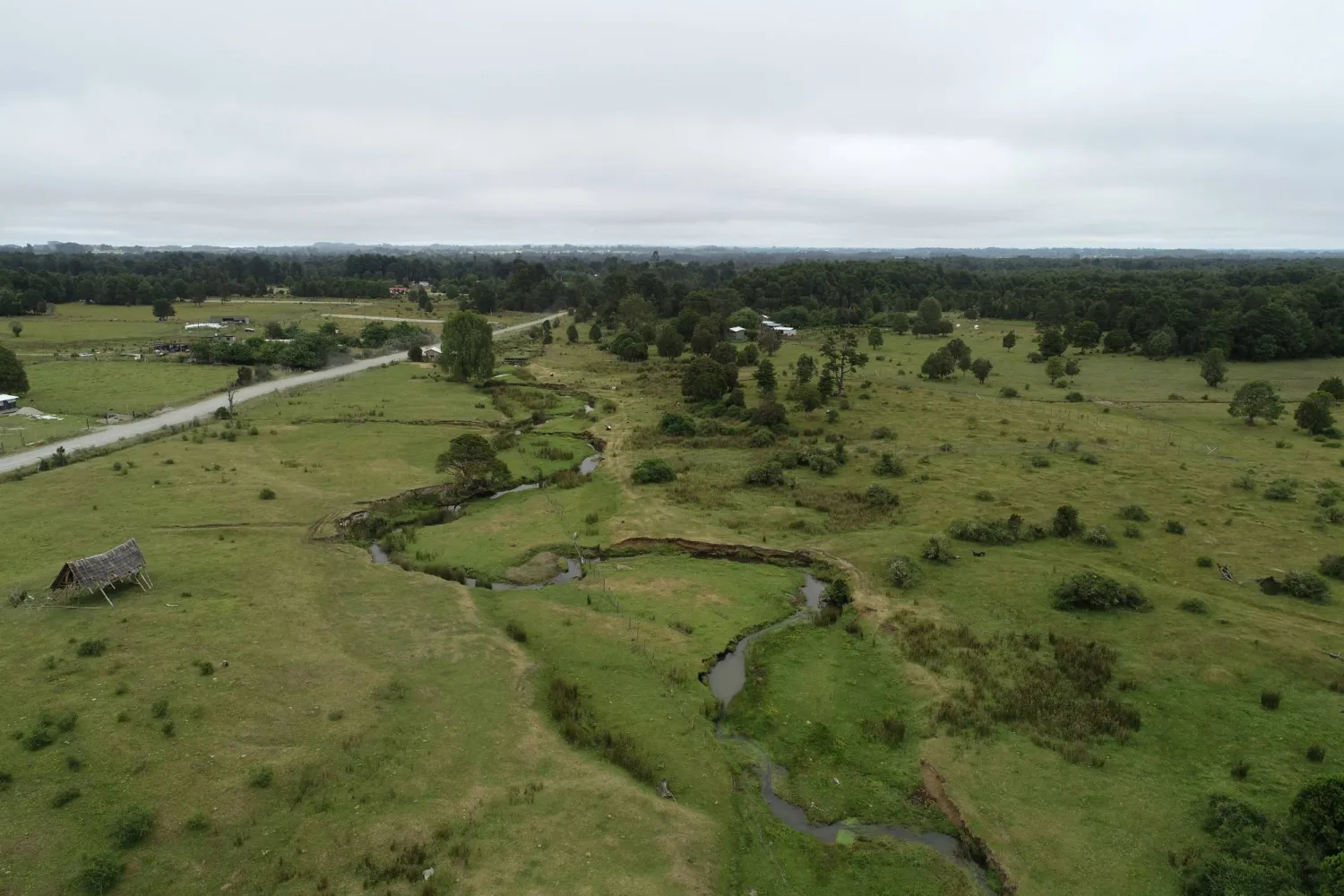
An aerial view of the of the Monte Verde archaeological site in southern Peru, in this 2023 photograph released on March 18, 2026. Todd Surovell/via REUTERS
TT

Study Suggests Younger Age for Chile's Important Monte Verde Archaeological Site

An aerial view of the of the Monte Verde archaeological site in southern Peru, in this 2023 photograph released on March 18, 2026. Todd Surovell/via REUTERS

The Monte Verde archaeological site in Chile, discovered in the 1970s, revolutionized the thinking about when humans entered the Americas, with scientists calculating decades ago that this former abode for ancient hunter-gatherers was about 14,500 years old. But a new study suggests it is much more recent than that.

Researchers said a fresh analysis of this Ice Age creek valley site found it dates to between 4,200 and 8,200 years ago. Such a date would make Monte Verde irrelevant to the longstanding scientific debate about when the initial peopling of the Western Hemisphere occurred.

"This finding suggests a later date of human arrival to the Americas than is widely believed," said University of Wyoming archaeologist Todd Surovell, lead author of the research published on Thursday in the journal Science.

The researchers used three scientific dating methods on material from in and around Monte Verde, located in southern Chile about 36 miles (58 km) from the Pacific coast.

"We sampled in the site area. We also sampled the same landforms upstream and downstream of the site," Reuters quoted Surovell as saying.

"These landforms are continuous throughout ⁠the valley, and our ⁠dating of them was consistent in all locations. We placed these into stratigraphic (soil and rock layers) context, and the dating errors of the previous investigators were immediately apparent," Surovell said.

Testing in 1997 concluded the site was 14,500 years old. That would make it more than 1,500 years older than the previous earliest-known human occupation sites south of the continental ice sheets that covered parts of North America at the time. Those sites were associated with North America's Clovis culture, known for distinctive stone tools and named for a locale in New Mexico.

Because Monte Verde was considered older and was thousands of miles south of the Clovis locations, scientists saw it as evidence that people must ⁠have been in the Americas much earlier than the Clovis sites had indicated.

Humans are thought to have crossed from Siberia into Alaska over an Ice Age land bridge, then later journeyed south.

The new research dated pieces of wood, sand deposited by the creek and a layer of ancient volcanic ash.

"The dating of the volcanic ash was especially important," Surovell said.

The ash was determined to have been deposited about 11,000 years ago. It was in a layer that was below the evidence of occupation, showing that the human presence must have come after that date, Surovell said.

Within the age range indicated by the new testing, Surovell said the Monte Verde human occupation most likely dates to 6,000 to 8,000 years ago.

Surovell said the site's older age was calculated using a technique called radiocarbon dating on wood recovered there. Surovell said while the wood indeed was 14,500 years old, it greatly predated the human occupation and was simply mixed among older material trapped in the banks of the creek.

"Imagine the stream undercutting the bank as ⁠it meanders in the valley. Materials ⁠in the bank then get transported and redeposited by the stream," Surovell said.

Vanderbilt University anthropologist Tom Dillehay, who has studied Monte Verde extensively since the 1970s, cited "many methodological and empirical errors" in the new study.

Its interpretation of the wood, Dillehay said, "disregards a vast body of well-dated cultural evidence associated with Monte Verde, including stone tools, wooden and bone artifacts, edible plant remains including seaweed and potatoes, hearths, human footprints, and animal meat and hide remains."

"These and other elements constitute a complex cultural context that has been extensively documented over five decades of interdisciplinary archaeological research," Dillehay said. "In turning to their data, it is a mixture of inventions and misunderstandings. They saw what they wanted to see, and came to the site with predetermined conclusions."

The timing of the peopling of the Americas remains contentious.

"Monte Verde is internationally recognized as one of the most significant archaeological sites on the American continent, having played a decisive role in replacing the longstanding 'Clovis First' paradigm," Dillehay said, a theory positing that the first inhabitants of the Americas arrived approximately 12,800 years ago.

Surovell said the new findings show Monte Verde postdates the Clovis sites.

"The Monte Verde site is still important for understanding the Holocene (geological epoch, beginning 11,700 years ago) human occupation of its region, but it no longer has much significance for understanding the initial peopling of the Americas," Surovell said.


Prince Mohammed bin Salman Project Restores Historical Al-Saidan Mosque in Al-Jouf Region

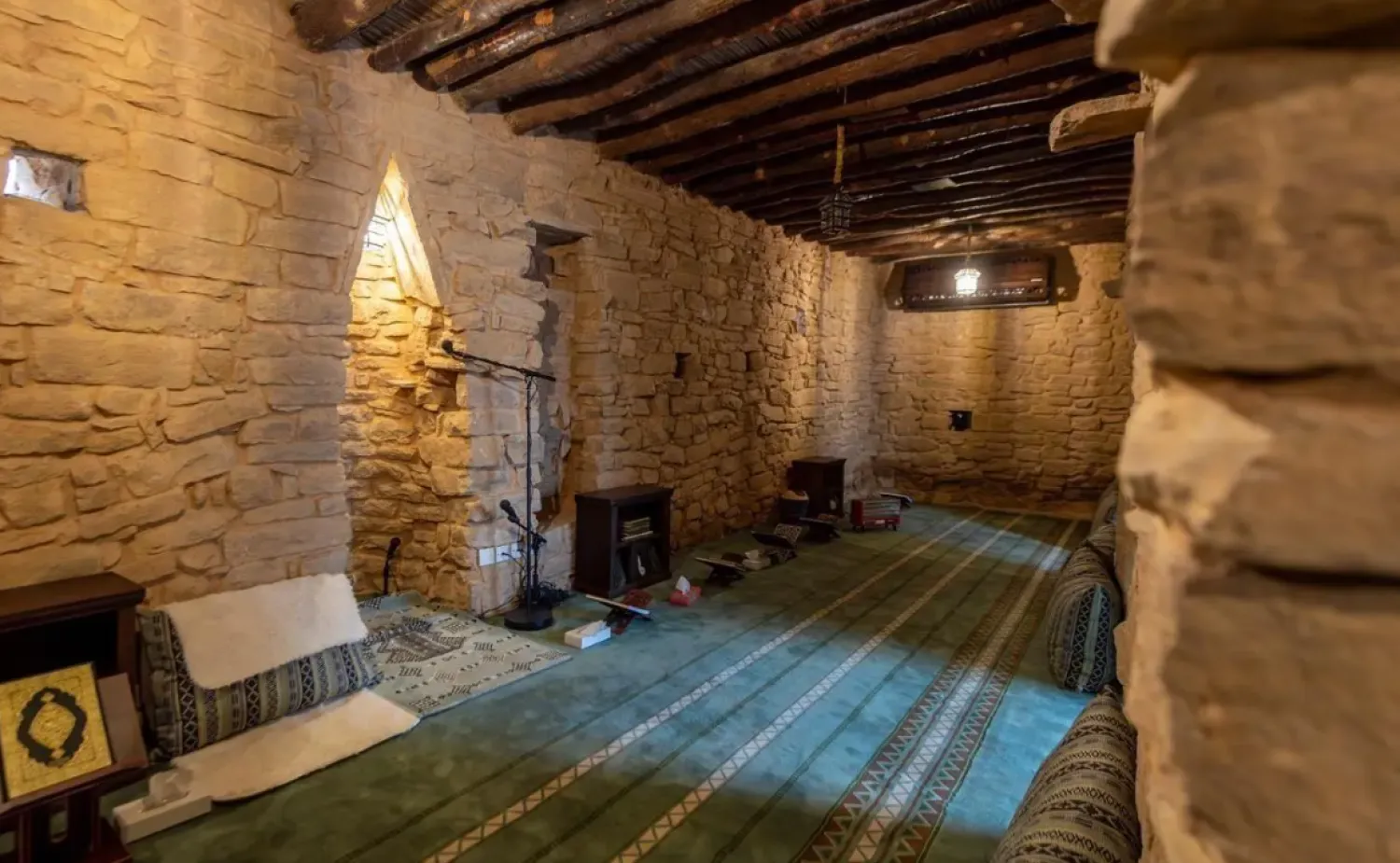
The renovation uses traditional Al-Jouf mud-brick techniques and natural materials - SPA
TT

Prince Mohammed bin Salman Project Restores Historical Al-Saidan Mosque in Al-Jouf Region

The renovation uses traditional Al-Jouf mud-brick techniques and natural materials - SPA

The Prince Mohammed bin Salman Project for the Development of Historical Mosques has commenced the restoration of Al-Saidan Mosque in Dumat Al-Jandal, Al-Jouf Region. Dating back to 620 AH (1223 CE), it is the city's second oldest mosque and formerly served as a judicial court and a prominent educational center for Quranic studies.

As part of the project's second phase, the mosque's area will increase from 179 to 202.39 square meters, restoring its capacity to 68 worshippers after prayers were previously suspended, SPA reported.

The renovation uses traditional Al-Jouf mud-brick techniques and natural materials to preserve the site's authentic desert architecture.

Notable features being preserved include a historical well and an ancient underground stone water channel used for wudu.

By rehabilitating this landmark, the project fulfills its strategic goals of restoring architectural authenticity and highlighting the Kingdom’s civilizational heritage in line with Vision 2030.