Jabal Sirin: A Meeting Point of Coral Reefs and Turquoise Waters Along the Coasts of Makkah

Emerging from the blue waters of the Red Sea stands Jabal Sirin, a mountain rising approximately 500 meters above sea level. (SPA)
TT

Jabal Sirin: A Meeting Point of Coral Reefs and Turquoise Waters Along the Coasts of Makkah

Emerging from the blue waters of the Red Sea stands Jabal Sirin, a mountain rising approximately 500 meters above sea level. (SPA)

Emerging from the blue waters of the Red Sea, west of Al-Lith Governorate, stands Jabal Sirin, a mountain rising approximately 500 meters above sea level. Its distinctive formation has made it a favored destination for marine adventure enthusiasts.
Spanning over 1,000 meters in width, the mountain’s beauty is accentuated by the vibrant coral reefs surrounding it, known for their dazzling colors, stunning beauty, and rich biodiversity, reported the Saudi Press Agency.
The vegetation covering the mountain's slopes and summit complements the crystal-clear turquoise waters, creating breathtaking views, especially at sunrise and sunset.
Jabal Sirin is not only a unique natural environment but also a sought-after tourist attraction. Its remote location from the mainland and proximity to a cluster of islands in the Red Sea provide visitors with an unparalleled experience of relaxation and exploration.


Study Suggests Younger Age for Chile's Important Monte Verde Archaeological Site

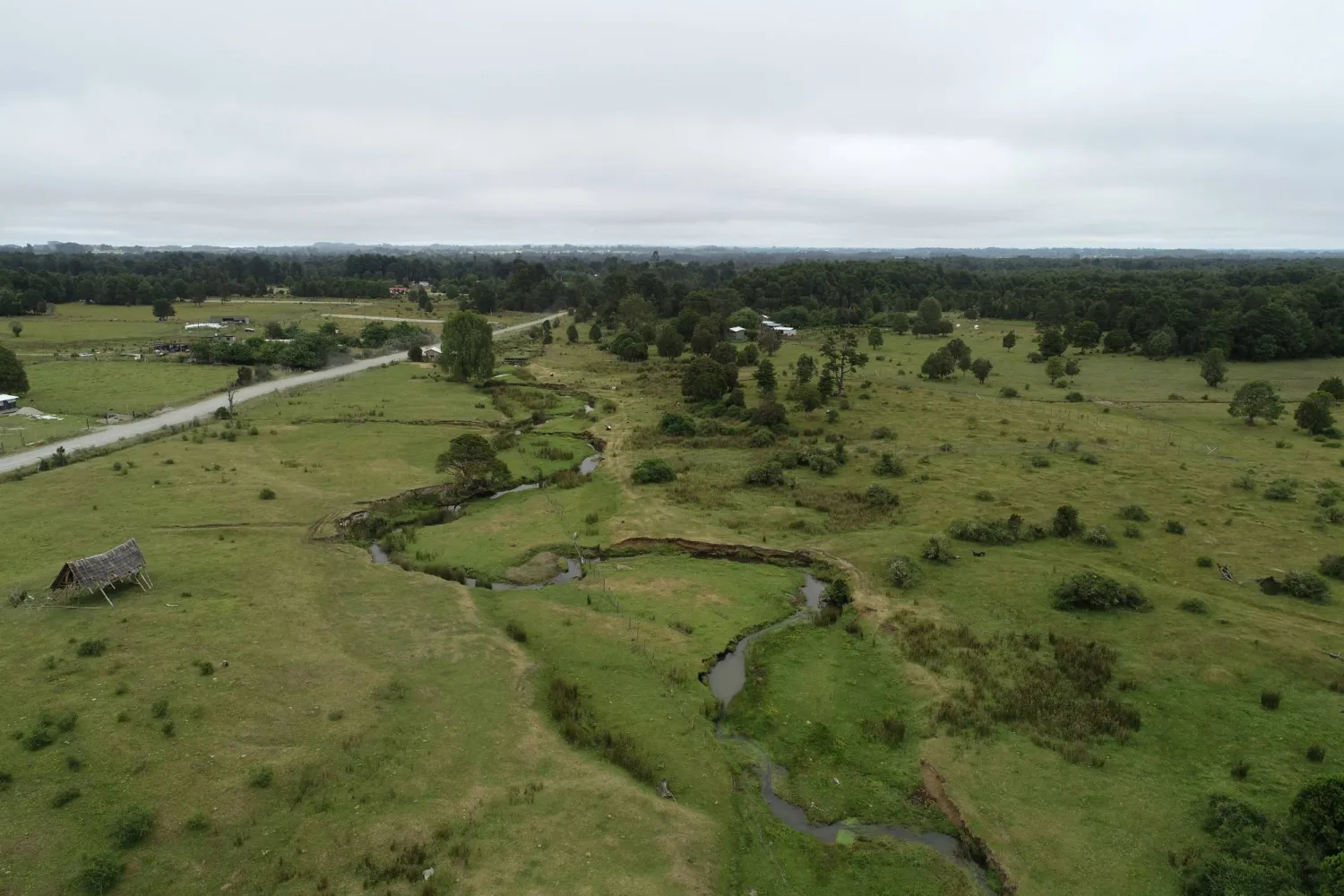
An aerial view of the of the Monte Verde archaeological site in southern Peru, in this 2023 photograph released on March 18, 2026. Todd Surovell/via REUTERS
TT

Study Suggests Younger Age for Chile's Important Monte Verde Archaeological Site

An aerial view of the of the Monte Verde archaeological site in southern Peru, in this 2023 photograph released on March 18, 2026. Todd Surovell/via REUTERS

The Monte Verde archaeological site in Chile, discovered in the 1970s, revolutionized the thinking about when humans entered the Americas, with scientists calculating decades ago that this former abode for ancient hunter-gatherers was about 14,500 years old. But a new study suggests it is much more recent than that.

Researchers said a fresh analysis of this Ice Age creek valley site found it dates to between 4,200 and 8,200 years ago. Such a date would make Monte Verde irrelevant to the longstanding scientific debate about when the initial peopling of the Western Hemisphere occurred.

"This finding suggests a later date of human arrival to the Americas than is widely believed," said University of Wyoming archaeologist Todd Surovell, lead author of the research published on Thursday in the journal Science.

The researchers used three scientific dating methods on material from in and around Monte Verde, located in southern Chile about 36 miles (58 km) from the Pacific coast.

"We sampled in the site area. We also sampled the same landforms upstream and downstream of the site," Reuters quoted Surovell as saying.

"These landforms are continuous throughout ⁠the valley, and our ⁠dating of them was consistent in all locations. We placed these into stratigraphic (soil and rock layers) context, and the dating errors of the previous investigators were immediately apparent," Surovell said.

Testing in 1997 concluded the site was 14,500 years old. That would make it more than 1,500 years older than the previous earliest-known human occupation sites south of the continental ice sheets that covered parts of North America at the time. Those sites were associated with North America's Clovis culture, known for distinctive stone tools and named for a locale in New Mexico.

Because Monte Verde was considered older and was thousands of miles south of the Clovis locations, scientists saw it as evidence that people must ⁠have been in the Americas much earlier than the Clovis sites had indicated.

Humans are thought to have crossed from Siberia into Alaska over an Ice Age land bridge, then later journeyed south.

The new research dated pieces of wood, sand deposited by the creek and a layer of ancient volcanic ash.

"The dating of the volcanic ash was especially important," Surovell said.

The ash was determined to have been deposited about 11,000 years ago. It was in a layer that was below the evidence of occupation, showing that the human presence must have come after that date, Surovell said.

Within the age range indicated by the new testing, Surovell said the Monte Verde human occupation most likely dates to 6,000 to 8,000 years ago.

Surovell said the site's older age was calculated using a technique called radiocarbon dating on wood recovered there. Surovell said while the wood indeed was 14,500 years old, it greatly predated the human occupation and was simply mixed among older material trapped in the banks of the creek.

"Imagine the stream undercutting the bank as ⁠it meanders in the valley. Materials ⁠in the bank then get transported and redeposited by the stream," Surovell said.

Vanderbilt University anthropologist Tom Dillehay, who has studied Monte Verde extensively since the 1970s, cited "many methodological and empirical errors" in the new study.

Its interpretation of the wood, Dillehay said, "disregards a vast body of well-dated cultural evidence associated with Monte Verde, including stone tools, wooden and bone artifacts, edible plant remains including seaweed and potatoes, hearths, human footprints, and animal meat and hide remains."

"These and other elements constitute a complex cultural context that has been extensively documented over five decades of interdisciplinary archaeological research," Dillehay said. "In turning to their data, it is a mixture of inventions and misunderstandings. They saw what they wanted to see, and came to the site with predetermined conclusions."

The timing of the peopling of the Americas remains contentious.

"Monte Verde is internationally recognized as one of the most significant archaeological sites on the American continent, having played a decisive role in replacing the longstanding 'Clovis First' paradigm," Dillehay said, a theory positing that the first inhabitants of the Americas arrived approximately 12,800 years ago.

Surovell said the new findings show Monte Verde postdates the Clovis sites.

"The Monte Verde site is still important for understanding the Holocene (geological epoch, beginning 11,700 years ago) human occupation of its region, but it no longer has much significance for understanding the initial peopling of the Americas," Surovell said.


Prince Mohammed bin Salman Project Restores Historical Al-Saidan Mosque in Al-Jouf Region

The renovation uses traditional Al-Jouf mud-brick techniques and natural materials - SPA
TT

Prince Mohammed bin Salman Project Restores Historical Al-Saidan Mosque in Al-Jouf Region

The renovation uses traditional Al-Jouf mud-brick techniques and natural materials - SPA

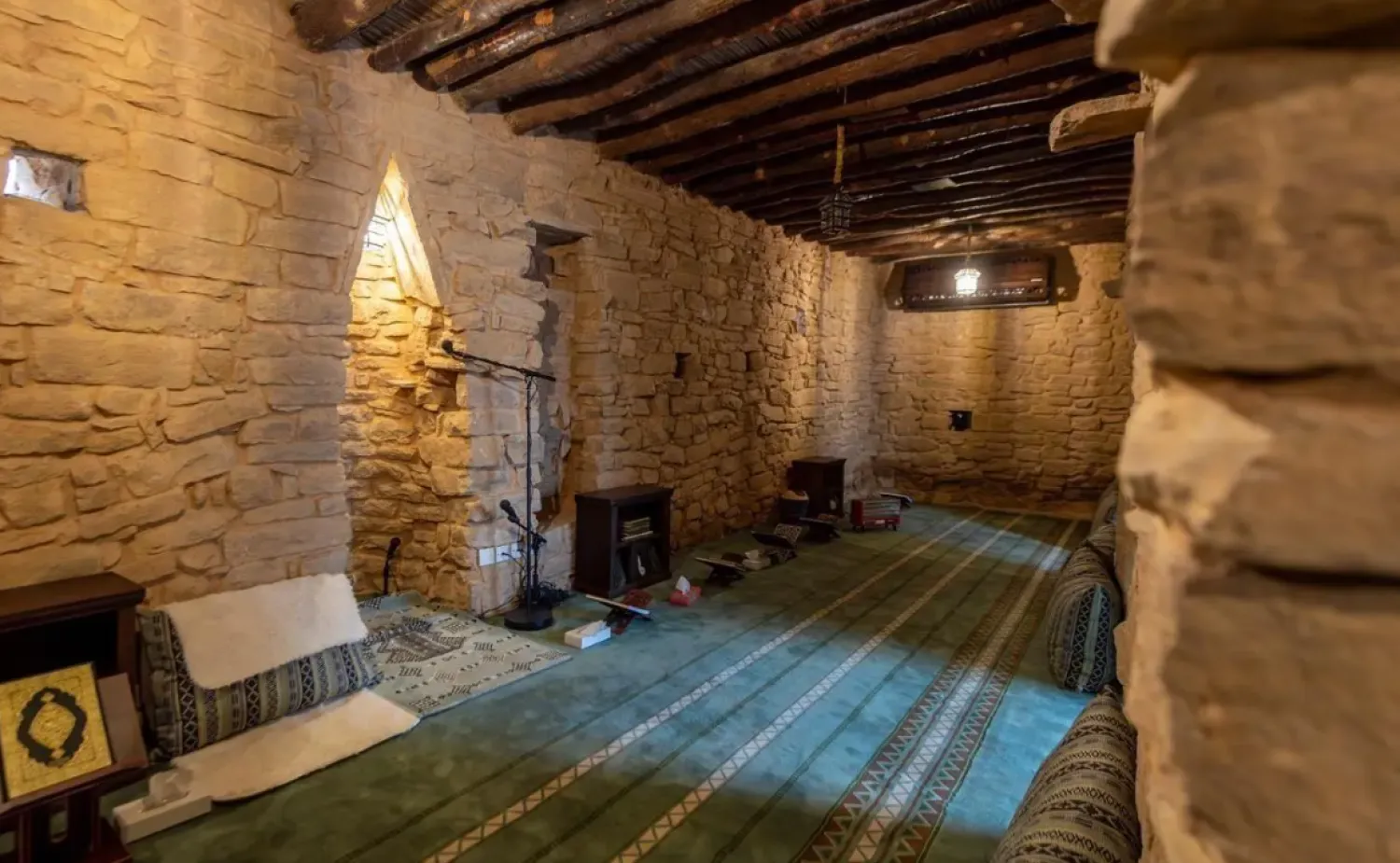
The Prince Mohammed bin Salman Project for the Development of Historical Mosques has commenced the restoration of Al-Saidan Mosque in Dumat Al-Jandal, Al-Jouf Region. Dating back to 620 AH (1223 CE), it is the city's second oldest mosque and formerly served as a judicial court and a prominent educational center for Quranic studies.

As part of the project's second phase, the mosque's area will increase from 179 to 202.39 square meters, restoring its capacity to 68 worshippers after prayers were previously suspended, SPA reported.

The renovation uses traditional Al-Jouf mud-brick techniques and natural materials to preserve the site's authentic desert architecture.

Notable features being preserved include a historical well and an ancient underground stone water channel used for wudu.

By rehabilitating this landmark, the project fulfills its strategic goals of restoring architectural authenticity and highlighting the Kingdom’s civilizational heritage in line with Vision 2030.


Rome’s Colosseum Gets a Fresh Look That Recreates the Footprints of Long-Gone Columns

The inauguration of the new layout and archaeological area of the southern ambulacra of the Colosseum in Rome, Italy, 17 March 2026. (EPA)
TT

Rome’s Colosseum Gets a Fresh Look That Recreates the Footprints of Long-Gone Columns

The inauguration of the new layout and archaeological area of the southern ambulacra of the Colosseum in Rome, Italy, 17 March 2026. (EPA)

The Colosseum has a bright new look following a restoration using the same travertine marble of ancient Rome to recreate parts of columns from 2,000 years ago.

Thousands of Romans once flocked to this arena to watch gladiators battle each other and wild animals. The structure still captures the public's imagination; it is Italy’s most popular tourist destination, with 9 million visitors in 2025 alone.

The project focused on a semicircular piazza outside the arena, where Roman spectators crowded under two arcades comprised of marble columns stretching up to 50 meters (164 feet) high. People stood in these arcades as they waited to pass through the entrances and take their seats.

Those arches are long gone, collapsing over the centuries from earthquakes and unstable ground. But now, tourists will be able to sit on large travertine marble slabs where their columns once stood and read reproductions of the Roman numerals that indicated seat sections.

“These blocks of travertine marble are placed, located exactly where the pillars, the original pillars were based,” said Italian architect Stefano Boeri, who designed the piazza. “The idea we had was to give back to the public the perception of the proportion of the arcades and the proportion of the vaults of the arches that were used to enter in the center of the Colosseum.”

Over time, the outside area became filled with detritus, including pieces of ruins, and overgrown with weeds.

Restorers began by digging a meter (yard) to where the travertine paving stones once covered the entrance area. They discovered coins, statues, animal bones and a gold ring. Deeper down is the secret underground passageway where Emperor Commodus used to enter the Colosseum while avoiding the hoi-polloi, and which was opened to the public last year.

Restorers sourced the new slabs of travertine from the same quarries where the ancient Romans retrieved theirs — and that today are used build a new generation of religious buildings, banks, museums, government buildings and private homes.

“From the beginning we understood only one thing and that was that we wanted to be involved,” Fabrizio Mariotti, head of the Mariotti Carlo stonecutting firm that has been carving travertine to order for four generations in Tivoli, said Tuesday while sitting on a slab of the stone.

“For a family like ours that has been working with travertine for four generations, working at the Colosseum, which is the symbol not only of Rome but also of this material, is so important.”

Earlier this year, the city of Rome opened two new subway stations, one deep beneath the Colosseum completing a multi-billion euro metro project. The restoration of the Colosseum’s perimeter was done using compensatory funds from the metro, project officials said.