



Bayeux Tapestry Leaves Museum for First Time Since 1983 Before UK Loan

The Bayeux Tapestry tells the story of the 11th century Norman conquest of England. (AFP)
TT

Bayeux Tapestry Leaves Museum for First Time Since 1983 Before UK Loan

The Bayeux Tapestry tells the story of the 11th century Norman conquest of England. (AFP)

The 11th-century Bayeux Tapestry has been moved from its museum in northern France for the first time in more than 40 years, authorities said on Friday, before the artwork's loan to the United Kingdom.

The 68-meter-long (224-foot-long) tapestry, which depicts the Norman conquest of England in 1066, was taken to a secret storage location from its museum in the French town of Bayeux in Normandy, sources told AFP.

The authorities in Calvados, northern France, which supervised the delicate maneuver with Normandy's regional cultural affairs body (DRAC), said more than 90 people were involved in the removal, which took seven hours and 15 minutes.

"The tapestry, packed in a crate, reached its storage location" late on Friday afternoon, the prefecture said in a statement, without providing further details about where it was being kept.

The operation had been planned for Thursday, prompting the French government to announce a delay as a result of nationwide strikes and protests against French President Emmanuel Macron.

But because of the intricate planning involved, the removal -- the first from the museum since 1983 -- went ahead as planned under a shroud of secrecy, the sources with knowledge of the move said.

"The conditions and timing of the operation were kept secret to organize the transfer under optimal security conditions for the artwork and with minimal impact on the residents of Bayeux," the Calvados prefecture added.

France's loan of the artifact, which was added to UNESCO's "Memory of the World" register in 2007, has sparked an outcry from heritage experts concerned over the ancient embroidery's already fragile state.

Since 2020, experts have meticulously documented 24,204 stains, 9,646 holes and 30 tears in the artwork.

In 2021, DRAC told AFP that "it was not possible to transport the work before restoring it".

In July, Macron promised to loan the tapestry to the British Museum in London in September 2026 for 18 months to celebrate the relationship between France and Britain, with the tapestry set to land on British soil for the first time.

Critics argue that the transfer to the UK risks causing damage to the priceless piece. More than 73,000 people have signed an online petition on change.org urging Macron to stop a "true heritage crime".



Priceless 2,500-year-old Golden Helmet Returned to Romania after Dutch Museum Raid

Dacian gold items, a 2,500-year-old helmet and wristbands, stolen from a museum in the Netherlands and then recovered by Dutch authorities, are presented during a press conference after being returned, at the National Museum of Romanian History, in Bucharest, Romania, Tuesday, April 21, 2026. (AP Photo/Andreea Alexandru)
TT

Priceless 2,500-year-old Golden Helmet Returned to Romania after Dutch Museum Raid

Dacian gold items, a 2,500-year-old helmet and wristbands, stolen from a museum in the Netherlands and then recovered by Dutch authorities, are presented during a press conference after being returned, at the National Museum of Romanian History, in Bucharest, Romania, Tuesday, April 21, 2026. (AP Photo/Andreea Alexandru)

A priceless golden helmet dating back 2,500 years was returned to Romania on Tuesday after the national heirloom was stolen from a Dutch museum where it was on loan last year.

The ornate Cotofenesti helmet and three golden bracelets — some of Romania’s most revered national treasures from the Dacia civilization — were taken from the Drents Museum in January 2025 in a raid which shocked the art world and devastated Romanian authorities.

But after 14 months of investigations, diplomatic tensions, and three suspects in an ongoing trial, most of the artifacts arrived at Bucharest Henri Coanda International Airport on Tuesday from where authorities transported them under guard to Bucharest’s National History Museum. They were displayed in a glass cabinet, flanked by masked, armed guards.

Cornel Constantin Ilie, the museum's interim director, said that the artifacts have been returned “not as simple patrimony items, but as relics of our historical memory, as the legacy of a civilization that continues to define us.”

“For us, this is a moment of joy, but also of contemplation,” he said. “For months, we have lived with the fear that part of our past could be lost forever. Today we can say that an essential part of this treasure has returned.”

Robert van Langh, the Drents Museum director, described the recovery and return of the relics as “an emotional moment for all involved,” and acknowledged “the grief, the anger and now the relief have naturally been even greater” in Romania than in the Netherlands.

“Romanian national heritage has returned home,” The Associated Press quoted him as saying. “The impact of this robbery was already significant in the Netherlands, but here it must have been truly unparalleled ... The police and judicial authorities of both countries have done extraordinary work.”

Dutch prosecutors unveiled the recovered items at a news conference in the eastern Dutch city of Assen earlier this month. The whereabouts of the third golden bracelet remains unknown, but van Langh vowed the search would continue and that a judicial verdict is expected in the coming weeks.

During its disappearance, the golden helmet was slightly dented, while the recovered bracelets were in perfect condition.

Romania’s Minister of Culture Demeter Andras Istvan said the return of the artifacts had shown “how strong the connection between heritage and collective consciousness can be.”

“This entire episode reminds us at the same time how exposed heritage can be. It can be exposed to violence, illegal trafficking, negligence, oblivion,” he said.

After the raid, Dutch authorities were left with grainy security footage of three people wrenching open a museum door with a crowbar, after which an explosion was seen. Before its recovery, there were fears the helmet may have been melted down because its fame and distinctive appearance made it virtually unsellable.

The artifacts will be exhibited to the public in Bucharest before undergoing some restoration work, the museum's interim director said.

“We believe that the public has the pleasure of celebrating them ... not only as splendid objects, but as a witness to an ordeal, an almost irreparable loss, and a return that we owe to the operation between institutions and the perseverance of the authorities,” he said. “Today, these treasures returned home.”


Saudi Heritage Commission Announces 2025 Excavation Results at Al-Serrain Archaeological Site

Saudi Heritage Commission Announces 2025 Excavation Results at Al-Serrain Archaeological Site
TT

Saudi Heritage Commission Announces 2025 Excavation Results at Al-Serrain Archaeological Site

Saudi Heritage Commission Announces 2025 Excavation Results at Al-Serrain Archaeological Site

The Saudi Heritage Commission announced on Tuesday the results of the 2025 archaeological excavation season of the Saudi-Chinese mission at the Al-Serrain archaeological site in Al-Lith Governorate, Makkah Region. The mission was part of its efforts to document and study coastal archaeological sites and deepen understanding of Islamic historical cities and ports along the Red Sea coast.

Excavation works during the season revealed architectural extensions, including documentation of residential, service, and storage units, as well as pottery kilns reflecting daily life activities.

The season documented diverse archaeological finds, including various types of pottery, ceramic incense burners, stone tools, agate beads, and glass, alongside organic materials such as shells and animal bones, reflecting the diversity of the site's inhabitants' economic and daily activities.

Among the most notable discoveries was a fragment of a Chinese ceramic jar dating to the Northern Song Dynasty (960–1127 CE), bearing remnants of a decorative seal with partially damaged, illegible Chinese script, serving as an archaeological testament to commercial contact between southern China and the Red Sea coast during the Islamic era.

The Heritage Commission underscored its commitment to ongoing excavation and study at Al-Serrain in the coming seasons, aiming to build a comprehensive scientific understanding of the site's settlement history and urban development, and to highlight its value as one of the most important historical ports on the Red Sea coast.


Ancient Mughal Tradition of Pigeon-Rearing Thrives in India’s Capital

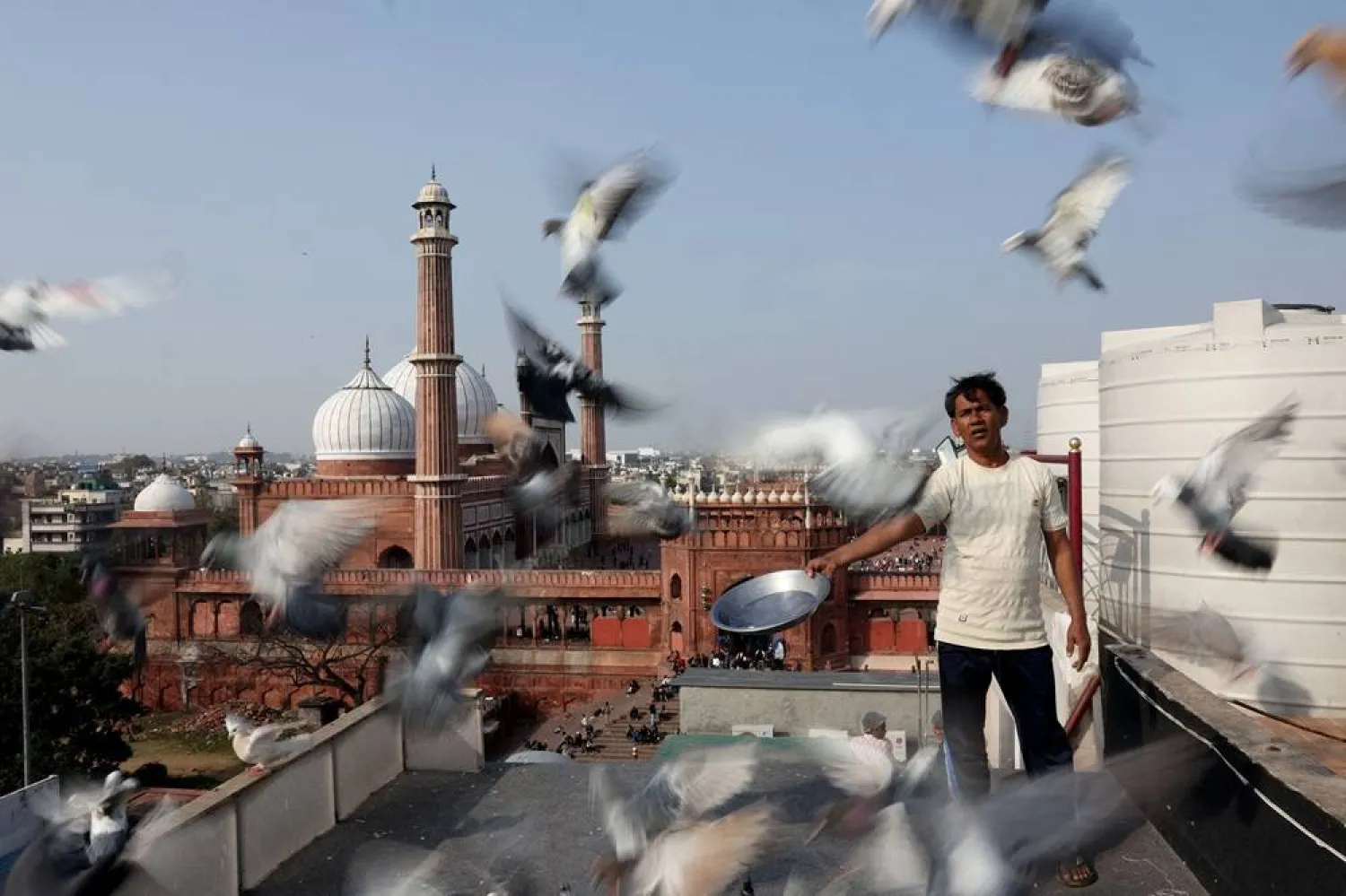
 Mohammed Rashid, alias "Rambo", a kabootarbaaz (pigeon keeper) feeds his pigeons as he trains them, on the rooftop of a restaurant in the old quarters of Delhi, India, January 24, 2026. (Reuters)
Mohammed Rashid, alias "Rambo", a kabootarbaaz (pigeon keeper) feeds his pigeons as he trains them, on the rooftop of a restaurant in the old quarters of Delhi, India, January 24, 2026. (Reuters)
TT

Ancient Mughal Tradition of Pigeon-Rearing Thrives in India’s Capital

 Mohammed Rashid, alias "Rambo", a kabootarbaaz (pigeon keeper) feeds his pigeons as he trains them, on the rooftop of a restaurant in the old quarters of Delhi, India, January 24, 2026. (Reuters)
Mohammed Rashid, alias "Rambo", a kabootarbaaz (pigeon keeper) feeds his pigeons as he trains them, on the rooftop of a restaurant in the old quarters of Delhi, India, January 24, 2026. (Reuters)

In the ‌heart of India's capital city New Delhi, a few men are practicing the ancient Mughal tradition of pigeon-rearing, training the birds to navigate long distances, as they preserve a skill passed on for generations.

Every day, among the packed lanes near the Jama Masjid, in the old part of the city and a few kilometers away from its toniest areas, Azhar Udeen, 30, gathers with his younger brother and friends at ‌his terrace, ‌letting more than 120 pigeons of various ‌breeds ⁠out of their ⁠cages.

The birds are then fed and trained to fly in different formations, and are sometimes raced, as men cheer them on.

"I saw my grandfather doing this when I was a child, and after I grew up, I watched and learned from ⁠my ustad (teacher)," Udeen told Reuters.

Kabootarbaazi, as the ‌tradition is known, comes ‌from the Hindi/Urdu word for pigeon, and was patronized by ‌the many Mughal kings who ruled in India, ‌when men kept a flock, taught them to fly in formation, and used them as messengers.

Training the birds how to fly straight against the wind and return after covering ‌a long distance takes nearly four months, and involves beating a whip against ⁠a ⁠hard surface to create loud sounds that will scare the birds into flying farther out, the trainers said.

For many, the rooftop gatherings are as important as the flying itself. Practitioners describe kabootarbaazi as a stress reliever that creates a pocket of calm and community in a crowded city.

"We sit with our friends and students, and all the tensions from our work or homes, all of it disappears and that’s what the main intention behind pigeon keeping is," Kahlifa Mohsin, another pigeon-keeper, said.