
In Lebanon’s Tyre, Ancient Site Threatened by Israeli Bombs

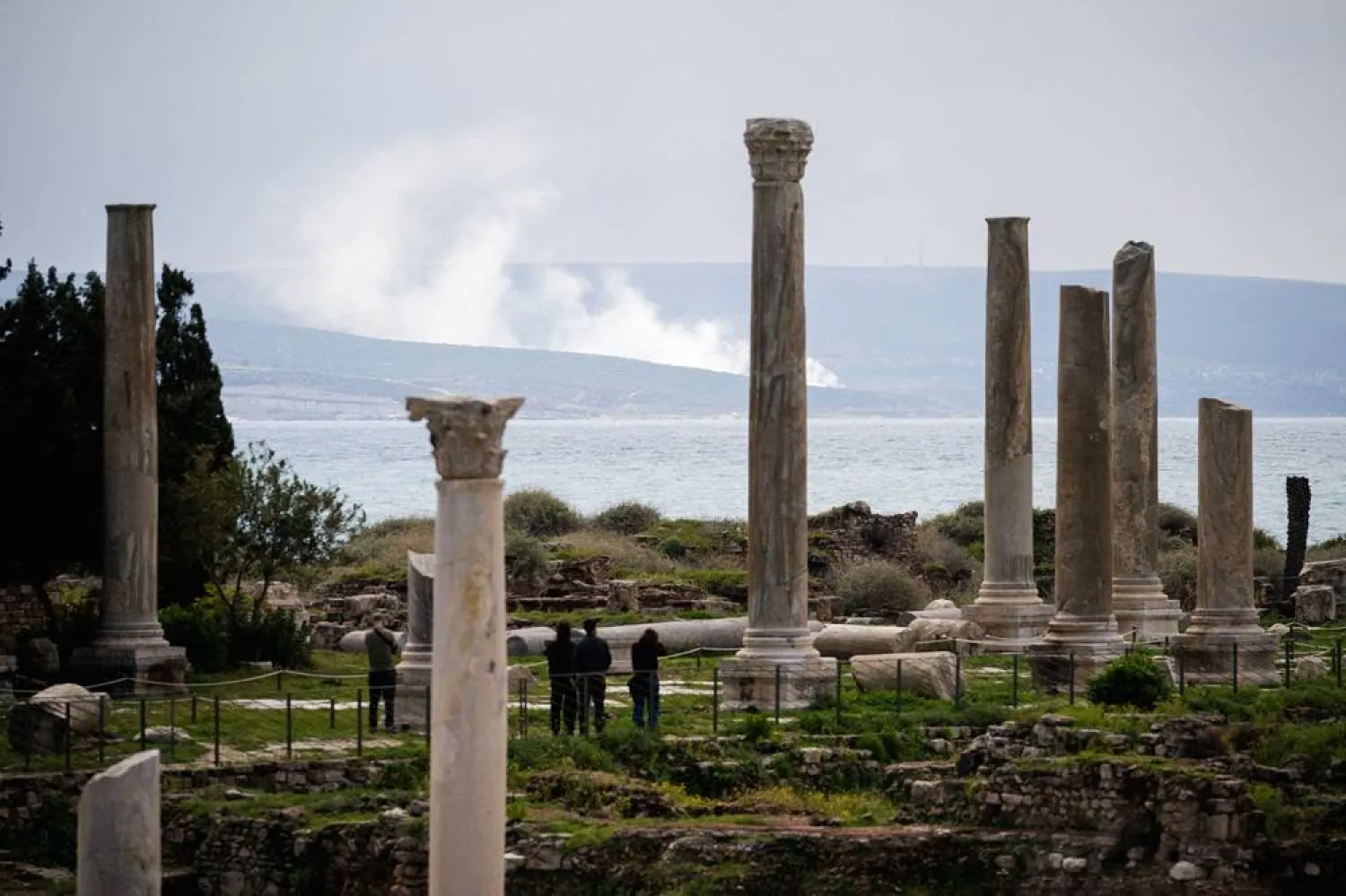
This photograph taken on March 23, 2026, shows smoke as it rises from the site of an Israeli air strike at the background of the archaeological site of the ruins of the Phoenician Port in the southern Lebanese city of Tyre. (AFP)
TT

In Lebanon’s Tyre, Ancient Site Threatened by Israeli Bombs

This photograph taken on March 23, 2026, shows smoke as it rises from the site of an Israeli air strike at the background of the archaeological site of the ruins of the Phoenician Port in the southern Lebanese city of Tyre. (AFP)

At an archaeological site in southern Lebanon's Tyre, small signs bearing a blue and white emblem provide a symbolic shield, meant to protect the ancient ruins from bombardment.

One of the oldest cities on the Mediterranean coast, Tyre is located around 20 kilometers (12 miles) from the Israeli border, and has been the target of several strikes since Lebanon was drawn into the Middle East war by Hezbollah's March 2 rocket attack on Israel.

The Al-Bass site is centered on a necropolis that dates back three millennia to Tyre's time as a major Phoenician city and was still in use until the Arab conquests of the 7h Century.

An organization linked to UNESCO, the United Nations' cultural heritage agency, launched the signs initiative near the site, part of a push that covers more than 30 locations across the country.

It is a reminder that the 1954 Hague Convention obliges warring parties to protect cultural property.

On March 6, an Israeli strike hit just a few meters away, killing eight people according to Lebanon's health ministry.

The target, a family home, is now a pile of rubble.

"They were our neighbors... They thought that being close to an archaeological site protected them, that because this is a World Heritage site it would not be struck," said Nader Saqlawi, director of archaeological excavations in the south for Lebanon's culture ministry.
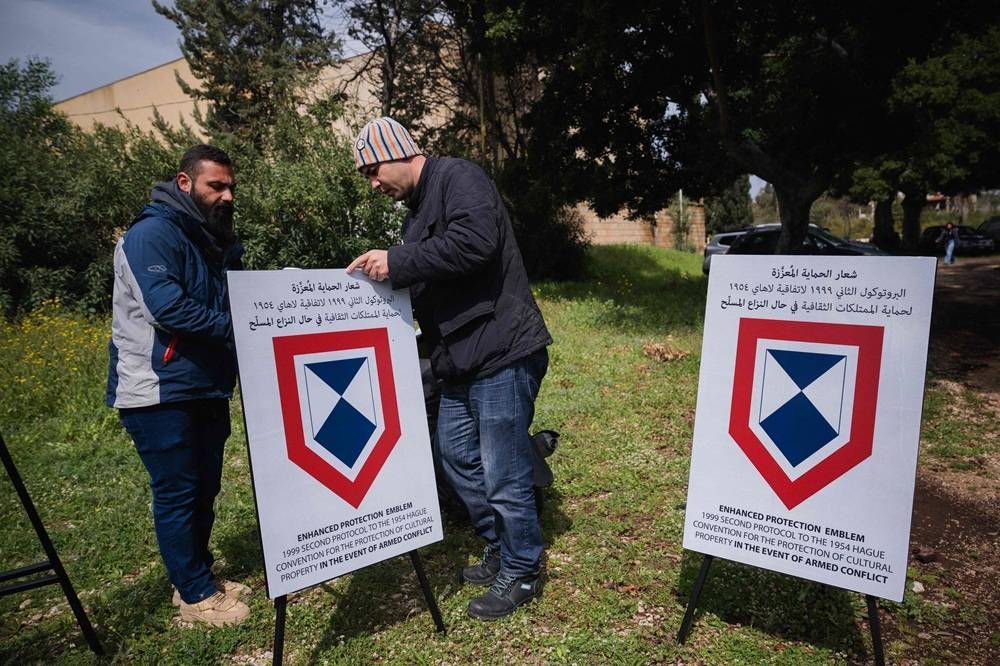
Museum employees place Enhanced Protection Emblems, a special symbol used under international humanitarian law to protect critical sites during armed conflict, at the archaeological site of the Roman hippodrome in the southern Lebanese city of Tyre, on March 23, 2026. (AFP)

- Human remains -

The team from the ministry that came to inspect possible damage to the monuments found human remains -- "a hand and pieces of flesh" -- on the roof of the site's museum, which is still under construction, he said.

The museum suffered damage, its windows were blown out, but the explosion did not reach the necropolis nor the Roman-era triumphal arch, aqueducts and hippodrome that are also part of the site.

In antiquity, the city of Tyre was at various times Phoenician, Persian, Hellenistic, Roman and Byzantine.

While many of its inhabitants have fled the latest war, others remain alongside the city's precious relics.

Lebanese Culture Minister Ghassan Salame condemned what he called Israel's aggression.

"The archaeological sites do not contain any military or security presence. Therefore, this argument cannot be used to justify their bombing," he said.

There was no immediate comment in response to AFP's request from the Israeli army, which usually says it is targeting Hezbollah sites or operatives with its attacks.

"Lebanon is full of archaeological riches... and the Beirut depots do not have the capacity to accommodate all these threatened objects," said David Sassine, an expert at the International Alliance for the Protection of Heritage.
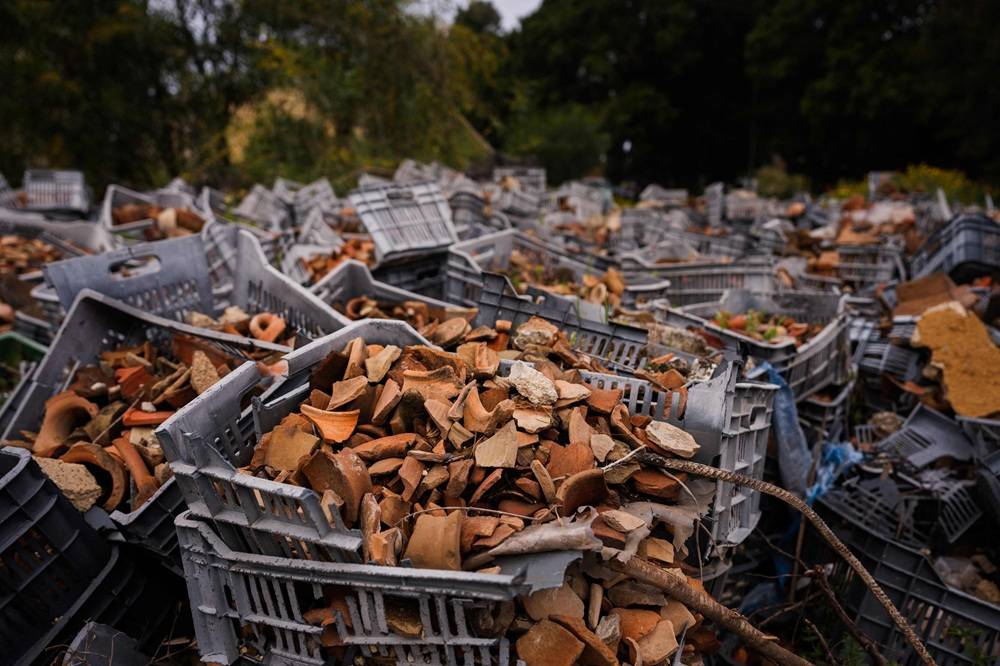
This photograph taken on March 23, 2026, shows boxes filled with fragments of ancient pottery collected after an Israeli strike near the archaeological site of the Roman hippodrome in the southern Lebanese city of Tyre. (AFP)

- 'No one cares' -

There is also no guarantee that the objects would be safer in the capital, which is itself regularly bombed by Israel, and transporting the items from the south of the country, even under military escort, "remains risky", Sassine said.

During the previous Israel-Hezbollah conflict in 2024, gold coins, millennia-old amphorae and valuable sarcophagi were transferred to Beirut, where they have remained.

Tyre was heavily damaged by Israeli strikes during that war, while much of the population evacuated at the time.

Closer to the border, the citadel in the village of Shamaa was also partly destroyed by the Israeli military.

Saqlawi of the culture ministry said he believed attacks on historic sites were intentional.

"The Israelis know everything. They know your shoe size... and they know very well this is an archaeological site," he said.

Mustapha Najdi, a guard at the archaeological sites, was at the Al-Bass site when the March 6 strike hit.

"I heard a very violent impact. I fled and alerted the authorities," he said.

"No one cares about us," Najdi lamented, calling on "everyone who can to exert pressure to stop this barbarity".

"This civilization represents history, represents us all, Lebanese and non-Lebanese."


Saudi Culture Minister Meets with Indonesian Minister of Creative Economy

The Saudi Minister of Culture met on Tuesday with Indonesia’s Minister of Creative Economy in Jakarta. SPA
TT

Saudi Culture Minister Meets with Indonesian Minister of Creative Economy

The Saudi Minister of Culture met on Tuesday with Indonesia’s Minister of Creative Economy in Jakarta. SPA

Saudi Minister of Culture Prince Bader bin Abdullah bin Farhan on Tuesday met with Indonesia’s Minister of Creative Economy Teuku Riefky Harsya in Jakarta.

The ministers discussed cooperation in the creative economy between the two countries through the exchange of artistic and technical expertise in film, fashion, and handicrafts.

They also explored opportunities for collaboration to promote innovation and sustainability.


‘Life Through a Royal Lens’ Exhibition Showcases British Royal Photography

“Life Through a Royal Lens” runs until June 7. (Kensington Palace)
TT

‘Life Through a Royal Lens’ Exhibition Showcases British Royal Photography

“Life Through a Royal Lens” runs until June 7. (Kensington Palace)

A photography exhibition showcasing more than 100 photographs taken of and by the British Royal Family is on tour following its launch at Kensington Palace.

The “Life Through a Royal Lens” exhibition explores the enduring relationship between the Crown and the camera over 200 years.

It was first launched at Kensington Palace and is now on tour, starting at The Amelia Scott in Tunbridge Wells, according to the BBC.

Jeremy Kimmel, arts, heritage and engagement director at The Amelia Scott, said: “Royal Tunbridge Wells has been shaped by centuries of royal connections, from the first royal visit in the early 1600s to what was then just woodland, to becoming the favorite summer retreat of Princess Victoria.”

He said “Life Through a Royal Lens” was not just about royalty.

“The images reflect moments of national identity, cultural change, and shared experience,” said Kimmel.

The royal family are one of the most photographed families in the world and the exhibition captures state ceremonies and royal tours as well as personal images which share a glimpse of life behind the scenes.

It also features the last public photograph taken of Elizabeth II taken on 6 September 2022, just two days before she died at the age of 96.

Kimmel said: “It was taken at Balmoral Castle before the historic 'kissing of hands' ceremony in which she publicly appointed her 15th British Prime Minister, Liz Truss.”

The public can also view portraits and press photographs from the first three years of King Charles III and Queen Camilla's reign.

The exhibition was created by Historic Royal Palaces, the independent charity that cares for Kensington Palace.

Eleri Lynn, chief curator at Historic Royal Palaces, said the display of images spanning 300 years of family photoshoots, commissioned portraiture and official engagements would embark on a tour planned to span the UK.

“We are thrilled that visitors to ‘Life Through a Royal Lens’ at The Amelia Scott will be able to explore the history behind the iconic image of modern monarchy we know today,” she added.

“Life Through a Royal Lens” runs until June 7.


French Lawmakers Pass Bill Simplifying Return of Colonial-era Art

People sit at a bistro, enjoying the sun in Paris, Thursday, April 9, 2026.(AP Photo/Michel Euler)
TT

French Lawmakers Pass Bill Simplifying Return of Colonial-era Art

People sit at a bistro, enjoying the sun in Paris, Thursday, April 9, 2026.(AP Photo/Michel Euler)

French lawmakers on Monday passed a bill to simplify the return of artworks looted during the colonial era to their countries of origin, AFP reported.

France still has in its possession tens of thousands of artworks and other prized artefacts that it looted from its colonial empire.

The draft legislation to return them was unanimously approved by the lower house National Assembly late on Monday.

The upper house had unanimously passed the measure in January.

President Emmanuel Macron has made it a political promise to return the cultural items, and has gone further than his predecessors in admitting past French abuses in Africa.

Speaking on a visit to the Burkina Faso capital Ouagadougou shortly after taking office in 2017, Macron vowed that France would never again interfere in its former colonies and promised to facilitate the return of African cultural heritage within five years.

Designed to streamline the process, Monday's bill specifically targets property acquired between 1815 and 1972.

Former colonial powers in Europe have slowly been moving to send back some artworks obtained during their imperial conquests -- but France is hindered by its current legislation, which requires every item in the national collection to be voted on individually.

France has been flooded with restitution demands, including from Algeria, Mali and Benin.