


Anti-fur Activists Target Max Mara, Fendi at Milan Fashion Week

Activists say fur farming is cruel and better alternatives are available. Marco BERTORELLO / AFP
TT

Anti-fur Activists Target Max Mara, Fendi at Milan Fashion Week

Activists say fur farming is cruel and better alternatives are available. Marco BERTORELLO / AFP

Animal activists have fashion brands squarely in their sights this Milan Fashion Week, hoping to pressure Italian brands Max Mara and Fendi to give up fur in future collections.
An activist from PETA (People for the Ethical Treatment of Animals) stormed the Fendi runway on Wednesday brandishing a sign saying "Animals are NOT clothing".
And a coalition of pro-animal groups stepped up their campaign on Thursday against Max Mara.
Over 1,500 international fashion brands, including some of the most prestigious, have renounced fur in recent years, due to concerns about animal cruelty, changing trends and new synthetic alternatives.
On Thursday, a hot-air balloon with the message "Max Mara Go Fur-Free" floated above the company's headquarters in Emilia Romagna for the second day running.
The stunt was backed by the Fur Free Alliance -- a coalition of over 50 global animal protection associations, including the Humane Society International and Italy's LAV (Anti-Vivisection League) -- which has been targeting Max Mara since earlier this month.
The campaign, involving protests, social media posts, telephone calls and emails, corresponds to the season of fashion weeks in New York, London, Milan and Paris running until March 5.
Max Mara -- whose runway show on Thursday did not feature fur -- did not respond to requests for comment from AFP.
Unlike Fendi, which began as a fur line, Max Mara is best known for its luxurious wool and camel hair coats, using fur occasionally as trim on hoods and cuffs.
That means the company could easily stop using fur without affecting its core business, said LAV's Simone Pavesi.
"It's really a question of total indifference. They could resolve it from one season to another," he told AFP.
He added that the fashion house had refused to sit down with animal welfare groups, as many other brands have done.
'Smell of death'
Outside the Max Mara show, Anna Kirichenko, 32, sported a black ski hat prominently decorated with the company's logo, combined with an oversized black faux fur jacket.
"There are so many alternatives, so many young designers who can give us cheaper and better alternatives (to real fur)," Kirichenko said.
"I want to be an example... I don't like the smell of death."
At Fendi, fashion student Elke Orth, 21, said top brands still using fur have oversized influence, even though attitudes among young people have changed.
"They have all the power because everyone wants to be inside that world," she said.
"But if a famous actor or singer says 'I won't go to that show', that would make a big change," she said.
Armani, Dolce and Gabbana, Gucci, Prada, Valentino and Versace, are among several prestigious fashion houses who have renounced fur.
"All these companies have seen how unethical and unsustainable fur is," Pavesi said.

Major recalcitrants include France's Louis Vuitton and Hermes.
Activists cite the cruelty inherent in fur farming, in which foxes, minks, chinchillas, rabbits and raccoon dogs are crammed into tiny wire battery cages before being gassed or electrocuted.
Undercover operations have brought to light deplorable conditions in fur farms, sick and stressed animals, and episodes of self-mutilation and infections.
An outbreak of the Covid-19 virus in Dutch mink fur farms in 2020 hastened the scheduled closure of the farms by three years to 2021.
Ethics and 'sustainability'
The fur industry markets its products as environmentally friendly renewable resources -- claims that anti-fur activists refute, citing higher carbon footprints.
Within the European Union, there is no ban on sales of fur, nor any specific animal welfare legislation covering these animals.
California, Israel and certain US cities have banned fur sales.
As of December, 17 of the EU's 27 member countries had adopted full or partial bans on fur farming, with others in the works.
There are currently more than 1,000 fur farms in the EU -- most of them in Finland, Greece and Poland -- which amounts to about 7.7 million animals.
Fur Free Europe collected 1.7 million signatures last year to petition the European Commission to ban fur farming.
In response, the EU's executive asked its food safety agency to conduct an independent review on the protection of fur production animals by March 2025.
By March 2026, the Commission will rule on a potential ban on fur farming and the sale of farmed animal fur products within the EU.
Alternatively, it could adopt "appropriate standards" for better animal welfare practices.
LAV's Pavesi said that as of Wednesday, Max Mara had begun to block critical comments about its use of fur from its Instagram page.
"We have no interest in a pressure campaign," he said.
"We'd prefer to talk with the company, explain our reasons... and convince them to stop using fur."



South Sudan Models Dominate Global Catwalks but Visas a Problem

Professional models from the Juba-based modelling agency Jubalicious practice their catwalking during a modelling training session at a hotel in Juba on February 19, 2026.  (Photo by Luis TATO / AFP)
Professional models from the Juba-based modelling agency Jubalicious practice their catwalking during a modelling training session at a hotel in Juba on February 19, 2026. (Photo by Luis TATO / AFP)
TT

South Sudan Models Dominate Global Catwalks but Visas a Problem

Professional models from the Juba-based modelling agency Jubalicious practice their catwalking during a modelling training session at a hotel in Juba on February 19, 2026.  (Photo by Luis TATO / AFP)
Professional models from the Juba-based modelling agency Jubalicious practice their catwalking during a modelling training session at a hotel in Juba on February 19, 2026. (Photo by Luis TATO / AFP)

Heels click on cracked paving stones as fantastically long-limbed men and women practice moves they hope will whisk them away from South Sudan, one of the fashion world's favorite scouting locations.

Many hope to follow in the footsteps of their compatriot Awar Odhiang, who went from a refugee camp in Ethiopia to closing Chanel's Paris Fashion Week show last year.

South Sudan has been mired in conflict, poverty and corruption since its independence in 2011, but the success of its models has been a ray of positivity.

No less than nine of the top 50 models currently listed on Models.com are originally from the east African country.

"Paris, Milan, London -- the fashion industry is dominated by South Sudanese boys and girls at the moment," said Doris Sukeji, founder of the Jubalicious modelling agency in the capital Juba.

"Mostly it's the skin color. That is how most of the South Sudanese get signed. They are looking for very dark models," she said.

One of the first to blaze a trail was Alek Wek, scouted in London in the 1990s after her family fled an earlier war.

It was an image of Wek on her mother's Facebook feed that inspired Yar Agou, 19, now signed with Jubalicious.

"Damn! I saw her and I thought that is me one day if God is there. I want to make it like her," she told AFP in Juba.

All skinny-long limbs and charming attitude, Agou has what it takes for the runway, but politics is standing in the way of her dream.

She was supposed to be working at the recent Milan Fashion Week, but her visa was rejected at the last minute. For now, she is working as a cleaner, hoping there will be more opportunities.

- 'Heartbroken' –

Successful models can earn tens of thousands of dollars in a season, a life-changing amount in South Sudan where 92 percent live under the poverty line.

But Sukeji said seven men and women had been rejected for visas in recent months despite having work sponsors, as the climate against immigrants hardens in the West.

"You get heartbroken," she said.

Bichar Hoah, 24, raised by a single mother in Kakuma refugee camp in neighboring Kenya, was recently rejected for a European visa.

"There are some people who discourage us by saying that we tried and failed... (but) I want to represent South Sudan as a model," he said, hoping to change the narrative around his country.

- 'A chance' –

But even those who make it abroad face immense challenges in an industry known for relentless turnover.

Clients constantly want "new faces," Sukeji said.

There are added challenges in a conservative country like South Sudan.

As well as physical requirements -- tall but not above 5 foot 11 (1 meter 80) for women -- Sukeji must also contend with families who view modelling as a cover for prostitution.

"I always ask them to give the boy or the girl a chance," she said.

She brings them in for free training, which can take up to three months, taking a 10-percent cut if they get work.

Her trainer, drilling the models with the precision of a military sergeant when AFP visited, said many were like "newborn babies" when they started.

But as the young models gathered on a Juba rooftop to practice their struts, there was hope for a future beyond South Sudan's poverty and ever-present threat of war.

"One day, really, South Sudan will change," said Agou.

All hope they can emulate the likes of Anyier Anei, who landed international modelling gigs and recently starred in French film "Coutures".

"Failure is less frightening than having dreams you never try to achieve," Anei told Harper's Bazaar recently. "Even with fear, you have to take that risk."


Zalando Says AI Drives Productivity and Expects Higher Profit, Shares Jump

FILED - 22 October 2013, Thuringia, Erfurt: A general view of the logistics center of online retailer Zalando in Erfurt. Photo: Marc Tirl/dpa-Zentralbild/dpa
TT

Zalando Says AI Drives Productivity and Expects Higher Profit, Shares Jump

FILED - 22 October 2013, Thuringia, Erfurt: A general view of the logistics center of online retailer Zalando in Erfurt. Photo: Marc Tirl/dpa-Zentralbild/dpa

European online fashion retailer Zalando said on Thursday its use of artificial intelligence was making its business more efficient and productive, as it forecast full-year adjusted operating profit to grow in 2026 and launched an up to 300-million-euro ($346 million) share buyback.

Zalando shares jumped 7% in early trading as investors welcomed the positive outlook, providing some succour to the stock that had tumbled sharply from peaks in 2021 when the pandemic boosted online shopping.

Zalando ⁠said AI-generated product ⁠images were saving money and time on ad creation and enabling it to publish 70% more content, while an AI virtual try-on was also helping shoppers pick their correct size, reducing size-related returns - a major headache for online shopping platforms.

Analysts said concerns had been growing over the risk to Zalando from AI, with some worried consumers could use large-language models like ⁠ChatGPT to research products and shop online, bypassing the company's platform.

The Berlin-based company, which sells clothes, shoes and accessories from thousands of brands including Nike, Hugo Boss, and Coach, expects adjusted earnings before interest and taxes (EBIT) of 660 million to 740 million euros in 2026, compared with 591 million euros in 2025.

"We are providing our customers and partners with experiences and services that seemed impossible just a few years ago while making our own operations more efficient," Robert Gentz, co-CEO of Zalando, said in a statement.

Zalando, whose business-to-business arm sells services to other retailers and ⁠brands, also announced ⁠its software unit Scayle signed a deal with Levi's to run its worldwide ecommerce, which JP Morgan analysts said investors would welcome given the brand's status and size.

The company expects gross merchandise volume growth of 12% to 17% in 2026, after GMV - a key revenue metric measuring the value of all goods sold - grew 14.7% to 17.56 billion euros in 2025.

Zalando's active customer numbers increased to 62 million in 2025 from 51.8 million in 2024, while the average order value was 62.8 euros, up from 61 euros a year earlier.

The company said it would repurchase up to 20 million shares with a total price of up to 300 million euros.


Zara Owner Inditex Posts Record Profit in 2025

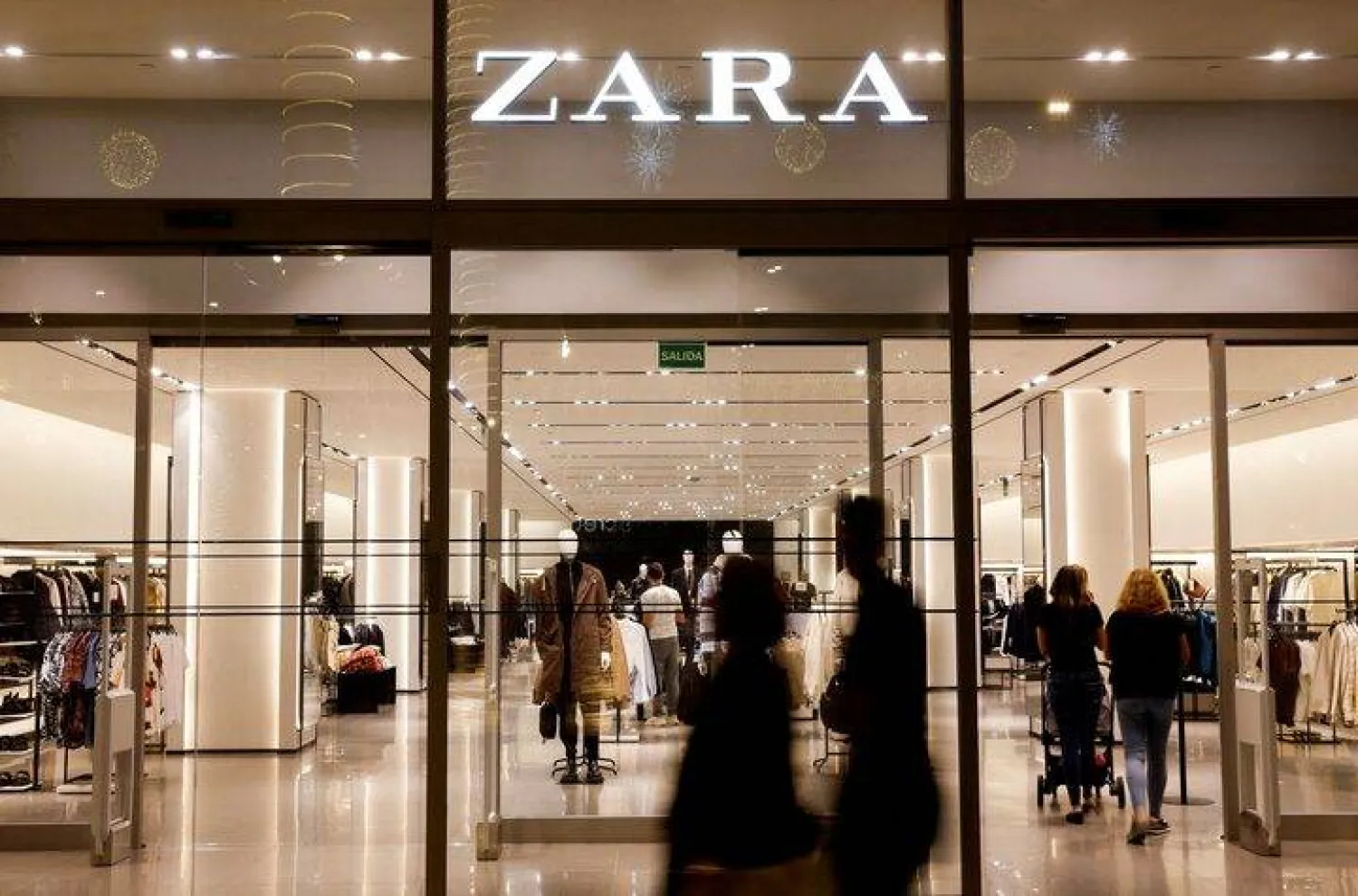
Shoppers walk past a Zara clothes store, part of the Spanish group Inditex, in Las Palmas de Gran Canaria, Spain, December 13, 2022. REUTERS/Borja Suarez
TT

Zara Owner Inditex Posts Record Profit in 2025

Shoppers walk past a Zara clothes store, part of the Spanish group Inditex, in Las Palmas de Gran Canaria, Spain, December 13, 2022. REUTERS/Borja Suarez

Zara owner Inditex, the world's leading low-cost fashion retailer, posted a record annual profit for the third year running on Wednesday, seeing off strong international competition.

The Spanish group, which includes top brands such as Massimo Dutti, Pull & Bear and Bershka, reported a profit of 6.22 billion euros ($7.23 billion) in the fiscal year ending January 31.

That marked a six percent rise on the 5.9 billion it raked in in 2024, which was also a group record, Inditex said.