

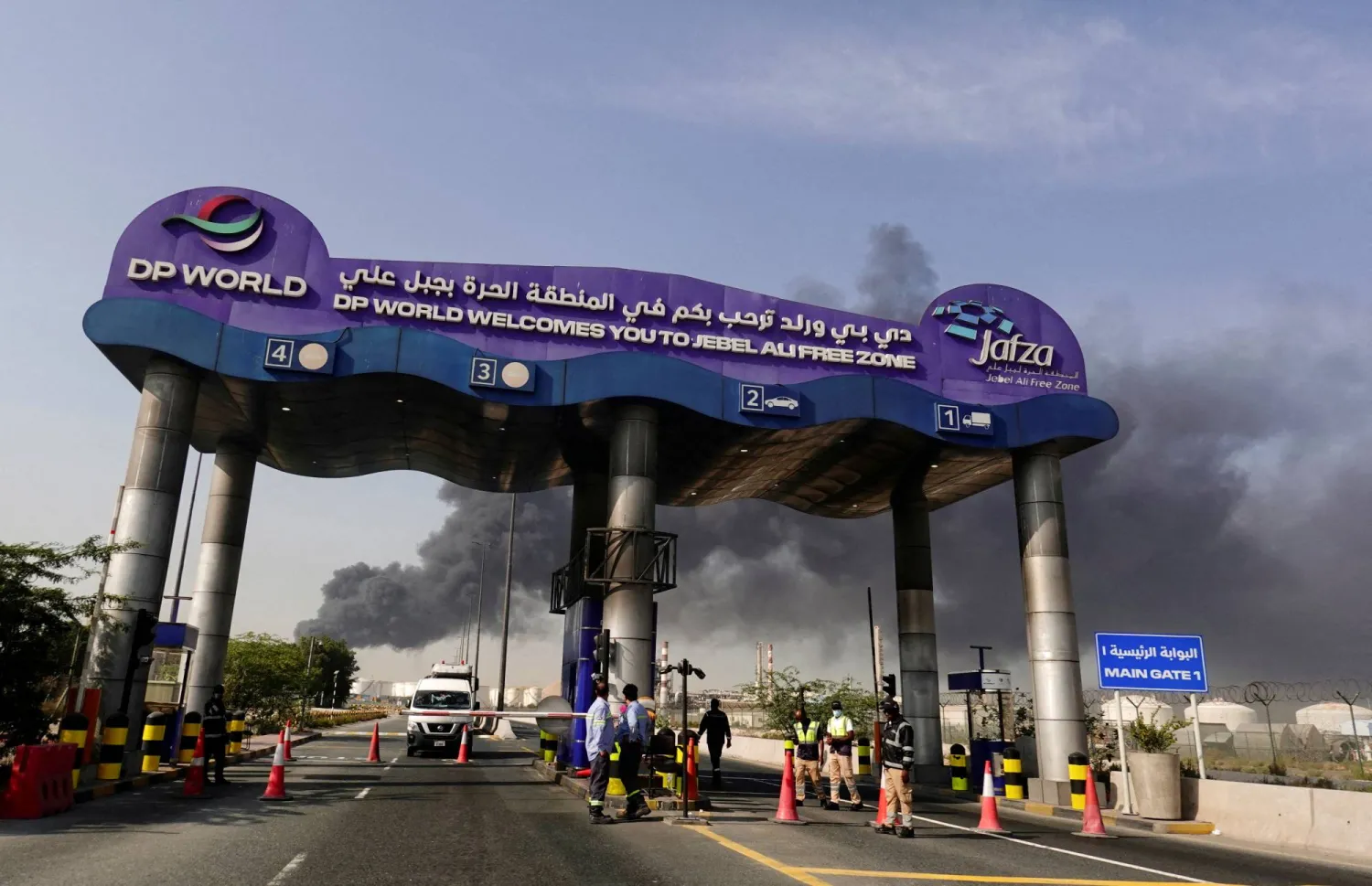

Gulf States Repel Iranian Attacks on Fifth Day of War

Gulf States Repel Iranian Attacks on Fifth Day of War
TT

Gulf States Repel Iranian Attacks on Fifth Day of War

Gulf States Repel Iranian Attacks on Fifth Day of War

As the military confrontation between Iran on one side and the United States and Israel on the other entered its fifth day, Iran continued launching missile and drone attacks targeting several Gulf states. Officials across the region repeatedly affirmed that Gulf air-defense systems were able to intercept most of the incoming threats.

While several Gulf countries announced the interception of dozens of missiles and drones, limited damage was reported in isolated incidents. Governments stressed that their armed forces remain fully prepared to protect national airspace and critical infrastructure.

Saudi Arabia

Major General Turki Al-Maliki, official spokesman for the Saudi Ministry of Defense, announced on Wednesday that air-defense forces intercepted and destroyed nine drones immediately after they entered Saudi airspace.

Al-Maliki later confirmed that two cruise missiles were intercepted and destroyed in Al-Kharj Governorate, about 80 kilometers southeast of the capital, Riyadh. He also reported the interception and destruction of an additional drone in the Eastern Province.

In a related development, an official source at the Ministry of Energy said that the Ras Tanura oil refinery was targeted early Wednesday by an attempted drone attack. The source confirmed that no damage occurred and that oil supplies were not affected.

Qatar

In Qatar, the Ministry of Defense announced that the country had been targeted on Wednesday by a number of drones and two cruise missiles launched from Iran.

According to the ministry, the attack involved 10 drones and the two cruise missiles. The Qatari Emiri Air Defense Forces intercepted six of the drones.

The Qatari Emiri Air Force successfully intercepted two additional drones as well as both cruise missiles, while the Qatari Emiri Naval Forces dealt with the remaining two drones.

The ministry stressed that the Qatari Armed Forces possess the full capabilities and resources necessary to protect the country’s sovereignty and territory and to respond decisively to any external threat.

Kuwait

The Kuwaiti Armed Forces announced that they had dealt with a wave of missiles and drones detected in the country’s airspace.

In a statement, the Kuwaiti Army’s General Staff said the armed forces were carrying out their duties in intercepting and neutralizing the targets, emphasizing their full readiness to confront all threats and ensure the protection of the nation’s territory, airspace, and the safety of citizens and residents.

Separately, Kuwait’s Ministry of Health announced the death of a resident child after being injured by falling debris in a residential area of Capital Governorate.

The ministry’s official spokesman, Dr. Abdullah Al-Sanad, said that Al-Amiri Hospital received the 11-year-old girl through emergency medical services after she was struck by shrapnel that fell in a residential neighborhood. However, she passed away due to her injuries.

United Arab Emirates

The UAE Ministry of Defense reported that air defense systems successfully intercepted three ballistic missiles, while 129 drones were detected. Of those, 121 were intercepted, while eight fell inside the country’s territory.

The ministry said that since the beginning of the Iranian attacks, 189 ballistic missiles had been detected heading toward the UAE. 175 were destroyed, 13 fell into the sea, and one landed inside Emirati territory.

Authorities also reported detecting 941 Iranian drones, with 876 intercepted and 65 falling inside the country, in addition to the detection and destruction of eight cruise missiles.

The ministry said the attacks caused some collateral damage, as well as three fatalities and 78 injuries, most of them described as minor.

Bahrain

The General Command of the Bahrain Defense Force announced that 74 missiles and 95 hostile drones had been destroyed since the beginning of Iranian attacks on the country.

In a statement, the command said all air-defense systems remain on maximum alert to respond immediately and decisively to missile and drone strikes, which it described as “ongoing and unjustified Iranian aggression.”

It added that specialized field teams are rapidly securing attack sites to ensure public safety and that air-defense systems remain at the highest level of readiness.

The command stressed that targeting civilians and civilian infrastructure with missiles and drones constitutes a flagrant violation of international humanitarian law and the United Nations Charter, affirming Bahrain’s legitimate right to take all necessary measures to defend its sovereignty and security.

Maritime Incident Near Hormuz

Separately, the Royal Navy of Oman responded to a report that a Malta-flagged cargo ship had been struck by two missiles near the Strait of Hormuz.

Authorities said the vessel’s 24 crew members were rescued and provided with the necessary medical care, confirming that all were in good health.




Iran Continues Attacks on Gulf States on Sixth Day of War

Smoke from intercepted missiles appears in the sky over Doha (EPA). 
TT

Iran Continues Attacks on Gulf States on Sixth Day of War

Smoke from intercepted missiles appears in the sky over Doha (EPA). 

On the sixth day of the war between the United States and Israel on one side and Iran on the other, Tehran continued launching attacks against Gulf countries, while air defenses in Saudi Arabia, Kuwait, Bahrain and the United Arab Emirates intercepted missiles and drones.

Saudi Arabia

Saudi Arabia’s Ministry of Defense announced that its air defenses intercepted and destroyed three cruise missiles outside the city of Al-Kharj in central Saudi Arabia. The defenses also shot down three drones east of Al-Kharj governorate.

The ministry’s official spokesman added that another drone was intercepted and destroyed east of the Al-Jawf region in northern Saudi Arabia near the border with Jordan.

Qatar

Qatar’s Ministry of Defense said Thursday that the country had come under a missile attack, confirming that its air defenses were responding to the incoming missiles.

In a statement carried by the Qatar News Agency, the ministry urged citizens, residents and visitors to remain calm and follow instructions issued by the security authorities.

Qatar’s Ministry of Interior also announced that, as a precautionary measure to ensure public safety, authorities had temporarily evacuated residents living in the vicinity of the US embassy. Alternative accommodation was provided, the ministry said in a statement on its official account on platform X.

Since the outbreak of the US–Israeli war against Iran on Saturday, Iranian forces have repeatedly launched missiles and drones at several Gulf states, including Qatar.

Complaint to the United Nations

Qatar sent identical letters to United Nations Secretary-General Antonio Guterres and to Michael Waltz, the United States’ permanent representative to the UN and president of the Security Council for March, detailing the latest Iranian attack on Qatari territory.

According to the Qatari Ministry of Foreign Affairs, the country’s permanent representative to the UN, Sheikha Alya Ahmed bin Saif Al Thani, said in the letter that the attack constituted a “flagrant violation” of Qatar’s sovereignty and a direct threat to its security and territorial integrity, warning that it represents an unacceptable escalation threatening regional stability.

The letter reviewed details of the ongoing attacks, citing Defense Ministry figures showing that Qatar had so far detected three cruise missiles, 101 ballistic missiles, 39 drones and two Su-24 fighter jets.

Qatar said its armed forces successfully intercepted three cruise missiles, 98 ballistic missiles, 24 drones and the two fighter aircraft. It stressed that the armed forces possess the capabilities necessary to protect the country’s sovereignty and confront any external threat.

The country concluded by strongly condemning the attacks and affirming its full right to respond in accordance with Article 51 of the UN Charter in defense of its national interests. It also requested that the letter be circulated as an official Security Council document.

Kuwait

Kuwait on Thursday denied reports of an incident near Mubarak Al-Kabeer Port after Iran claimed that the Iranian Revolutionary Guard Corps had attacked a US oil tanker sailing in the Gulf.

Kuwait’s Ministry of Interior said the incident occurred outside the country’s territorial waters and at least 60 kilometers away from the port.

Earlier, the United Kingdom Maritime Trade Operations (UKMTO) agency reported receiving a notification of an incident about 55 nautical miles southeast of Mubarak Al-Kabeer Port.

The captain of an oil tanker anchored in the area reported hearing and seeing a large explosion on the vessel’s port side before a small boat was seen leaving the scene.

An oil spill was observed, potentially causing environmental damage, while water also entered the tanker. UKMTO confirmed that all crew members were safe.

Iran’s Tasnim news agency reported that a fire had broken out aboard the tanker in the northern Gulf.

The Iranian Revolutionary Guard Corps also renewed its threat to seize control of the Strait of Hormuz, warning that vessels from the United States, Israel, European countries and their allies would not be allowed to pass and could be targeted.

The Strait of Hormuz plays a pivotal role in global energy trade, with about one-fifth of the world’s oil shipments passing through the waterway near Iran’s coast.

Missile attacks on vessels have repeatedly been reported in the Gulf, the Strait of Hormuz and the Gulf of Oman. Iranian missile and drone threats have nearly halted commercial shipping in the region since the latest hostilities began.

The US president said the US Navy would escort ships through the Strait of Hormuz if necessary.

United Arab Emirates

On the sixth day of the conflict, the UAE’s air defenses detected seven ballistic missiles, intercepting six while one fell inside the country. Authorities also detected 131 drones, intercepting 125 of them, while six landed on Emirati territory.

The attacks resulted in three deaths — from Pakistan, Nepal and Bangladesh — and 94 minor injuries among people of multiple nationalities, including Emirati, Egyptian, Ethiopian, Filipino, Pakistani, Iranian, Indian and others.

Reuters reported late Thursday that repeated explosions were heard in Abu Dhabi near Zayed International Airport. The UAE’s National Emergency Crisis and Disaster Management Authority urged residents to move to safe locations and take shelter until the danger passed.

Since the beginning of the Iranian attacks, the UAE says it has detected 196 ballistic missiles, intercepting 181. Thirteen fell into the sea and two struck inside the country. Authorities also detected 1,072 Iranian drones, intercepting 1,001 while 71 landed within UAE territory. Eight cruise missiles were also intercepted.

The UAE Ministry of Defense said its forces remain fully prepared to counter any threat and safeguard the country’s sovereignty, security and stability.

Bahrain

Bahrain’s Ministry of Interior said Thursday evening that a facility in the Maameer area had been targeted, adding that authorities responded immediately to the incident.

Earlier, Bahrain’s Defense Force said it had destroyed 75 missiles and 123 drones targeting the kingdom since the start of what it described as Iranian attacks.

The military urged residents to remain indoors except in cases of necessity, avoid filming military operations or debris sites and rely only on official sources for information.

Japan Evacuates Citizens

Japan’s Foreign Ministry announced Thursday that it will evacuate Japanese nationals from four Middle Eastern countries using chartered flights as the US–Israeli war against Iran continues.

According to the Kyodo news agency, Tokyo raised its travel advisory level for Kuwait, Bahrain, Qatar and the United Arab Emirates — as well as Saudi Arabia and Oman — to Level 3, urging citizens to avoid all travel.

Japanese nationals wishing to leave will be transported overland to Saudi Arabia and Oman before boarding chartered flights to Tokyo.


Saudi FM Discusses Regional Developments with Brazilian, Polish Counterparts

Saudi Foreign Minister Prince Faisal bin Farhan (Asharq Al-Awsat)
TT

Saudi FM Discusses Regional Developments with Brazilian, Polish Counterparts

Saudi Foreign Minister Prince Faisal bin Farhan (Asharq Al-Awsat)

Saudi Minister of Foreign Affairs Prince Faisal bin Farhan bin Abdullah held separate phone calls with the Minister of Foreign Affairs of the Federative Republic of Brazil, Mauro Vieira, and the Deputy Prime Minister and Minister of Foreign Affairs of the Republic of Poland, Radosław Sikorski.

During the discussions, the ministers reviewed the latest developments in the region, examined their implications for regional and international security and stability, and exchanged views on the ongoing efforts being undertaken to address these challenges.


Saudi, UAE Defense Ministers Affirm Full Solidarity against Iranian Aggression

Saudi Arabia’s Minister of Defense, Prince Khalid bin Salman bin Abdulaziz. (SPA)
TT

Saudi, UAE Defense Ministers Affirm Full Solidarity against Iranian Aggression

Saudi Arabia’s Minister of Defense, Prince Khalid bin Salman bin Abdulaziz. (SPA)

Saudi Arabia’s Minister of Defense, Prince Khalid bin Salman bin Abdulaziz, held a phone call on Thursday with Sheikh Hamdan bin Mohammed bin Rashid Al Maktoum, Crown Prince of Dubai, Deputy Prime Minister, and Minister of Defense of the United Arab Emirates.

During the call, the two officials condemned the Iranian aggression against the Kingdom of Saudi Arabia, the United Arab Emirates, and other brotherly states, the Saudi Press Agency said.

They also expressed full solidarity and commitment to providing necessary support for any measures taken in response.