


Singapore Trade Minister: Saudi Investment Initiatives have Captivated Our Companies

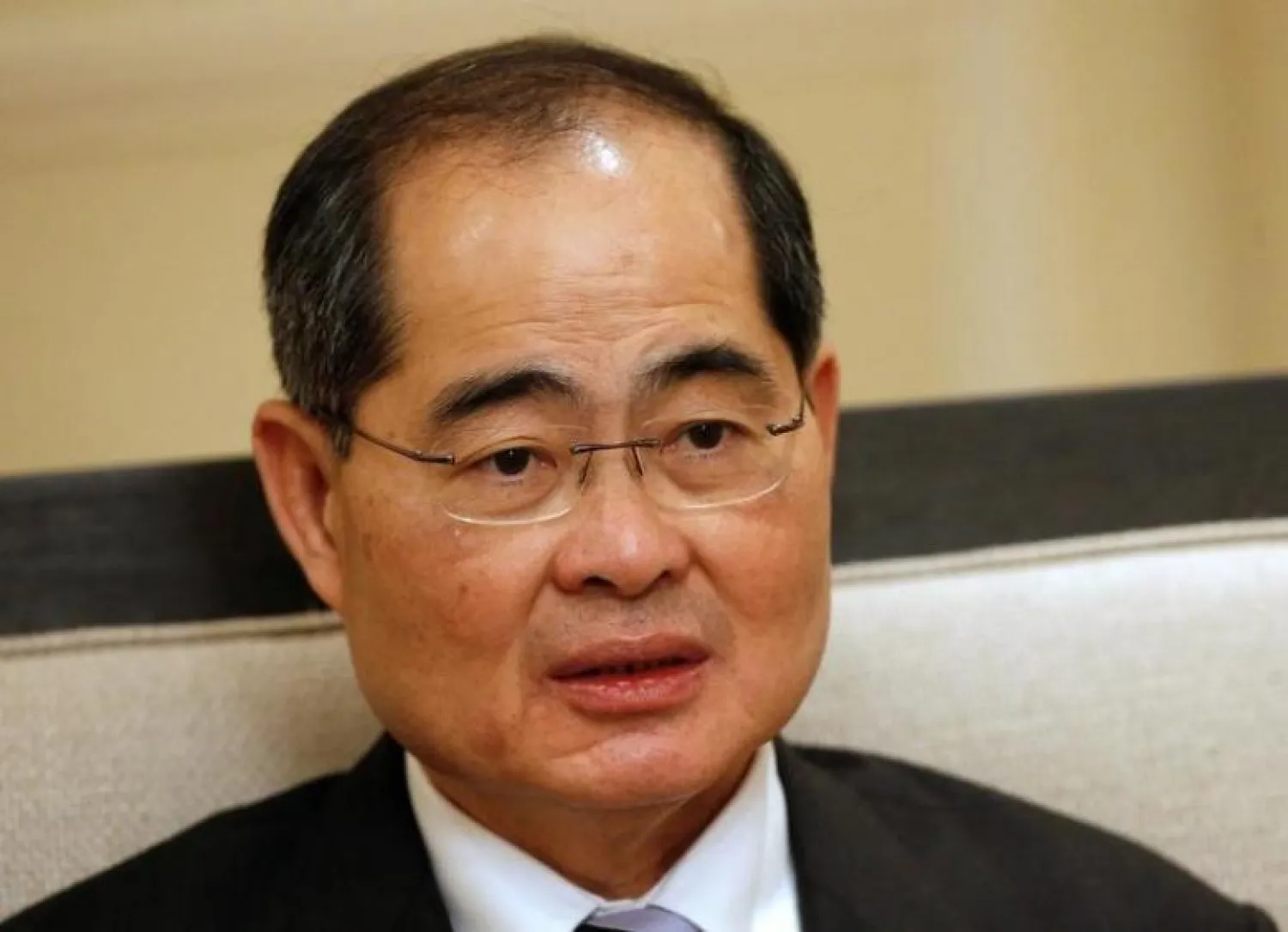
Singapore's Minister of Trade and Industry Lim Hng Kiang attends an interview with Reuters at a hotel in Mexico City, Mexico, June 9, 2016. REUTERS/Henry Romero
TT

Singapore Trade Minister: Saudi Investment Initiatives have Captivated Our Companies

Singapore's Minister of Trade and Industry Lim Hng Kiang attends an interview with Reuters at a hotel in Mexico City, Mexico, June 9, 2016. REUTERS/Henry Romero

Singapore Trade Minister Lim Hng Kiang‎ said the initiatives recently announced in Saudi Arabia during the “Future Investment Initiative" Conference have raised the interest of Singaporean companies looking to increase their business activities and investments within the Kingdom and achieve mutual benefit.

“Given the great transformation that Saudi Arabia is seeking, Vision 2030 and the Future Investment Initiative are clear signals that the Kingdom welcomes foreign investment and takes concrete steps to diversify the Saudi economy,” Lim Hng Kiang told Asharq al-Awsat newspaper on the sidelines of the conference.

“These interesting Saudi initiatives are based on the determination to move away from traditional oil dependence and focus on different sectors such as health care, education, facilities management, logistics and exports; areas where Singaporean firms with relevant expertise can contribute to achieve the Kingdom’s plans,” he added.

Asked about relations between Saudi Arabia and Singapore, the trade minister said: “Saudi Arabia and Singapore enjoy strong trade and investment ties, supported by the GCC-Singapore Free Trade Agreement, which entered into force in 2013.”

He went on to say: “Today, Riyadh is one of Singapore’s largest trading partners in the Middle East, where bilateral trade between the two countries exceeded 36 billion riyals (USD 9.6 billion) last year.”

Kiang pointed to the work of major Singaporean companies in the Saudi market, including Changi International Airport, which is working to enhance the efficiency of King Fahd International Airport in Dammam.

He noted that since the beginning of the “Changi” management of Dammam airport, passenger growth has increased significantly each year, stressing that Dammam Airport currently serves 36 airlines, with 65 cities inside and outside the region.

The minister noted that Singapore’s central geostrategic position in South-East Asia makes it a useful starting point for Saudi companies like Aramco and others looking for new opportunities in one of the fastest growing regions in the world. He also said he expected trade and investment to increase between the two sides.



Gold Eases as Firmer Dollar, Lingering Inflation Concerns Weigh

A saleswoman adjusts gold jewellery for sale at a shop in Lianyungang in China eastern Jiangsu province - AFP
TT

Gold Eases as Firmer Dollar, Lingering Inflation Concerns Weigh

A saleswoman adjusts gold jewellery for sale at a shop in Lianyungang in China eastern Jiangsu province - AFP

Gold prices edged lower on Wednesday, weighed down by an uptick in the US dollar and looming inflation concerns that boosted the likelihood of higher interest rates.

Spot gold was down 0.3% at $5,177.50 per ounce, as of 9:18 a.m. ET (1318 GMT). US gold futures for April delivery fell 1.1% to $5,185.20.

The US dollar index inched up 0.3%. A stronger US currency makes dollar-priced commodities more expensive for holders of other currencies, Reuters reported.

"The gold market seems to be in a push-and-pull between safe-haven demand driven by the war and concerns over higher-for-longer interest rates," said Peter Grant, vice president and senior metals strategist at Zaner Metals.

Gold is often seen as a hedge against uncertainty and inflation, but it does not yield interest, making it less attractive when rates are high.

On the geopolitical front, Iran fired at Israel and targets across the Middle East, while at least three ships were hit in the Gulf, demonstrating Tehran can still fight back and disrupt energy supplies despite the most intense US-Israeli strikes yet.

Meanwhile, oil prices rebounded as markets doubted whether the International Energy Agency's plan for a record release of oil reserves could offset potential supply shocks from the conflict. Higher oil prices risk stoking inflation by raising energy and transport costs across the economy.

Data showed the US consumer price index rose 0.3% in February, in line with forecasts and above January's 0.2% increase. CPI rose 2.4% in the year to February, also matching expectations.

Analysts at Standard Chartered noted it is not unusual for gold to experience downside pressure for several weeks amid a need for cash.

"We maintain our positive longer-term view and expect gold to resume its uptrend beyond near-term profit-taking," they added.

Among other metals, spot silver fell 3.1% to $85.67 per ounce, spot platinum lost 0.5% to $2,189.35, and palladium slipped 1.3% to $1,633.30.


Germany, Austria will Release Reserve Oil in Effort to Calm Surging Prices

Fishermen work in front of oil tankers south of the Strait of Hormuz Jan. 19, 2012, offshore the town of Ras Al Khaimah in United Arab Emirates. (AP Photo/Kamran Jebreili, File)
TT

Germany, Austria will Release Reserve Oil in Effort to Calm Surging Prices

Fishermen work in front of oil tankers south of the Strait of Hormuz Jan. 19, 2012, offshore the town of Ras Al Khaimah in United Arab Emirates. (AP Photo/Kamran Jebreili, File)

Germany and Austria said Wednesday they are releasing parts of their oil reserves following an International Energy Agency request for members to release a record 400 million barrels to help temper energy price spikes due to the Iran war.

Japan also said it will release some of its reserves starting Monday.

Group of Seven energy ministers met Tuesday at IEA headquarters in Paris. IEA executive director Fatih Birol said afterwards they had discussed all available options, including making IEA emergency oil stocks available to the market, The AP news reported.

The largest-ever previous collective release of emergency stocks by IEA member countries was 182.7 million barrels, in the wake of the energy shock prompted by Russia’s full-scale invasion of Ukraine in 2022.

IEA members currently hold over 1.2 billion barrels of public emergency oil stocks, with a further 600 million barrels of industry stocks held under government obligation.

Germany’s economy minister Katherina Reiche said the country would release parts of its oil reserves following the IEA request “to release oil reserves amounting to 400 million barrels, which is a good 54 million tons.”

She added it would take a couple of days before the delivery of the first quantities.

“Germany stands behind the IEA’s most important principle of mutual solidarity," Reiche said.

In response to US and Israeli strikes, Iran has attacked commercial ships across the Persian Gulf, escalating a campaign of squeezing the oil-rich region as global energy concerns mount. Iran has effectively stopped cargo traffic in the Strait of Hormuz through which about a fifth of all oil is shipped from the Persian Gulf toward the Indian Ocean.

Iran has also targeted oil fields and refineries in Gulf Arab nations, aiming at generating enough global economic pain to pressure the United States and Israel to end their strikes. Reports of sea mines allegedly laid by Iran in the Strait of Hormuz have also fueled concerns about the security of international energy supplies.

G7 energy ministers on Tuesday announced they supported in principle “the implementation of proactive measures to address the situation, including the use of strategic reserves.”

According to the IEA, export volumes of crude and refined products are currently at less than 10% of pre-war levels.

Austrian Economy Minister Wolfgang Hattmannsdorfer said his country was releasing part of the emergency oil reserve and extending the national strategic gas reserve, adding: “One thing is clear: in a crisis, there must be no crisis winners at the expense of commuters and businesses.”

The German government also said it will introduce a measure to allow gas stations in Germany to raise fuel prices no more than once a day. The federal government wants to introduce this as quickly as possible, Reiche said.

In Austria, starting Monday, price increases at gas stations will be allowed only three times a week, the country’s economy minister said.


Saudi Arabia's Industrial and Mining Sectors Record Strong Growth in 2025

The Ministry of Industry and Mineral Resources logo
TT

Saudi Arabia's Industrial and Mining Sectors Record Strong Growth in 2025

The Ministry of Industry and Mineral Resources logo

The Ministry of Industry and Mineral Resources announced the 2025 performance indicators for the Kingdom’s industrial and mining sectors, highlighting continued growth and increased investment.

According to the ministry, 1,660 new industrial licenses were issued in 2025, with investments exceeding SAR76 billion and the potential to create approximately 34,847 jobs.

During the same year, 1,201 factories began production, representing investments of more than SAR31 billion and employing around 45,454 workers, reflecting the sector’s growing appeal to both local and international investors.

In the mining sector, the ministry issued 736 new mining licenses. By the end of the year, the total number of active mining licenses reached 2,925, covering various license types across the sector.

These indicators underscore the ministry’s ongoing efforts to develop the mining industry, strengthen its global competitiveness, and position it as the third pillar of Saudi industry.