

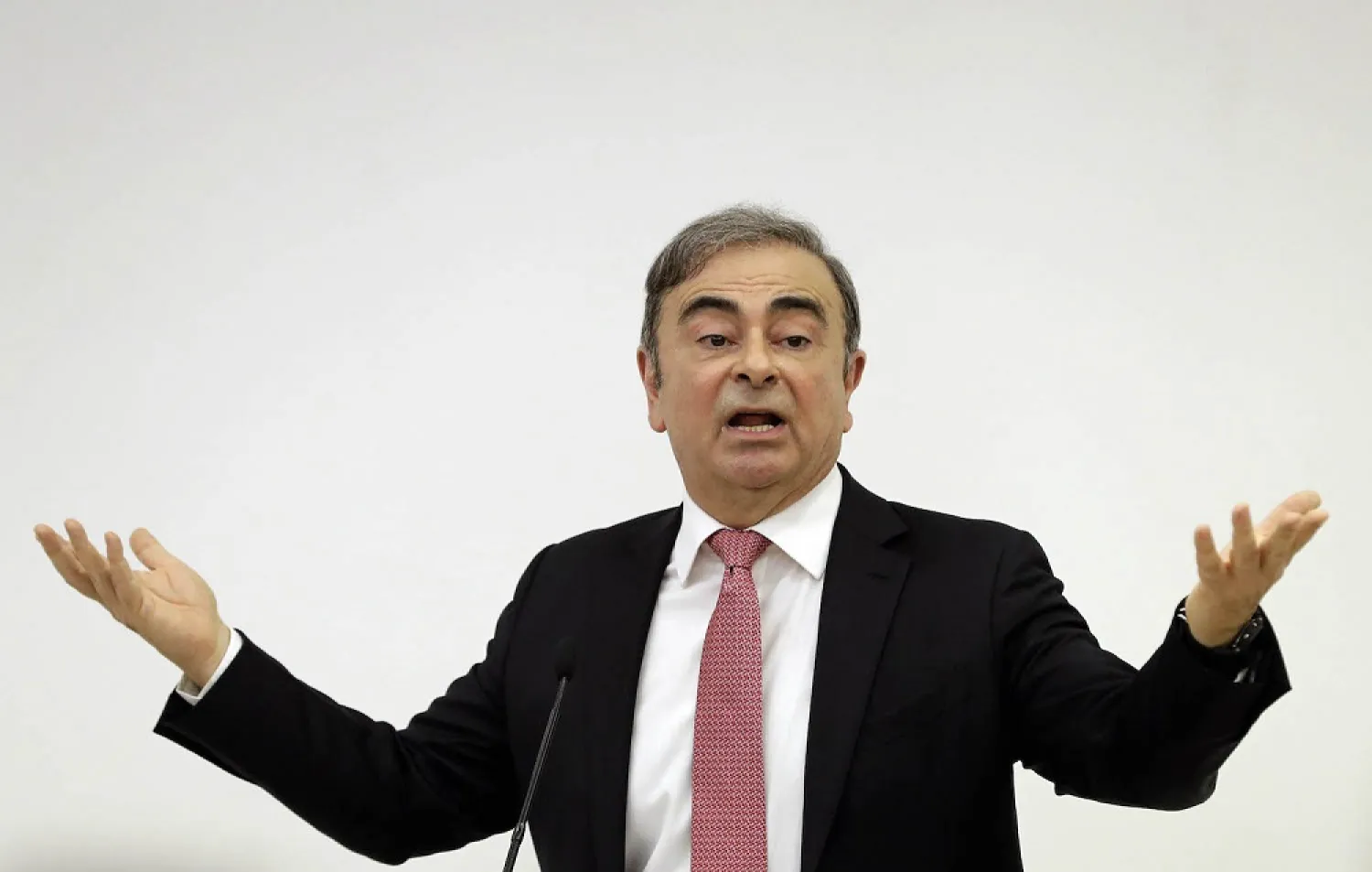

Turkish Suspect Tells Court Ghosn Mused on Hollywood Movie of Escape from Japan

Carlos Ghosn. (Getty Images)
TT

Turkish Suspect Tells Court Ghosn Mused on Hollywood Movie of Escape from Japan

Carlos Ghosn. (Getty Images)

A Turkish jet executive on trial over Carlos Ghosn’s dramatic escape from Japan told a court on Friday that the former Nissan boss spoke about Hollywood making a movie of his getaway as he flew in a private jet to Beirut.

Ghosn, once a leading light of the global car industry, was arrested in Japan in late 2018 and charged with underreporting his salary and using company funds for personal purposes, charges he denies.

The ousted chairman of the alliance of Renault, Nissan Motor Co and Mitsubishi Motors Corp had been awaiting his trial under house arrest in Japan when he escaped in December via Istanbul to Beirut, his childhood home.

An executive from Turkish private jet operator MNG Jet and four pilots were detained in early January soon after Ghosn’s escape and charged with migrant smuggling, a charge carrying a maximum sentence of eight years in jail.

They appeared in white protective overalls, masks and gloves as a measure against the coronavirus, as the court in Istanbul began hearing their defense. Two flight attendants, charged with failing to report a crime - which could incur a sentence of up to one year - were also there.

All seven defendants pleaded not guilty to the charges.

In their indictment, prosecutors had said MNG Jet operations manager Okan Kosemen - who is one of the seven on trial - knew before the flight left Osaka that Ghosn would be on board and would transfer to Beirut.

Kosemen said in court on Friday he was only told via phone about Ghosn’s presence on the plane during its flight to Istanbul and that he cooperated under duress, believing his family could be in danger.

Kosemen said a Lebanese broker who had arranged the flight had told him by phone, from Beirut, that the ex-Nissan boss was on board. He added that he had heard “screams of joy” in the background.

“I swore at him (the broker). I was very angry,” he told the court.

Kosemen later met the arriving plane at an Istanbul airport, and accompanied Ghosn on the Beirut-bound flight, he told the court. “Carlos asked me how much the plane cost ... and told me about Hollywood producers who want to make this escape a movie,” he said.

A lawyer for Ghosn did not immediately respond to a request to comment.

At the end of Friday’s session, the court ordered the release pending further proceedings of Kosemen and the four pilots, who had been in custody until now.

“When you take into account the time they’ve served already we expected a release decision earlier. The court answered our calls for a release today. We think our client is innocent,” Kosemen’s lawyer Levent Yildiz told Reuters.

Saga shakes auto world
The prosecution said Kosemen used WhatsApp to communicate with pilots before, during and after the Osaka-Istanbul flight, using terms like “luggage” and “consignment” to refer to Ghosn. Kosemen told the court “consignment” referred to sake - rice wine - that he himself had ordered from Japan.

According to the indictment, Kosemen told prosecutors a price of $175,000 was agreed for the flight with the Lebanese broker and paid into MNG Jet’s bank account.

In January, MNG Jet said he acted without the knowledge of the company and it had filed a criminal complaint for the illegal use of its aircraft. MNG declined to comment.

The pilots have said they are only required to check headcount, not the identities of passengers, according to the indictment.

Japan has formally asked the United States to extradite two Americans - a former Green Beret and his son - who also stand accused of helping Ghosn flee Japan. They were arrested in Massachusetts in May.

The Ghosn saga has shaken the global auto industry, at one point jeopardizing the Renault-Nissan alliance which he masterminded, and increased scrutiny of Japan’s judicial system.

Renault and Nissan have struggled to recover profitability following his tenure, during which both automakers say Ghosn focused too much on expanding sales and market share.



Iran Threatens to Retaliate against Gulf Energy and Water after Trump Ultimatum

epa12835579 Liquefied natural gas (LNG) facilities in Ras Laffan Industrial City, in Ras Laffan, Qatar, 25 February 2026 (issued 20 March 2026). Qatar has said Iranian missile attacks on the Ras Laffan Industrial City have caused significant damage to the natural gas industrial complex, located approximately 80 km north-east of Doha. It is operated by Qatar Energy and employs around 115,000 people according to the company.  EPA/HANNIBAL HANSCHKE
epa12835579 Liquefied natural gas (LNG) facilities in Ras Laffan Industrial City, in Ras Laffan, Qatar, 25 February 2026 (issued 20 March 2026). Qatar has said Iranian missile attacks on the Ras Laffan Industrial City have caused significant damage to the natural gas industrial complex, located approximately 80 km north-east of Doha. It is operated by Qatar Energy and employs around 115,000 people according to the company. EPA/HANNIBAL HANSCHKE
TT

Iran Threatens to Retaliate against Gulf Energy and Water after Trump Ultimatum

epa12835579 Liquefied natural gas (LNG) facilities in Ras Laffan Industrial City, in Ras Laffan, Qatar, 25 February 2026 (issued 20 March 2026). Qatar has said Iranian missile attacks on the Ras Laffan Industrial City have caused significant damage to the natural gas industrial complex, located approximately 80 km north-east of Doha. It is operated by Qatar Energy and employs around 115,000 people according to the company.  EPA/HANNIBAL HANSCHKE
epa12835579 Liquefied natural gas (LNG) facilities in Ras Laffan Industrial City, in Ras Laffan, Qatar, 25 February 2026 (issued 20 March 2026). Qatar has said Iranian missile attacks on the Ras Laffan Industrial City have caused significant damage to the natural gas industrial complex, located approximately 80 km north-east of Doha. It is operated by Qatar Energy and employs around 115,000 people according to the company. EPA/HANNIBAL HANSCHKE

Iran said on Sunday it would strike the energy and water systems of its Gulf neighbors in retaliation if US President Donald Trump follows through with a threat to hit Iran's electricity grid in 48 hours, escalating the three-week-old war.

The prospect of tit-for-tat strikes on civilian infrastructure could deepen the regional crisis and rattle global markets when they reopen on Monday morning, Reuters reported.

Air raid sirens sounded across Israel from the early hours of Sunday, warning of incoming missiles from Iran, after scores of people were hurt overnight in two separate attacks in the southern Israeli towns of Arad and Dimona.

The Israeli military said hours later that it was striking Tehran in response.

Trump threatened overnight to "obliterate" Iran's power plants if Tehran did not fully reopen the Strait of Hormuz within 48 hours, barely a day after he talked about "winding down" the war. He made the new threat as US Marines and heavy landing craft are heading to the region.

Iran's Parliament Speaker Mohammad Baqer Qalibaf wrote on X that critical infrastructure and energy facilities in the Middle East could be "irreversibly destroyed" should Iranian power plants be attacked.

Iran's powerful Revolutionary Guards said it would also mean the shipping lane where a fifth of global oil and liquefied natural gas normally transits along Iran's southern coast would remain shut.

"The Strait of Hormuz will be completely closed and will not be opened until our destroyed power plants are rebuilt," the Guards said in a statement.

"President Trump's threat has now placed a 48-hour ticking time bomb of elevated uncertainty over markets," said IG market analyst Tony Sycamore, who expects stock markets to fall when they reopen on Monday.

Oil prices jumped on Friday, ending the day at their highest in nearly four years.

Markets already under severe strain from blockaded shipping were further rattled last week when Israel attacked a major gas field in Iran, and Tehran responded with strikes on neighbors Saudi Arabia, Qatar and Kuwait, raising the prospect of damage hindering energy output even if tankers resume sailing.

Iranian attacks have effectively closed the Strait of Hormuz, causing the worst oil crisis since the 1970s. Its near-closure sent European gas prices surging as much as 35% last week.

"If Iran doesn't FULLY OPEN, WITHOUT THREAT, the Strait of Hormuz, within 48 HOURS from this exact point in time, the United States of America will hit and obliterate their various POWER PLANTS, STARTING WITH THE BIGGEST ONE FIRST!" Trump posted on social media around 7:45 p.m. EDT (2345 GMT) on Saturday.

Iranian media quoted the country's representative to the International Maritime Organisation as saying the strait remains open to all shipping except vessels linked to "Iran's enemies".

Ali Mousavi said passage through the waterway was possible by coordinating security and safety arrangements with Tehran.

Ship-tracking data shows some vessels, such as Indian-flagged ships and a Pakistani oil tanker, have negotiated safe passage through the strait. But the vast majority of ships have remained holed up inside.

Iran's Khatam al-Anbiya military command headquarters said on Sunday if the US hit Iran's fuel and energy infrastructure, Iran would attack all US energy, information technology and desalination infrastructure in the region.

Striking major Iranian power plants could trigger blackouts, crippling everything from pumps and refineries to export terminals and military command centres.


Treasury's Bessent Says US Has 'Plenty' of Funds for Iran War

US and Iran flags are seen in this illustration taken June 18, 2025. REUTERS/Dado Ruvic/Illustration/File Photo
TT

Treasury's Bessent Says US Has 'Plenty' of Funds for Iran War

US and Iran flags are seen in this illustration taken June 18, 2025. REUTERS/Dado Ruvic/Illustration/File Photo

The US government has "plenty of money" to fund the war against Iran, but is requesting supplemental funding from Congress to ensure the military is well supplied in the future, US Treasury Secretary Scott Bessent said on Sunday.

Bessent, speaking on NBC News' "Meet the Press" program, also ruled out pushing for any tax increases to fund the war.

The US military's request for $200 billion in additional funding for the Iran war faces stiff opposition in Congress, with Democrats and even some Republicans questioning the need after large defense appropriations last year.

Bessent defended the request without confirming the amount, Reuters reported.

President Donald Trump has not yet sent a request for the Senate and House of Representatives to approve the sum and his administration has made clear that the number could change.

"We have plenty of money to fund this war," Bessent said. "This is supplemental. President Trump has built up the military, as he did in his first term, as he is now doing in his second term, and he wants to make sure that the military is well supplied going forward."

Secretary of Defense Pete Hegseth said last week that the extra money was needed "to ensure that we're properly funded for what's been done, for what we may have to do in the future."

He dismissed a question about possible tax increases as "ridiculous" and said that was "not at all" under consideration.

Early indications suggest that the war will be the most expensive for the US since the long conflicts in Iraq and Afghanistan. Administration officials told lawmakers that the first six days of the Iran war had cost more than $11 billion.

The Republican-led Congress has already approved record funding for the military since Trump began his second term in January 2025. Last month, he signed into law the Fiscal 2026 Defense Appropriations Act with about $840 billion in funding.

And last summer, over opposition from Democrats, the Republican-led Congress passed a sweeping tax cut and spending bill that included $156 billion for defense.

Bessent also defended the Trump administration's moves in recent days to lift sanctions on Iranian and Russian oil. Doing so, he argued, would allow other countries besides China — including Japan and South Korea — to purchase the oil, while preventing oil prices from spiking to $150 per barrel and reducing the overall revenues Iran and Russia would receive.

He said a Treasury analysis showed that the maximum extra amount of oil revenue Russia could get would be $2 billion.


Iran Has Fired 400 Missiles at Israel, 92% Intercepted since Start of War

A woman stands inside a destroyed building, amid the US-Israeli conflict with Iran, in Tehran, Iran, March 21, 2026. Reuters/Alaa Al-Marjani
TT

Iran Has Fired 400 Missiles at Israel, 92% Intercepted since Start of War

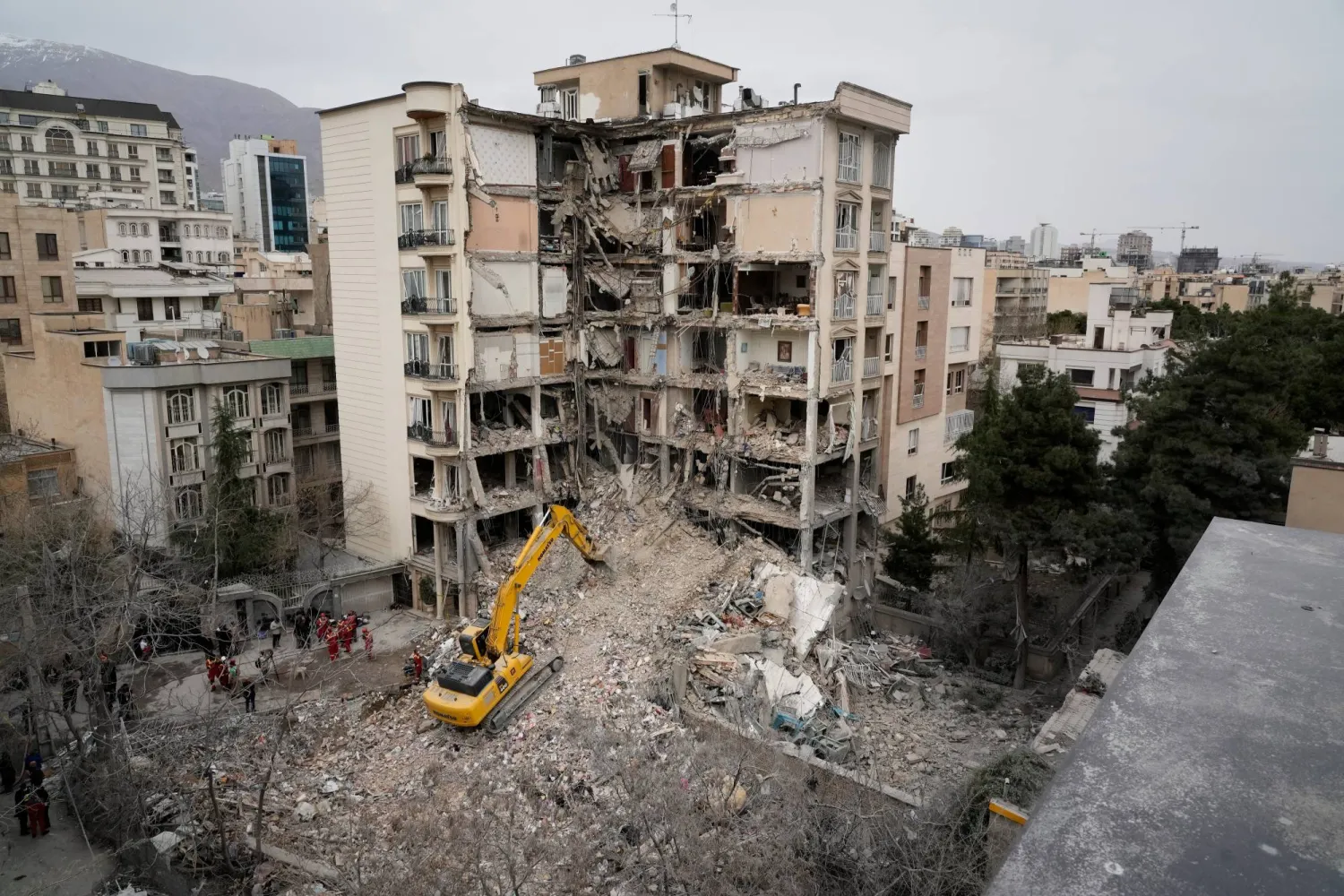
A woman stands inside a destroyed building, amid the US-Israeli conflict with Iran, in Tehran, Iran, March 21, 2026. Reuters/Alaa Al-Marjani

Israel's military said on Sunday that Iran had fired more than 400 ballistic missiles at Israel since the start of the Middle East war, with around 92 percent of them intercepted.

The figures were announced a day after Iranian missiles struck two towns in southern Israel, leaving around 175 people needing medical treatment.

"Iran has fired over 400 ballistic missiles. We have had great interception rates. We have approximately a 92 percent successful interception rate," Israeli military spokesman Lieutenant Colonel Nadav Shoshani told journalists.

One of the towns hit on Saturday was Dimona, widely believed to hold Israel's undeclared nuclear arsenal.

The impact of the missile was just five kilometres from the town's nuclear facility, AFP reported.

The other nearby town to be hit was Arad, which saw extensive damage to several buildings.

Shoshani said the missiles fired on Saturday were "not different from ballistic missiles" and that there had now only been four direct hits during the war so far.

The Israeli military has said it will investigate the failure to intercept the incoming fire on Saturday.

"We have intercepted in the past and will intercept in the future," Shoshani said.

Prime Minister Benjamin Netanyahu acknowledged Saturday was a "very difficult evening" and urged residents to head to protection centres whenever sirens blare.

On Sunday he visited Arad, where he vowed to continue pursuing top Iranian officials.

"We are going after the IRGC (Iran's Revolutionary Guards), this criminal gang," Netanyahu told journalists at the site.

"We're going after them personally, their leaders, their installations, their economic assets. We're going after them personally."

One man was wounded Sunday in the commercial hub of Tel Aviv in what local media said was a blast from a cluster munition.