



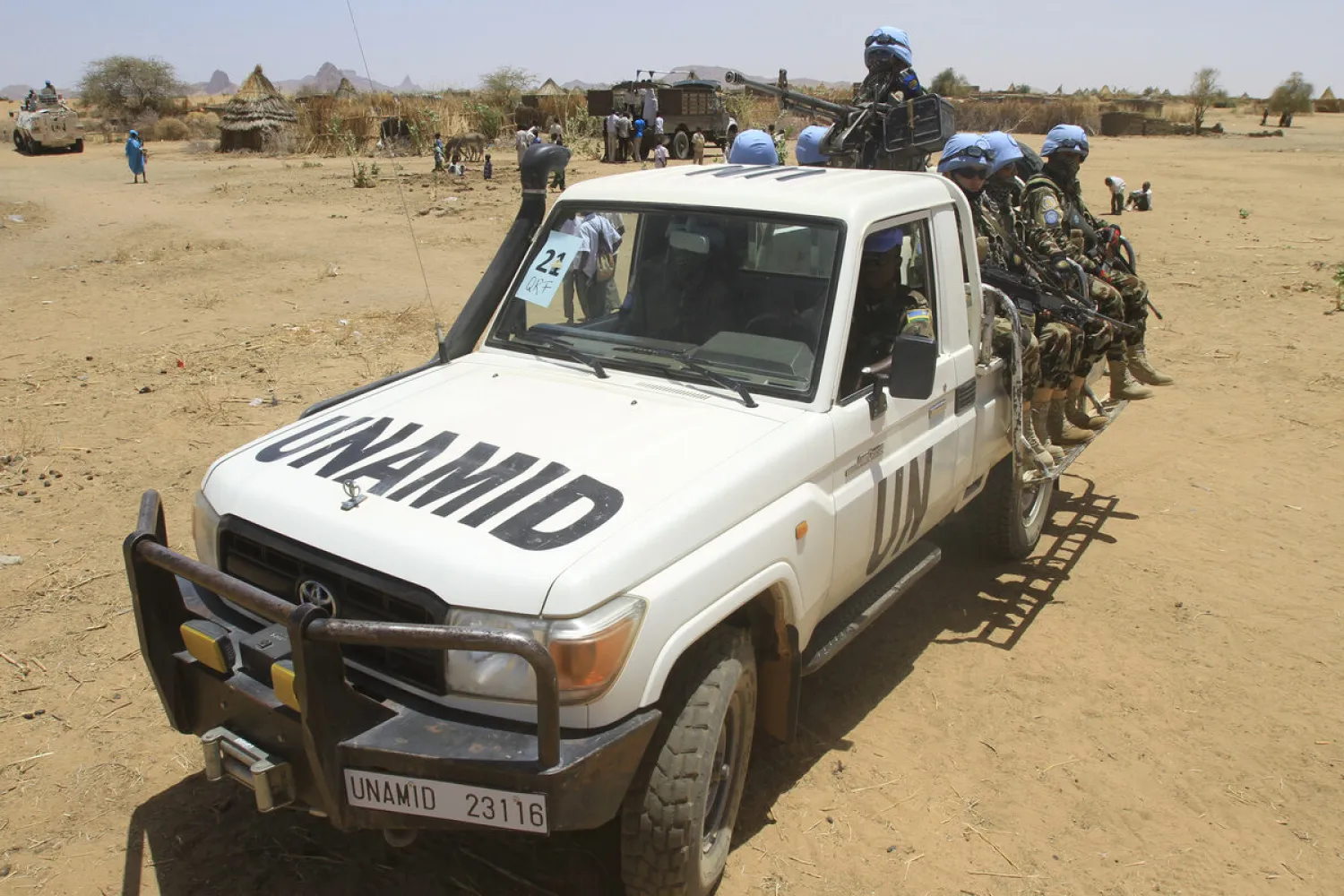

The Security Council decided to end the joint UN-African Union peacekeeping force in Sudan’s western Darfur region when the mission's mandate runs out on Dec. 31, after pressure from the country's transitional government, Russia and African nations.
The 15-member council voted unanimously late Tuesday not to extend the mandate of the joint mission, known as UNAMID.
In June, the council unanimously approved replacing it with a much smaller and solely political mission, which will be known as United Nations Integrated Transition Assistance Mission in Sudan, or UNITAMS.
The UNAMID force, established in 2007, was the first joint UN-AU peacekeeping operation. According to the UN website of the peacekeeping mission, there are currently some 4,000 troops, 480 police advisers, 1,631 police, 483 international civilian staff and 945 national civilian staff on the ground.
The Sudanese government has been pressing for UNAMID to expire at year's end, a request that obtained the backing of Russia, Niger, South African, Tunisia and St. Vincent and the Grenadines in a council meeting earlier this month.
Several Western nations have urged more time before UNAMID's exit, with Germany’s ambassador to the UN, Christoph Heusgen, warning that Sudan is at “a critical juncture” and “the transition process could still derail.”
Sudan is on a fragile path to democracy after a popular uprising led the military to overthrow president Omar al-Bashir in April 2019, after nearly three decades of rule. Since then, the country has been led by a joint military-civilian government
The Security Council also called on UN chief Antonio Guterres to complete the withdrawal of UNAMID by June 30 next year, and to quickly ensure a “phased, sequenced and efficient" transition to UNITAMS.
It urged Sudan’s government to “fully and swiftly” implement its plan to provide protection to civilians in Darfur. The government has already started to deploy a 12,000-strong Civilian Protection Force to the region as part of a peace deal it struck with the Sudan Revolutionary Front, a coalition of several armed groups.
The Security Council called on the transitional government to work to “build confidence of local communities in the ability of the rule of law institutions to deliver justice, ensure accountability and provide legal protection to vulnerable communities."


