

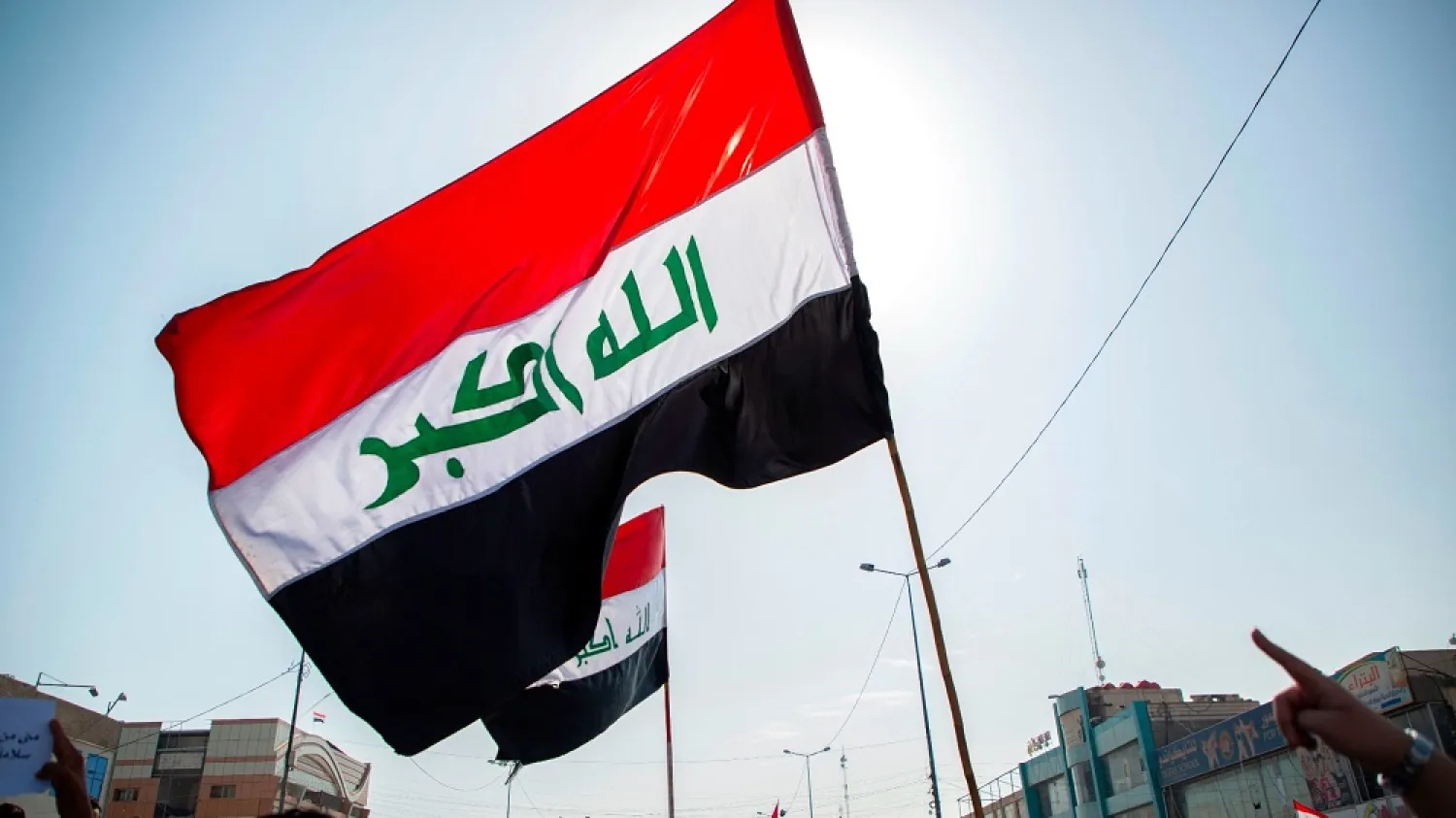

Iraqi President Calls for Formation of Govt. that Can 'Confront Challenges'

The new parliament is set to meet for the first time on Sunday. (Getty Images)
TT

Iraqi President Calls for Formation of Govt. that Can 'Confront Challenges'

The new parliament is set to meet for the first time on Sunday. (Getty Images)

Iraqi President Barham Salih called on Wednesday for the formation of a new government that can "confront the challenges" even as differences persist between the political parties that won the October parliamentary elections.

The parliament is set to meet for the first time on Sunday.

Speaking at a ceremony marking the second anniversary of the killing of Iranian general Qassem Soleimani in Baghdad, Salih said: "We are faced with a major national responsibility."

"We must work on preventing the re-occurrence of terrorist tragedies and preventing extremist and terrorist cells from carrying out attacks in a desperate attempt to meddle with our security and peace," he urged.

"We must therefore unite national ranks for the sake of protecting civil peace. This also demands radical reform to secure a dignified life for the people," added the president.

The new parliament must be allowed to carry out its duties and confront challenges lurking in our country and region, he stressed.

The winners of the elections have yet to agree on the final form of the largest parliamentary bloc that will hold sway over the formation of a new government.

The Shiite, Sunni and Kurdish forces continue to debate over whether the government will be formed through consensus or be "majoritarian".

Debate is also raging over whether to re-elect President Salih and Prime Minister Mustafa al-Kadhimi to another term. Debate is also ongoing over the position of parliament speaker.

Given the sharp differences, attention will be focused on Sunday's parliamentary meeting, which will likely be limited to the swearing in of the new lawmakers.

According to the constitution, however, the session should also elect a new speaker and his deputy, as well as declare the largest parliamentary bloc. This appears unlikely given the ongoing disputes.

Legal expert Faisal Rikan stressed to Asharq Al-Awsat that the first meeting of parliament should not be postponed.

Holding the inaugural session is outlined in the constitution and the president is obligated to call it to session within 15 days of the ratification of the elections results, he explained.

Nowhere does the constitution allow the postponement of the first meeting, he stressed.

The inaugural meeting is dedicated to the election of a new speaker and his deputy, and opening nominations for the position of president, he said. It will also determine the largest bloc in line with stipulations of the Federal Supreme Court.

The parliament will remain in session until these constitutional obligations are fulfilled, Rikan stated.

As it stands, disputes continue to persist over the largest parliamentary bloc.

Head of the Sadrist movement, cleric Moqtada al-Sadr was the victor in the elections. He has been seeking to form a parliamentary majority but has been confronted by challenges from the losing Shiite, mainly pro-Iran, factions. Since losing the elections, the factions have formed the "Coordination Framework" and have sought consensus over the largest bloc.

The Sadrists have yet to declare a stance over the largest bloc.

The Coordination Framework members are making almost daily statements that they may form the largest bloc without Sadr in an effort to keep the Shiite ranks united.

The Sunni and Kurdish powers, meanwhile, are hoping for inter-Shiite agreement so that they would not find themselves aligned with one Shiite bloc and not the other.



Indonesia Calls for Investigation into Peacekeeper Deaths in Lebanon

 Wreaths as people visit to offer condolences for Praka Farizal Rhomadhon, a United Nations Interim Force in Lebanon (UNIFIL) peacekeeper killed following an Israeli strike on Sunday in southern Lebanon, in Kulon Progo regency, Yogyakarta, Indonesia, April 1, 2026. (Reuters)
Wreaths as people visit to offer condolences for Praka Farizal Rhomadhon, a United Nations Interim Force in Lebanon (UNIFIL) peacekeeper killed following an Israeli strike on Sunday in southern Lebanon, in Kulon Progo regency, Yogyakarta, Indonesia, April 1, 2026. (Reuters)
TT

Indonesia Calls for Investigation into Peacekeeper Deaths in Lebanon

 Wreaths as people visit to offer condolences for Praka Farizal Rhomadhon, a United Nations Interim Force in Lebanon (UNIFIL) peacekeeper killed following an Israeli strike on Sunday in southern Lebanon, in Kulon Progo regency, Yogyakarta, Indonesia, April 1, 2026. (Reuters)
Wreaths as people visit to offer condolences for Praka Farizal Rhomadhon, a United Nations Interim Force in Lebanon (UNIFIL) peacekeeper killed following an Israeli strike on Sunday in southern Lebanon, in Kulon Progo regency, Yogyakarta, Indonesia, April 1, 2026. (Reuters)

Indonesia has called on the United Nations to investigate the deaths of three of its UNIFIL peacekeepers following Israeli strikes in southern Lebanon, a foreign ministry official said on Wednesday as relatives at home mourned their deaths.

The ministry's UN representative, Umar Hadi, called for the inquiry in a statement during an emergency meeting of the Security Council on Tuesday.

"We demand a direct investigation from the UN, not just Israel's excuses," he said.

Indonesia said earlier this week that ongoing Israeli military operations have ‌placed UN peacekeepers ‌in Lebanon at grave risk.

The Indonesian peacekeepers were ‌killed ⁠in two separate incidents ⁠in southern Lebanon after a bloody weekend in which Lebanese journalists and medics were also killed in Israeli strikes.

PEACEKEEPER'S RELATIVES MOURN

One of the peacekeeping troops, Farizal Rhomadhon, 28, was killed in an attack on Sunday. He is survived by a wife and one child, local media reported.

In his village in the city of ⁠Yogyakarta, his uncle Sumijan, 82, attended a family ‌gathering on Wednesday to pay his respects, ‌though he said his nephew's body had not yet been returned ‌to Indonesia.

"The kid was obedient, hard-working," he told Reuters. "Before he ‌was a soldier, he was in the business of selling songbirds. He was very disciplined."

Indonesian foreign ministry's initial reaction to Farizal's death on Monday drew criticism on social media, with many users complaining that it ‌did not identify the cause of the attack, describing it as "indirect artillery fire".

UN INVESTIGATION BLAMES ROADSIDE ⁠EXPLOSION

A roadside ⁠explosion appeared to strike the convoy of two Indonesian peacekeepers killed in southern Lebanon on Monday, UN peacekeeping chief Jean-Pierre Lacroix said on Tuesday, citing the initial findings of an investigation.

The Israeli military said on Tuesday that its review of an incident involving UNIFIL troops on Monday concluded that Israeli troops had not placed any explosive device in the area and had deployed no troops there.

Indonesia contributes over 2,700 uniformed personnel to UN peacekeeping, among the largest contributors globally, the UN said in 2024.

Indonesia has pledged to contribute troops for potential deployment in Gaza as part of the UN-mandated multinational International Stabilization Force.


Official: Yemen’s Arabian Sea Ports Poised to Become Global Logistics Hubs

Arabian Sea ports poised to become global logistics hubs (Arabian Sea Ports Authority)
TT

Official: Yemen’s Arabian Sea Ports Poised to Become Global Logistics Hubs

Arabian Sea ports poised to become global logistics hubs (Arabian Sea Ports Authority)

A Yemeni maritime official said ports along the Arabian Sea are capable of becoming global logistics hubs, citing their competitive advantages and capacity to handle various types of commercial vessels, particularly container ships and general cargo vessels, as well as dry and liquid bulk carriers.

Dr. Nabil bin Aifan, acting director of maritime affairs in Mukalla in eastern Yemen, told Asharq Al-Awsat that the Port of Mukalla is distinguished by its ability to receive all types of vessels.

He also described Saudi Arabia’s experience in developing the maritime transport and ports sector as “successful” at both regional and global levels, expressing hope that Yemeni ports — particularly Mukalla — would benefit from this experience, as well as from Saudi support for infrastructure projects in the country.

Roadmap

Mohsen al-Amri, Yemen’s transport minister, recently announced a roadmap focused on turning technical and economic studies into tangible projects, particularly regarding the ports in Hadramout, Shabwa and the Socotra archipelago, in addition to the expansion project of the Port of Mukalla, which is considered a key pillar of Yemen’s maritime activity.

Al-Amri pledged to work towards transforming Arabian Sea ports into global logistics hubs, in a move aimed at strengthening Yemen’s position on the international trade map.

Strong potential

Bin Aifan said the Port of Qana in Shabwa governorate has significant potential to become a successful commercial port, particularly in terms of its geographic location, depth, hinterland and the capacity of its berths and yards.

He also referred to a previous study he conducted on the Port of Aden and its strategic importance, noting that the port possesses global competitive advantages and, if properly invested in, could become one of the most prominent ports in the region and among the busiest in cargo handling.

“For example, the port’s geographical location links East and West, and ships need no more than four nautical miles to change direction and reach the pilot station,” he said. “It is also naturally protected from waves and from the northeast and southwest monsoon winds, enabling it to operate year-round without interruption. It lies just 105 nautical miles from the Bab el-Mandeb Strait, through which around 21,000 ships pass annually.”

Sustaining operational capacity

According to a United Nations report cited by bin Aifan, the Port of Aden requires an investment package to maintain its current operational capacity, which has declined due to insufficient maintenance, weak infrastructure and limited institutional capacity.

The report also pointed to the absence of long-term investment plans, the lack of systematic integration of risk management into decision-making processes, as well as weak awareness of health, safety and environmental issues.

Six pillars

Bin Aifan outlined six main pillars for developing Yemeni ports, foremost among them the Port of Aden: infrastructure development, digital transformation, strengthening administrative and logistics systems, developing human capital, meeting safety requirements and protecting the environment, alongside the need for a comprehensive legal framework.

“The role of the private sector in the development process cannot be overlooked, as it is one of the key pillars of successful port operations,” he said, adding that experience has shown that assigning port operations to the private sector helps improve efficiency and enhance competitiveness.

Speaking about Saudi Arabia’s role, bin Aifan said there is a strong direction within the Kingdom to support infrastructure and economic projects in Hadramout in particular and Yemen in general.

“We hope the ports will receive a substantial share of this support, based on the Kingdom’s priorities and its successful experience in this field,” he stated.


Yemen's Houthis Claim 3rd Missile Attack Targeting Israel

People ride in a vehicle past a digital billboard featuring Houthi leader Abdul-Malik al-Houthi in Sanaa, Yemen, 31 March 2026. EPA/YAHYA ARHAB
TT

Yemen's Houthis Claim 3rd Missile Attack Targeting Israel

People ride in a vehicle past a digital billboard featuring Houthi leader Abdul-Malik al-Houthi in Sanaa, Yemen, 31 March 2026. EPA/YAHYA ARHAB

Yemen's Houthis on Wednesday claimed a missile attack against Israel that they said was launched jointly with their backer Iran and Lebanon's Hezbollah group -- the third such attack by the militias since they entered the Middle East war.

Earlier on Wednesday, Israel's military said its air defenses had responded to a missile launched from Yemen, later announcing that residents were "permitted to leave protected spaces in all areas of the country.”

Israeli media said the missile was intercepted, and there were no reports of any casualties or damage.

The Houthis "carried out the third military operation... targeting sensitive Israeli enemy targets... with a barrage of ballistic missiles,” Houthi military spokesman Yahya Saree said in a video statement.

"This operation was conducted jointly with our mujahideen brothers in Iran and Hezbollah in Lebanon," he added.

Yemen's Houthis claimed missile and drone attacks targeting Israel over the weekend, their first in the current war.

The Israeli military also said on Monday that two drones launched from Yemen were intercepted.

From Yemen, the Houthis could potentially disrupt shipping through the Red Sea, as they did at the height of Israel's war on Gaza.

The Houthis have previously threatened shipping through the Red Sea and the Suez Canal, which requires vessels to travel through a narrow strait off Yemen's coast.