


Sabotage in Fujairah Shapes a Big Question Mark

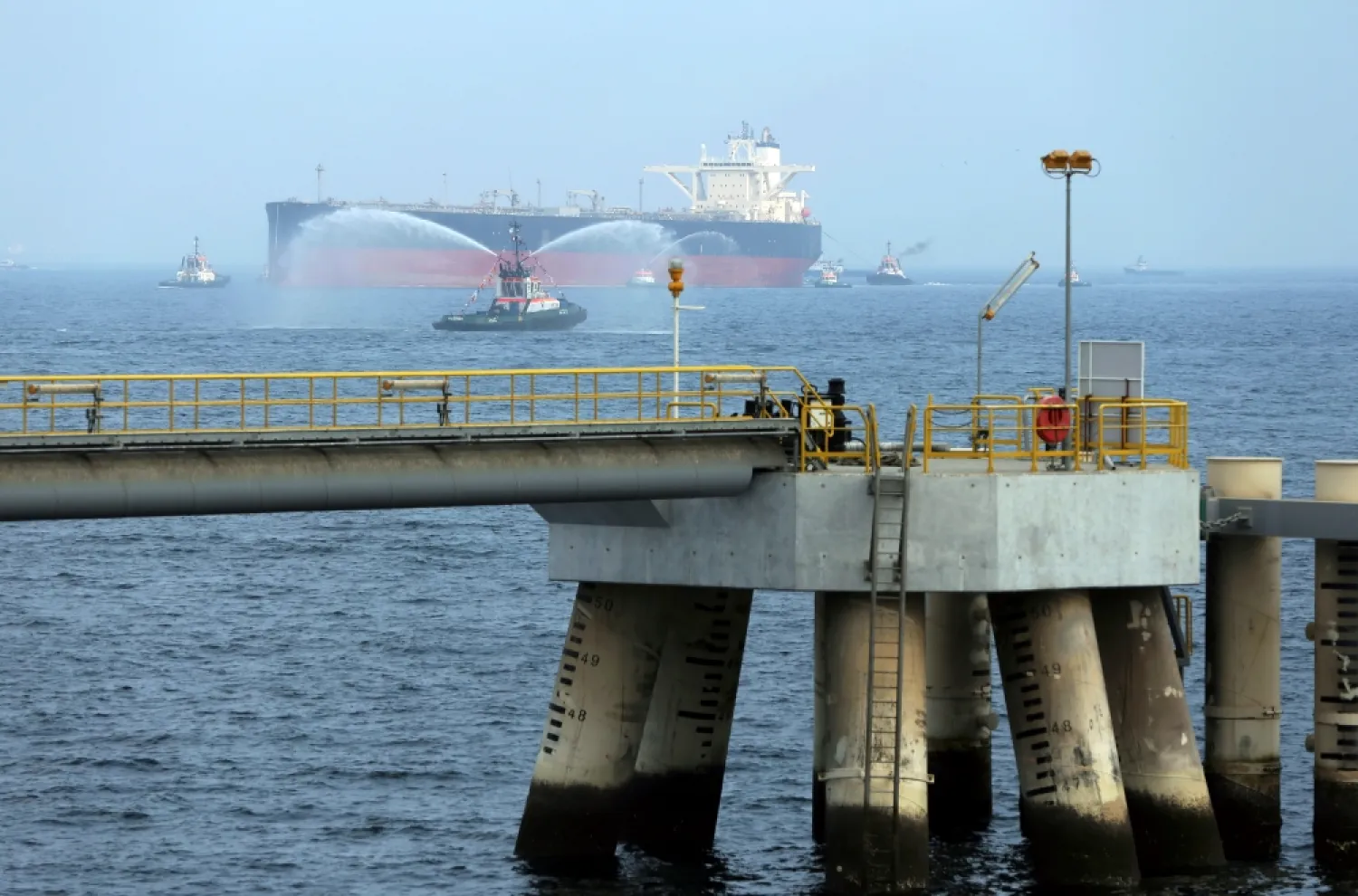
An oil tanker approaches to the new Jetty during the launch of the new oil facility in Fujairah, United Arab Emirates, on September 21, 2016. (AP)
TT

Sabotage in Fujairah Shapes a Big Question Mark

An oil tanker approaches to the new Jetty during the launch of the new oil facility in Fujairah, United Arab Emirates, on September 21, 2016. (AP)

Regardless of who was actually behind the sabotage of four ships at the UAE port of Fujairah, the event may mark the start of a second phase in the latest between the Islamic Republic in Iran on the one hand and the United States and its regional allies on the other.

The first phase started a year ago when President Donald Trump decided to reactivate a set of anti-Tehran sanctions suspended by his predecessor Barack Obama. Initially, it seems that Trump aimed at persuading the decision-makers in Tehran to return to the negotiating table to seek a deal which would then be registered in Trump’s name. Unlike his predecessors, Trump presented tangible demands to the mullahs in the shape of a 12-point desiderata signed by Secretary of State Mike Pompeo.

The Khomeinist leadership reacted as it had always done in its choppy relationship with the Americans. It started implementing Pompeo’s wishes while pretending it was not budging one inch. As always the hope was that Washington would welcome such signals and decide to also quietly ease the sanctions for example by extending the exemption granted to eight countries for importing Iranian oil.

The Iranian tactic had always worked with six previous American presidents. In 1980, the mullahs held secret talks with President Jimmy Carter’s administration and agreed to release the US hostages in exchange for unfreezing of some of Iran’s assets. They even signed a humiliating accord with Washington in Algiers. However, when the crunch came they refused to release the hostages in time to help Carter win re-election.

The same scenario was unfolded under Carter’s successor, President Ronald Reagan. In a series of secret negotiations they gave Reagan everything he wanted in exchange for secret deliveries of American arms with the help of Israel. But, once again, the mullahs made sure that Reagan would reap no political no benefit for himself or his party. In fact, the “Irangate” scandal briefly threatened to wreck the Reagan presidency.

The “goodwill-breeds-goodwill” secret talks with President George W. H. Bush produced a similar result as did the fantasy of the “Grand Bargain” under President Bill Clinton, who went out of his way to flatter the mullahs.

Presidents George W. Bush and Barack Obama had more or less similar experiences. Bush gave Tehran what amounted to a say in post-liberation Iraq’s politics and issued a bizarre statement that sounded like inviting Tehran to join the US as an equal partner in ensuring regional stability. As for Obama, he ignored international law and practice to cajole the mullahs into his surrealistic “nuke deal”.

In every case, the American president hoped for turning an adversary into a partner and demonstrate that dramatic change in public. And in every case, that hope was dashed. Tehran’s tactical retreat was never acknowledged in public and the mullahs were back to cheating on their promises at the first opportunity.

Tehran’s attempt at trying the same tactic with Trump found its most open expression when Iranian Foreign Minister Mohammad Javad Zarif traveled to New York and proposed secret talks on what he termed “a prisoner exchange”, meaning the release of American hostages in Tehran in exchange for a number of condemned criminals in US jails.

The message had previously been relayed to Washington via the Swiss and the Omanis.

However, the Trump administration was and is still, looking for something different. They want talks that are public and focused on the concrete aim of re-writing the Obama “nuke deal”, making the freeze on Iran’s missile project permanent, disbanding the Iranian expeditionary force in Syria and signaling the beginning of the end of Iranian meddling in the affairs of other countries through surrogates, such as Hezbollah in Lebanon.

For the first time in almost 40 years an American administration is demanding a change of strategy by Iran. Needless to say, a regime that has profited from the retreat-and-cheat tactic for four decades finds it hard to do so.

Thus, the best that Tehran can hope for in this new phase is to freeze things at present level.

“Supreme Guide” Ali Khamenei says he needs to sell 1.5 million barrels of oil a day to provide for his regime’s basic expenses, such as paying the civil service, the military and hired foreign fighters, like Hezbollah, not to forget paying for what is left of Bashar Assad’s regime in Damascus. Tehran has already frozen more than 4,000 development projects and increased the price of petrol domestically and cut many subsidies to save money. Further, it hopes to secure part of the income it needs through contraband oil sales via Iraq, plus soft loans promised by Russia.

The one thing that Khamenei hopes to avoid is the humiliation of entering into public talks with the Americans. And that is precisely what Trump wants. Trump hopes to enter his re-election campaign with the claim that not only has he presided over a booming economy, but has also managed to rewrite “bad trade treaties” with the European Union, Canada, Mexico and even China, while calming the North Koreans, taming the Iranian mullahs and flushing out the Venezuelan “communists.” It is clear that Tehran and Washington have diametrically different aims. Yet, both may share a desire to avoid military confrontation.

The question, however, is whether that desire is shared by all factions in Tehran and all key players in Washington. On that score, the sabotage in Fujairah looms like a big question mark.



Gaza Girls Take Up Boxing to Heal War’s Scars

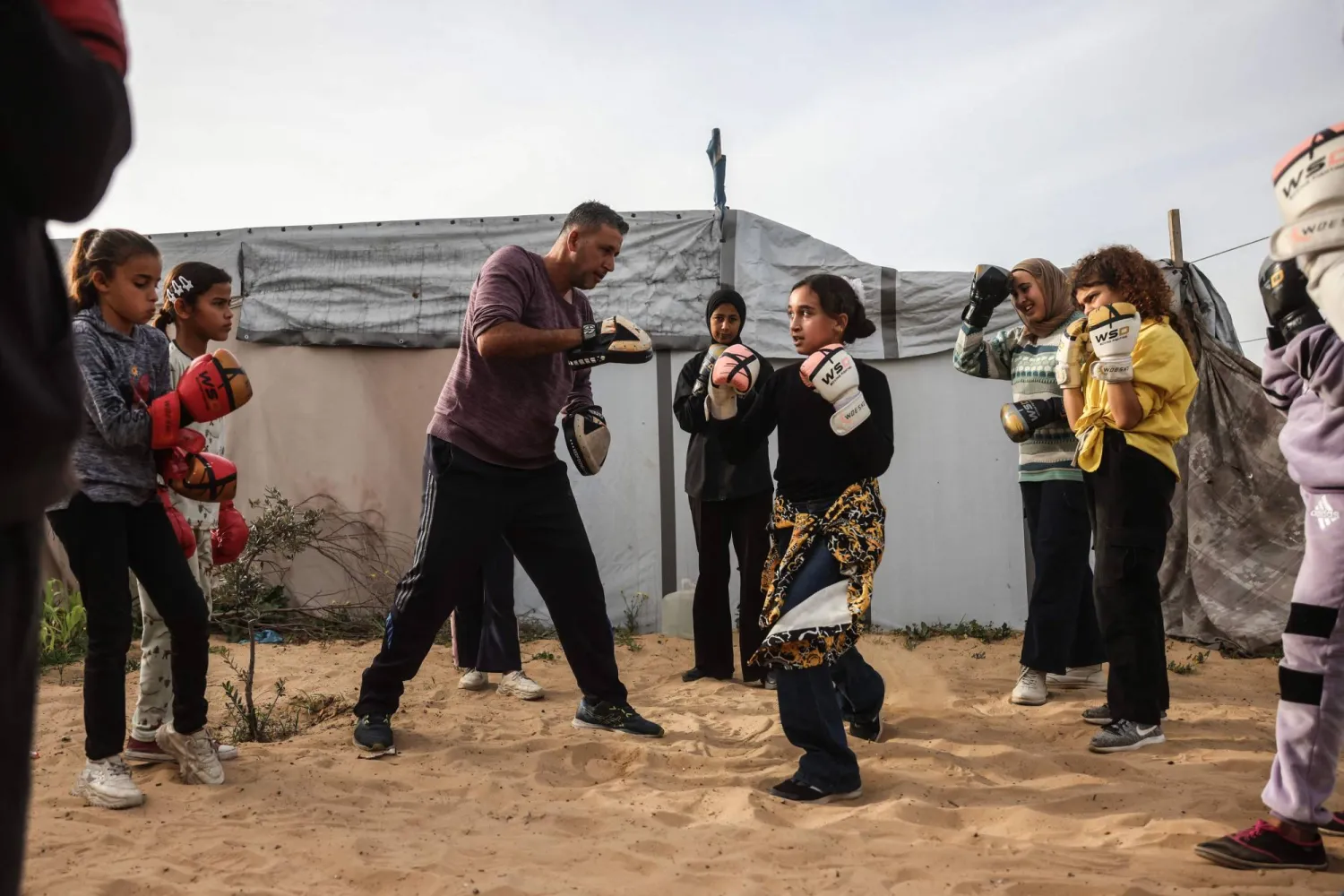
Palestinian girls and young women attend a boxing training session between displacement tents in Khan Younis, in the southern Gaza Strip, on February 9, 2026. (AFP)
TT

Gaza Girls Take Up Boxing to Heal War’s Scars

Palestinian girls and young women attend a boxing training session between displacement tents in Khan Younis, in the southern Gaza Strip, on February 9, 2026. (AFP)

In a makeshift boxing ring etched into the sand between the tens of displaced Palestinians in southern Gaza, a dozen young girls warmed up before delivering fierce blows at their coach's command.

Osama Ayub once ran a boxing club in Gaza City, in the north of the Palestinian territory, until it was destroyed in a strike along with his home during the war between Israel and Hamas.

After finding shelter in the southern city of Khan Younis, he opted to put his sporting skills at the service of displaced Gazans, crammed by the tens of thousands in tents and makeshift shelters.

"We decided to work inside the camp to offer the girls some psychological relief from the war", Ayub told AFP.

Behind him, some of the young athletes faced each other in the ring surrounded by cheering gymmates, while others trained on a punching bag.

"The girls have been affected by the war and the bombardments; some have lost their families or loved ones. They feel pain and want to release it, so they have found in boxing a way to express their emotions," said Ayub.

Ayub now runs these free training sessions for 45 boxers aged between 8 and 19 three times a week, with positive feedback from his students as well as from the community.

One of the youngsters, Ghazal Radwan, aged 14, hopes to become a champion and represent her country.

"I practice boxing to develop my character, release pent-up energy and to become a champion in the future, compete against world champions in other countries, and raise the Palestinian flag around the world", she told AFP.

- Call for aid -

One after the other, the girls trained with Ayub, shifting from right to left jabs, hooks and uppercuts at his command.

In war-devastated Gaza, where construction materials are scarce, Ayub had to improvise to build his small training facility.

"We brought wood and built a square boxing ring, but there are no mats or safety measures," he said.

He called on the international community to support the boxers and help them travel abroad to train, "to strengthen their confidence and offer them psychological support".

The strict blockade that Israel imposed on the Gaza Strip makes the reconstruction of sports facilities particularly complicated, as building materials are routinely rejected by Israeli officials.

The official Palestinian news agency Wafa reported in January that a shipment of artificial turf donated by China to Gaza's youth and sports council was not allowed in by Israel.

With medicine, food and fuel all in short supply, sports equipment comes much lower on the list of items entering the Palestinian territory.

Rimas, a 16-year-old boxer, said she and her friends continued "to practice boxing despite the war, the bombardments and the destruction".

"We, the girls who box, hope for your support, that you will bring us gloves and shoes. We train on sand and need mats and punching bags," she said in comments addressed to the international community.


Is Iran Pushing Houthis Toward Military Action Against Washington?

Houthis continue mobilization, fundraising, and declare combat readiness (AP) 
TT

Is Iran Pushing Houthis Toward Military Action Against Washington?

Houthis continue mobilization, fundraising, and declare combat readiness (AP) 

As US military movements intensify in the Middle East and the possibility of strikes on Iran looms, Yemen’s Houthi group has continued military preparations, mobilizing fighters and establishing new weapons sites.

The Houthi mobilization comes at a time when the group is widely viewed as one of Iran’s most important regional arms for retaliation.

Although the Iran-backed group has not issued any official statement declaring its position on a potential US attack on Iran, its leaders have warned Washington against any military action and against bearing full responsibility for any escalation and its consequences.

They have hinted that any response would be handled in accordance with the group’s senior leadership's assessment, after evaluating developments and potential repercussions.

Despite these signals, some interpret the Houthis’ stance as an attempt to avoid drawing the attention of the current US administration, led by President Donald Trump, to the need for preemptive action in anticipation of a potential Houthi response.

The Trump administration previously launched a military campaign against the group in the spring of last year, inflicting heavy losses.

Islam al-Mansi, an Egyptian researcher specializing in Iranian affairs, said Iran may avoid burning all its cards unless absolutely necessary, particularly given US threats to raise the level of escalation should any Iranian military proxies intervene or take part in a confrontation.

Iran did not resort to using its military proxies during its confrontation with Israel or during a limited US strike last summer because it did not perceive an existential threat, al-Mansi said.

That calculation could change in the anticipated confrontation, potentially prompting Houthi intervention, including targeting US allies, interests, and military forces, he told Asharq Al-Awsat.

Al-Mansi added that although Iran previously offered, within a negotiating framework, to abandon its regional proxies, including the Houthis, this makes it more likely that Tehran would use them in retaliation, noting that Iran created these groups to defend its territory from afar.

Many intelligence reports suggest that Iran’s Revolutionary Guard has discussed with the Houthis the activation of alternative support arenas in a potential US-Iran confrontation, including the use of cells and weapons not previously deployed.

Visible readiness

In recent days, Chinese media outlets cited an unnamed Houthi military commander as saying the group had raised its alert level and carried out inspections of missile launch platforms in several areas across Yemen, including the strategically important Red Sea region.

In this context, Yemeni political researcher Salah Ali Salah said the Houthis would participate in defending Iran against any US attacks, citing the group’s media rhetoric accompanying mass rallies, which openly supports Iran’s right to defend itself.

While this rhetoric maintains some ambiguity regarding Iran, it repeatedly invokes the war in Gaza and renews Houthi pledges to resume military escalation in defense of the besieged enclave’s population, Salah told Asharq Al-Awsat.

He noted that Iran would not have shared advanced and sophisticated military technologies with the Houthis without a high degree of trust in their ability to use them in Iran’s interest.

In recent months, following Israeli strikes on the unrecognized Houthi government and several of its leaders, hardline Houthi figures demonstrating strong loyalty to Iran have become more prominent.

On the ground, the group has established new military sites and moved equipment and weapons to new locations along and near the coast, alongside the potential use of security cells beyond Yemen’s borders.

Salah said that if the threat of a military strike on Iran escalates, the Iranian response could take a more advanced form, potentially including efforts to close strategic waterways, placing the Bab al-Mandab Strait within the Houthis’ target range.

Many observers have expressed concern that the Houthis may have transferred fighters and intelligence cells outside Yemen over recent years to target US and Western interests in the region.

Open options

After a ceasefire was declared in Gaza, the Houthis lost one of their key justifications for mobilizing fighters and collecting funds. The group has since faced growing public anger over its practices and worsening humanitarian conditions, responding with media messaging aimed at convincing audiences that the battle is not over and that further rounds lie ahead.

Alongside weekly rallies in areas under their control in support of Gaza, the Houthis have carried out attacks on front lines with Yemen’s internationally recognized government, particularly in Taiz province.

Some military experts describe these incidents as probing attacks, while others see them as attempts to divert attention from other activities.

In this context, Walid al-Abara, head of the Yemen and Gulf Studies Center, said the Houthis entered a critical phase after the Gaza war ended, having lost one of the main justifications for their attacks on Red Sea shipping.

As a result, they may seek to manufacture new pretexts, including claims of sanctions imposed against them, to maintain media momentum and their regional role.

Al-Abara told Asharq Al-Awsat that the group has two other options. The first is redirecting its activity inward to strengthen its military and economic leverage, either to impose its conditions in any future settlement or to consolidate power.

The second is yielding to international and regional pressure and entering a negotiation track, particularly if sanctions intensify or its economic and military capacity declines.

According to an assessment by the Yemen and Gulf Studies Center, widespread protests in Iran are increasingly pressuring the regime’s ability to manage its regional influence at the same pace as before, without dismantling its network of proxies.

This reality is pushing Tehran toward a more cautious approach, governed by domestic priorities and cost-benefit calculations, while maintaining a minimum level of external influence without broad escalation.

Within this framework, al-Abara said Iran is likely to maintain a controlled continuity in its relationship with the Houthis through selective support that ensures the group remains effective.

However, an expansion of protests or a direct military strike on Iran could open the door to a deeper Houthi repositioning, including broader political and security concessions in exchange for regional guarantees.


The Gaza Ceasefire Began Months Ago. Here’s Why the Fighting Persists

Israeli soldiers and tanks stand in Gaza, as seen from the Israeli side of the Israel-Gaza border, in Israel, February 4, 2026. REUTERS/Amir Cohen
TT

The Gaza Ceasefire Began Months Ago. Here’s Why the Fighting Persists

Israeli soldiers and tanks stand in Gaza, as seen from the Israeli side of the Israel-Gaza border, in Israel, February 4, 2026. REUTERS/Amir Cohen

As the bodies of two dozen Palestinians killed in Israeli strikes arrived at hospitals in Gaza on Wednesday, the director of one asked a question that has echoed across the war-ravaged territory for months.

“Where is the ceasefire? Where are the mediators?” Shifa Hospital's Mohamed Abu Selmiya wrote on Facebook.

At least 556 Palestinians have been killed in Israeli strikes since a US-brokered truce came into effect in October, including 24 on Wednesday and 30 on Saturday, according to Gaza's Health Ministry. Four Israeli soldiers have been killed in Gaza in the same period, with more injured, including a soldier whom the military said was severely wounded when militants opened fire near the ceasefire line in northern Gaza overnight.

Other aspects of the agreement have stalled, including the deployment of an international security force, Hamas' disarmament and the start of Gaza's reconstruction. The opening of the Rafah border crossing between Gaza and Egypt raised hope of further progress, but fewer than 50 people were allowed to cross on Monday, The Associated Press said.

Hostages freed as other issues languish In October, after months of stalled negotiations, Israel and Hamas accepted a 20-point plan proposed by US President Donald Trump aimed at ending the war unleashed by Hamas' Oct. 7, 2023, attack into Israel.

At the time, Trump said it would lead to a “Strong, Durable, and Everlasting Peace."

Hamas freed all the living hostages it still held at the outset of the deal in exchange for thousands of Palestinian prisoners held by Israel and the remains of others.

But the larger issues the agreement sought to address, including the future governance of the strip, were met with reservations, and the US offered no firm timeline.

The return of the remains of hostages meanwhile stretched far beyond the 72-hour timeline outlined in the agreement. Israel recovered the body of the last hostage only last week, after accusing Hamas and other militant groups of violating the ceasefire by failing to return all of the bodies. The militants said they were unable to immediately locate all the remains because of the massive destruction caused by the war — a claim Israel rejected.

The ceasefire also called for an immediate influx of humanitarian aid, including equipment to clear rubble and rehabilitate infrastructure. The United Nations and humanitarian groups say aid deliveries to Gaza's 2 million Palestinians have fallen short due to customs clearance problems and other delays. COGAT, the Israeli military body overseeing aid to Gaza, has called the UN's claims “simply a lie.”

Ceasefire holds despite accusations

Violence has sharply declined since the ceasefire paused a war in which more than 71,800 Palestinians have been killed, according to the Gaza Health Ministry. The ministry is part of the Hamas-led government and maintains detailed records seen as generally reliable by UN agencies and independent experts.

Hamas-led militants killed some 1,200 people in the initial October 2023 attack and took around 250 hostage.

Both sides say the agreement is still in effect and use the word “ceasefire” in their communications. But Israel accuses Hamas fighters of operating beyond the truce line splitting Gaza in half, threatening its troops and occasionally opening fire, while Hamas accuses Israeli forces of gunfire and strikes on residential areas far from the line.

Palestinians have called on US and Arab mediators to get Israel to stop carrying out deadly strikes, which often kill civilians. Among those killed on Wednesday were five children, including two babies. Hamas, which accuses Israel of hundreds of violations, called it a “grave circumvention of the ceasefire agreement.”

In a joint statement on Sunday, eight Arab and Muslim countries condemned Israel’s actions since the agreement took effect and urged restraint from all sides “to preserve and sustain the ceasefire.”

Israel says it is responding to daily violations committed by Hamas and acting to protect its troops. “While Hamas’ actions undermine the ceasefire, Israel remains fully committed to upholding it,” the military said in a statement on Wednesday.

“One of the scenarios the (military) has to be ready for is Hamas is using a deception tactic like they did before October 7 and rearming and preparing for an attack when it’s comfortable for them,” said Lt. Col. Nadav Shoshani, a military spokesperson.

Some signs of progress

The return of the remains of the last hostage, the limited opening of the Rafah crossing, and the naming of a Palestinian committee to govern Gaza and oversee its reconstruction showed a willingness to advance the agreement despite the violence.

Last month, US envoy Steve Witkoff, who played a key role in brokering the truce, said it was time for “transitioning from ceasefire to demilitarization, technocratic governance, and reconstruction.”

That will require Israel and Hamas to grapple with major issues on which they have been sharply divided, including whether Israel will fully withdraw from Gaza and Hamas will lay down its arms.

Though political leaders are holding onto the term “ceasefire” and have yet to withdraw from the process, there is growing despair in Gaza.

On Saturday, Atallah Abu Hadaiyed heard explosions in Gaza City during his morning prayers and ran outside to find his cousins lying on the ground as flames curled around them.

“We don’t know if we’re at war or at peace,” he said from a displacement camp, as tarpaulin strips blew off the tent behind him.