

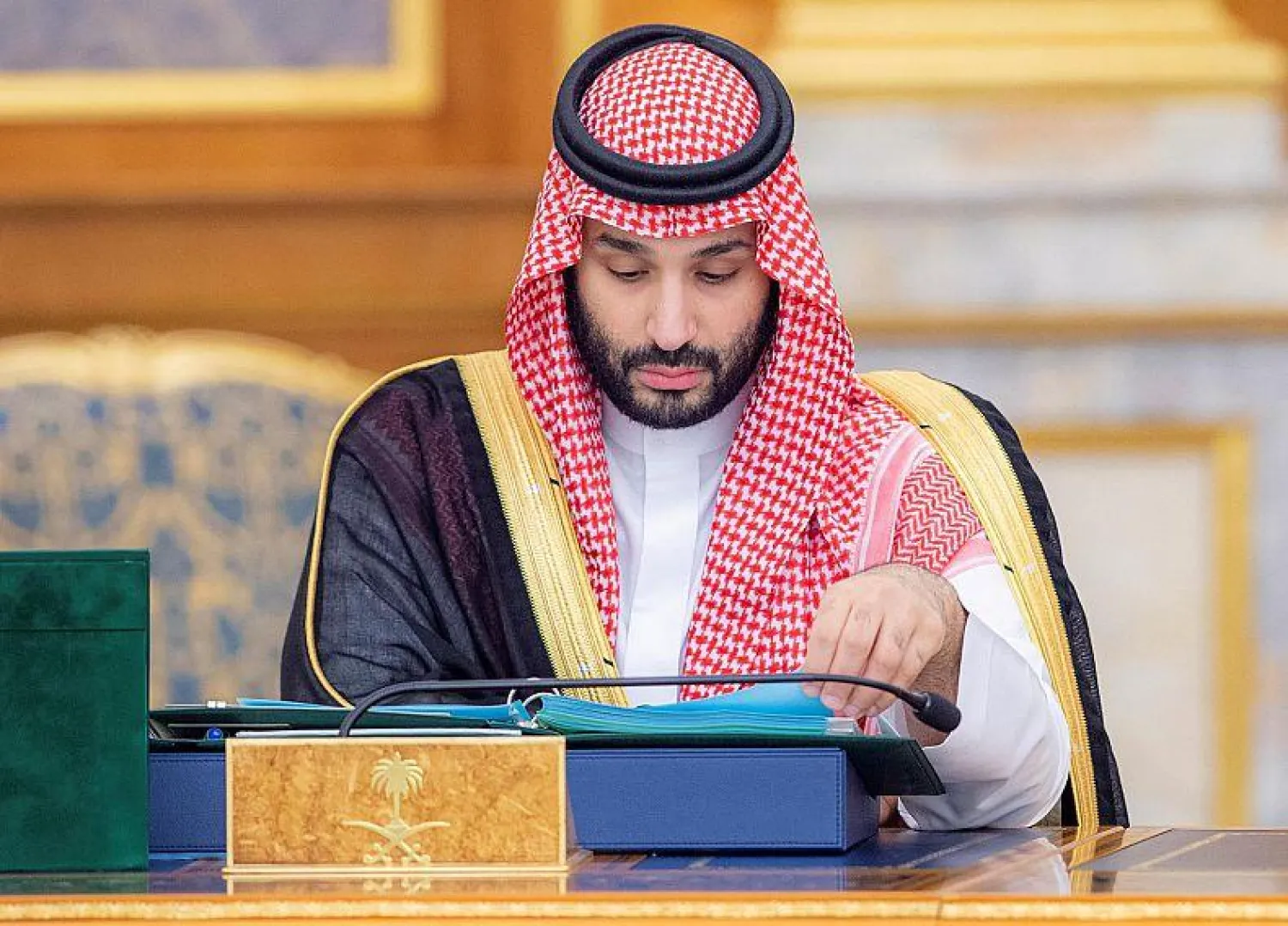

Saudi Crown Prince Launches National Industrial Strategy

Saudi Crown Prince Mohammed bin Salman bin Abdulaziz (SPA)
TT

Saudi Crown Prince Launches National Industrial Strategy

Saudi Crown Prince Mohammed bin Salman bin Abdulaziz (SPA)

Saudi Crown Prince Mohammed bin Salman bin Abdulaziz launched the National Strategy for Industry, which aims to promote industry and attract investment, leading to economic diversification and growth of non-oil exports and GDP.

The Crown Prince, also Prime Minister and Chairman of the Council of Economic Affairs and Development, said Saudi Arabia has all the capabilities to reach a competitive and sustainable industrial economy, from ambitious young talents, a prominent geographic location, rich natural resources, and leading national industrial companies.

"Through the National Industrial strategy and in partnership with the private sector, the kingdom will become a leading industrial powerhouse that contributes to securing global supply chains and export high-tech products to the world," said the Crown Prince.

The industrial sector is one of the pillars of Vision 2030 and received significant attention from the Saudi leadership.

The National Industrial Development and Logistics Program (NIDLP) was launched, and an independent ministry was established to care for the sector and several other programs and entities.

It doubled the industrial establishments, which did not exceed 7,206 factories within 42 years. The number jumped more than 50 percent after Vision 2030 to reach 10.64 thousand industrial facilities in 2022.

The National Strategy for Industry will increase growth in the sector, bringing the number of factories to about 36,000 by 2035.

The Strategy focuses on 12 sub-sectors to diversify the industrial economy in the Kingdom while identifying more than 800 investment opportunities worth $266 billion, beginning a new chapter of sustainable growth for the sector.

It seeks to achieve ambitious economic returns for the Kingdom by 2030, including increasing industrial GDP threefold and doubling the value of industrial exports to reach $148.5 billion.

The National Strategy aims to bring the total value of additional investments in the sector to $346.6 billion, increase exports of advanced technology products by about six times, and create tens of thousands of quality jobs of high value.

Saudi Arabia aspires to empower the private sector, increase the flexibility and competitiveness of the industrial sector, which guarantees the continuity of access to essential commodities for the welfare of the citizens, and achieve global leadership in a group of selected items by investing in promising new technologies.

According to information released, a governance model for the industrial sector was developed through the formation of the Supreme Committee for Industry, chaired by the Crown Prince, which will help achieve these ambitious national goals.

It will help supervise the development of the sector and the formation of the Industrial Council with the participation of the private sector to ensure the involvement of industrial investors in decision-making and policy development.

The Kingdom's industrial sector is based on solid industrial foundations and successes built over 50 years, adding more than $90.6 billion to the GDP and providing many quality jobs and entrepreneurship opportunities in various industrial fields.

The Kingdom enjoys the presence of leading national industrial companies, which have placed the Saudi industry in the ranks of advanced industries regionally and globally.

Saudi Arabia is the fourth largest manufacturer of petrochemical products in the world, while its industrial outputs contribute to providing global supply and manufacturing chains involved in the production of many industries.

The launch of the Strategy is in line with global trends in the sector, such as the Fourth Industrial Revolution, the objectives of Saudi Arabia, and the competitive advantages it enjoys through its geographic location, an abundance of natural resources and energy sources, human capabilities, purchasing power, and stable monetary policies.



Gold Breaks $4,400 for 1st Time on Fed Rate-cut Bets, Silver Hits New High

FILE PHOTO: UK gold bullion bars are stacked at Baird & Co in Hatton Garden in London, Britain, October 8, 2025. REUTERS/Hiba Kola/File Photo
TT

Gold Breaks $4,400 for 1st Time on Fed Rate-cut Bets, Silver Hits New High

FILE PHOTO: UK gold bullion bars are stacked at Baird & Co in Hatton Garden in London, Britain, October 8, 2025. REUTERS/Hiba Kola/File Photo

Gold jumped past the $4,400-per-ounce level for the first time on Monday, riding on growing expectations of further US rate cuts and strong safe-haven demand, with silver also joining the rally to hit an all-time high.

Spot gold was up 1.7% at $4,411.01 per ounce, as of 0822 GMT, having climbed down from the record high of $4,420.01 hit earlier in the day. Spot silver climbed 2.5% to hit $69.44, Reuters reported.

US gold futures for February delivery rose 1.3% to $4,444.00 per ounce.

Bullion has gained 67% ⁠so far this year, shattering multiple records and breaching the $3,000 and $4,000 per-ounce milestones for the first time. It is poised for its biggest annual gain since 1979.

Silver has surged 138% year-to-date, vastly outperforming gold, underpinned by robust investment inflows and persistent supply constraints.

"With December usually producing positive returns for gold and silver, seasonality is on their side," said StoneX ⁠senior analyst Matt Simpson.

"Given that gold has already risen 4% this month and we're nearing the end of the year, bulls may want to tread with caution as volumes are to deplete and odds of profit-taking are also likely on the rise."

Spot gold may extend gains to $4,427 per ounce, as it has broken a key resistance at $4,375, Reuters technical analyst Wang Tao said.

Traditionally viewed as a safe-haven asset, gold has been supported by heightened geopolitical and trade tensions, steady central bank buying and expectations of lower interest rates next year.

A ⁠softer dollar has provided an additional tailwind by making the metal cheaper for overseas buyers.

Markets are currently pricing in two US rate cuts for next year despite the Federal Reserve signaling caution. Non-yielding assets such as gold tend to benefit in lower interest rate environments.

Simpson said two Fed rate cuts were penciled in for 2026, with a faster US jobs slowdown and a shift to a more dovish Fed likely to add further upside to gold.

Elsewhere, platinum jumped 4.3% to $2,058.35, hitting its highest in more than 17 years, while palladium climbed 4.1% to $1,784.00, a near three-year high.


UK Growth Revised Down in Second Quarter 

Shoppers fill the pavement on Regent Street in central London on December 21, 2025. (AFP)
TT

UK Growth Revised Down in Second Quarter 

Shoppers fill the pavement on Regent Street in central London on December 21, 2025. (AFP)

Britain's economy expanded less than initially estimated in the second quarter, according to revised official data released Monday, dealing a fresh setback to the Labour government.

Gross domestic product was revised down to 0.2 percent in the April-June period from a previous estimate of 0.3 percent, the Office for National Statistics said in a statement.

Growth in the third quarter stood at an unrevised 0.1 percent, the ONS said, marking a sustained slowdown from the 0.7 percent expansion recorded in the first three months of the year.

"The economy is still pretty weak and is heading into 2026 with very little momentum," noted Alex Kerr, UK economist at Capital Economics.

Prime Minister Keir Starmer has struggled to revive Britain's sluggish economy since his Labour party came to power in July 2024.

Finance minister Rachel Reeves raised taxes on businesses in her inaugural budget last year -- a decision widely blamed for causing weak UK economic growth and rising unemployment.

She returned in her November budget with fresh tax hikes to bring down government debt, this time hitting workers.

The Bank of England last week cut its key interest rate to 3.75 percent after UK inflation eased faster than expected and as the economy weakens.


Saudi Finance Minister Says New Financial Control System Protects Public Funds

Saudi Minister of Finance Mohammed Al-Jadaan. Asharq Al-Awsat
TT

Saudi Finance Minister Says New Financial Control System Protects Public Funds

Saudi Minister of Finance Mohammed Al-Jadaan. Asharq Al-Awsat

Saudi Minister of Finance Mohammed Al-Jadaan has said that the new Financial Control System constitutes a “fundamental shift” in the control methodology and the improvement of the legislative framework for financial work in government agencies, through a more flexible and comprehensive model that focuses on empowerment and the protection of public funds.

Speaking at the 1st edition of the Financial Supervision Forum held at the General Court of Audit in Riyadh on Sunday, Al-Jadaan said the Kingdom must invest in national talent alongside regulatory reforms to build a modern financial oversight system.

He stressed the importance of enhancing institutional integration between the relevant authorities, especially between the Finance Ministry and the General Court of Audit, which contributes to unifying oversight efforts and reducing duplication.

According to Al-Jadaan, the success of this transformation depends on concerted efforts between regulatory authorities on the one hand, and authorities dealing with public money on the other hand, in a way that maximizes the impact in protecting public money and enhancing the efficiency of financial oversight.

President of the General Court of Audit Hussam Alangari also said that organizing the forum in partnership with the Finance Ministry comes within the qualitative transformation that Saudi Arabia is witnessing in financial oversight during an era in which the country holds a leading global position in the management of public finances, characterized by governance, responsibility, and a high level of transparency.

He told the forum that the General Court of Audit has had strong foundations that have strengthened its role and independence as the supreme authority for public financial oversight and auditing.

Alangari pledged to strengthen the “deep partnership” with the Finance Ministry, describing it as a partnership cemented by trust and built on the foundations of cooperation across various fields.

The partnership has resulted in qualitative leaps, most notably what has been achieved in the exchange of information through full technical integration between the Etimad and Shamel platforms, he said.