


Anti-fur Activists Target Max Mara, Fendi at Milan Fashion Week

Activists say fur farming is cruel and better alternatives are available. Marco BERTORELLO / AFP
TT

Anti-fur Activists Target Max Mara, Fendi at Milan Fashion Week

Activists say fur farming is cruel and better alternatives are available. Marco BERTORELLO / AFP

Animal activists have fashion brands squarely in their sights this Milan Fashion Week, hoping to pressure Italian brands Max Mara and Fendi to give up fur in future collections.
An activist from PETA (People for the Ethical Treatment of Animals) stormed the Fendi runway on Wednesday brandishing a sign saying "Animals are NOT clothing".
And a coalition of pro-animal groups stepped up their campaign on Thursday against Max Mara.
Over 1,500 international fashion brands, including some of the most prestigious, have renounced fur in recent years, due to concerns about animal cruelty, changing trends and new synthetic alternatives.
On Thursday, a hot-air balloon with the message "Max Mara Go Fur-Free" floated above the company's headquarters in Emilia Romagna for the second day running.
The stunt was backed by the Fur Free Alliance -- a coalition of over 50 global animal protection associations, including the Humane Society International and Italy's LAV (Anti-Vivisection League) -- which has been targeting Max Mara since earlier this month.
The campaign, involving protests, social media posts, telephone calls and emails, corresponds to the season of fashion weeks in New York, London, Milan and Paris running until March 5.
Max Mara -- whose runway show on Thursday did not feature fur -- did not respond to requests for comment from AFP.
Unlike Fendi, which began as a fur line, Max Mara is best known for its luxurious wool and camel hair coats, using fur occasionally as trim on hoods and cuffs.
That means the company could easily stop using fur without affecting its core business, said LAV's Simone Pavesi.
"It's really a question of total indifference. They could resolve it from one season to another," he told AFP.
He added that the fashion house had refused to sit down with animal welfare groups, as many other brands have done.
'Smell of death'
Outside the Max Mara show, Anna Kirichenko, 32, sported a black ski hat prominently decorated with the company's logo, combined with an oversized black faux fur jacket.
"There are so many alternatives, so many young designers who can give us cheaper and better alternatives (to real fur)," Kirichenko said.
"I want to be an example... I don't like the smell of death."
At Fendi, fashion student Elke Orth, 21, said top brands still using fur have oversized influence, even though attitudes among young people have changed.
"They have all the power because everyone wants to be inside that world," she said.
"But if a famous actor or singer says 'I won't go to that show', that would make a big change," she said.
Armani, Dolce and Gabbana, Gucci, Prada, Valentino and Versace, are among several prestigious fashion houses who have renounced fur.
"All these companies have seen how unethical and unsustainable fur is," Pavesi said.

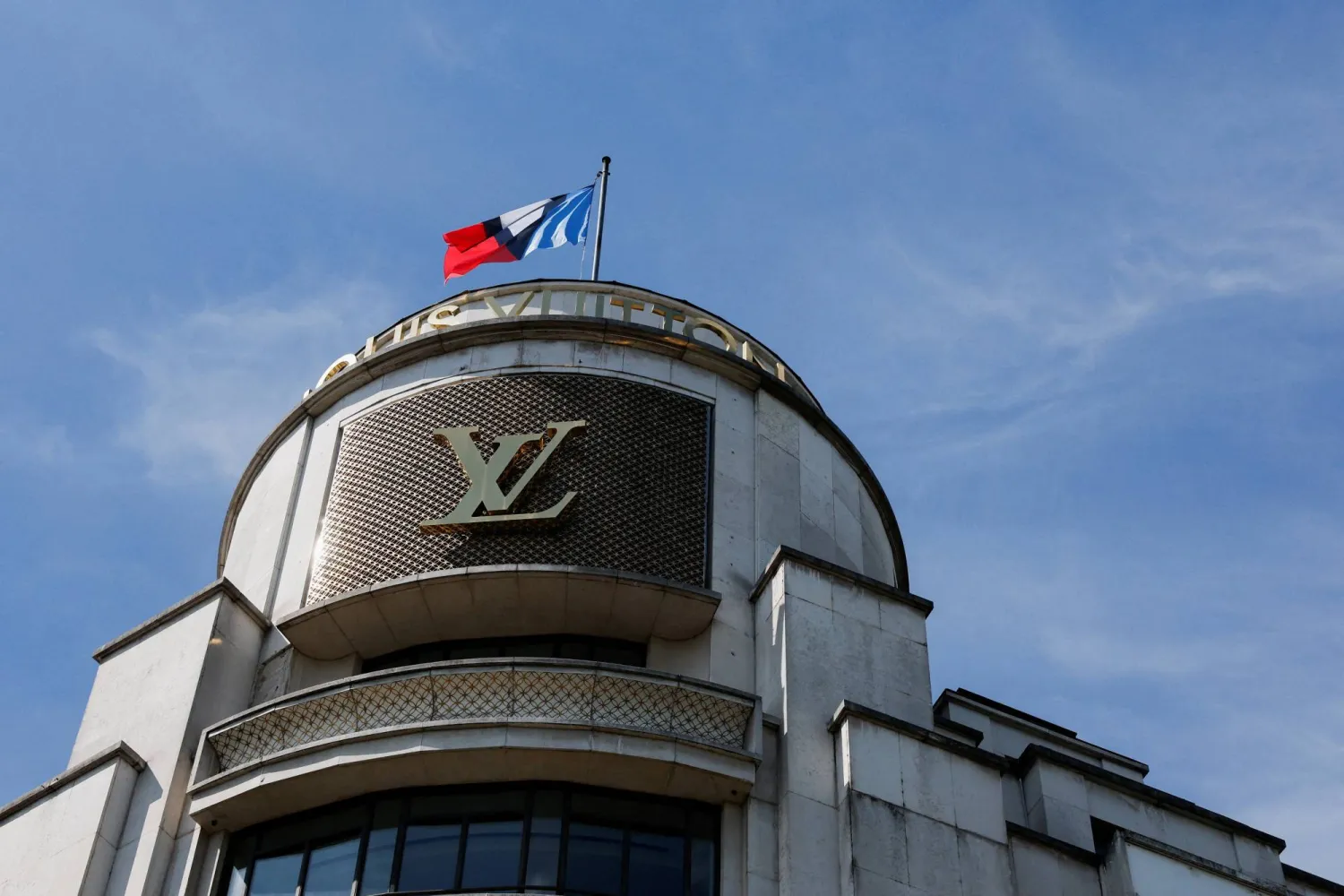
Major recalcitrants include France's Louis Vuitton and Hermes.
Activists cite the cruelty inherent in fur farming, in which foxes, minks, chinchillas, rabbits and raccoon dogs are crammed into tiny wire battery cages before being gassed or electrocuted.
Undercover operations have brought to light deplorable conditions in fur farms, sick and stressed animals, and episodes of self-mutilation and infections.
An outbreak of the Covid-19 virus in Dutch mink fur farms in 2020 hastened the scheduled closure of the farms by three years to 2021.
Ethics and 'sustainability'
The fur industry markets its products as environmentally friendly renewable resources -- claims that anti-fur activists refute, citing higher carbon footprints.
Within the European Union, there is no ban on sales of fur, nor any specific animal welfare legislation covering these animals.
California, Israel and certain US cities have banned fur sales.
As of December, 17 of the EU's 27 member countries had adopted full or partial bans on fur farming, with others in the works.
There are currently more than 1,000 fur farms in the EU -- most of them in Finland, Greece and Poland -- which amounts to about 7.7 million animals.
Fur Free Europe collected 1.7 million signatures last year to petition the European Commission to ban fur farming.
In response, the EU's executive asked its food safety agency to conduct an independent review on the protection of fur production animals by March 2025.
By March 2026, the Commission will rule on a potential ban on fur farming and the sale of farmed animal fur products within the EU.
Alternatively, it could adopt "appropriate standards" for better animal welfare practices.
LAV's Pavesi said that as of Wednesday, Max Mara had begun to block critical comments about its use of fur from its Instagram page.
"We have no interest in a pressure campaign," he said.
"We'd prefer to talk with the company, explain our reasons... and convince them to stop using fur."

Pieter Mulier Named Creative Director of Versace

(FILES) Pieter Mulier attends the 2025 CFDA Awards at The American Museum of Natural History on November 03, 2025 in New York City. (Photo by Dimitrios Kambouris / GETTY IMAGES NORTH AMERICA / AFP)
TT

Pieter Mulier Named Creative Director of Versace

(FILES) Pieter Mulier attends the 2025 CFDA Awards at The American Museum of Natural History on November 03, 2025 in New York City. (Photo by Dimitrios Kambouris / GETTY IMAGES NORTH AMERICA / AFP)

Belgian fashion designer Pieter Mulier has been named the new creative director of the Milan fashion house Versace starting July 1, according to an announcement on Thursday from the Prada Group, which owns Versace.

Mulier is currently creative director of the French fashion house Alaïa, and was previously the right-hand man of fellow Belgian designer and Prada co-creative director Raf Simons at Calvin Klein, Jil Sander and Dior.

In his new role, Mulier will report to Versace executive chairman Lorenzo Bertelli, the designated successor to manage the family-run Prada Group. Bertelli is the son of Miuccia Prada and Prada Group chairman Patrizio Bertelli.

“We believe that he can truly unlock Versace’s full potential and that he will be able to engage in a fruitful dialogue,’’ The Associated Press quoted Lorenzo Bertelli as saying of Mulier in a statement.

Mulier takes over from Dario Vitale, who departed in December after previewing just one collection during his short-lived Versace stint.

Mulier was honored last fall by supermodel and longtime Alaïa muse Naomi Campbell at the Council of Fashion Designers of America for his work paying tribute to brand founder Azzedine Alaïa. Mulier took the creative helm in 2021, after Alaïa’s death.


Ralph Lauren’s Margin Caution Eclipses Stronger‑than‑expected Quarterly Results

Guests wait after viewing the latest Ralph Lauren collection in New York City, US, April 17, 2025. REUTERS/Caitlin Ochs/File photo
TT

Ralph Lauren’s Margin Caution Eclipses Stronger‑than‑expected Quarterly Results

Guests wait after viewing the latest Ralph Lauren collection in New York City, US, April 17, 2025. REUTERS/Caitlin Ochs/File photo

Ralph Lauren posted third-quarter results above Wall Street estimates on Thursday, but the luxury retailer's warning of margin pressure tied to US tariffs sent its shares down nearly 6.4% in premarket trading.

The company expects fourth-quarter margins, its smallest revenue period, to shrink about 80 to 120 basis points due to higher tariff pressure and marketing spend.

Ralph Lauren, which sources its products from regions such as China, India and Vietnam, has relied on raising prices and reallocating production to regions with lower duty exposure to offset US tariff pressures, Reuters reported.

"Ralph Lauren has been able to raise prices for some time now. There is some limit on how long it can continue to do this. I think (the company's) gross margins are near peak levels," Morningstar analyst David Swartz said.

The company, which sells $148 striped linen shirts and $498 leather handbags, has tightened inventory, lifted full-price sales and refreshed core styles, boosting its appeal among wealthier and younger customers, including Gen Z.

Higher-income households are still splurging on luxury items, travel and restaurant meals, while lower- and middle-income consumers are strained by higher costs for rents and food as well as a softer job market.

The New York City-based company saw quarterly operating costs jump 12% year-on-year as it ramped up brand building efforts through sports-focused brand campaigns such as Wimbledon and the US Open tennis championship.

The luxury retailer said revenue in the quarter ended December 27 rose 12% to $2.41 billion, above analysts' estimates of a 7.9% rise to $2.31 billion, according to data compiled by LSEG.

It earned $6.22 per share, excluding items, compared to expectations of $5.81, aided by a 220 basis points increase in margins and an 18% rise in average unit retail across its direct-to-consumer channel.

Ralph Lauren now expects fiscal 2026 revenue to rise in the high single to low double digits on a constant currency basis, up from its prior forecast of a 5% to 7% growth.


Saudi Fashion Commission, Kering Launch 'Kering Generation Award X MENA'

This year's award builds on the strong success of the 2025 award, which attracted more than 500 applications, shortlisted 21 finalists, and recognized three winners. SPA
TT

Saudi Fashion Commission, Kering Launch 'Kering Generation Award X MENA'

This year's award builds on the strong success of the 2025 award, which attracted more than 500 applications, shortlisted 21 finalists, and recognized three winners. SPA

Saudi Arabia’s Fashion Commission and global luxury group Kering have launched the "Kering Generation Award X MENA" across the Middle East and North Africa (MENA) for 2026.

The announcement was made on Tuesday during the opening of the RLC Global Forum, hosted at the French Embassy in Riyadh.

This year's award builds on the strong success of the 2025 award, which attracted more than 500 applications, shortlisted 21 finalists, and recognized three winners.

Participants benefited from mentorship programs, workshops, and opportunities to strengthen their global presence. Building on this momentum, the 2026 program seeks to expand its impact across the MENA region.

The 2026 award focuses on four key areas of sustainable fashion: innovation in regenerative materials and clean production, circular design and sustainable business models, nature conservation and animal welfare, and consumer awareness and cultural engagement.

The program targets startups across the MENA region that operate in, or positively influence, the sustainable fashion sector, provided they demonstrate innovation capabilities and the ability to deliver measurable sustainability outcomes.